by ProxyEmpire Team | Oct 8, 2025 | Proxy Basics
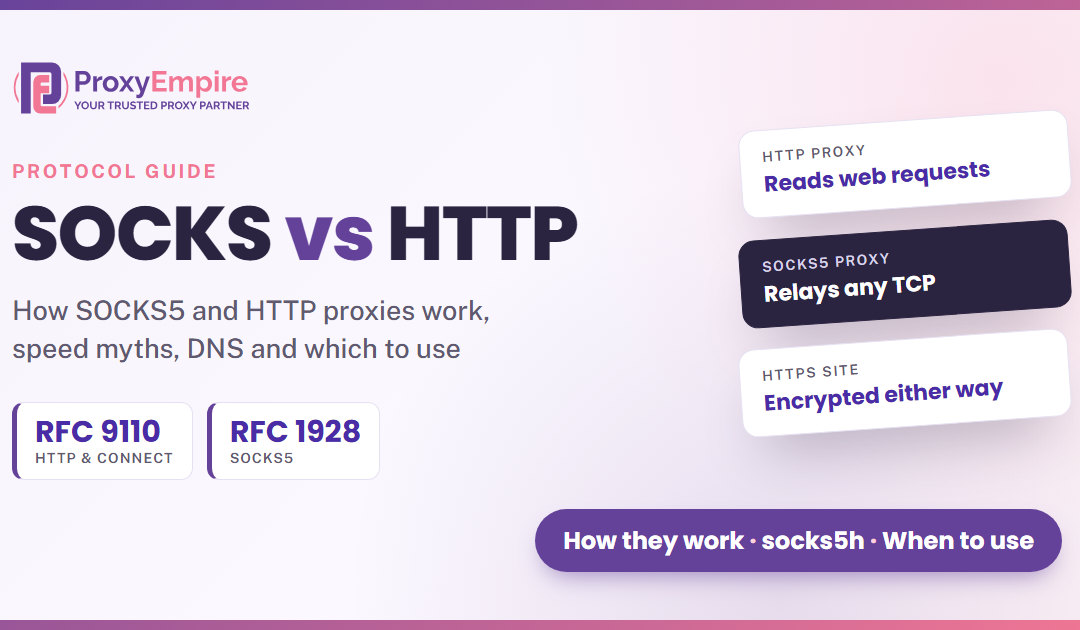
Protocol guide · Last reviewed 1 October 2026 · 12 min read SOCKS vs HTTP proxy comes down to one design choice. An HTTP proxy speaks HTTP: it reads your web requests and forwards them, or opens a CONNECT tunnel for HTTPS sites. A SOCKS proxy doesn’t care what...
by ProxyEmpire Team | Nov 30, 2023 | Proxy Basics
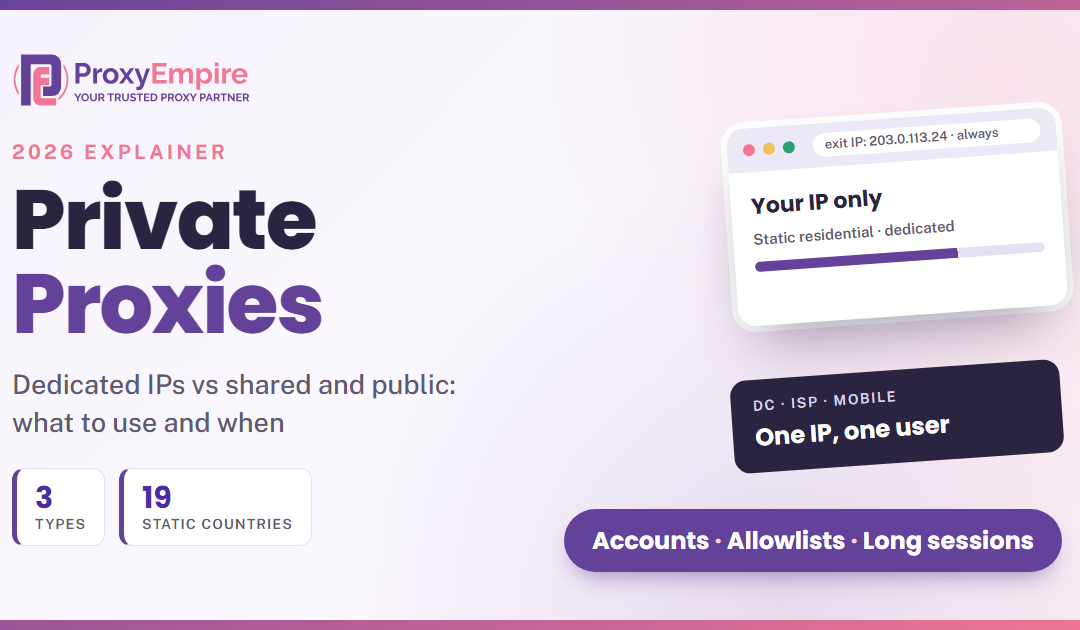
Explainer · Last reviewed 28 September 2026 · 11 min read Private proxies are proxies whose IP address is assigned to one user only, so nobody else’s traffic shares it. That gives you a clean, predictable IP for logins, long sessions and allowlists, which shared...
by ProxyEmpire Team | Nov 30, 2023 | Proxy Basics
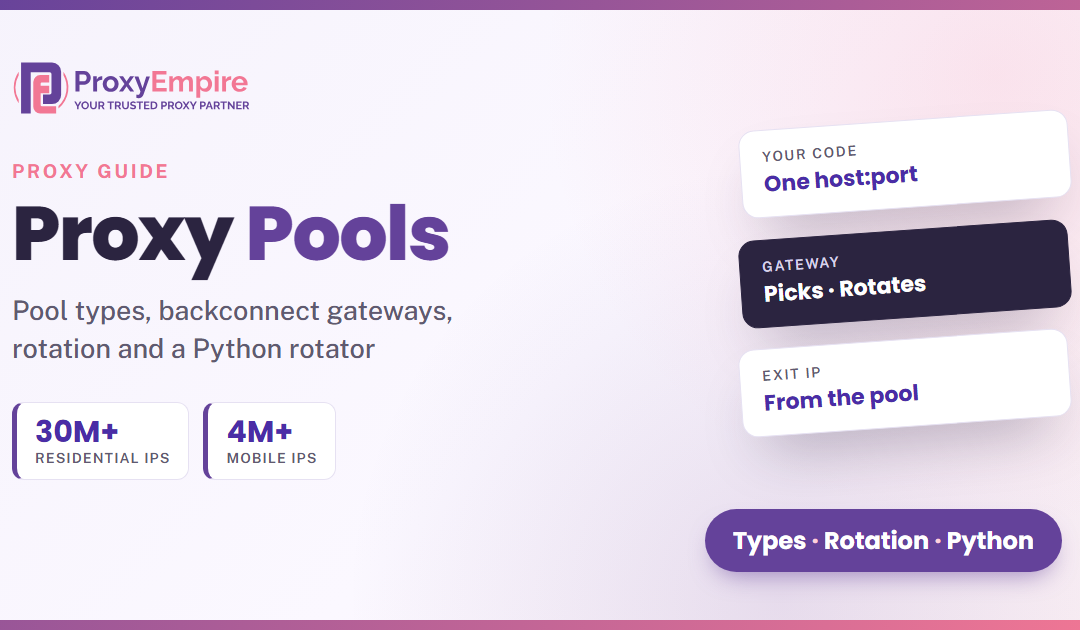
Proxy guide · Last reviewed 1 October 2026 · 16 min read A proxy pool is a set of IP addresses that your requests are spread across, so no single address carries all of your traffic. You can run one yourself, as a list of proxies your code rotates through, or rent a...
by ProxyEmpire Team | Nov 3, 2023 | Proxy Basics
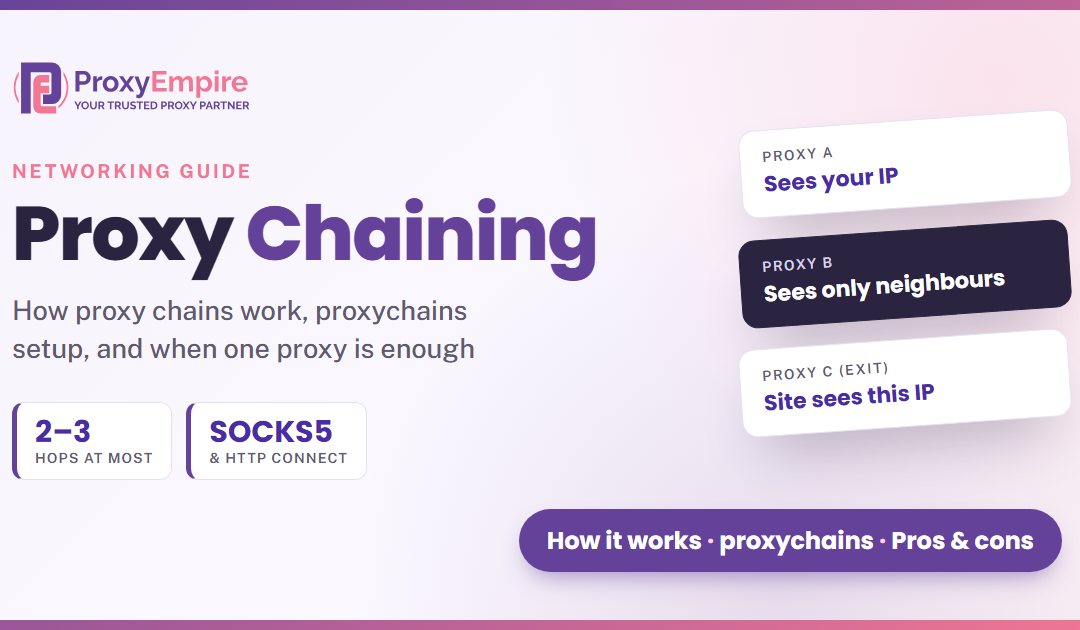
Networking guide · Last reviewed 1 October 2026 · 10 min read Proxy chaining means sending your traffic through two or more proxy servers in a row, so each hop only talks to the one before it and the one after it, and the website sees only the last proxy’s IP...
by ProxyEmpire Team | Nov 3, 2023 | Proxy Basics
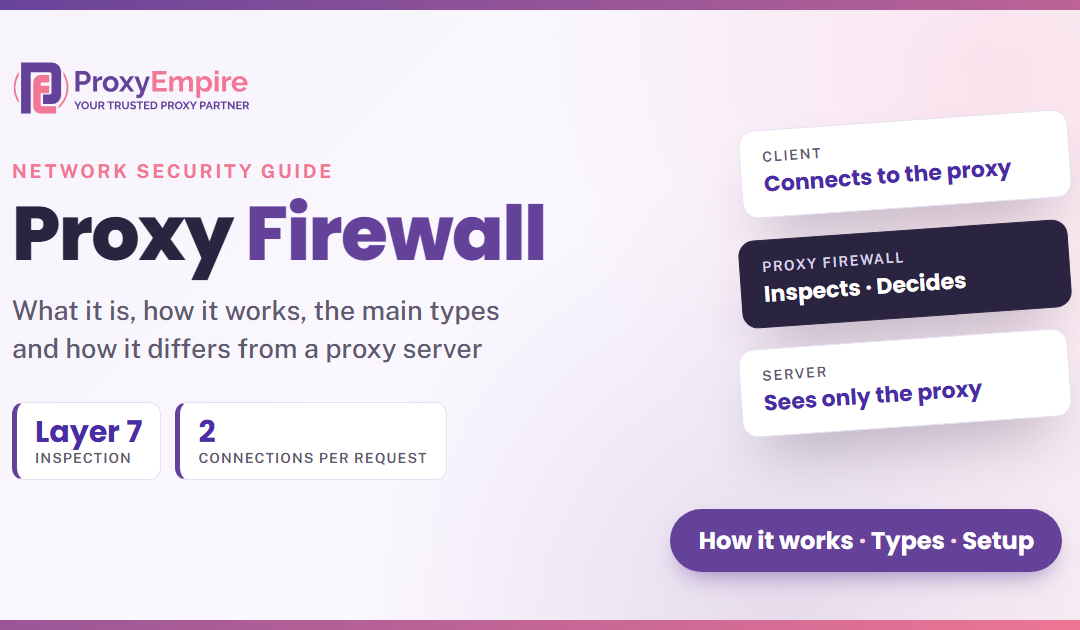
Network security guide · Last reviewed 26 September 2026 · 12 min read A proxy firewall is a firewall that works as a go-between: your devices talk to the proxy, the proxy checks the request against its rules, and only then does it open its own connection to the...
by ProxyEmpire Team | Nov 3, 2023 | Proxy Basics
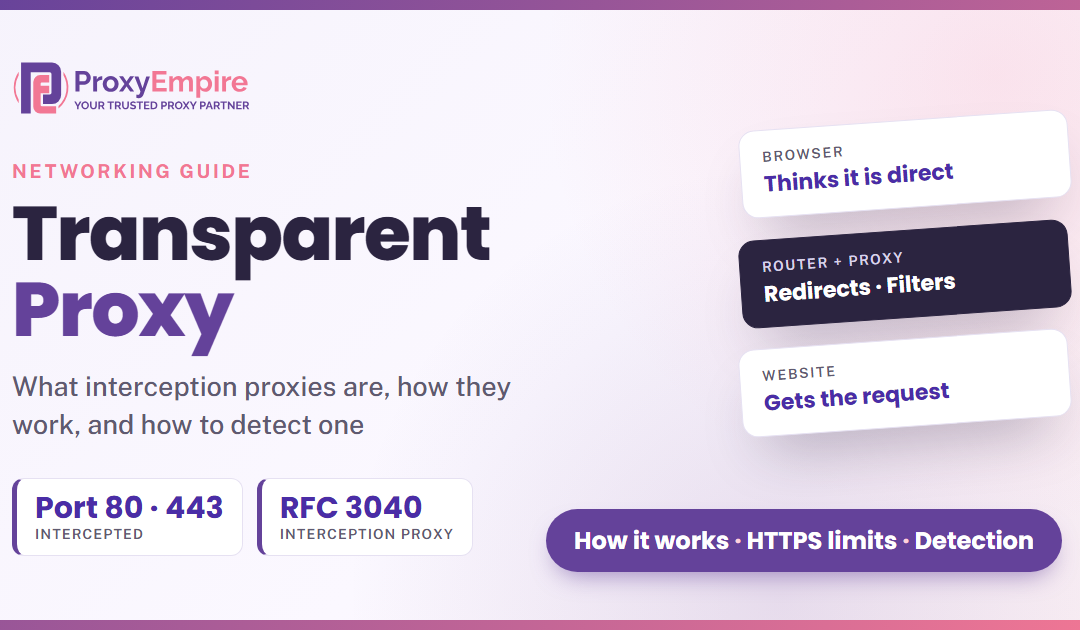
Networking guide · Last reviewed 1 October 2026 · 18 min read A transparent proxy is a proxy you never configured. It sits in the network path, on a router, a firewall or a gateway, and catches your web traffic on its way out, so your browser thinks it is talking...
