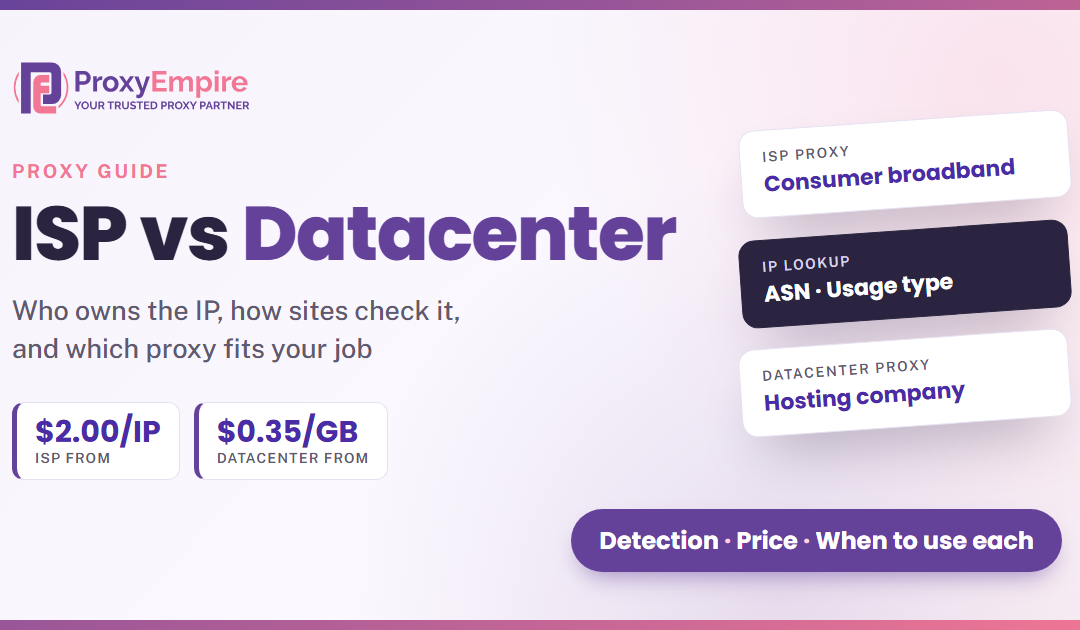
by ProxyEmpire Team | Apr 16, 2026 | Proxy Basics
Proxy guide · Last reviewed 1 October 2026 · 11 min read ISP vs datacenter proxies comes down to one question: who is the IP address registered to? Both kinds of proxy usually run on servers in data centres, so both are fast. An ISP proxy’s address belongs to a...
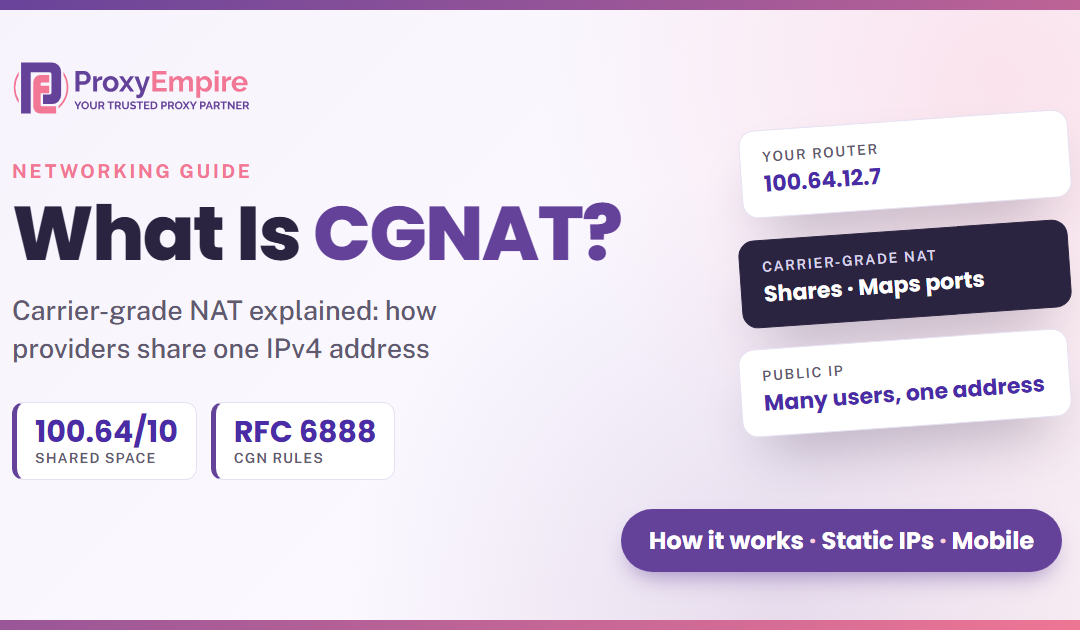
by ProxyEmpire Team | Dec 9, 2025 | Proxy Basics
Networking guide · Last reviewed 1 October 2026 · 10 min read CGNAT, short for carrier-grade NAT, is a technique internet providers use to put many customers behind one shared public IPv4 address. It is why your router’s internet address often isn’t the...
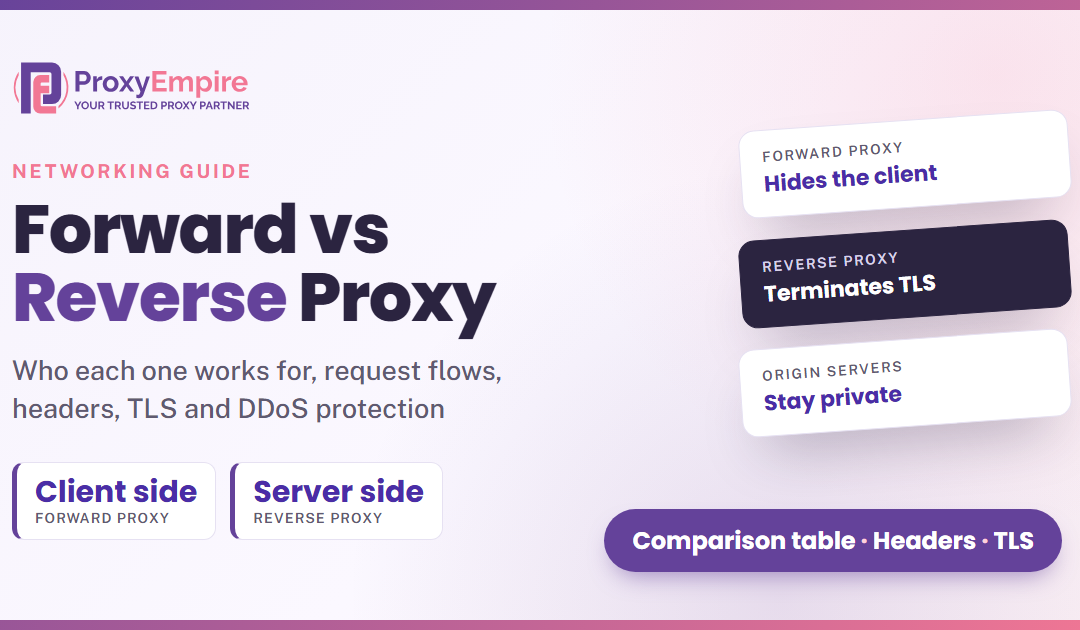
by ProxyEmpire Team | Oct 23, 2025 | Proxy Basics
Networking guide · Last reviewed 1 October 2026 · 18 min read Forward proxy vs reverse proxy comes down to one question: whose side is the proxy on? A forward proxy works for the client. You configure your browser, script or network to send requests to it, and it...
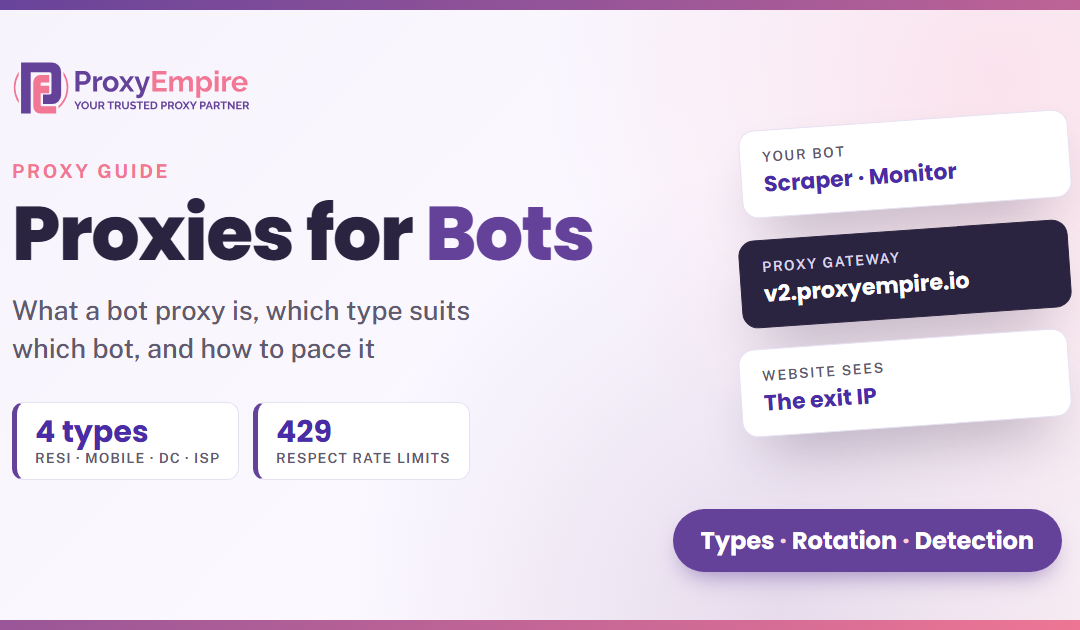
by ProxyEmpire Team | Oct 9, 2025 | Proxy Basics
Proxy guide · Last reviewed 1 October 2026 · 13 min read Proxies for bots are proxy servers that an automated program, such as a scraper, a price monitor or a rank tracker, sends its requests through, so each request reaches the website from a proxy IP instead of the...
by ProxyEmpire Team | Oct 8, 2025 | Proxy Basics
Comparison guide · Last reviewed 28 September 2026 · 12 min read Datacenter proxies vs residential proxies is a trade between price and acceptance. Datacenter proxies are fast and cost a fraction per gigabyte, but websites can see that their IPs belong to hosting...
by ProxyEmpire Team | Oct 8, 2025 | Proxy Basics
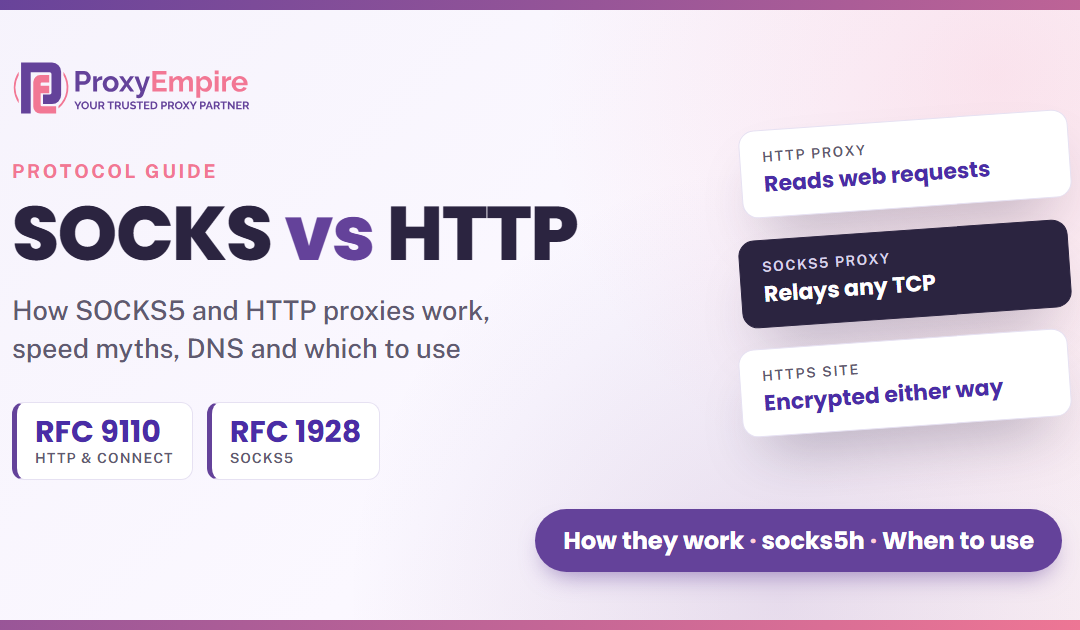
Protocol guide · Last reviewed 1 October 2026 · 12 min read SOCKS vs HTTP proxy comes down to one design choice. An HTTP proxy speaks HTTP: it reads your web requests and forwards them, or opens a CONNECT tunnel for HTTPS sites. A SOCKS proxy doesn’t care what...