
The best open-source proxy servers in 2026 give full control over traffic flow, yet many teams still need ready residential IPs for public web data collection and market research. A solid residential proxy setup from ProxyEmpire often fills that gap with real ISP addresses that stay consistent across approved workflows.
For teams evaluating proxy infrastructure, residential proxies provide access to real ISP addresses for approved public data collection, ad verification, price monitoring, and market research.
Discover the Best Open-Source Proxy Servers In 2026 – ProxyEmpire.
What Makes A Strong Proxy Server In 2026
The best open-source proxy servers in 2026 sit between your tools and the open web. It handles requests, keeps sessions steady, and supports the protocols most teams actually use today. Open-source choices let you install and tune everything on your own hardware. That control feels powerful when you manage a small internal network or run light research jobs.
Yet many projects outgrow pure self-hosted setups. When the work involves location-based testing with residential IPs or large public data collection, a managed service adds speed and scale without the constant maintenance load. ProxyEmpire’s rotating residential proxies give teams that extra reach while open-source tools handle local caching or load balancing.
How Open Source Proxies Fit Different Needs
Open-source proxy servers shine in different roles. Some focus on caching repeated content so bandwidth stays low. Others act as reverse proxies that spread traffic across several backend machines. Lightweight options run on small devices with almost no memory use. Privacy-focused tools filter headers and strip unwanted content before it reaches users.
The right pick depends on your daily tasks. A caching proxy helps office networks. A high-performance load balancer keeps busy web apps online. A tiny daemon works well on edge hardware. When the goal moves to ad verification, price monitoring, or market research across many locations, managed residential proxy services become the practical next step. Teams often pair an open-source reverse proxy with a static residential proxy pool, so sessions stay stable while the open-source layer handles internal routing.
Best Open-Source Proxy Servers In 2026
1. ProxyEmpire – Best Open-Source Proxy Server Alternative

ProxyEmpire is a premium proxy service provider designed to empower public data collection and viewing public web experiences across supported locations through a vast network of ethically sourced residential, mobile, and datacenter proxies.
Overview of ProxyEmpire
ProxyEmpire offers a comprehensive suite of proxy solutions tailored for individuals, businesses, and developers seeking reliable, high-performance tools for data gathering and privacy protection. With over 30 million clean IP addresses spanning 170+ countries, ProxyEmpire provides unparalleled global coverage, supporting large-scale public data collection with a 99.9% uptime and lightning-fast response times (as low as 0.6 seconds).
Proxy Types and Features:
🏘️ Rotating Residential Proxies
Key Benefits
- Extensive Network Coverage: Access to over 30 million IPs worldwide across every major region, supporting public data collection with selection options by country, city, state, and ASN/ISP
- High Reliability: A 99.86% uptime ensures uninterrupted service, supported by patented technology for enhanced speed and security.
- Ethical Sourcing: Proxies are responsibly harvested, ensuring quality and compliance.
- Versatile Use Cases: Supports public data collection, price monitoring, market research, SEO tracking, ad verification, automation, and viewing public web experiences across supported locations. Rotating residential proxies and rotating mobile proxies are best for large-scale public data collection, market research, and workflows that benefit from automatic IP rotation. Static residential proxies are better when a longer, consistent session is required.
- Integration-Friendly: Compatible with standard proxy protocols (HTTP, SOCKS5) and third-party tools like Multilogin, Dolphin Anty, Kameleo, Octobrowser, and Gologin.
- No Hidden Fees: Transparent pricing with all features included, starting at a $1.97 trial.
Use case:
2. ResiProx

ResiProx focuses on residential and mobile proxy networks that support public web data collection and market research workflows. The service draws from a broad pool of real-user IP addresses across many countries, giving teams the ability to view public web experiences across supported locations. Both rotating and sticky session options are available, which helps when a project needs fresh addresses for each request or a longer consistent session for QA testing and monitoring. Protocol support includes common options such as HTTP and SOCKS5, making integration with most scripts and tools straightforward.
The platform emphasizes simple session controls and a clear dashboard so users can adjust targeting by country or city without complex setup steps. Strengths include solid coverage in major markets and reliable connection behavior for everyday research tasks. Some users find the advanced targeting and long-session tools less extensive than larger providers, yet the overall experience remains practical for mid-size projects that need residential authenticity without building their own infrastructure. Teams often pair it with open-source reverse proxies for internal routing while relying on the managed residential layer for external collection.
- Key features: residential and mobile IP pools, rotating or sticky sessions, HTTP and SOCKS5 support, country and city targeting options
- Facts and Information: broad geographic reach across many regions, focus on public data and research use cases, straightforward dashboard for session management
3. Squid

Squid stands as one of the longest-running open-source caching and forwarding proxy servers still actively maintained. It stores frequently requested content so repeated visits load faster and consume less bandwidth on shared networks. Many organizations install Squid to manage internal web traffic, apply access rules, and filter content before it reaches end users. The software handles HTTP, HTTPS, and FTP with a mature set of access control lists that let administrators define detailed policies based on users, time of day, or destination.
Configuration requires careful attention because the feature set is deep, yet the payoff is strong control over every request that passes through the proxy. Squid can also operate in reverse-proxy mode to accelerate backend web servers. Ongoing community updates keep the code current with modern protocol needs. The main trade-off is the time needed for installation, tuning, and security patching. Teams that want full ownership of their proxy layer and value caching efficiency continue to choose Squid for office networks and controlled environments where self-hosted solutions fit best.
- Key features: advanced content caching, flexible access control lists, multi-protocol support, reverse-proxy capability
- Facts and Information: decades of continuous development, widely deployed for bandwidth savings, active open-source community providing regular improvements
4. HAProxy

HAProxy is a high-performance open-source reverse proxy and load balancer designed for reliability under heavy traffic. It operates at both Layer 4 and Layer 7, so it can forward plain TCP connections or inspect HTTP requests for intelligent routing. Health checks continuously monitor backend servers and remove unhealthy ones from the pool, while sticky-session options keep related requests on the same machine when needed. Detailed statistics and logging give operators clear visibility into connection counts, response times, and error rates.
The event-driven architecture keeps latency low even when thousands of concurrent connections arrive. SSL termination is built in, letting HAProxy handle encryption so backend applications stay simpler. Configuration is powerful and precise, though new users often need time to learn the syntax. Many large websites rely on HAProxy for production traffic distribution because it remains stable over long periods. The software ships with most mainstream Linux distributions and continues to receive steady updates that improve scalability and observability.
- Key features: Layer 4 and Layer 7 load balancing, advanced health checks, SSL termination, rich statistics and logging
- Facts and Information: trusted by many high-traffic sites, event-driven design for strong concurrency, regular stable releases that focus on reliability
5. Nginx
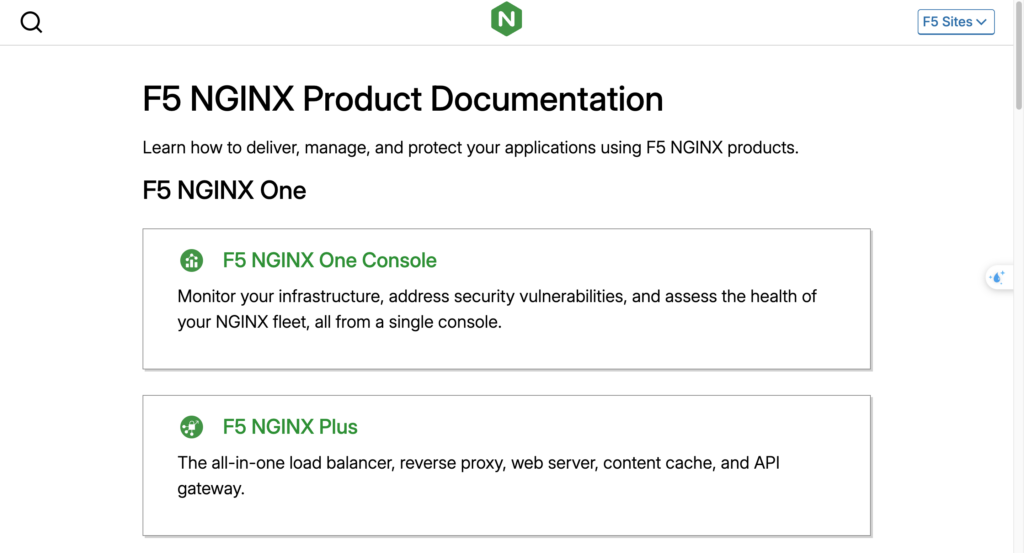
Nginx began as a lightweight web server and evolved into one of the most common open-source reverse proxies in use today. It efficiently handles SSL termination, URL rewriting, caching, and load balancing with a small memory footprint. The event-driven core processes many simultaneous connections without the overhead of traditional process-based designs. Administrators who already run Nginx for static content can add proxy rules to forward dynamic requests to backend application servers.
The configuration language is widely understood, and a large collection of modules extends its capabilities. Caching of responses reduces load on origin servers, while flexible rewrite rules support complex routing needs. Nginx works equally well as a pure reverse proxy or as a combined web server and proxy. Setup stays relatively simple for common scenarios, though advanced tuning still benefits from experience. Its popularity means documentation and community examples are easy to find, making it a practical choice for teams that want one reliable tool for both serving and proxying.
- Key features: reverse proxy and load balancing, built-in caching, SSL termination, flexible rewrite and routing rules
- Facts and Information: one of the most widely deployed servers, low resource consumption, extensive documentation and module ecosystem
6. Tinyproxy
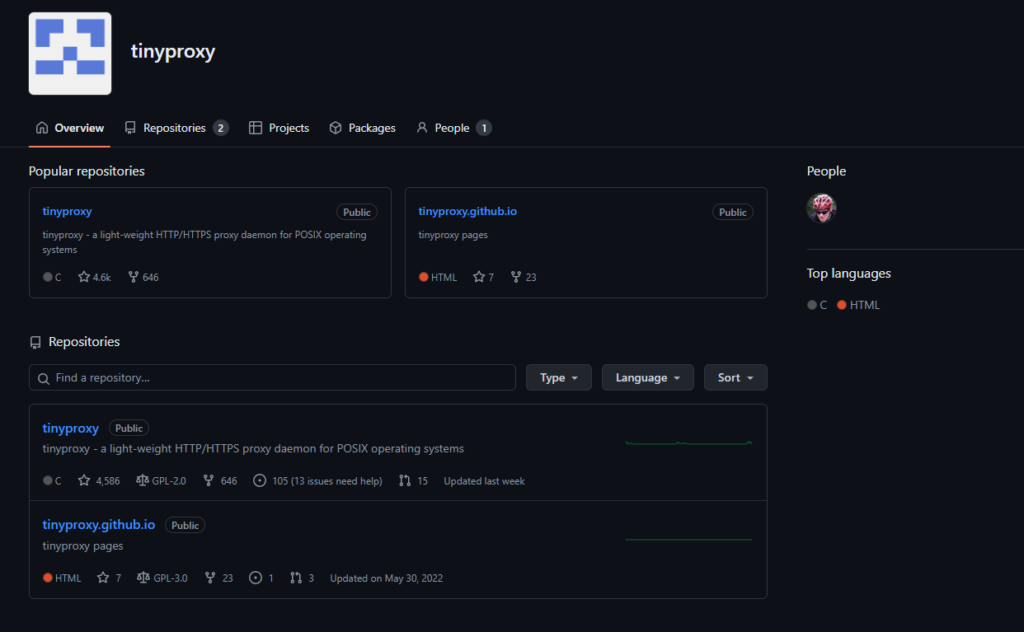
Tinyproxy is a deliberately lightweight open-source HTTP and HTTPS proxy daemon built for environments where memory and CPU are limited. It runs comfortably on small devices such as Raspberry Pi boards or edge gateways, using only a few megabytes of RAM. The design follows a simple buffering approach that receives fast responses from upstream servers and then delivers them to clients at the speed those clients can accept. Access control by subnet or interface keeps the proxy restricted to approved machines.
Optional transparent mode allows traffic redirection without client-side configuration, which is useful on controlled networks. Feature set stays intentionally small so the code remains easy to audit and maintain. Teams that need a basic forward proxy without the complexity of larger packages often select Tinyproxy for edge deployments or small office networks. Installation is straightforward on most POSIX systems, and the project continues to receive maintenance updates that preserve its minimalist character.
- Key features: very low memory footprint, HTTP and HTTPS forwarding, subnet-based access control, optional transparent mode
- Facts and Information: engineered for resource-constrained hardware, simple codebase that is easy to review, ongoing maintenance focused on stability
7. 3proxy
3proxy is a compact multi-protocol open-source proxy server that runs on both Windows and Unix-like systems. A single small binary can provide HTTP, HTTPS, SOCKS4, SOCKS5, FTP, and several messaging-related proxy services. Bandwidth limiting, daily or monthly traffic quotas, and detailed access rules are available out of the box. Logging options include local files, syslog, and ODBC so administrators can track usage without extra tools.
The software is designed to stay small yet functional, making it suitable for situations where installing a full-featured package would be excessive. Configuration uses a single clear text file that defines listening ports, authentication, and upstream chaining when needed. Cross-platform support means the same tool works on desktop Windows machines and Linux servers. Users who want one lightweight solution covering several proxy types appreciate the simplicity. The project remains free and open-source with continued updates that keep the code compatible with modern systems.
- Key features: multi-protocol support including SOCKS5, bandwidth and quota controls, flexible logging, cross-platform binaries
- Facts and Information: tiny footprint with broad protocol coverage, single-file configuration, long history as a free open-source tool
8. Privoxy

Privoxy is a non-caching open-source web proxy that specializes in privacy and content filtering. It can strip advertisements, remove tracking scripts, modify HTTP headers, and apply access rules before content reaches the browser. The action and filter system lets administrators write precise policies that treat different sites or content types differently. Because it does not cache responses, every request is examined in real time, which suits privacy-focused deployments.
Resource use stays modest, so Privoxy runs well on modest hardware. It is often installed on home or small-office networks where system-wide filtering is preferred over browser extensions. Configuration involves defining action files that describe what should be blocked, modified, or allowed. The project has a long history of privacy-oriented development and continues to receive updates that address new web technologies. Teams that value control over the data leaving their network and want to reduce unwanted content find Privoxy a practical open-source choice.
- Key features: advanced content and header filtering, privacy-oriented rule sets, access control, non-caching design
- Facts and Information: focused on privacy enhancement, suitable for local network filtering, steady community-driven improvements
9. Varnish
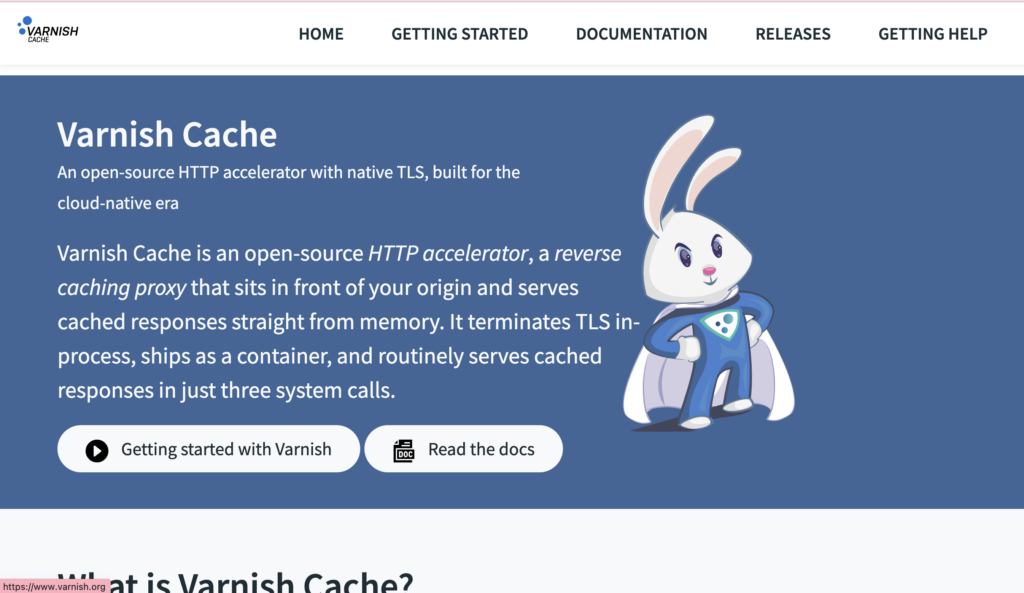
Varnish is an open-source HTTP reverse proxy and caching accelerator built for high performance. It sits in front of web servers and stores responses in memory so repeated requests can be served almost instantly. The VCL configuration language gives operators fine-grained control over what is cached, how long it stays in memory, and how requests are routed. Under heavy load Varnish reduces the number of requests that reach origin servers, improving response times and lowering backend resource use.
The architecture is optimized for speed rather than general forward-proxy features. Many content-heavy sites rely on Varnish to keep pages loading quickly even during traffic spikes. Setup focuses on tuning the cache and writing effective VCL rules. Because the software is open-source, teams can inspect and extend the code when specialized behavior is required. Regular releases continue to improve performance and add modern protocol support. Varnish works best when the primary goal is accelerating HTTP responses rather than providing outbound client proxies.
- Key features: high-speed memory caching, flexible VCL language, reverse-proxy mode, strong performance under load
- Facts and Information: designed as a web accelerator, widely used for content delivery, continuous development focused on speed
10. Apache Traffic Server
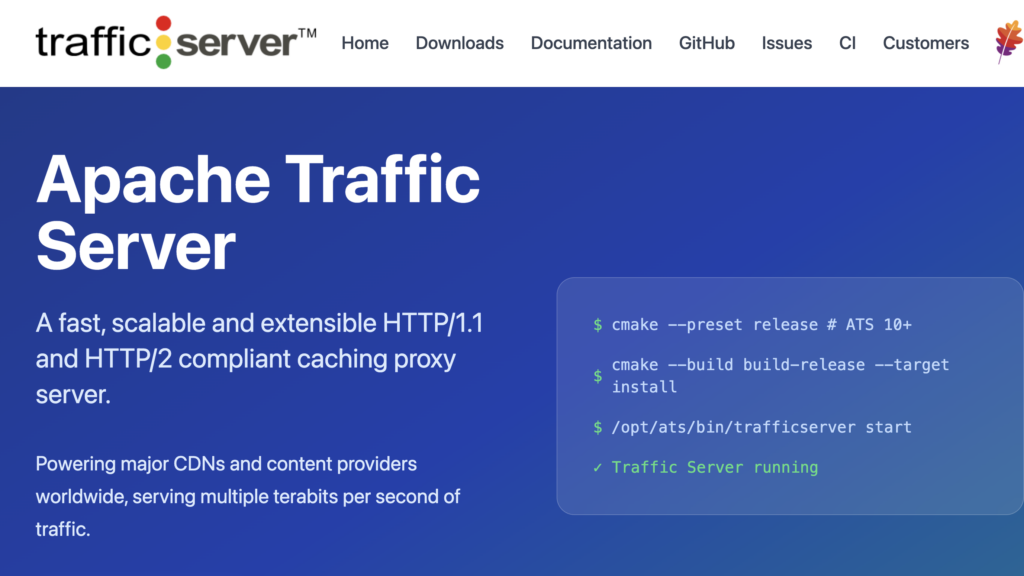
Apache Traffic Server is a fast and scalable open-source caching proxy that can operate as both a forward and reverse proxy. It handles large volumes of HTTP traffic and includes a plugin system that lets developers extend its behavior. Originally developed inside a major web company and later donated to the Apache Foundation, the project brings production-proven code to the open-source community. Caching decisions, protocol handling, and request routing are all tunable through configuration and plugins.
The software is engineered for high throughput, making it suitable for environments where many concurrent connections must be processed efficiently. Teams that need a robust caching layer with good extensibility often evaluate Apache Traffic Server alongside other mature open-source options. Documentation and community resources help with deployment and tuning. Ongoing development keeps the project aligned with current HTTP standards and performance expectations. It remains a solid choice when self-hosted caching and proxy capabilities are required at scale.
- Key features: high-volume HTTP caching, forward and reverse modes, extensible plugin architecture, scalable design
- Facts and Information: mature Apache project with large-scale heritage, active development community, proven under heavy traffic
11. Traefik
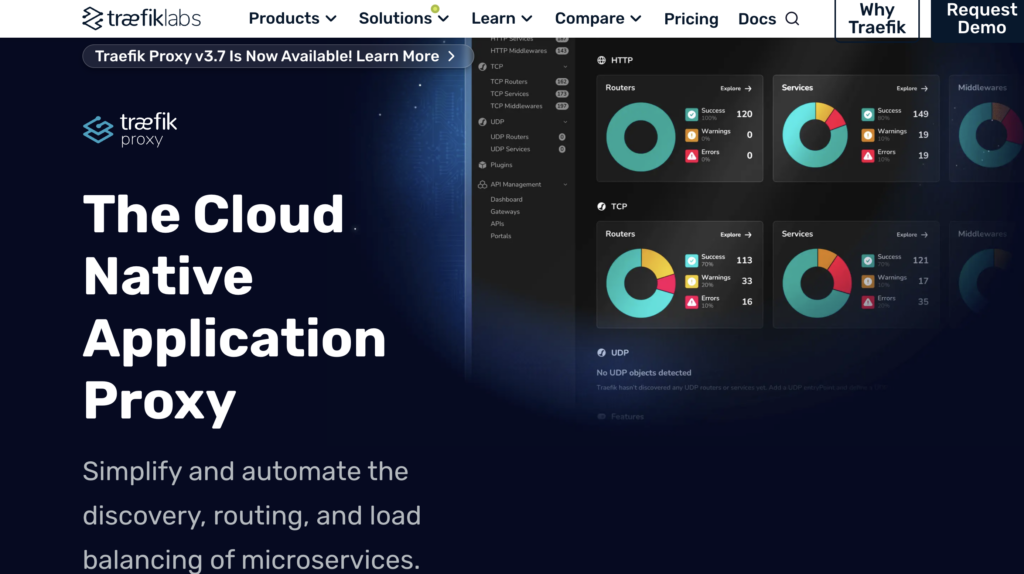
Traefik is a modern open-source reverse proxy and load balancer created for container and microservices environments. It automatically discovers services running in Docker or Kubernetes and configures routes using simple labels or annotations. Automatic HTTPS certificate management removes much of the manual work normally required for secure connections. Dynamic configuration means new containers appear in the routing table without restarting the proxy.
The focus on cloud-native workflows makes Traefik a frequent choice for teams that deploy applications as containers. It supports both HTTP and TCP routing, health checks, and middlewares that can add authentication or rate controls. The web dashboard provides a live view of current routes and backends. Because configuration is driven by the infrastructure itself, operational overhead stays low once the initial setup is complete. Regular updates keep Traefik aligned with evolving container platforms and modern protocol needs. It works best when the environment already uses orchestration tools and the team wants automatic, low-maintenance routing.
- Key features: automatic service discovery, built-in HTTPS certificate handling, Docker and Kubernetes integration, dynamic configuration
- Facts and Information: popular in container orchestration setups, reduces manual route management, continuous updates for cloud-native platforms
Choosing The Right Proxy Approach For Daily Work
Self-hosted open-source proxies give full ownership and zero license fees. They work best when traffic stays inside a controlled network or when caching and load balancing are the main goals. Installation, updates, monitoring, and security patches become part of the regular workload.
Managed residential services remove that maintenance layer. Real ISP addresses from home networks support location-based testing and public data collection more naturally than datacenter IPs. Many teams keep an open-source reverse proxy for internal routing and add a rotating residential proxy pool for external research tasks. The combination keeps internal control while gaining the reach of residential IPs.
When projects grow, the time spent maintaining open-source servers often exceeds the cost of a reliable managed service. ProxyEmpire’s clean IP pools and flexible session options let teams focus on the actual research or monitoring work instead of server upkeep.
Common Setup Patterns Teams Use Today
A frequent pattern places HAProxy or Nginx in front of application servers for load balancing and SSL handling. Squid or Varnish sits nearby for caching. For external public data work, the same team routes selected requests through a managed residential service. This hybrid approach keeps sensitive internal traffic private while external collection benefits from residential authenticity.
Another pattern uses Tinyproxy or 3proxy on edge devices for simple outbound control. Larger research jobs then switch to a service that supplies city-level residential IPs. The open-source layer stays lightweight, and the managed layer supplies the scale.
Documentation and community support remain strong for the major open-source projects. Still, production use demands careful hardening, log review, and regular updates. Managed services shift those duties to the provider so internal teams can stay focused on results. Options such as static residential proxies support longer, consistent sessions when the workflow requires them.
FAQ
What Is The Difference Between Forward And Reverse Proxies?
A forward proxy sits closer to the client side and sends outbound requests toward the wider internet on behalf of users or tools. A reverse proxy sits in front of one or more origin servers and accepts incoming requests, then routes them to the right backend. Open-source tools often handle either role depending on configuration, with some focusing on caching repeated content and others on spreading traffic across machines. Many teams use a reverse proxy for internal load balancing while directing selected external work through a managed layer such as rotating residential proxies when real residential addresses help with public data collection. Both styles appear throughout the discussion of open-source options because each solves different parts of everyday network and research needs.
Can Open-Source Proxy Servers Handle Location-Based Testing?
Open-source proxy servers give full control over the machine they run on, yet the IP address still belongs to that server’s own network. Proxy location-based testing that needs addresses from many different cities or ISPs usually requires residential IPs rather than a single self-hosted exit point. Teams often keep an open-source reverse proxy for internal routing and add a service that supplies real residential addresses for the external portion of the work. Options such as a USA residential proxy or broader static residential proxies support longer consistent sessions when the project calls for them. This hybrid pattern appears repeatedly when the goal is viewing public web experiences across supported locations without constant server maintenance.
How Do I Decide Between Self-Hosted And Managed Proxies?
Self-hosted open-source proxies work well when traffic stays inside a controlled network, the team has strong system skills, and full ownership of the software is the priority. Managed services become useful when the work needs real residential addresses, flexible session control, or when the time spent on updates and monitoring starts to grow. Many projects keep an open-source layer for caching or load balancing and turn to a managed residential pool for public data collection and market research. Rotating residential proxies fit workflows that benefit from automatic IP changes, while static options support longer sessions. The choice usually comes down to whether the daily focus is server maintenance or the actual research and monitoring tasks.
Do Open-Source Proxies Support Modern Protocols?
Most open-source proxy servers support HTTP proxy, HTTPS proxy, and SOCKS5 proxy along with modern TLS features. Tools focused on reverse proxy duties often include SSL termination and flexible routing rules that keep pace with current web standards. Protocol support continues to improve with each release, yet features such as large residential IP pools and city-level targeting remain outside the scope of pure self-hosted software. Teams that need those capabilities frequently combine an open-source reverse proxy with a managed service that already supports the same common protocols. This approach lets the open-source layer manage internal traffic while the managed layer supplies the residential addresses required for broader public web work.
What Are Common Setup Patterns For Open-Source And Managed Proxies Together?
A frequent pattern places an open-source reverse proxy in front of application servers for load balancing and SSL proxy handling while routing selected external requests through a residential service. Another pattern uses a lightweight open-source forward proxy on edge devices for basic outbound control and switches to residential IPs for larger public data collection jobs. Caching tools sit nearby to reduce repeated fetches, and the managed layer supplies the real ISP addresses needed for location-sensitive research. Services that offer rotating residential proxies or static residential proxies fit naturally into these hybrid designs. The combination keeps internal traffic private and controlled while external workflows gain the authenticity of residential addresses.
Read Also:
Discover the Best Open-Source Proxy Servers In 2026 – ProxyEmpire.