
The best residential proxies unlimited bandwidth for market research, ad verification, and public data collection pair real home IPs with no per-GB cap, sticky or rotating sessions, and HTTP proxy, HTTPS proxy, plus SOCKS5 proxy support in many countries for approved research and monitoring workflows.
Discover the Best Residential Proxies Unlimited Bandwidth – ProxyEmpire.
What Unlimited Bandwidth Residential Proxies Actually Mean

Unlimited bandwidth proxy on a residential network means you pay for access and speed, not for every gigabyte you send. The best residential proxies unlimited bandwidth still use real ISP-assigned home IPs. You are not buying a blank check for infinite speed. You are buying unmetered traffic under a set speed tier.
That model helps teams that collect public web data for approved business use cases all month long. Price checks, SERP reviews, and ad verification jobs can chew through traffic fast. A per-GB meter turns every extra page into a budget question. An unmetered plan turns the question into “does this speed tier hold up?”
Residential IPs still matter here. Sites treat home connections differently from hosting ranges. Rotating residential proxies fit large-scale public data collection, market research, and workflows that benefit from automatic IP rotation. Static residential proxies fit longer, consistent sessions.
Many providers label a plan “unlimited” and then add a fair use rule. Read that rule. True unmetered products state a speed cap, a country list, and a session style. They do not hide a quiet traffic ceiling in a footnote.
Why Teams Pick Unmetered Residential IPs Over Per-Gb Plans
Per-GB billing is easy to start. It gets messy when jobs run all day. A monitoring stack that checks stores, ads, and search pages can use more traffic in one week than a small test used in a month.
Unmetered residential access is built for that pattern. You pick a speed, then run price monitoring and SEO monitoring without pausing to add more gigabytes. Finance teams also like a flat monthly shape. They can forecast cost even when page volume swings.
Unmetered does not replace quality. You still need clean IPs, stable gateways, and session control. A slow “unlimited” line can cost more time than a metered plan that finishes the job. Match the plan to the work:
- New IP on every request for high-volume public data collection and market research
- Sticky sessions when a checkout flow, QA path, or research visit needs the same IP for a while
- Static residential or ISP-style IPs when the same identity should last days or weeks
- Rotating mobile proxies when the public page should look like a phone on a carrier network
Protocols matter too. HTTP and HTTPS cover most browsers and scripts. SOCKS5 helps tools that need a wider tunnel. If your stack already speaks those protocols, proxy integrations stay short.
Best Residential Proxies Unlimited Bandwidth
1. ProxyEmpire – Best Residential Proxies Unlimited Bandwidth
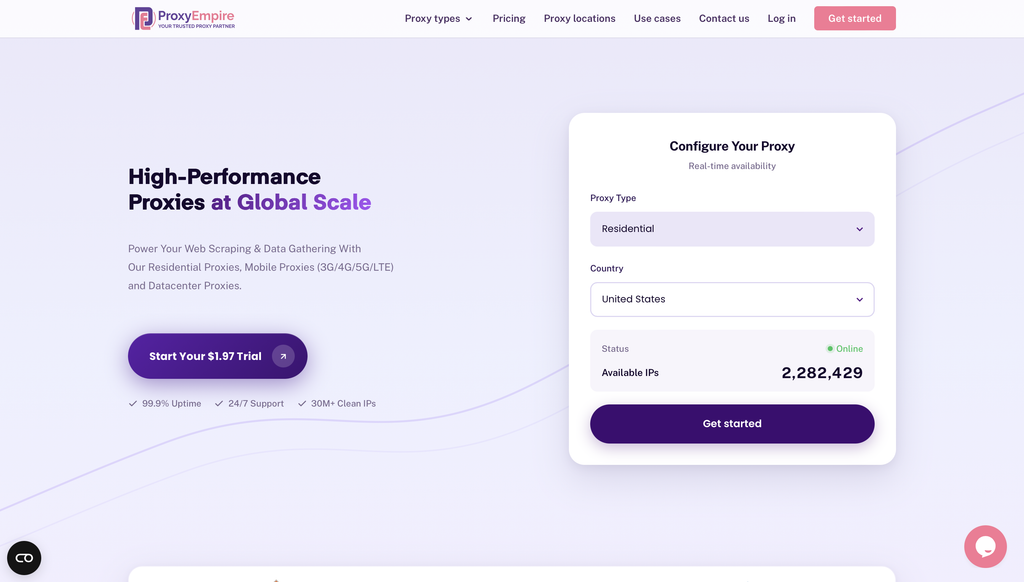
ProxyEmpire is a premium proxy service provider designed to empower public data collection and viewing public web experiences across supported locations through a vast network of ethically sourced residential, mobile, and datacenter proxies.
Overview of ProxyEmpire
ProxyEmpire offers a comprehensive suite of proxy solutions tailored for individuals, businesses, and developers seeking reliable, high-performance tools for data gathering and privacy protection. With over 30 million clean IP addresses spanning 170+ countries, ProxyEmpire provides unparalleled global coverage, supporting large-scale public data collection with a 99.9% uptime and lightning-fast response times (as low as 0.6 seconds).
Proxy Types and Features:
🏘️ Rotating Residential Proxies
Key Benefits
- Extensive Network Coverage: Access to over 30 million IPs worldwide across every major region, supporting public data collection with selection options by country, city, state, and ASN/ISP
- High Reliability: A 99.86% uptime ensures uninterrupted service, supported by patented technology for enhanced speed and security.
- Ethical Sourcing: Proxies are responsibly harvested, ensuring quality and compliance.
- Versatile Use Cases: Supports public data collection, price monitoring, market research, SEO tracking, ad verification, automation, and viewing public web experiences across supported locations. Rotating residential proxies and rotating mobile proxies are best for large-scale public data collection, market research, and workflows that benefit from automatic IP rotation. Static residential proxies are better when a longer, consistent session is required.
- Integration-Friendly: Compatible with standard proxy protocols (HTTP, SOCKS5) and third-party tools like Multilogin, Dolphin Anty, Kameleo, Octobrowser, and Gologin.
- No Hidden Fees: Transparent pricing with all features included, starting at a $1.97 trial.
Use case:
2. ResiProx Residential Proxies
ResiProx sells rotating residential and mobile IPs for teams that collect public web data for approved business use cases. The network is built around real ISP and carrier addresses, so public pages look like a normal home or phone visit. Coverage reaches many countries, with filters for country, region, city, ZIP, and ISP. That helps with location-based testing with residential IPs, ad verification, price monitoring, and market research.
You can request a new IP on every call or keep a sticky session when a longer visit needs the same address. Sticky windows are flexible, and many workflows can hold a session as long as that IP stays available. HTTP, HTTPS, and SOCKS5 are supported, so browsers, scripts, and research tools can share one setup. Approved jobs can run many concurrent sessions at once, which suits parallel QA, monitoring, and research workflows.
The dashboard includes a proxy list generator and a public API. Endpoint builders work with Python, Node.js, PHP, Selenium, and similar stacks. Traffic packages are prepaid and unused data can stay available, so irregular monthly use does not vanish at a reset date. Support is offered around the clock. Residential and mobile products sit in the same account, which makes it simple to view public web experiences across supported locations on both desktop-style and carrier-style IPs.
Key features
- Residential and mobile IPs in one catalog
- Country, region, city, ZIP, and ISP filters
- Rotating or sticky sessions
- HTTP, HTTPS, and SOCKS5
- Proxy list generator, API, and many tool integrations
- Unlimited concurrent sessions on plans
- Ethically sourced pool with strong coverage in major markets
Facts and information
- Founded as a specialist in residential and mobile access for public data work
- Pool size is large by vendor claim, with many unique IPs across a wide country list
- Prepaid traffic model with data that can remain available until it is used
- Fits research teams that want simple self-serve controls and mixed IP types
3. Oxylabs Residential Proxies
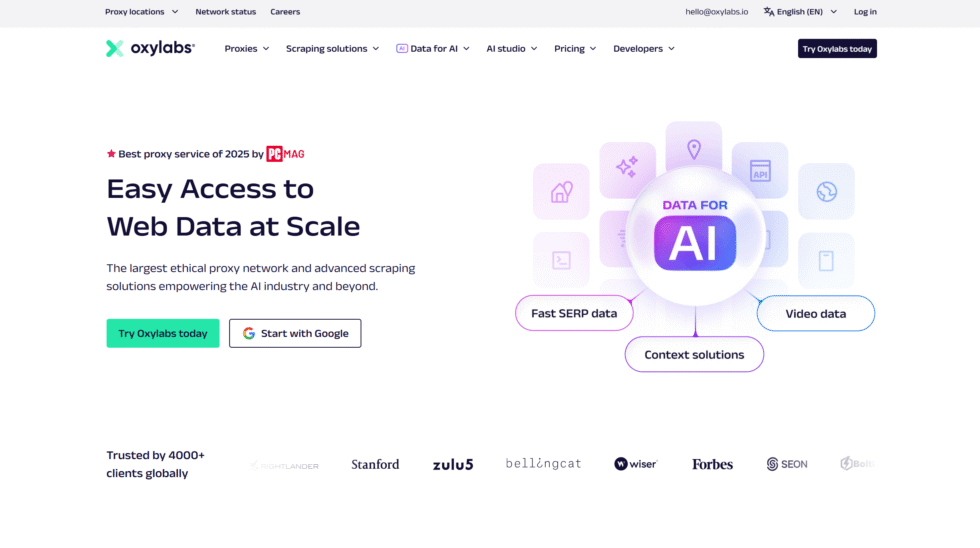
Oxylabs is based in Vilnius, Lithuania, and sells residential, ISP, mobile, and datacenter products to mid-size and enterprise teams. The residential network is large and documented in detail. Filters can go from country down to city, ZIP, coordinates, and ASN on supported plans. That depth helps when a public page must match a very specific local view.
Session control is mature. You can rotate on each request or hold a sticky session for a long window on supported products. HTTP, HTTPS, HTTP/3, and SOCKS5 cover most stacks. Extra tools such as an unblocker-style API sit beside raw proxies for hard public pages. Compliance checks are part of onboarding, which many larger buyers want.
Unlimited-style access shows up more often on static or ISP lines than on every rotating plan. Fair use language is common, so high-volume jobs still need a written policy read. The dashboard and docs are polished. Smaller teams can feel the product is built for operators who already have a data pipeline. For firms that want one vendor with deep filters and account managers, Oxylabs remains a frequent shortlist name.
Key features
- Large residential pool with fine location filters
- Long sticky sessions on supported products
- HTTP, HTTPS, HTTP/3, and SOCKS5
- ISP and mobile options beside rotating residential
- Extra collection tools for difficult public pages
Facts and information
- Strong fit for enterprise research desks
- Unmetered claims are plan-specific, often on dedicated or ISP products
- Setup can take longer than a simple self-serve shop
4. Bright Data Residential Proxies
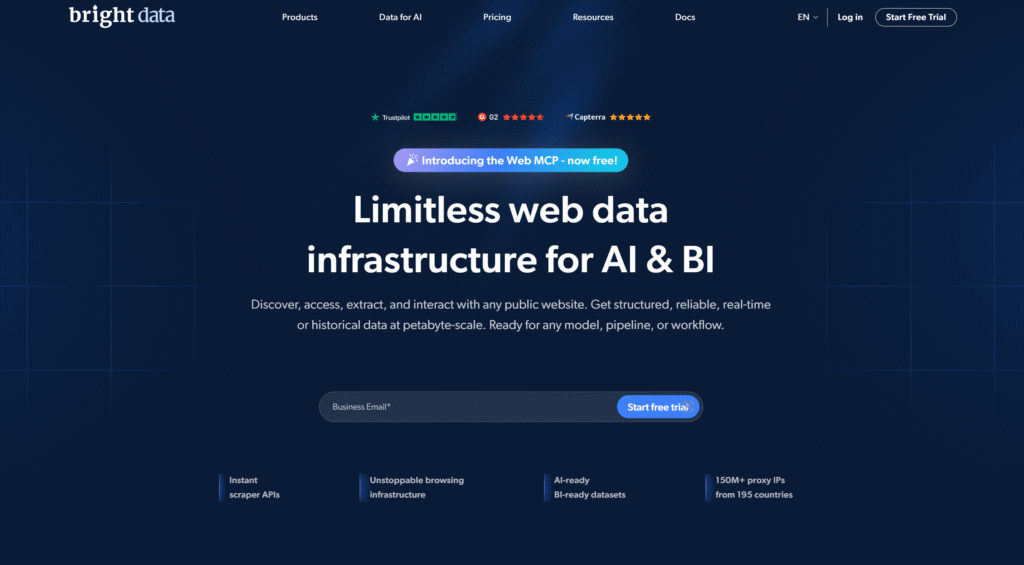
Bright Data, with major offices in Israel and the United States, runs a wide proxy and public-data platform. The residential pool is among the largest marketed in the category. The company also sells ISP products, mobile IPs, datasets, and browser-style collection tools. Some ISP lines are sold with unmetered traffic under fair use. Rotating residential traffic is still often packaged by volume.
Location filters are deep on many products. Teams can view public web experiences across supported locations with country, city, and network-level controls. The platform is built for companies that want proxies plus adjacent data tools in one contract. Account checks can be strict. That suits compliance-heavy buyers and can slow a small test.
If you only need an unmetered rotating endpoint, the catalog can feel larger than the job. If you already use Bright Data for datasets or unlocker-style APIs, the residential layer slots in cleanly. Success on public pages is generally strong when the right product is selected. Read which SKU is unmetered and which is metered before you plan monthly volume.
Key features
- Very large residential network
- ISP, mobile, and residential in one platform
- Deep location filters on many products
- APIs and browser-style collection tools
- Fair-use unmetered options on selected ISP lines
Facts and information
- Built for enterprises that want one vendor for proxies and data tools
- Unmetered language usually sits on selected dedicated or ISP products
- Vetting and setup can be slower than mid-market networks
5. Decodo Residential Proxies
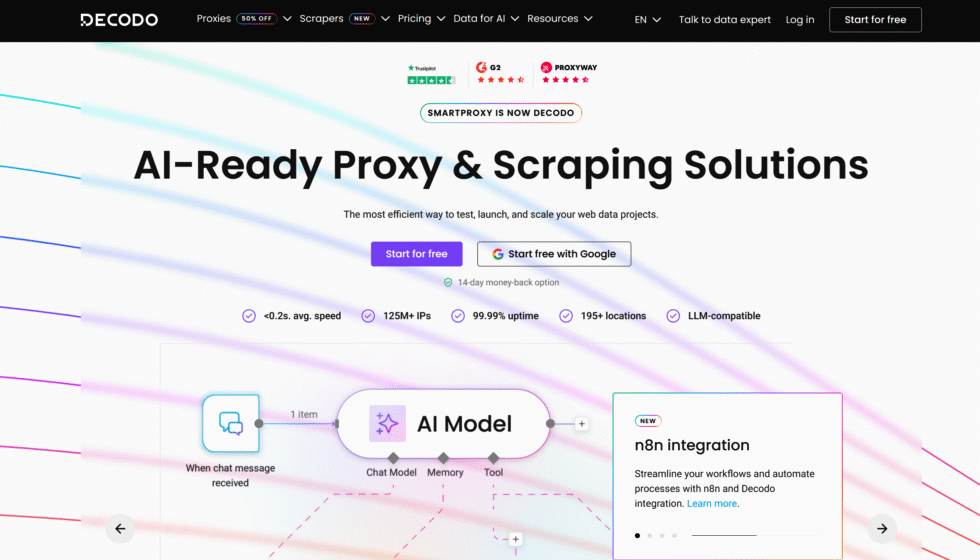
Decodo, formerly Smartproxy and based in Lithuania, is a mid-market residential network with a clear dashboard and friendly docs. The pool is large enough for most research jobs. Every plan typically reaches the full residential network. Rotating and sticky sessions are both available, with sticky windows that can run a long time on supported products.
Unlimited traffic is not automatic on every residential SKU. It shows up more often on dedicated static residential and datacenter lines. Rotating residential still leans on traffic packages for many buyers. That split matters when you compare Decodo with flat-rate rotating products.
Targeting includes country, state, city, and ZIP on many plans. HTTP, HTTPS, and SOCKS5 are supported. A proxy list generator helps non-developers get endpoints quickly. Decodo is easy to like for first-time buyers and growing teams. Confirm which product is unmetered and which only offers unlimited threads. Threads without unmetered traffic is still a metered plan.
Key features
- Clear dashboard and list generator
- Rotating and sticky residential sessions
- Static residential options with unmetered traffic on selected plans
- Country to ZIP filters on many products
- HTTP, HTTPS, and SOCKS5
Facts and information
- Strong everyday pick for growing research teams
- Unlimited bandwidth is product-specific
- Better known for ease of use than for raw unmetered rotating traffic
6. IPRoyal Residential Proxies
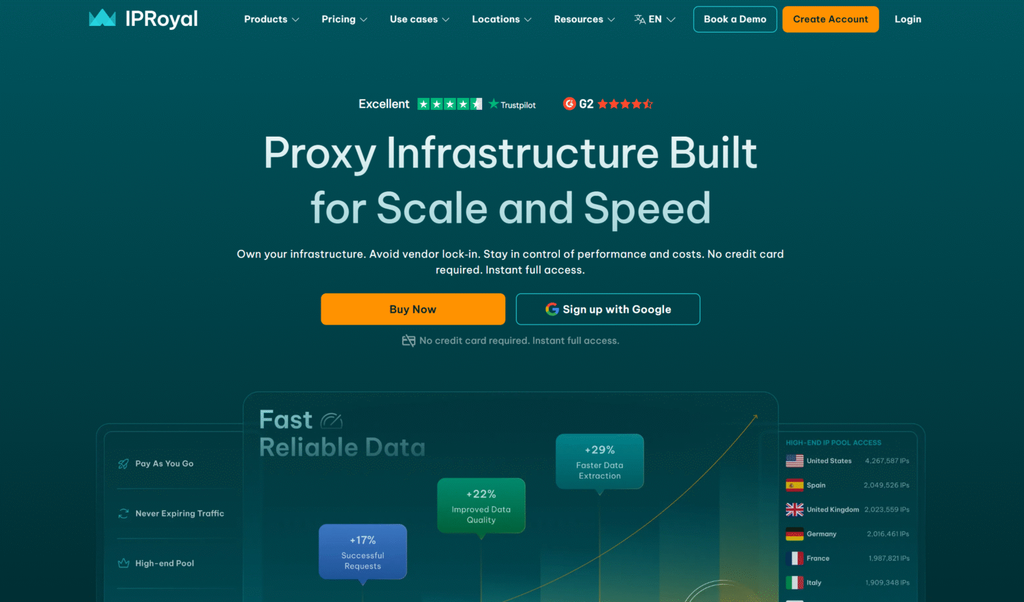
IPRoyal, based in Vilnius, Lithuania, sells residential, ISP, mobile, and datacenter products through a self-serve shop. Its best-known trait is traffic that does not expire on many metered plans. That is not the same as unlimited bandwidth, but it helps teams whose monthly use swings up and down.
Some ISP and static products sit closer to unmetered monthly access. Rotating residential remains a traffic product for most buyers. Filters cover country and city on residential lines. HTTP, HTTPS, and SOCKS5 are available. Onboarding is quick compared with enterprise vendors.
The pool is mid-size next to the largest platforms. For many regional jobs that is enough. For worldwide unique-IP variety in one sweep, larger pools still have an edge. IPRoyal works well as a flexible traffic wallet: buy data, keep it, and point it at the product type the workflow needs. Read the plan page if you need a true no-GB-meter rotating line.
Key features
- Residential, ISP, mobile, and datacenter in one catalog
- Non-expiring traffic on many volume plans
- Country and city filters on residential products
- Self-serve dashboard
- HTTP, HTTPS, and SOCKS5
Facts and information
- Useful when monthly usage is uneven
- Unlimited claims should be read as plan-specific
- Pool size is mid-tier compared with the largest vendors
7. SOAX Residential Proxies
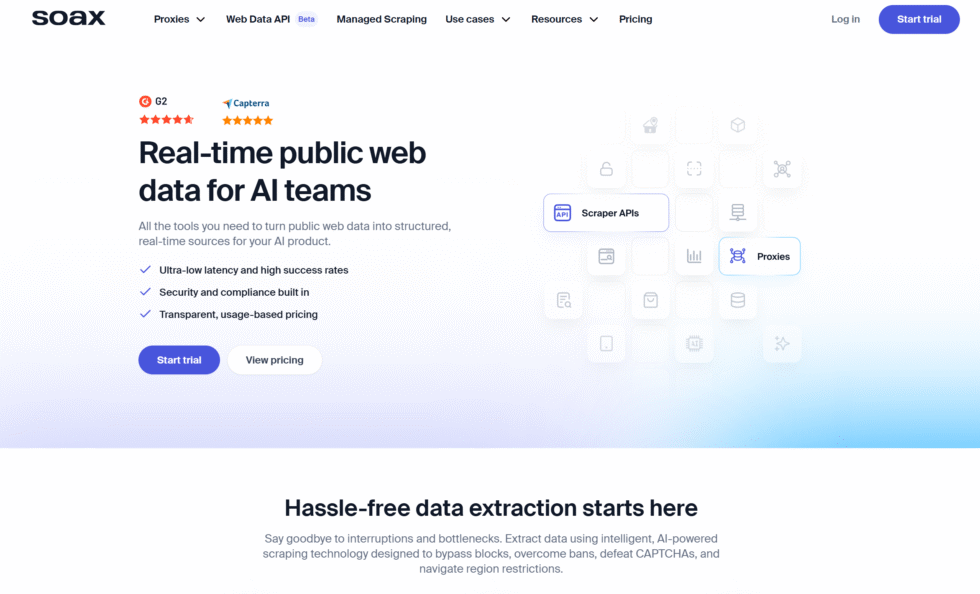
SOAX focuses on precise location filters and mixed residential plus mobile access. Teams that need a public page to match a given city or ASN often look here. Headquarters are commonly listed in the United Kingdom. Plans are mostly traffic-based. Unlimited bandwidth is not the core pitch.
Session length can be tuned, including stricter sticky modes on supported products. Mobile IPs sit beside home IPs, which helps app checks, ad verification, and other phone-like views of public pages. The dashboard is built for operators who care about where an IP sits, not only that it is residential.
The tradeoff is familiar. You pay for targeting depth more than for a flat unmetered pipe. If your job is “send a lot of traffic and ignore the GB counter,” other products on this list fit better. If your job is “this page must look like a user on this ISP in this city,” SOAX is built for that. Confirm the exact SKU before you assume there is no traffic cap.
Key features
- Fine country, city, and ASN filters
- Adjustable sticky sessions
- Residential and mobile in one account
- Self-serve and guided setup
- HTTP, HTTPS, and SOCKS5
Facts and information
- Strong when public pages must match a specific city or ISP
- Less known as a flat unmetered rotating residential vendor
- Better for precision work than for always-on unmetered volume
8. Webshare Residential And Isp Proxies
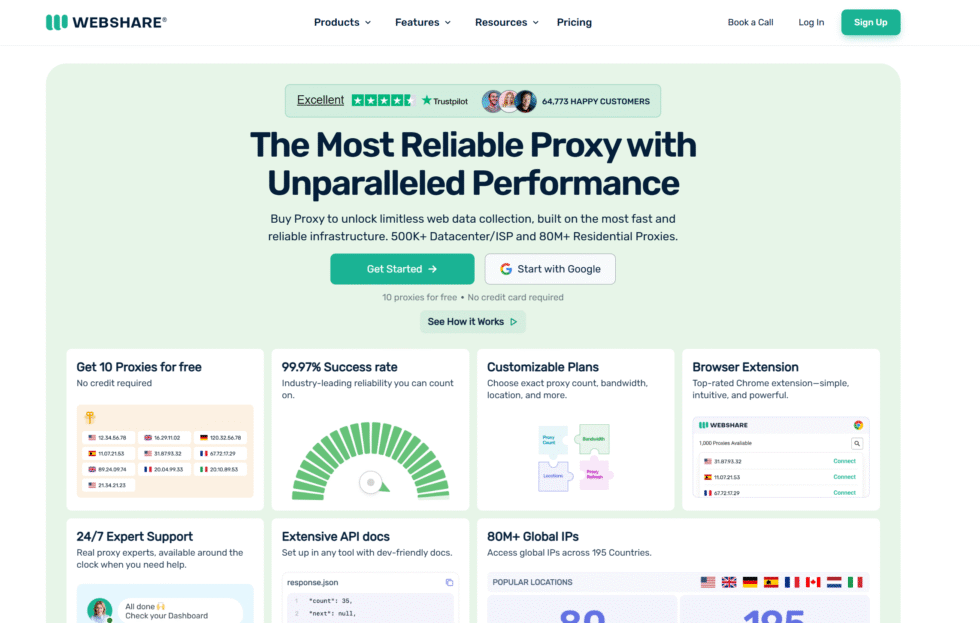
Webshare is a developer-friendly proxy shop with a free starter tier and a mix of datacenter, static, and rotating products. Many static and ISP lines are sold per IP with unmetered traffic on that address. Rotating residential is a separate, usually metered, product. That split is the key buying fact.
Buyers who want one stable home-like IP and no GB meter often land on the static side. Buyers who need a huge rotating pool may want a larger residential network. The dashboard is simple. API access and proxy lists make tests easy. Support is lighter than enterprise desks.
Connection speed on static lines can be high. Coverage and unique-IP depth sit below the biggest residential platforms. Webshare is a practical start for prototypes, small production jobs, and per-IP unmetered access. It is less of a match when the brief is “unlimited rotating residential across many countries.” Pick the product type first, then judge the plan.
Key features
- Free starter proxies for tests
- Static and ISP IPs with unmetered traffic on many plans
- Rotating residential as a separate product
- API and proxy lists
- Simple self-serve dashboard
Facts and information
- Handy for prototypes and small production jobs
- Unmetered usually means per IP, not an endless rotating pool
- Coverage and pool depth sit below the largest residential networks
9. Shifter Residential Proxies
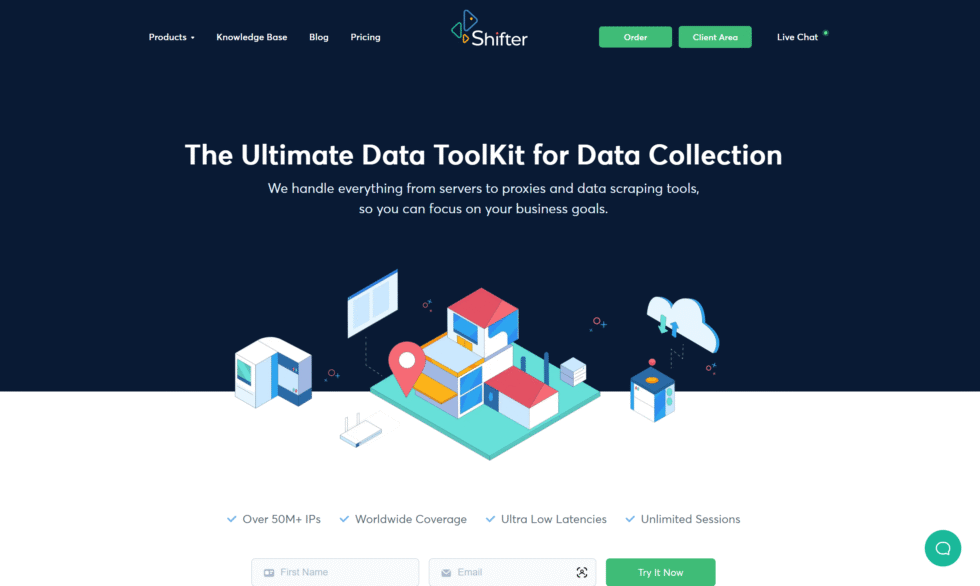
Shifter sells rotating residential access with an unlimited bandwidth story on selected plans. The advertised pool is large, and the pitch is built for teams that dislike per-GB math. Country filters are available. The product is aimed at high-volume public data collection, market research, and workflows that benefit from automatic IP rotation.
Shared unlimited pools can feel busy at peak hours. That is normal for flat-rate rotating networks. Test your real targets before you move a full workload. Tooling is lighter than the big enterprise suites. If you want datasets, unlockers, and account managers in one contract, other vendors go further. If you want a rotating residential pipe without a gigabyte counter, Shifter is one of the names that still sells that shape.
Quality varies by site and time of day, as it does on most shared residential pools. Keep session style simple. Use rotation for short public-data calls and sticky mode only when a multi-step visit needs the same IP.
Key features
- Rotating residential with unlimited bandwidth on selected plans
- Large advertised IP pool
- Country targeting
- Built for high-volume public data collection
Facts and information
- Often named when buyers search for unmetered rotating residential
- Performance depends on how busy the shared pool is
- Better when traffic volume matters more than premium tooling
10. StormProxies Residential Proxies
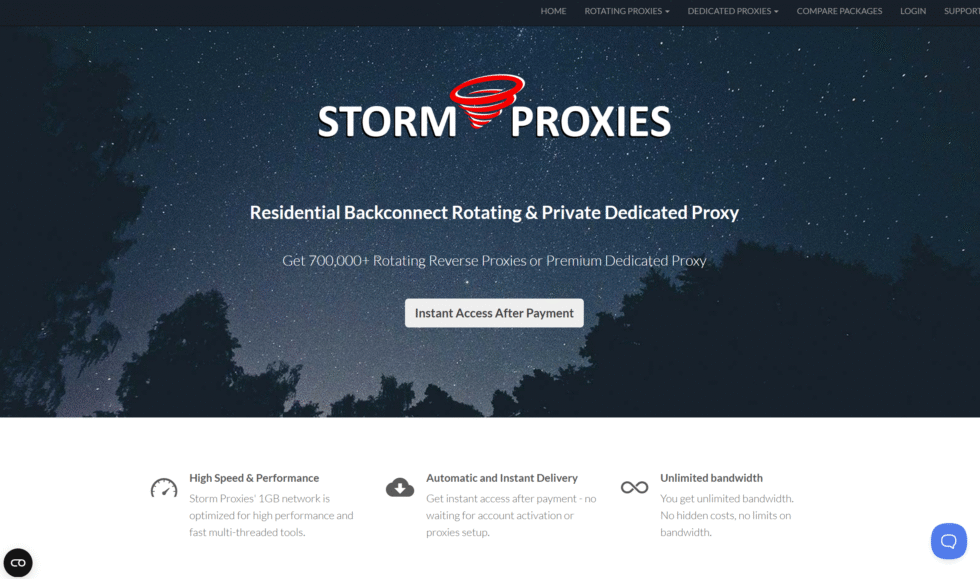
StormProxies is a smaller, older brand that still sells unlimited bandwidth rotating proxies. The pool is modest. Coverage leans on major Western markets more than a full worldwide map. For a single operator with a steady workload in those markets, that can be enough.
Do not expect city-level filters on every plan or an enterprise dashboard. The product is simple: a rotating residential endpoint and a flat traffic story. Concurrent connection limits may apply even when gigabytes are unmetered. That is a common flat-rate design. Know your thread count before you buy.
If the job needs many countries, carrier IPs, or a huge unique-IP count, larger networks fit better. If the job is contained and the main need is “no GB meter,” StormProxies stays in the conversation. Run a short test on the actual public pages you monitor. Simple products succeed when the use case is equally simple.
Key features
- Unlimited bandwidth positioning on rotating plans
- Simple setup
- Shared residential rotation
- Smaller country set than global enterprise pools
Facts and information
- Often used as an entry unlimited option
- Pool size is much smaller than large global networks
- Best for contained jobs, not worldwide research grids
11. Geonode Residential Proxies
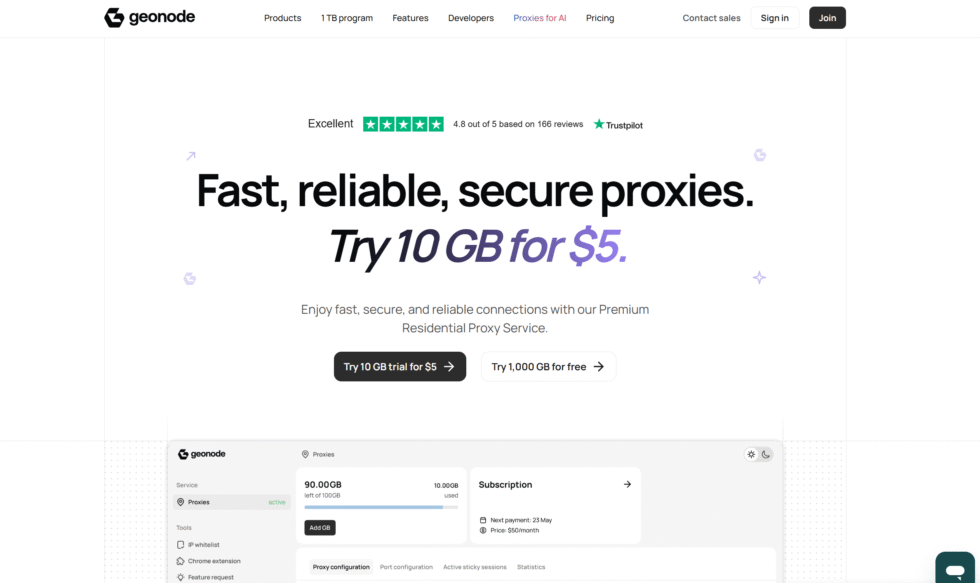
Geonode sells rotating and static residential products with a different billing idea on some plans. Instead of counting every gigabyte, some packages bill around concurrent requests or ports and market the traffic as unlimited. That can help bandwidth-heavy jobs if the concurrency cap matches your stack.
The pool is mid-sized. Country coverage exists, but the brand is known more for the billing model than for being the largest network. Unlimited traffic with a tight request cap is still a cap. Read that number the same way you would read a GB package.
Static and rotating products should be kept on separate workflows. Use rotation for large-scale public data collection and market research. Use static IPs when a longer, consistent session is required. Geonode can work when you can predict concurrency better than gigabytes. It is a weaker match when you need the deepest city filters or the widest unique-IP spread.
Key features
- Unlimited-bandwidth style plans on selected products
- Rotating and static residential options
- Request or port based packaging on some lines
- Self-serve dashboard
Facts and information
- Useful when you can predict concurrency better than traffic volume
- Mid-size pool compared with the largest vendors
- Policy details decide whether unmetered stays unmetered in practice
12. ProxyRack Residential Proxies
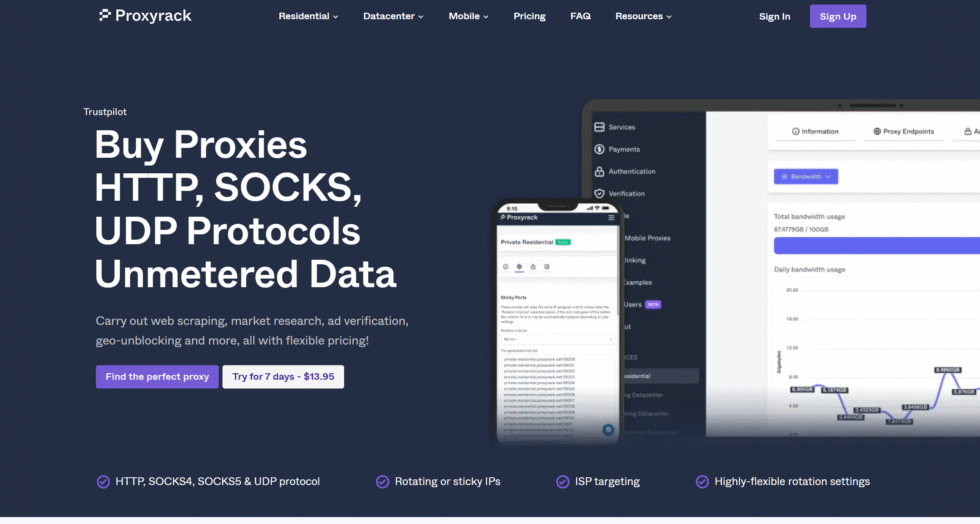
ProxyRack has sold mixed residential, mobile, and datacenter access for years. Some plans come with unlimited bandwidth and a cap on concurrent connections. That is a familiar flat-rate shape: lots of traffic, a ceiling on how many sockets you open at once. Teams that already know their thread count often get along with it.
The network is a practical middle option. It is not the flashiest dashboard and not the biggest advertised pool. Rotation and sticky behavior can be configured on supported products, including manual rotation and stricter sessions. HTTP and related protocols cover standard scripts and browsers.
Fine city filters and premium white-glove support are not the main story. Simple rotating access is. Confirm how a plan treats unused time, region mix, and thread limits. Then test the public pages you actually need: store pages, search pages, and ad URLs. ProxyRack belongs on a shortlist when the brief is unmetered traffic with a known concurrency number, not when the brief is maximum pool size.
Key features
- Unlimited bandwidth on selected plans
- Concurrent connection limits instead of a GB meter
- Mixed proxy types
- Configurable rotation and sticky sessions on supported plans
Facts and information
- Fits jobs where thread count is stable
- Less of a “one platform for every data tool” vendor
- Check rotation settings per plan before you scale workers
How Session Control Changes High Volume Work
Unmetered traffic only helps if the IP behavior matches the page you are visiting. Rotation and stickiness are not extras. They are the job.
Use automatic rotation when you collect public web data across many URLs. A new IP on each request spreads load and keeps the session short. This is the usual mode for rotating residential proxies and for unlimited bandwidth residential proxies that offer a fresh IP on demand.
Use a sticky session when the public site expects one visitor to click through several pages. QA paths, checkout tests, and some research logins break if the IP changes mid-flow. Keep the sticky window only as long as the visit needs. Long sticky windows on a shared pool can reduce unique IP variety.
Use static residential or ISP-style IPs when the same identity should return tomorrow. Brand protection reviews and long monitoring jobs often need that stability. Pair those IPs with a separate rotating pool so one identity is not doing every task.
Mobile IPs are a third path. Dedicated 4G and 5G proxies and rotating mobile proxies show public pages the way a phone on a carrier would. That helps some ad and app checks. It is not a drop-in replacement for every residential job. A simple rule holds: one workflow, one session style. Mixing rotation, stickiness, and static IPs inside the same script makes failures hard to read.
What To Check Before You Buy Unmetered Residential Access
“Unlimited” is a billing word. It is not a quality score. Walk through this list before you move production traffic.
| Check | Why it matters | What “good” looks like |
| Billing shape | Stops surprise overage | Speed tier or port plan with no hidden GB meter |
| Fair use language | Defines real limits | Written rules for abuse, speed, and approved use |
| Session controls | Matches the workflow | New IP on request and sticky windows you can set |
| Protocol support | Fits your tools | HTTP, HTTPS, and SOCKS5 when your stack needs them |
| Location filters | Supports local page checks | Country filters at minimum, city or ISP if the job needs them |
| Pool type | Changes how sites see you | Real residential or mobile IPs, not mixed hosting ranges |
| Concurrency | Protects the flat-rate plan | Enough threads for the job without a silent throttle |
| Support and API | Keeps jobs running | Docs, endpoint generators, and human help when a region dips |
Ask vendors to state the country list for the unlimited SKU. Some unmetered products cover fewer countries than the metered residential pool. USA residential proxies and UK residential proxies are common first tests because many public retail and search pages are checked there first.
Also separate tools from network. A pretty dashboard does not fix a busy subnet. Run a short trial on your real targets: search pages, store pages, and ad URLs. Watch success, speed, and how often you see the same IP. If a plan is unmetered but slow, you still lose. Speed tiers exist for a reason. Pick the line rate that matches how many workers you run, then scale workers only after the line stays stable.
FAQ
What Makes A Residential Proxy Plan Truly Unlimited?
A truly unlimited plan charges for access and speed, not for each gigabyte. Unlimited bandwidth residential proxies should state that in plain language, usually as a speed tier rather than a traffic package. Many plans called unlimited only remove a thread cap, or they add a fair use ceiling after heavy use. Ask whether traffic is unmetered, which countries are included, and what happens if usage stays high all month. If the answer points back to a GB package, it is not an unlimited bandwidth product.
Are Unlimited Residential Proxies Better Than Per-Gb Residential Proxies?
They are better when traffic is high and steady. Price monitoring, SEO monitoring, and public data collection can burn through metered plans. They are a weaker fit when you only need a little traffic now and then. In that case a rollover per-GB plan on rotating residential proxies can waste less unused data. Some teams keep both: unmetered lines for always-on monitors and a metered rotating pool for burst jobs in extra countries.
Can I Use Unlimited Bandwidth Residential Proxies For Mobile Testing?
Only if the product is actually mobile. Residential IPs come from home ISPs. Mobile IPs come from carrier networks. For app and phone-page checks, rotating mobile proxies or dedicated 4G and 5G proxies are the right match. You can still use unmetered residential IPs to view public web experiences across supported locations on desktop-style pages. Keep the two networks separate so results stay easy to read.
How Should I Start A New Unlimited Residential Setup?
Start with one workflow. Pick country, session style, and protocol. Send a small set of approved research or QA requests through proxy documentation and an endpoint generator so sticky session IDs stay consistent. Confirm the IP type, the rotation, and the speed tier before adding workers. Keep static identities on static residential proxies and keep rotating jobs on a rotating endpoint. When the first workflow is stable, copy the pattern instead of pointing every script at one port on day one.
Do Unlimited Residential Proxies Still Have Speed Or Country Limits?
Yes. Unlimited describes traffic billing, not infinite line rate or every country on earth. Speed-based unlimited bandwidth residential proxies cap how fast data can move, and some unmetered SKUs cover fewer countries than a full metered pool. Country filters still matter for location-based testing with residential IPs, including checks on USA residential proxies. Read the country list and the speed tier together. Unmetered traffic on a slow or narrow plan is still a limited plan.
Read Also:
- Best Cheap Unlimited Residential Proxies in 2026
- Unlimited Bandwidth Proxies Vs Rotating Residential Proxies
- Rotating Residential vs. Static Residential: A Head-to-Head Battle for Data Collectors
- Best Premium Residential Proxies in 2026
- Best Rotating Residential Proxy Providers in 2026
Discover the Best Residential Proxies Unlimited Bandwidth – ProxyEmpire.