You may start to see a theme where bot makers are out of stock of licenses, and this could be argued for more than one reason. That will probably leave you either waiting for a restock or purchasing a license from a third party.
Buying a license from a third party will usually cost you thousands of dollars.
Obviously, there are risks to spending so much money on the Internet and one of the best ways to buy bots is with BotBroker or BotMart.
With their platforms, you can become connected to people who have legitimate licenses.
Advanced Tips for Optimizing Sneaker Bot Performance
Fine-tuning bot configurations involves adjusting parameters like request intervals to align with site behaviors. Regular testing on practice modes reveals potential issues before live drops. In mobile-centric environments, rotating mobile proxies are utilized when emulating cellular access improves evasion of detection mechanisms. Incorporating analytics features within bots tracks success rates and identifies areas for improvement.
For bandwidth-intensive tasks, dedicated mobile proxies are applied in configurations requiring uninterrupted data flow. Exploring integrations with external tools enhances automation capabilities, such as combining with browser managers for better fingerprinting. Resources on web scraping 101 offer techniques for extracting release data that can inform bot strategies.
Why Use Proxies with Sneaker Bots
Sneaker bots automate the process of purchasing limited-edition footwear from online retailers, handling tasks like monitoring stock and completing checkouts at high speeds. These bots often face restrictions from websites that detect automated activity through repeated requests from the same IP address, leading to blocks or bans that hinder successful purchases. Proxies serve as intermediaries, routing bot traffic through different IP addresses to make each request appear as if it comes from a unique user, reducing the likelihood of detection.
Integrating proxies with sneaker bots allows for managing multiple accounts simultaneously without triggering security measures on retail sites. This setup supports running bots on both Mac OS and Windows systems, where software compatibility plays a role in performance. For instance, rotating residential proxies provide a pool of IPs that change automatically, helping maintain consistent access during high-demand releases.
Proxies also enhance bot efficiency by enabling parallel operations, where several instances of the bot can operate without overlapping IP usage. This is particularly useful for users who configure bots to handle various tasks, such as adding items to carts or processing payments, across different sessions. Overall, combining proxies with sneaker bots creates a more robust system for navigating online retail environments.
ProxyEmpire – Best Proxies for Sneaker Bots In 2026
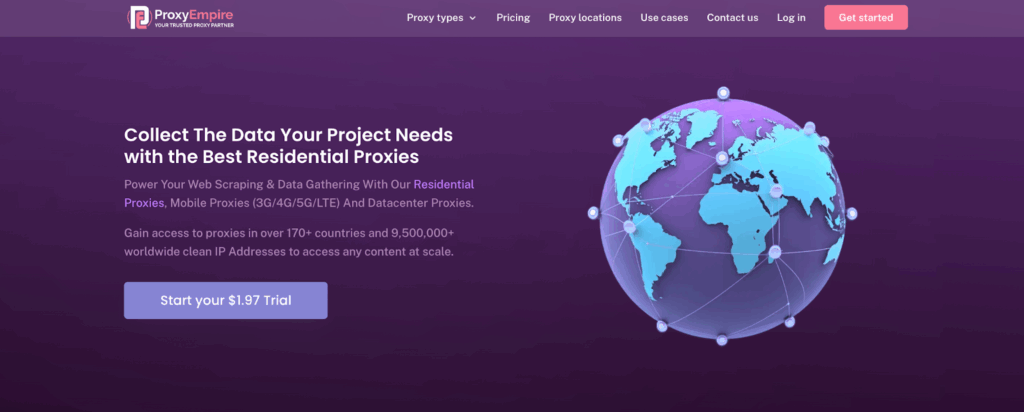
ProxyEmpire is a premium proxy service provider designed to empower web scraping, data collection, and unrestricted internet access through a vast network of ethically sourced residential, mobile, and datacenter proxies. Below is a detailed description based on the provided information:
Overview of ProxyEmpire
ProxyEmpire offers a comprehensive suite of proxy solutions tailored for individuals, businesses, and developers seeking reliable, high-performance tools for data gathering and privacy protection. With over 30 million clean IP addresses spanning 170+ countries, ProxyEmpire provides unparalleled global coverage, ensuring users can access content at scale with a 99.9% uptime and lightning-fast response times (as low as 0.6 seconds).
Proxy Types and Features:
🏘️ Rotating Residential Proxies
Key Benefits
- Global Reach: Access to over 30 million IPs worldwide, covering every major region, with precise targeting options (country, city, state, ASN/ISP).
- High Reliability: A 99.86% uptime ensures uninterrupted service, supported by patented technology for enhanced speed and security.
- Ethical Sourcing: Proxies are responsibly harvested, ensuring quality and compliance.
- Versatile Use Cases: Supports web scraping, price monitoring, sneaker copping, SEO tracking, ad verification, and more.
- Integration-Friendly: Compatible with standard proxy protocols (HTTP, SOCKS5) and third-party tools like Multilogin, Dolphin Anty, Kameleo, Octobrowser, and Gologin.
- No Hidden Fees: Transparent pricing with all features included, starting at a $1.97 trial.
Use case:
Latest News In 2026
Retailers have begun emphasizing in-person elements for some sneaker drops, suggesting a shift toward hybrid acquisition methods. Nike has implemented code updates to its systems, aiming to adapt how releases are handled against automated tools. The resale sector is broadening to include more collectibles alongside sneakers, creating additional avenues for automation users. Discussions indicate that botting remains a viable option despite advancements in site protections, with strategies evolving to match these changes. At CES, a new robotic system for cleaning footwear was introduced, featuring automated disinfection and drying processes. A Swiss brand is employing fiber-spraying technology with robots to produce athletic shoes, potentially setting new standards in manufacturing. Trends in sneaker styles are shifting, with some designs gaining prominence while others recede.
TL;DR
Sneaker bots automate purchasing limited release shoes online. They checkout faster than humans, allowing users to buy multiples for resale. Bots work with profiles, payment methods, shipping addresses and proxies. Popular bots for Windows include:
- Wrath AIO – All-in-one bot supporting various sites. Updated often. Aftermarket licenses cost over $5000.
- Noble AIO – Good for footsites. Aftermarket licenses required. Copped 100+ pairs on one Dick’s drop.
- Cybersole – No limits on simultaneous tasks. New licenses released monthly. Beginner friendly.
- Prism AIO – Known for Finishline support. Costs $150 every 3 months. Licenses hard to get.
For Mac, options are more limited but good bots exist:
- Nike Shoe Bot – One of the originals. Annual $500 fee. Always in stock. Beginner friendly.
- Dashe – Shopify bot. $50/month or lifetime $200 license. Restocks announced on Twitter.
- TohruAIO – Supports FootAction and Footlocker. Free giveaways sometimes. Reliable on Mac.
Licenses sell out fast, requiring restocks or aftermarket purchases. Legit resales happen on BotBroker and BotMart.
Bots need good proxies. ProxyEmpire’s residential and mobile proxies are fast for sneaker sites. Rotating IPs help create bot profiles. Unused bandwidth rolls over between drops.
FAQ
What Role Do Proxies Play in Sneaker Bot Operations?
Proxies act as a bridge between sneaker bots and retail websites, masking the bot’s original IP to prevent easy identification. This masking helps bots perform actions like stock checks and purchases without immediate restrictions. Users running bots on Mac OS or Windows often pair them with static residential proxies when needing stable connections for prolonged sessions, as these maintain the same IP for reliability during tasks.
How Do Different Proxy Types Affect Sneaker Bot Performance?
The type of proxy influences how effectively a sneaker bot can operate without interruptions. For example, datacenter proxies offer speed for quick transactions, while residential options blend in better with regular traffic. In scenarios where bots need frequent IP changes to avoid detection, rotating mobile proxies become useful, as they cycle through mobile network IPs that mimic everyday user behavior on shopping platforms.
Can Sneaker Bots Run Effectively Without Proxies?
While possible, running sneaker bots without proxies increases the risk of IP blocks from retailers monitoring for suspicious patterns. Bots on Windows might handle basic tasks initially, but sustained use often requires proxy integration to extend operational time. When bots encounter limits, switching to dedicated mobile proxies provides exclusive IPs that support uninterrupted bot activity on mobile-optimized sites.
What Makes Proxies Essential for Multi-Account Management in Sneaker Bots?
Managing multiple accounts with sneaker bots helps increase chances during limited releases, but it requires distinct IPs to avoid linking accounts. Proxies enable this by assigning separate addresses to each bot instance. On Mac OS setups, users find rotating datacenter proxies suitable for budget-conscious operations where speed is prioritized over other factors in handling several accounts at once.
How Do Proxies Help Bypass Retail Site Restrictions for Sneaker Bots?
Retail sites impose restrictions like rate limiting to curb bot usage, but proxies distribute requests across various IPs to stay under thresholds. This distribution allows bots on both Mac and Windows to continue functioning smoothly. In cases involving data-intensive bot tasks, incorporating web scraping APIs alongside proxies aids in gathering product details without direct exposure.
What Considerations Are There for Proxy Compatibility with Mac OS Sneaker Bots?
Mac OS sneaker bots require proxies that integrate seamlessly with the system’s networking features for optimal performance. Compatibility ensures bots can route traffic efficiently without software conflicts. Users often select sneaker proxies designed specifically for such environments, where the focus is on maintaining connection stability during automated purchasing sequences.
How Do Proxies Influence Sneaker Bot Speed on Windows?
Proxies can impact the overall speed of sneaker bots on Windows by adding a layer of routing, but choosing low-latency options minimizes delays. Faster proxies support rapid checkouts essential for time-sensitive drops. When speed is critical, what are proxies for bots explains how certain configurations optimize bot response times in high-competition scenarios.
What Are Common Proxy Setup Challenges with Sneaker Bots?
Setting up proxies with sneaker bots involves configuring authentication and ports correctly to avoid connection errors. Challenges arise if proxies don’t match bot requirements, leading to failed requests. For troubleshooting, understanding the differences between residential, mobile & datacenter proxies helps in selecting the right type to resolve integration issues on either Mac or Windows.
How Do Proxies Support Long-Term Use of Sneaker Bots?
For ongoing sneaker bot usage, proxies prevent cumulative detection over time by rotating IPs regularly. This sustains bot effectiveness across multiple releases. Long-term setups benefit from best proxies for sneakers in 2026, which outline options that adapt to evolving retail defenses without compromising bot functionality.
What Additional Tools Complement Proxies in Sneaker Bot Strategies?
Beyond proxies, tools like APIs for data extraction enhance sneaker bot capabilities by providing real-time information. These tools work in tandem with proxies to streamline operations. In advanced setups, ecommerce scraping API integrates with bots to monitor inventory changes, adding layers of automation for users on Mac OS or Windows.
What defines a sneaker bot in the context of online retail?
Sneaker bots are automated programs that replicate human browsing and purchasing actions on e-commerce platforms to acquire limited-edition footwear during rapid sellouts. They incorporate scripts for tasks such as inventory monitoring and form completion, enabling them to operate across various websites with minimal user intervention. In setups requiring IP rotation for anonymity, rotating residential proxies are integrated when managing connections from diverse sources to evade detection mechanisms. Advanced versions include modules for handling dynamic site elements, ensuring adaptability to changing retail environments.
How do sneaker bots interact with retail websites?
Sneaker bots communicate with retail sites by sending HTTP requests to simulate user interactions, such as adding items to carts and proceeding to checkout at accelerated speeds. They parse website structures to locate product pages and extract necessary data like availability status. When stability is key for uninterrupted sessions, static residential proxies are employed in configurations where consistent IP usage prevents session drops during interactions. Some bots use browser emulation to mimic natural navigation patterns, reducing the likelihood of triggering security alerts.
What features should users prioritize in a sneaker bot?
Prioritize bots with robust proxy integration to manage IP addresses effectively and avoid bans from retail platforms. Features like automated captcha resolution and multi-threaded task execution allow for handling multiple operations concurrently. Compatibility with integrations enhances functionality in scenarios where external tools are linked for improved data flow and automation. Look for customizable delay settings to simulate human-like behavior and minimize detection risks.
In what ways can proxies complement sneaker bot usage?
Proxies enhance sneaker bot operations by masking original IP addresses, allowing bots to appear as distinct users across multiple requests. They facilitate bypassing rate limits imposed by retailers, enabling sustained activity without interruptions. In high-speed environments, rotating datacenter proxies are utilized when quick IP changes support rapid task execution on demanding sites. This combination helps in maintaining operational efficiency during peak release times.
How can users stay informed about sneaker release schedules?
Users track sneaker releases through retailer newsletters, social media alerts, and dedicated apps that aggregate drop information. Community forums and release calendars provide timelines for upcoming launches, aiding in preparation. Exploring web scraping 101 techniques allows for automated collection of data from various sources to stay ahead of announcements. Integrating notification systems ensures timely updates without constant manual checking.
What challenges arise when using sneaker bots on mobile apps?
Mobile apps present challenges like device fingerprinting and stricter security protocols that can flag automated behavior more readily. Bots must emulate mobile-specific interactions, which may require additional configuration for compatibility. In such setups, rotating mobile proxies are applied when simulating cellular connections helps overcome app-based restrictions. Network variability can also lead to connection issues, necessitating reliable proxy solutions.
How does bot maintenance affect long-term performance?
Routine maintenance involves updating bot scripts to align with retailer site changes, preserving functionality over time. It includes debugging to resolve emerging issues and optimizing configurations for better efficiency. Pairing with dedicated mobile proxies ensures consistent performance in bandwidth-heavy operations during extended use. Neglecting this can result in reduced success rates as platforms evolve their defenses.
What role does account management play in sneaker bot strategies?
Account management enables the creation and rotation of multiple profiles to increase entry opportunities in limited releases. It involves organizing credentials and monitoring account status to prevent suspensions. Leveraging proxies from all locations diversifies access points, supporting strategies that rely on varied connections. Effective handling ensures scalability in operations across different platforms.
How do sneaker bots handle payment processing?
Sneaker bots automate payment entry by preloading details and confirming transactions swiftly to complete purchases. They incorporate verification steps to validate card information before submission. Reviewing proxy use cases provides insights into securing transactions through anonymized connections. Some include fallback options for retrying failed attempts due to network or site errors.
What key components make up a typical sneaker bot architecture?
A typical sneaker bot consists of a user interface for inputting preferences, a scraper for monitoring inventory, and an automation engine for executing purchases. It includes proxy handlers to manage IP rotations and avoid blocks. Core elements also feature integration points for external data sources, enhancing adaptability. The architecture often incorporates modular design for easy updates to components.
How do sneaker bots adapt to different retail platforms?
Sneaker bots adapt by using site-specific modules that adjust to unique APIs and layouts of various retailers. They employ reverse engineering to map out platform changes and update request patterns accordingly. Developers incorporate flexible scripting to handle diverse security measures across sites. This ensures continued operation despite frequent updates from retailers.
In what scenarios do users employ multiple bots simultaneously?
Users run multiple bots when targeting diverse platforms or releases to maximize coverage during simultaneous drops. This approach is common in high-competition environments where one bot focuses on monitoring while another handles checkouts. Coordinating with varied proxy setups supports parallel operations without conflicts. It allows for diversified strategies across brands.
What maintenance practices keep sneaker bots effective over time?
Maintenance includes regular code audits to fix vulnerabilities and align with new site protocols. Users test bots on simulated environments to identify issues before live use. Keeping dependencies updated prevents compatibility problems with evolving technologies. Community feedback often guides refinements for better reliability.
How does task scheduling work within sneaker bots?
Task scheduling in sneaker bots involves setting timers for actions like monitoring or purchasing based on release timelines. Bots use internal clocks to trigger sequences at precise moments. This automation aligns with drop schedules to initiate processes without manual input. Adjustable intervals allow for fine-tuning based on platform behaviors.
What role does error handling play in sneaker bot operations?
Error handling in sneaker bots manages failures like connection timeouts by implementing retries or alternative paths. It logs issues for analysis, helping users diagnose and resolve recurring problems. Robust mechanisms prevent total shutdowns, maintaining partial functionality during disruptions. This contributes to overall resilience in volatile online environments.
How can sneaker bots incorporate data from external sources?
Sneaker bots integrate external data via APIs or scraping tools to gather release info and pricing from multiple sites. They process feeds from social media or databases to inform task parameters. Such incorporation enhances decision-making for targeted acquisitions. Modular designs facilitate seamless addition of new data streams.
What considerations apply to bot compatibility with operating systems?
Bot compatibility involves ensuring software runs on specific OS like Windows or macOS, often requiring emulators for cross-platform use. Users check for native support to avoid performance losses. Some bots offer versions optimized for different systems to maintain efficiency. Hardware requirements also influence choices for smooth operation.