The best South Carolina proxies help teams view public web experiences across Charleston, Columbia, and Greenville while collecting public web data for approved business use cases. Sticky or rotating sessions keep market research and QA workflows stable.
Regional proxy needs can vary by market, making broader coverage useful for research and testing workflows. Alongside South Carolina proxies, teams can explore California proxies, Texas proxy servers, Maryland proxy servers, North Carolina proxies, and Ohio proxies for location-based testing, ad verification, price monitoring, and approved public web research.
Discover the Best South Carolina Proxies in 2026 – ProxyEmpire.
Why South Carolina Proxies Matter For Local Work

South Carolina is not one market. Charleston retail looks different from Columbia campus traffic. Greenville tech shops, Myrtle Beach travel pages, and Upstate store listings all change what a visitor sees. That is why the best South Carolina proxies matter for teams that compare prices, ads, and search results the way a local household would see them.
A South Carolina IP comes from a real ISP path in the state. Public sites then treat the session as in-state traffic. That helps with price monitoring, ad verification, and SEO monitoring when results shift by city. Port traffic, tourism seasons, and college calendars also change inventory and offers. A local residential path keeps those checks closer to what people in the Palmetto State actually get.
Regional research often extends beyond South Carolina, especially when comparing consumer experiences across different U.S. markets. Related options include New Jersey proxies, Pennsylvania proxies, Utah proxies, Illinois proxies, Nevada proxies, and Connecticut proxies for public web research, price monitoring, ad verification, and QA workflows. For broader coverage, USA residential proxies and USA proxies support research across multiple supported locations while maintaining residential IP connectivity.
What Makes A Strong South Carolina Proxy Setup
A useful setup starts with the job, not a giant pool claim. Rotating residential proxies fit high volume public data collection and market research, because the IP can change on a schedule you control. Static residential proxies fit longer sessions when the same identity should stay in place for QA, account reviews, or repeated page checks. Mobile proxies fit carrier-style tests on phones and apps. Datacenter proxies fit fast, simple fetches when a household identity is not required.
Look for state and city filters, ISP filters when a network matters, HTTP plus SOCKS5, sticky sessions, and clear docs. USA residential proxies that also cover Charleston, Columbia, Greenville, and nearby cities save you from stitching several vendors together. Unlimited residential proxies help when traffic volume is hard to predict. A proxy checker and a dashboard keep the day-to-day work simple.
Best South Carolina Proxies
1. ProxyEmpire – Best South Carolina Proxies
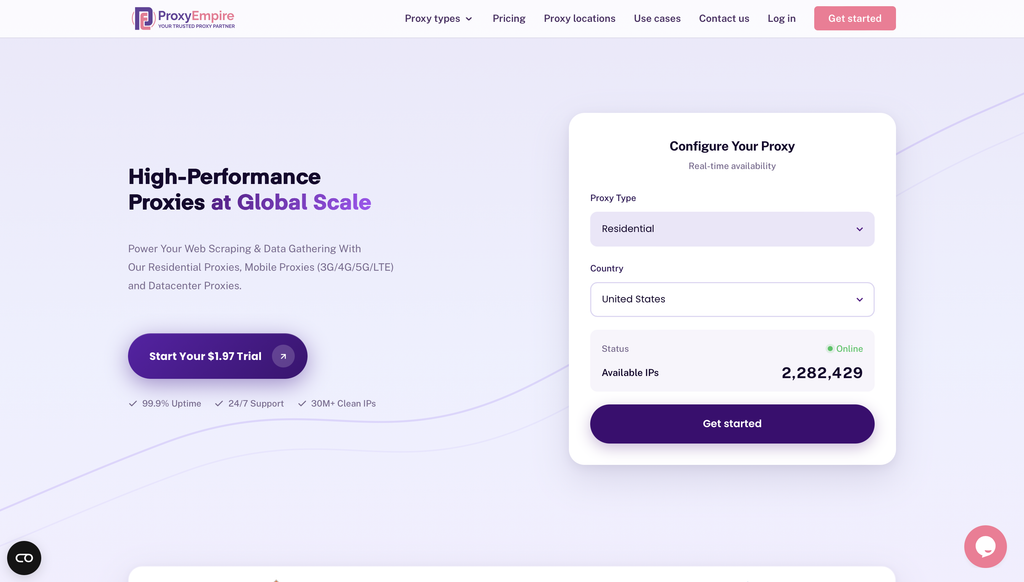
ProxyEmpire is a premium proxy service provider designed to empower public data collection and viewing public web experiences across supported locations through a vast network of ethically sourced residential, mobile, and datacenter proxies.
Overview of ProxyEmpire
ProxyEmpire offers a comprehensive suite of proxy solutions tailored for individuals, businesses, and developers seeking reliable, high-performance tools for data gathering and privacy protection. With over 30 million clean IP addresses spanning 170+ countries, ProxyEmpire provides unparalleled global coverage, supporting large-scale public data collection with a 99.9% uptime and lightning-fast response times (as low as 0.6 seconds).
Proxy Types and Features:
🏘️ Rotating Residential Proxies
Key Benefits
- Extensive Network Coverage: Access to over 30 million IPs worldwide across every major region, supporting public data collection with selection options by country, city, state, and ASN/ISP
- High Reliability: A 99.86% uptime ensures uninterrupted service, supported by patented technology for enhanced speed and security.
- Ethical Sourcing: Proxies are responsibly harvested, ensuring quality and compliance.
- Versatile Use Cases: Supports public data collection, price monitoring, market research, SEO tracking, ad verification, automation, and viewing public web experiences across supported locations. Rotating residential proxies and rotating mobile proxies are best for large-scale public data collection, market research, and workflows that benefit from automatic IP rotation. Static residential proxies are better when a longer, consistent session is required.
- Integration-Friendly: Compatible with standard proxy protocols (HTTP, SOCKS5) and third-party tools like Multilogin, Dolphin Anty, Kameleo, Octobrowser, and Gologin.
- No Hidden Fees: Transparent pricing with all features included, starting at a $1.97 trial.
Use case:
2. ResiProx
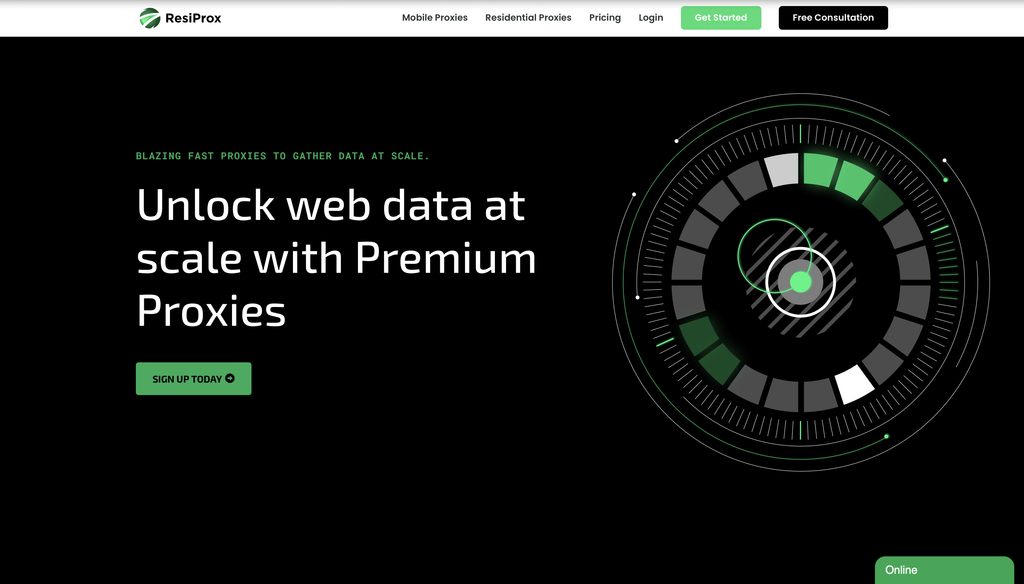
ResiProx sells rotating residential and rotating mobile proxies for public data collection, market research, ad checks, and QA. The network is built for self-serve teams that want country, region, city, and ISP filters without an enterprise contract. United States coverage is one of the thicker parts of the pool, so South Carolina work usually starts at the state, then a city such as Charleston, Columbia, or Greenville when inventory is there. Sticky sessions hold a path for shorter workflows. Rotation fits sampling many public pages. HTTP and SOCKS5 cover common scripts and browsers. Username and password auth is the standard login method. The dashboard is simple: pick location, pick rotate or sticky, generate an endpoint. That speed of setup is the main appeal.
The catalog is narrower than full-stack vendors. There is no dedicated static residential line, no dedicated 4G fleet, and no unlimited bandwidth residential plan in the same account. Sticky windows are shorter than providers that hold one identity for days. Some reviewers note that a share of exits underperform and that live chat is not always the first support channel. Pool claims also vary across ResiProx pages, so city depth in smaller South Carolina metros should be tested before a large run. For statewide offer checks and light mobile tests, it can work. For long QA sessions or mixed product stacks, many teams still pair it with another network.
Key features
- Rotating residential and rotating mobile (4G, LTE, 5G) products
- Country, region, city, and ISP filters
- Sticky or rotating sessions
- HTTP and SOCKS5
- Unlimited concurrent sessions on published plans
- Integrations with many common tools and languages
Facts and Information
- Self-serve dashboard with endpoint generation
- Stronger US pool than many smaller brands, with city inventory that can thin outside major metros
- Auth is mainly username and password
- Support is often email-first
- Better as a residential and mobile add-on than as a full proxy stack
3. Bright Data
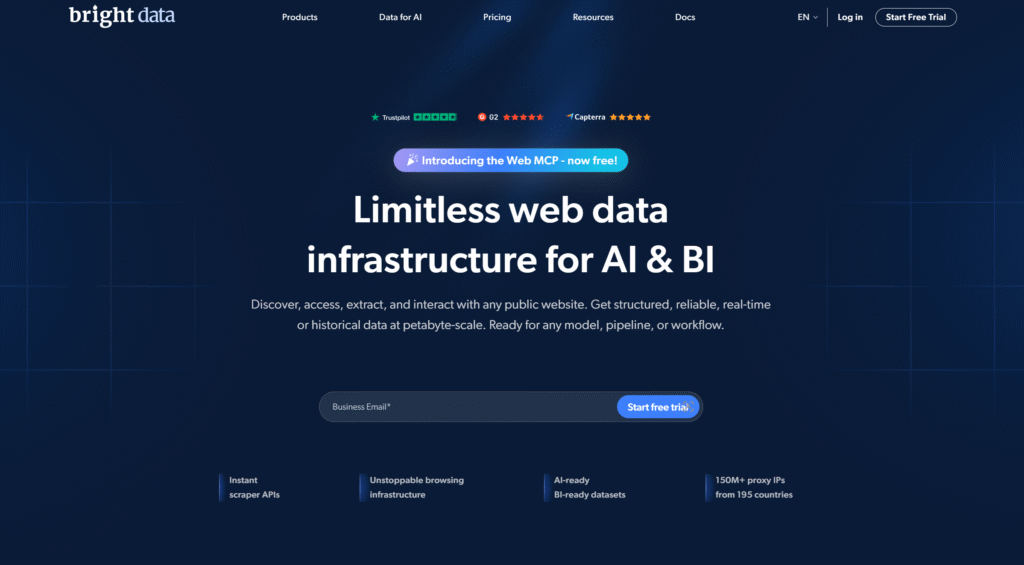
Bright Data, based in Netanya, Israel, runs one of the widest proxy catalogs in the market. Residential, ISP, mobile, and datacenter products sit in one account, along with managers, APIs, and compliance tooling that large research teams already know. United States filters can go to city and ZIP, which helps when Charleston ads differ from Columbia search results. Session controls are mature once the workspace is set up. Many enterprise programs stay here because legal reviews, user roles, and reporting already exist.
That breadth has a cost in time. New users often spend extra time mapping products to jobs. A South Carolina-only project does not need every module, yet the interface still presents them. Smaller teams can feel lost between residential, ISP, and extra tools. Support is built for named accounts more than quick self-serve chats. Documentation is deep, which helps after onboarding and slows the first week. If the work is statewide price checks and a few QA logins, the platform can be more system than needed. If the work spans many countries, audits, and mixed networks, Bright Data remains a common enterprise pick.
Key features
- Residential, ISP, mobile, and datacenter networks
- City and ZIP filters in many US markets
- Proxy manager, APIs, and extra data tools
- Role controls and reporting for larger teams
Facts and Information
- Frequent choice for compliance-heavy programs
- Setup takes more planning than a focused dashboard
- Strong docs, with a steeper first-week curve
- Better when several proxy types share one vendor
4. Oxylabs
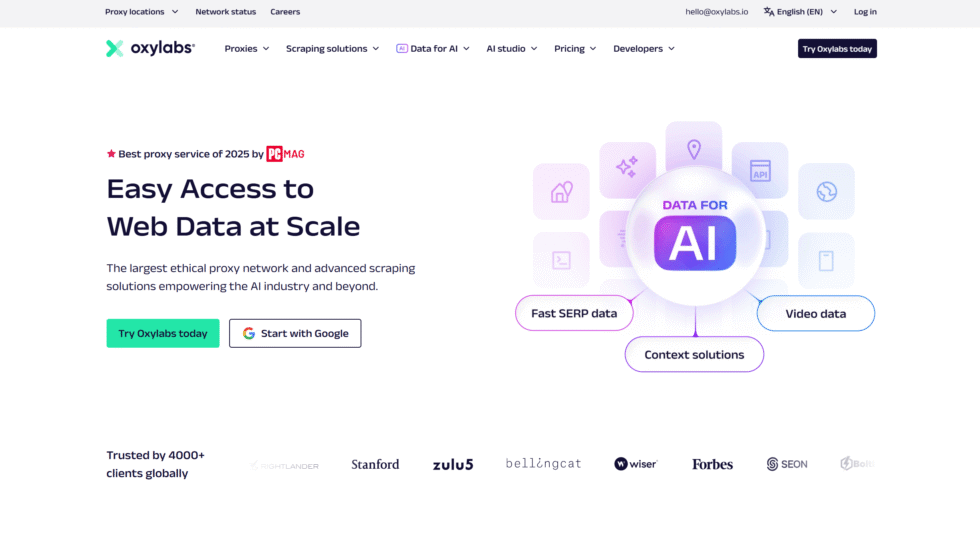
Oxylabs, based in Vilnius, Lithuania, is an enterprise residential and ISP vendor with mobile and datacenter lines beside the main pool. Many data teams use it for market research, brand work, and public page collection that needs stable infrastructure. United States filters include state, city, and ASN, so a South Carolina job can sit next to a given ISP when that path matters. Sticky sessions help multi-step flows. Protocols cover the usual HTTP and SOCKS5 stack. Success on public sites is generally strong in independent tests.
The product set is wide. New users often need a sales or success call to pick the right network. Self-serve is possible, yet the mental model is built for programs, not one-off city checks. City inventory in smaller South Carolina metros should still be verified. Some teams find the account model rigid if traffic spikes only a few weeks a year. Support is solid for business accounts and less casual than mid-market chat tools. Oxylabs fits when a serious collection stack already exists and one vendor should grow with it. It is heavier than needed for a single-state QA week.
Key features
- Residential, ISP, mobile, and datacenter options
- State, city, and ASN filters
- Sticky sessions for longer workflows
- Mature APIs and documentation
Facts and Information
- Common pick for larger data programs
- Onboarding can take more planning than mid-market tools
- City depth should be checked outside major metros
- Strong protocols for scripts and browsers
5. Decodo
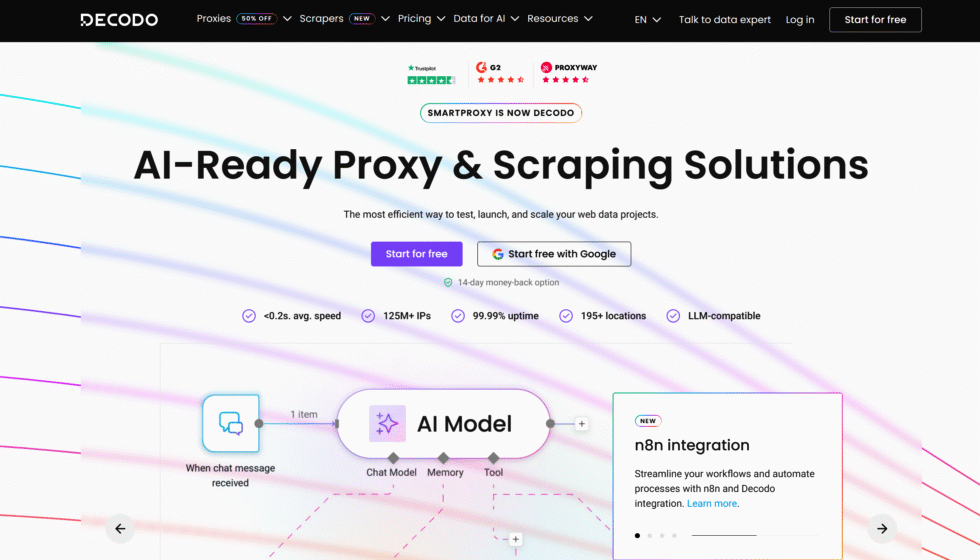
Decodo, formerly Smartproxy and based in Lithuania, sits in the mid-market. Residential, ISP, mobile, and datacenter products share a dashboard that many users call easy. US state and city filters are available on residential plans, which covers most South Carolina research. Sticky sessions help checkout tests and multi-page QA. Rotation handles sampling. Chat support and clear docs make the first project faster than enterprise suites.
The tradeoff is focus. Decodo is a general network, not a South Carolina specialist. City inventory can vary by week in smaller towns. Some teams want longer sticky windows or dedicated mobile hardware that this catalog does not emphasize. Independent tests often show healthy success and speed, with results that still depend on the target site. Plan structure is straightforward, without the rollover-and-unlimited mix some teams want in one bill. If a known brand, a clean UI, and mixed products matter, Decodo is a practical number in the middle of the list. Confirm Charleston and Greenville exits before a statewide ad pass.
Key features
- Residential, ISP, mobile, and datacenter proxies
- State and city filters in the United States
- Sticky and rotating session modes
- Self-serve dashboard and chat support
Facts and Information
- Familiar interface for many mid-size teams
- City inventory can vary by state and week
- Good fit for research and SEO checks
- Less specialized hardware than dedicated mobile vendors
6. IPRoyal
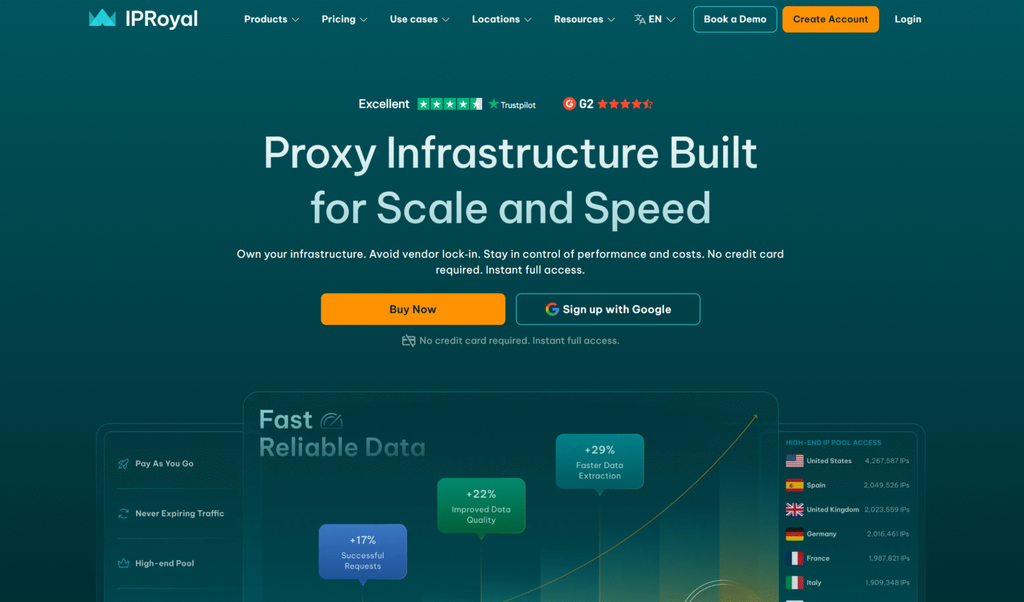
IPRoyal, based in Vilnius, Lithuania, sells residential, ISP, datacenter, and mobile proxies with a pay-as-you-go feel that smaller teams like. Traffic that is not used can stay in the account on many plans, which helps uneven research months. Sticky sessions can last a long time, useful for QA and account reviews that should keep one identity. HTTP and SOCKS5 are supported. The dashboard is plain and quick to learn. Sourcing through a peer app is a known part of the story.
The pool is smaller than the biggest enterprise names. City-level coverage in South Carolina may be thinner than on large US-focused networks. Some public tests show more modest success than the top mid-market brands. There is no deep enterprise layer of roles, audit logs, or dedicated account managers unless one is negotiated. Mobile is present but not the center of the product. IPRoyal works when unused traffic should wait for the next sprint and a smaller local pool is acceptable. Test Columbia and Charleston first. Keep a second vendor ready if a given ISP filter comes back empty.
Key features
- Residential, ISP, mobile, and datacenter products
- Long sticky sessions on supported plans
- Unused traffic that can remain available
- Simple checkout and dashboard
Facts and Information
- Popular with smaller research teams
- Pool depth varies by city
- Success can trail the leading mid-market networks
- Handy when work volume changes month to month
7. SOAX
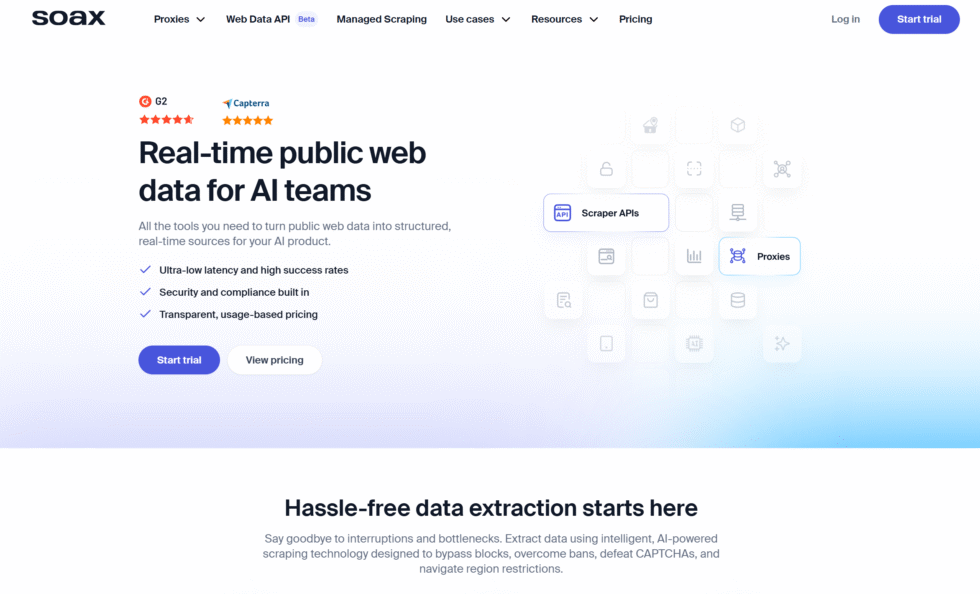
SOAX focuses on residential and mobile proxies with filters for country, region, city, and ASN. Many teams pick it when they want a curated pool rather than the largest advertised count. Routing and sticky controls are part of the platform. US coverage includes state-level work. That is enough for many statewide offer and search reviews. Support can help with targeting questions during setup.
City inventory for Charleston, Columbia, and Greenville should be checked before a large run. Onboarding can feel slower than big self-serve brands. The catalog does not lean on dedicated static residential IPs or unlimited residential pipes in the same way full-stack vendors do. Some users say marketing copy runs ahead of what they see in a single US state. Mobile is available and useful for carrier-style tests when the exit is actually in-state. SOAX is a reasonable mid-list option for ads and market research if the city is verified, sessions stay modest, and every proxy type does not need to live under one login.
Key features
- Residential and mobile networks
- Region, city, and ASN filters
- Sticky and rotating modes
- Platform-based routing controls
Facts and Information
- Often picked for cleaner exit IPs
- Coverage can be uneven in smaller metros
- Useful for ads and market research
- Leaner catalog than multi-product enterprise suites
8. Shifter
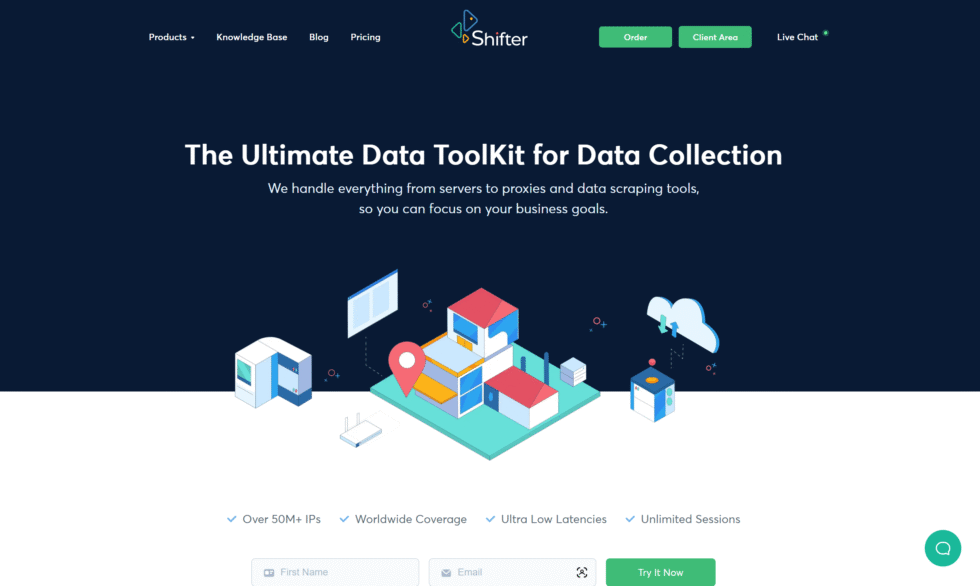
Shifter has sold residential proxies for years and lists South Carolina as a supported US state, with city options in places such as Columbia. The network uses real household ISPs and supports HTTP and SOCKS5. Rotation is built around ports and sessions. Many teams like the long history and the public state pages, because it is clear the vendor intends local US work. Support is available. The dashboard feels more classic than newer tools.
The product line is narrower than vendors that also sell dedicated mobile, datacenter rotation, and unlimited residential plans in one account. Teams that need carrier-style checks or a fixed identity for a month may need a second provider. City lists are not as deep as the largest US residential pools. The older interface is fine for stable jobs and less friendly for rapid experiment work. Shifter fits localized research and ad checks when a vendor that already publishes a South Carolina page is useful. It is less of a one-stop stack if the week also includes app testing and high volume public crawls.
Key features
- Residential IPs with US state and city filters
- HTTP and SOCKS5
- Port and session based rotation
- Long-running residential network
Facts and Information
- Public South Carolina location pages
- Fewer product types than full-stack vendors
- Fit for localized research and ad checks
- Interface is functional rather than modern
9. Rayobyte
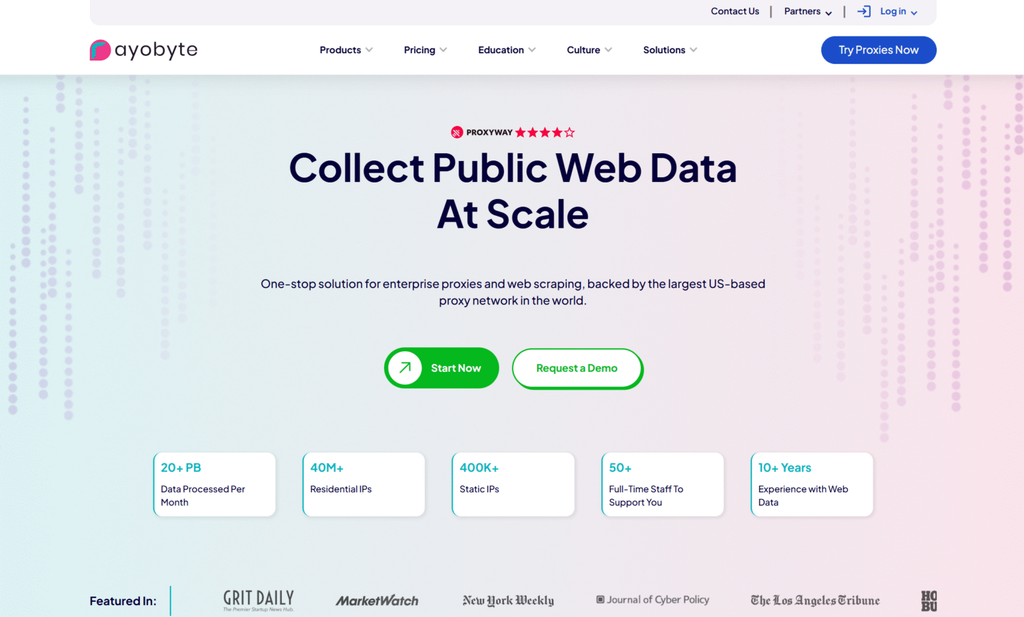
Rayobyte, based in Florida, United States, offers residential, ISP, datacenter, and mobile proxies with a practical, no-frills style. Many US teams like buying from a domestic company when legal review asks where the vendor sits. Targeting exists at country and finer levels on supported products. The dashboard is clear. Support is known for being direct. Datacenter and ISP lines give options when a household path is not required.
Speeds are fine for many research jobs, though some reviews note slower responses than the fastest global pools. South Carolina city control is not the headline feature. Exits in Charleston and Greenville should be confirmed rather than assumed. The brand is mid-tier: useful tools, fewer enterprise extras, less marketing gloss. That honesty helps some buyers and leaves others wanting richer session analytics. Rayobyte is a solid US-based choice for mixed public data work. Pair it with a provider that publishes denser Carolina city filters if ads change from one metro to the next.
Key features
- Residential, ISP, datacenter, and mobile options
- US-focused inventory and Florida headquarters
- Simple account tools
- Direct support style
Facts and Information
- Domestic vendor for teams that care about US presence
- Performance can vary by target site
- Easy fit for mid-size public data work
- City-level Carolina depth should be verified
10. Infatica
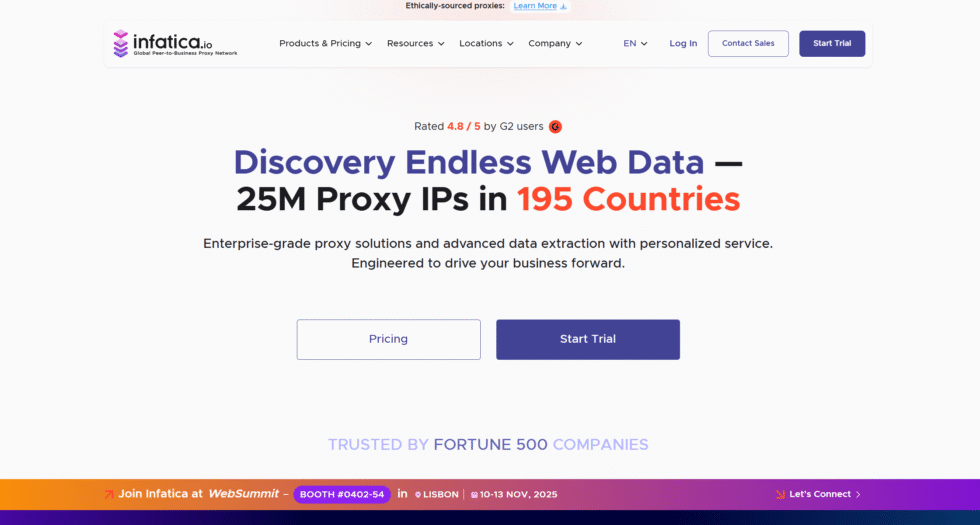
Infatica sells residential, mobile, and datacenter proxies with country and city filters for many markets. Ethical sourcing is a regular theme in its materials. US coverage is present. Rotation and sticky sessions live in the dashboard. Documentation exists for common languages. Global reach is the real pitch: one account for many countries, with South Carolina as a slice of the US pool rather than a featured state product.
That global tilt is also the limit. City depth in the Carolinas should be confirmed for each project. Some users report mixed success on harder public sites. The brand is less visible in US-only buyer guides than some mid-market names. Support quality can vary with plan size. Infatica works when a share of traffic sits in South Carolina and the rest sits abroad. It is a weaker first pick if every request must look like a Charleston or Columbia household this month. Run a short city sample, keep notes on ISP paths, and only then schedule the full research window.
Key features
- Residential, mobile, and datacenter proxies
- City filters in many countries
- Ethical sourcing claims
- Standard rotation and sticky controls
Facts and Information
- Global pool with US availability
- Results can vary by site and city
- Better as a multi-country tool than a SC-only stack
- Confirm local inventory before a statewide pass
11. Webshare
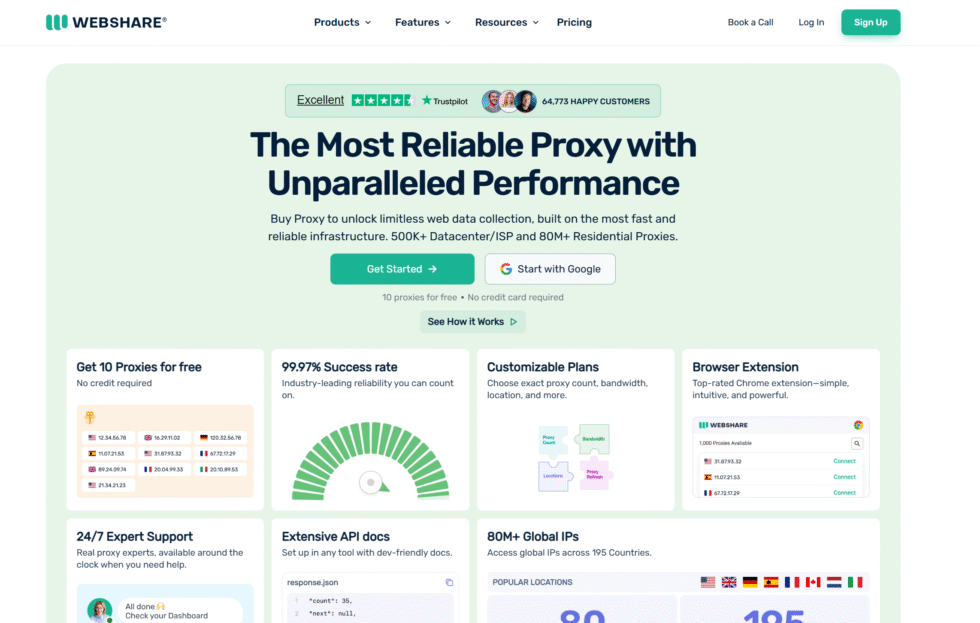
Webshare is known for datacenter proxies and also sells residential and ISP products. Many developers like the API, proxy lists, and quick signup. Residential coverage is wide at the country level. Datacenter IPs are fast for light checks and simple fetches. The dashboard is clean. A free entry tier exists for people who want to learn the API before they buy. That developer-first design is the point of the brand.
State and city control for South Carolina is less of a focus than on specialist residential networks. Datacenter exits do not look like a home ISP, so they are a poor match for local ad previews and household QA. Residential inventory may not pin a session to Charleston with the same ease as a US-state specialist. Webshare is a handy extra tool for speed and scripting. It is rarely the first pick when the job is to view public web experiences the way a Palmetto State household would. Use it for bulk public fetches. Keep a residential vendor for city-true checks.
Key features
- Datacenter, residential, and ISP proxies
- Developer-friendly API and lists
- Fast signup and a simple dashboard
- List-style and gateway-style access
Facts and Information
- Strong for simple, high-speed tasks
- Weaker state-level household focus
- Useful as a secondary network
- Not built first for Carolina city research
12. DataImpulse
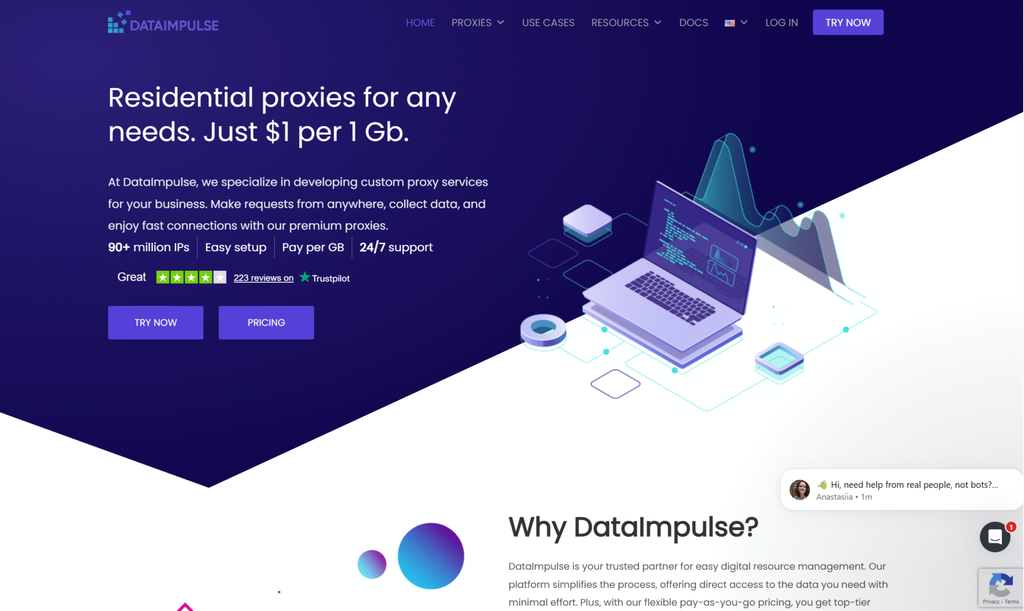
DataImpulse sells residential, mobile, and datacenter traffic with a simple pay-as-you-go model that many small teams use for short projects. Unused traffic can stay in the account on published plans, which suits burst work. Targeting exists. The product is lean on purpose: buy traffic, point an endpoint, run the job. That lack of ceremony is why short sprints land here.
Fine city control in South Carolina should be tested first. There is less enterprise tooling than on larger platforms. Session analytics, dedicated hardware, and long static identities are not the core offer. Speeds are acceptable for many public pages and less consistent on harder targets. Support is lighter than named-account vendors. DataImpulse can fill burst jobs when a monthly contract is not wanted and a thinner local filter set is acceptable. It is a weak stand-alone answer if Charleston sticky sessions are needed all quarter. Sample the state, watch the exits, and keep a fuller stack nearby for the work that must stay local.
Key features
- Residential, mobile, and datacenter traffic
- Pay-as-you-go style plans
- Basic targeting controls
- Light dashboard
Facts and Information
- Popular for short or uneven workloads
- Less city depth than larger US pools
- Few extras beyond traffic and endpoints
- Best as a burst network, not a full Carolina stack
How To Match Proxy Type To The Job
Pick the product the same way you pick a vehicle. Short, high volume checks on public pages pair well with rotating residential proxies. Long logins, checkout tests, and repeated QA passes pair well with static residential proxies. App and carrier checks pair well with rotating mobile proxies or dedicated 4G and 5G proxies. Fast catalog pulls that do not need a home ISP can use rotating datacenter proxies.
| Job | Better fit | Session style |
| Price and offer checks across cities | Residential rotating | Short or timed rotation |
| QA, logins, multi-step flows | Static residential | Same IP for the project |
| App and carrier checks | Mobile rotating or dedicated | Sticky or on-demand change |
| High speed public fetches | Datacenter rotating | New IP as needed |
| Heavy, hard-to-forecast traffic | Unlimited residential | Mixed |
Keep one identity when the site expects a continuous visit. Rotate when you are sampling many public pages. Mix products in one account when ads, SEO, and e-commerce research share the same week.
South Carolina Cities And Networks Teams Usually Request
Most local work clusters around a few places. Charleston covers tourism, ports, and coastal retail. Columbia covers state government, campus life, and midlands shopping. Greenville covers Upstate business and tech. Myrtle Beach covers seasonal travel. Spartanburg, Rock Hill, and Hilton Head show up in smaller retail and hospitality tests.
Household paths in the state often sit on Spectrum, AT&T, Verizon, Xfinity, Windstream, and regional fiber. ISP-level filters help when an ad or checkout flow changes by network. Mobile checks often use Verizon, AT&T, and T-Mobile paths. Pair city plus ISP only when the test needs that detail. State-only targeting is enough for many statewide offer and search reviews.
Use a proxy checker before a large run so you confirm the city and network you asked for. Then keep notes on which metro you used for social media research and which one you used for store pages. That small habit stops mixed results later.
Frequently Asked Questions
What Are South Carolina Proxies?
South Carolina proxies are IP addresses that exit through connections inside the state, so public sites treat the session as local traffic. Residential proxies use household ISP paths. Mobile proxies use carrier paths. Datacenter proxies use hosted servers. Teams use them to view public web experiences across supported locations, collect public web data for approved business use cases, and run separate QA, monitoring, and research workflows. The value is a local path for price monitoring, ad verification, and SEO monitoring.
Can I Target Charleston, Columbia, Or Greenville?
Yes, when the product supports city filters on USA residential proxies or mobile products. Start with the state, then add a city if ads, prices, or search results change between metros. Charleston covers coastal retail and ports, Columbia covers midlands and campus traffic, and Greenville covers Upstate business pages. If city inventory is thin, state targeting still covers statewide offer and search reviews. ISP-level filters help only when a given network changes the page.
Which Type Should I Use For Long Sessions?
Use static residential proxies when the same identity should last for days or weeks. That fit covers QA, account reviews, and repeated monitoring on public pages. Use sticky rotating residential proxies when you need a household path that holds for a shorter window, then changes. Use mobile sticky sessions for app work that should look like a phone on a carrier. Keep one identity when the site expects a continuous visit, and rotate when you are sampling many public pages.
Do I Need Mobile IPs For South Carolina Tests?
Only if the job is about phones, apps, or carrier pages. Many store, search, and ad checks work on household residential proxies. Rotating mobile proxies help when the public page or app treats cellular traffic differently. Dedicated 4G and 5G proxies help when one device-style exit with on-demand IP changes is the better match. Start with residential, then add mobile if the results differ on the same public page.
How Do South Carolina Proxies Help With Local Research And Ads?
South Carolina is not one market. Retail in Charleston, campus traffic in Columbia, Upstate shops in Greenville, and seasonal pages in Myrtle Beach can all show different public offers. A local household or carrier path keeps market research, ad verification, and brand protection closer to what people in those cities see. Pair city plus ISP only when the test needs that detail. Unlimited residential proxies help when traffic volume is hard to forecast across several metros in the same week.
Read Also:
- Best North Carolina Proxies in 2026
- 5 Best USA Proxies in 2026
- Best California Proxies in 2026
- Best Cheap Rotating Residential Proxies in 2026
- Best Dedicated SEO Proxies in 2026
Discover the Best South Carolina Proxies in 2026 – ProxyEmpire.