
Data collectors often face blocks when pulling information from sites. That’s where residential proxies come in, acting like real home connections to keep things smooth. Rotating residential proxies switch addresses often, while static residential proxies stick with one. This rotating residential vs. static residential comparison breaks down both types, showing how they handle tasks like scraping or market checks.
For those gathering large sets, rotating residential proxies offer fresh IPs to dodge limits. On the other hand, static residential proxies provide steady links for ongoing jobs. Both help mimic everyday users, but your choice depends on the job’s scale and needs. Many prefer rotating for big pulls, static for consistent access. Variations like dynamic residential IPs or fixed home proxies fit specific setups. Ready to boost your collection?
Get started with top-tier residential proxies today at ProxyEmpire.
What Are Rotating Residential Proxies?
Rotating residential proxies pull from a big pool of home IPs, changing them out with each request or after a short time. They work by linking to real devices through providers, making your traffic look like it’s from different houses. This setup helps avoid detection because sites see varied sources, not one repeating spot.
In practice, you connect via a backconnect server that picks a new address automatically. Some let you set how often it switches, like every minute or per action. For data work, this means pulling info from many pages without raising flags. Providers add features like session control to fine-tune.
Many users pick these for their ability to handle heavy loads. They fit well with tools for automated pulls, blending in better than other types. If you’re dealing with sites that watch for patterns, this change-up keeps things running.
What Are Static Residential Proxies?
Static residential proxies assign one fixed home IP that stays the same for your whole session or longer. They come from ISPs linked to actual homes, but run through data centers for speed. This gives a reliable, unchanging link that sites treat as trustworthy.
You get the IP when you buy or rent it, and it doesn’t flip unless you ask. Sessions can last days or weeks, ideal for jobs needing the same identity. In data collection, this helps with tasks where switching might trigger checks, like logging into accounts repeatedly.
Some appreciate the control over one address, avoiding surprises from changes. They often pair with ad checks to verify content without issues. If stability matters more than variety, these shine.
Key Differences Between Rotating and Static Residential Proxies
The big split comes in IP handling. Rotating ones cycle through addresses, while static holds steady. This affects how sites respond, with rotating dodging blocks better in bulk work.
Speed varies too. Static often run faster due to no switches, but rotating can lag a bit during changes. Yet, for large pulls, rotating’s evasion makes up for it.
Anonymity leans toward rotating, as constant shifts hide patterns. Static provide solid cover but risk exposure over time if overused. Maintenance? Rotating automates a lot, static needs more hands-on watch.
In data jobs, rotating suits widespread collection, static fits focused, repeat access. Both use real home IPs for trust, but the dynamic nature sets them apart.
Pros and Cons of Rotating Residential Proxies
Pros of rotating residential proxies include top-notch evasion, letting you grab data from tough sites without stops. They scale up for big projects, pulling from various spots easily. Automation fits naturally, with built-in switches saving time.
Cons? Possible slowdowns from flips, especially in shared setups. Costs can add up based on use, though many find it worth it for results. Shared pools might share risks if others misuse them.
Overall, they excel where variety beats consistency. Pair them with mobile options for even more flexibility in collection.
Pros and Cons of Static Residential Proxies
Pros of static residential proxies feature steady speeds and reliable links, perfect for jobs needing one face. They cut down on verifications, as sites see a consistent user. Often cheaper for long hauls, with unlimited bandwidth in some plans.
Cons involve higher block chances in repeat pulls, requiring careful pacing. Less flexible for multi-spot work, sticking to one area. Manual swaps if issues arise add effort.
They work best for targeted, ongoing tasks. Check our use case examples to see fits.
Best Use Cases for Rotating Residential Proxies in Data Collection
These shine in web scraping, where you need to hit many pages fast without alerts. Switch IPs to bypass rate caps and gather prices or reviews across sites.
Market research benefits, pulling trends from different areas to spot patterns. Ad verification uses them to check displays worldwide, ensuring accuracy.
Automation scripts run smoother, mimicking users from various homes. For e-commerce data, track stock without bans. If you’re into broad pulls, these keep you under radar.
Best Use Cases for Static Residential Proxies in Data Collection
Static residential proxies fit account-based pulls, like logging in to track user data over time. They maintain trust, avoiding flags from changes.
Social media collection works well, scraping profiles with one identity. For e-commerce, manage carts or checkouts without disruptions.
Ongoing monitoring, such as price watches on single sites, favors their stability. Some use them for secure access to dashboards.
Comparison Table: Rotating vs. Static Residential Proxies
| Feature | Rotating Residential | Static Residential |
| IP Handling | Cycles automatically | Fixed and steady |
| Speed | Variable with switches | Consistent high |
| Anonymity | High due to changes | Solid but trackable |
| Maintenance | Low, automated | Higher, manual |
| Best For | Large-scale pulls | Focused sessions |
| Cost Model | Often traffic-based | Per IP or time |
| Evasion | Excellent for blocks | Good with pacing |
How to Choose Between Rotating and Static for Your Data Needs
Think about your project’s size first. Big volumes? Go rotating to stay hidden. Small, repeat tasks? Static keeps it simple.
Consider site rules. Tough anti-bot spots need rotating’s tricks. Easier ones handle static fine.
Budget plays in, with rotating suiting variable use, static for set periods. Test both if possible.
Factor tools too. Some scripts work better with changes, others with steadiness.
For custom advice, explore our targets page.
ProxyEmpire – Best Residential Proxies for Data Collectors In 2026
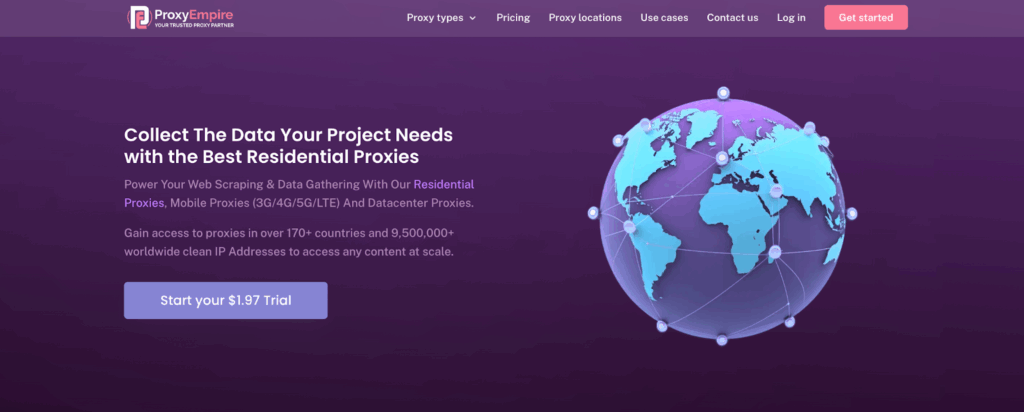
ProxyEmpire is a premium proxy service provider designed to empower web scraping, data collection, and unrestricted internet access through a vast network of ethically sourced residential, mobile, and datacenter proxies. Below is a detailed description based on the provided information:
Overview of ProxyEmpire
ProxyEmpire offers a comprehensive suite of proxy solutions tailored for individuals, businesses, and developers seeking reliable, high-performance tools for data gathering and privacy protection. With over 30 million clean IP addresses spanning 170+ countries, ProxyEmpire provides unparalleled global coverage, ensuring users can access content at scale with a 99.9% uptime and lightning-fast response times (as low as 0.6 seconds).
Proxy Types and Features:
🏘️ Rotating Residential Proxies
Key Benefits
- Global Reach: Access to over 30 million IPs worldwide, covering every major region, with precise targeting options (country, city, state, ASN/ISP).
- High Reliability: A 99.86% uptime ensures uninterrupted service, supported by patented technology for enhanced speed and security.
- Ethical Sourcing: Proxies are responsibly harvested, ensuring quality and compliance.
- Versatile Use Cases: Supports web scraping, price monitoring, sneaker copping, SEO tracking, ad verification, and more.
- Integration-Friendly: Compatible with standard proxy protocols (HTTP, SOCKS5) and third-party tools like Multilogin, Dolphin Anty, Kameleo, Octobrowser, and Gologin.
- No Hidden Fees: Transparent pricing with all features included, starting at a $1.97 trial.
Use case:
FAQ
What Makes Rotating Residential Proxies Better for Large Data Pulls?
Rotating residential proxies excel in handling extensive data extraction by automatically alternating IP addresses from a diverse pool of real household connections, which helps maintain uninterrupted access to multiple sources. This dynamic approach allows collectors to simulate traffic from various users, making it suitable for aggregating information across numerous platforms without triggering automated defenses. For tasks involving web scraping, they provide flexibility in managing high-volume requests, ensuring broader coverage in activities like competitor analysis or trend monitoring.
When Should Data Collectors Pick Static Over Rotating?
Static residential proxies are preferable when a consistent IP is needed for prolonged sessions, such as maintaining access to subscription-based resources or performing in-depth audits on specific websites. They offer a fixed address that builds familiarity with target sites, reducing the likelihood of interruptions in scenarios requiring repeated interactions from the same virtual location. In applications like ad verification, this stability supports precise, ongoing evaluations without the variability introduced by address changes.
How Do Residential Proxies Help Avoid Detection in Collection?
Residential proxies mask data collection activities by routing traffic through legitimate home-based IPs, which appear more natural to website algorithms compared to other proxy types. This method incorporates features like session persistence in static setups or automatic rotation in dynamic ones, adapting to different site behaviors for smoother operations. When integrated with social media proxies, they enhance the ability to gather insights discreetly, blending in with regular user patterns across various online environments.
Can You Mix Rotating and Static in One Project?
Mixing rotating and static residential proxies in a single project allows for tailored strategies, where rotating handles exploratory phases with wide-reaching queries, and static manages detailed follow-ups on selected targets. This hybrid model leverages the strengths of both, such as using rotating for initial broad sweeps and switching to static for refined data validation. For seamless implementation, compatibility with integrations enables smooth transitions between types, optimizing overall efficiency in complex collection workflows.
Get started with top-tier residential proxies today at ProxyEmpire.