
In 2026, shared datacenter proxies help people and businesses handle online tasks smoothly. These tools let you pull data from websites without getting blocked. They work well for scraping info, checking ads, or managing social accounts. Discover the best shared datacenter proxies in 2026 for fast, reliable web data access and bypassing restrictions.
What Are Shared Datacenter Proxies?
Shared datacenter proxies come from servers in big data centers. Multiple users share the same IP addresses, which keeps things affordable. These proxies route your internet traffic through a different IP, hiding your real one. They support HTTP and SOCKS protocols for secure connections. Businesses use them for quick data pulls or testing sites. Unlike residential proxies from home networks, datacenter ones run faster because they sit on powerful servers. Some providers offer rotation to switch IPs automatically, avoiding bans.
Why Use Shared Datacenter Proxies in 2026?
With more sites using anti-bot tech, shared datacenter proxies help dodge blocks during data collection. They suit tasks like market research or ad checks where speed matters. Many companies rely on them for stable uptime and broad location choices. In 2026, rising data needs make these proxies key for automation. They handle high volumes without slowing down. Providers now focus on clean IPs to boost success rates. This setup lets small teams scale up easily.
Best Shared Datacenter Proxies in 2026
1) ProxyEmpire – Best Shared Datacenter Proxies In 2026
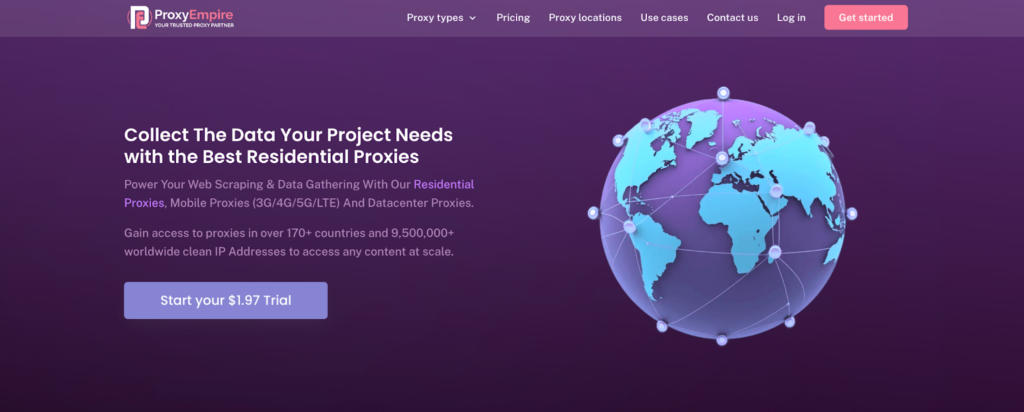
ProxyEmpire is a premium proxy service provider designed to empower web scraping, data collection, and unrestricted internet access through a vast network of ethically sourced residential, mobile, and datacenter proxies. Below is a detailed description based on the provided information:
Overview of ProxyEmpire
ProxyEmpire offers a comprehensive suite of proxy solutions tailored for individuals, businesses, and developers seeking reliable, high-performance tools for data gathering and privacy protection. With over 30 million clean IP addresses spanning 170+ countries, ProxyEmpire provides unparalleled global coverage, ensuring users can access content at scale with a 99.9% uptime and lightning-fast response times (as low as 0.6 seconds).
Proxy Types and Features:
🏘️ Rotating Residential Proxies
Key Benefits
- Global Reach: Access to over 30 million IPs worldwide, covering every major region, with precise targeting options (country, city, state, ASN/ISP).
- High Reliability: A 99.86% uptime ensures uninterrupted service, supported by patented technology for enhanced speed and security.
- Ethical Sourcing: Proxies are responsibly harvested, ensuring quality and compliance.
- Versatile Use Cases: Supports web scraping, price monitoring, sneaker copping, SEO tracking, ad verification, and more.
- Integration-Friendly: Compatible with standard proxy protocols (HTTP, SOCKS5) and third-party tools like Multilogin, Dolphin Anty, Kameleo, Octobrowser, and Gologin.
- No Hidden Fees: Transparent pricing with all features included, starting at a $1.97 trial.
Use case:
2. ResiProx
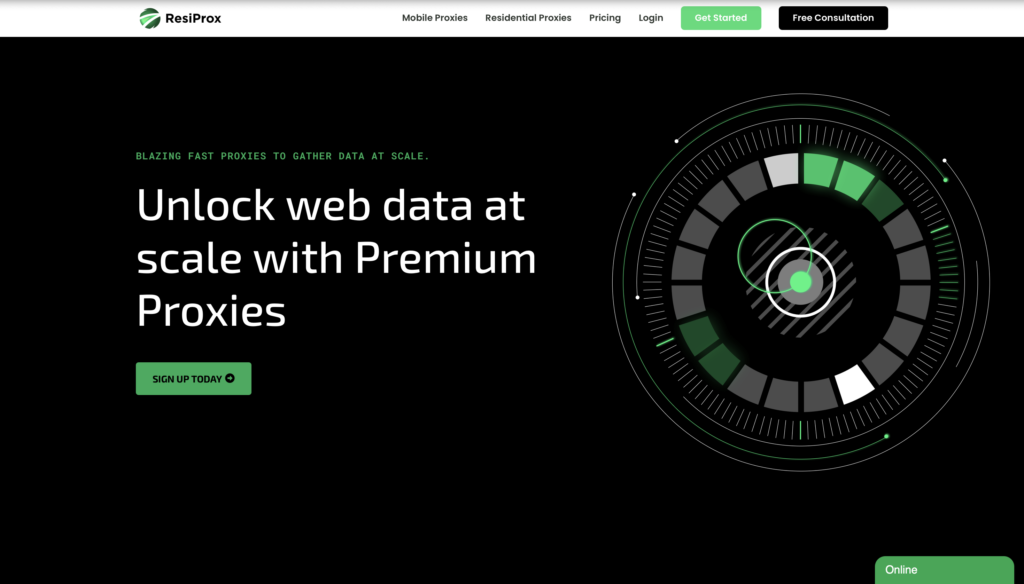
ResiProx delivers shared datacenter proxies through its rotating network, blending datacenter speed with broad coverage. Based in an undisclosed location, it draws from a large pool of IPs across many countries. The service shines in tasks like web scraping and ad verification, offering fast response times under half a second. Users can target specific regions, cities, or ISPs for precise access. It handles unlimited sessions, making it fit for scaling up operations. Protocols include HTTPS and SOCKS5 for secure links. Many turn to ResiProx for its reliable uptime and ethical IP sourcing, which cuts detection risks. The platform integrates well with scripts in Python or Node.js. Support comes via 24/7 experts and detailed docs. Overall, it provides solid tools for data gathering and market analysis without fuss.
- Key features: Rotating and sticky sessions, country/city/ISP targeting, HTTPS/SOCKS5 support.
- Accurate data and information: Average response under 0.3 seconds, 99.9% uptime.
- Pros: Large global IP pool, unlimited concurrent sessions, seamless tool integrations.
3. Webshare
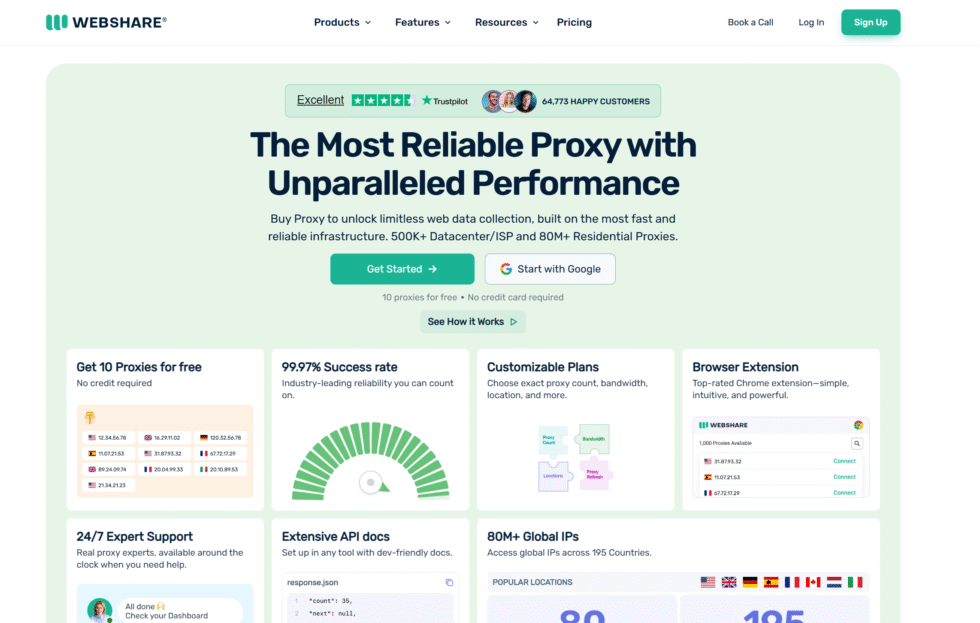
Webshare offers shared datacenter proxies known for their speed and customization. From Silicon Valley, the company provides IPs in many countries, including major spots like the US and UK. It’s great for web data collection and anonymous browsing. The proxies support HTTP and SOCKS5, with high success rates around 99.97%. Users can pick exact counts and locations for tailored setups. The network handles big requests monthly, suiting high-volume needs. A browser extension adds ease for quick tasks. Many appreciate the API docs for developer-friendly use. Webshare fits pricing intelligence and social management well. Trusted by thousands, it emphasizes stability and performance.
- Key features: Customizable proxy counts, global locations, browser extension.
- Accurate data and information: 99.97% success rate, 99.7% uptime.
- Pros: Developer tools like API, free starter proxies, high reliability.
- Cons: Shared IPs may face more blocks in strict sites.
4. Oxylabs
Oxylabs provides shared datacenter proxies focused on fast data extraction. Headquartered in Vilnius, Lithuania, it boasts quick response times below one second. The service excels in scaling projects with 99%+ success in public data pulls. New European locations like Slovenia and Greece expand options. Advanced filters let users pick OS or IP versions. It integrates with many tools and offers code samples for easy start. Certified centers ensure quality. Many use it for large operations due to its robust setup. Support includes videos and community resources. Oxylabs prioritizes transparency and expert help.
- Key features: OS/IP version filters, 30+ tool integrations, certified providers.
- Accurate data and information: <1s response, 99%+ success rate.
- Pros: Fast speeds, broad European coverage, strong community support.
- Cons: May require tech know-how for advanced setups.
5. Bright Data
Bright Data’s shared datacenter proxies emphasize high-speed extraction for big tasks. The Israel-based provider accesses a vast network spanning many countries. It’s built for volume data work with stable connections. Proxies suit e-commerce and AI data needs. Users get tools for efficient scraping without interruptions. The platform supports various protocols for flexibility. Many value its global reach for diverse projects. Bright Data focuses on ethical data access and performance.
- Key features: High-volume support, global IP network, protocol variety.
- Accurate data and information: 150M+ IPs, 195+ countries.
- Pros: Speedy for large-scale ops, reliable stability.
- Cons: Less focus on beginner-friendly guides.
6. IPRoyal
IPRoyal supplies shared datacenter proxies geared toward speed-critical jobs like testing and monitoring. It covers many locations with city-level targeting. The service offers smart rotation and high uptime around 99.9%. Users benefit from non-expiring traffic and real-time analytics. It integrates with hundreds of tools via API. Many choose it for compliant, scalable control in automation. IPRoyal supports enterprise needs with team permissions.
- Key features: City/state targeting, API access, redundancy built-in.
- Accurate data and information: 99.9% uptime, 650+ integrations.
- Pros: Precise control, seamless setups, full standards compliance.
- Cons: Targeting options might overwhelm new users.
7. Decodo
Decodo, once Smartproxy, delivers shared datacenter proxies with vast coverage. It draws from millions of IPs in hundreds of locations. Average speeds sit under 0.2 seconds with near-perfect uptime. Targeting goes down to ASN level. The service bypasses restrictions for anonymous data work. Free tools like browsers and checkers add value. Many rely on it for market research and workflows. Decodo stresses ethical sourcing and client trust.
- Key features: City/ASN targeting, SOCKS5 support, rotating/sticky options.
- Accurate data and information: <0.2s speed, 99.99% uptime.
- Pros: Huge IP pool, free add-ons, high client satisfaction.
- Cons: Recent name change could confuse some.
8. Rayobyte
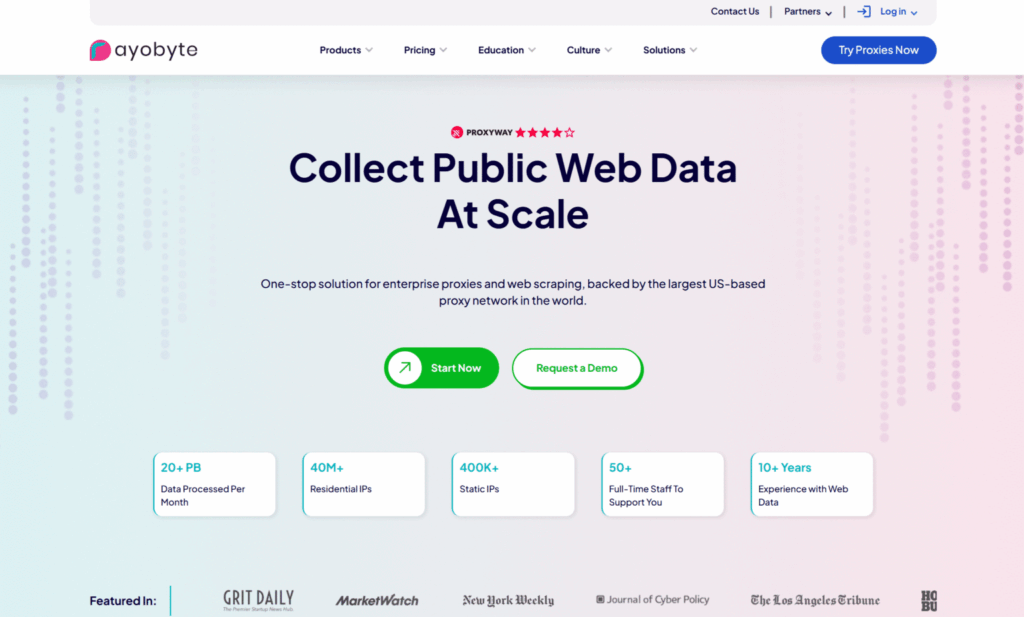
Rayobyte’s shared datacenter proxies come in rotating and static forms for fast data pulls. As a US-based network, it handles e-commerce and SERP tasks well. The large pool ensures high speeds and scalability. Users tap into it for AI and ad verification. Many like its ethical focus and volume support. Rayobyte provides reliable access without complexity.
- Key features: Rotating/static IPs, high-speed pools.
- Accurate data and information: Largest US network, optimal performance.
- Pros: Suits big users, ethical data gathering.
- Cons: Limited non-US details.
9. NetNut
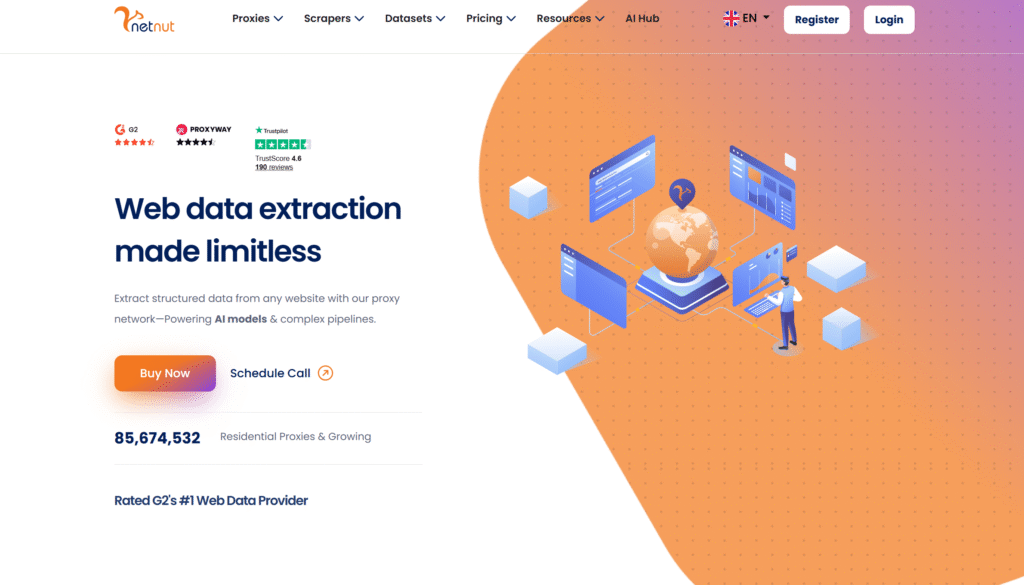
NetNut offers shared datacenter proxies with worldwide IPs for quick operations. It features rotating and static choices with top uptime. The service scales well for performance needs. Many use it for data collection without downtime. NetNut emphasizes speed and reliability across tasks.
- Key features: Global IPs, rotating/static, scalability.
- Accurate data and information: 99.99% uptime, 150K+ IPs.
- Pros: High speeds, no interruptions.
- Cons: Fewer targeting specifics.
10. Limeproxies
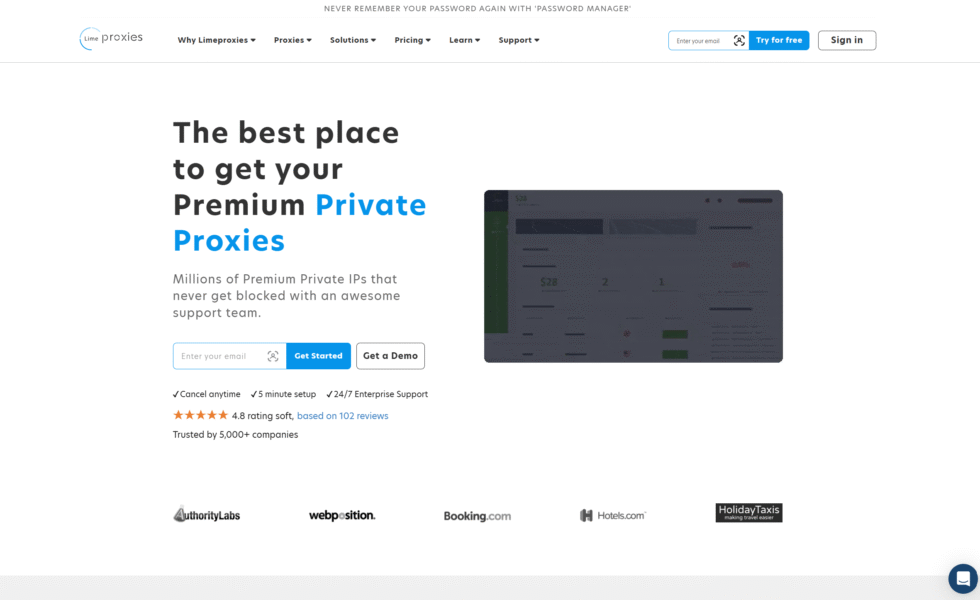
Limeproxies provides shared datacenter proxies with fast speeds up to 1 Gbps. It spans many geo spots in the US and abroad. On-demand IP refresh keeps things fresh. The control panel lets users manage easily. Many pick it for scraping and price tracking. Limeproxies offers 99.9% uptime and subnet variety.
- Key features: IP refresh, concurrent threads, 50+ locations.
- Accurate data and information: 1 Gbps speed, 99.9% uptime.
- Pros: Quick setup, 24/7 support, tool integrations.
- Cons: Dedicated focus might not suit all shared needs.
11. SOAX
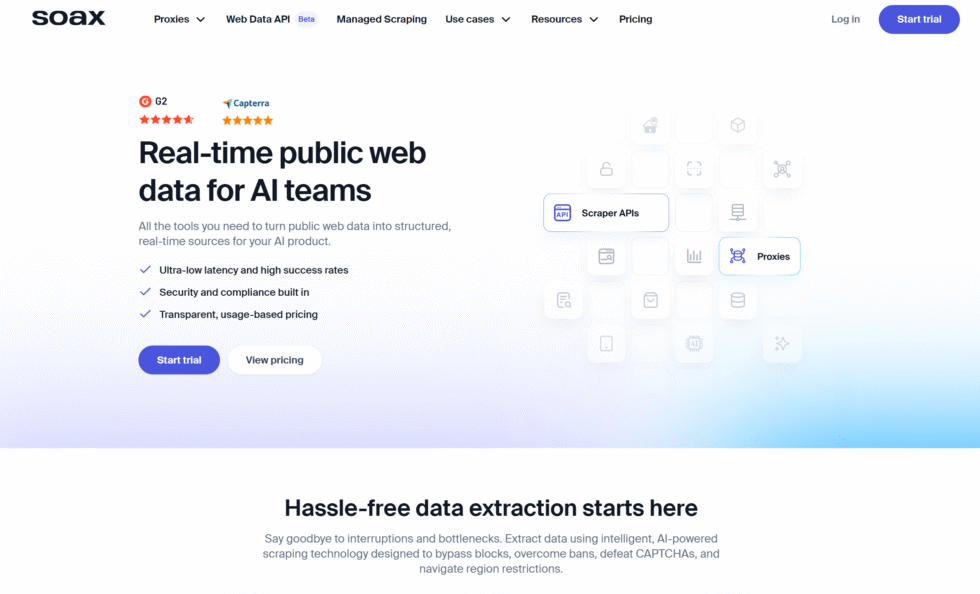
SOAX delivers shared datacenter proxies with high-performance IPs mainly in the US. From the UK, it offers advanced targeting and unlimited connections. Success rates top 99.5%. Protocols cover HTTP to QUIC. Many use it for scaling scrapes without blocks. SOAX provides clean IPs for smooth access.
- Key features: Geotargeting, sticky/rotating, unlimited bandwidth.
- Accurate data and information: 99.5%+ success, 300K+ IPs.
- Pros: Broad protocols, high performance.
- Cons: US-heavy may limit global tasks.
12. ProxyScrape
ProxyScrape specializes in shared datacenter proxies ideal for automation and large-scale data tasks. The company maintains 40,000 shared IPv4 addresses across nine locations with notable United States presence. These static proxies support HTTP, HTTPS, and SOCKS5 protocols, including UDP for SOCKS5 connections. Users enjoy unlimited traffic and concurrent sessions for activities like price monitoring, market research, social media management, and AI training. The network delivers 99.9% uptime and averages 375 milliseconds response time, supporting efficient high-volume operations. This allows companies to handle demanding workloads with reliable US-focused connectivity and scalability in competitive digital environments.
- Large pool of 40,000 shared IPv4 addresses in 9 geo-locations including the USA
- HTTP, HTTPS, and SOCKS5 protocol support with UDP compatibility
- Unlimited traffic and concurrent connections
- 99.9% uptime and 375 ms average response time
- Optimized for price monitoring, market research, social media management, and AI data collection
13. Trusted Proxies
Trusted Proxies offers shared datacenter proxies with registration in England and Wales and a US office in San Francisco. The service spans servers in more than 80 countries, featuring extensive coverage in the United States and North America. Proxies utilize HTTP, HTTPS, and SOCKS5 protocols while incorporating self-healing server technology with dynamic hostname updates to ensure seamless uptime. Proximity to major internet exchange points provides high-speed access, and static IPs enable applications such as market analysis, SEO monitoring, social media maintenance, and geo-restricted content access. Encrypted connections and subnet diversity enhance operational security for international data collection and analysis projects across Europe, Asia, and US markets.
- Global network covering over 80 countries with multiple US and North American locations
- HTTP, HTTPS, and SOCKS5 protocol support
- Self-healing servers and dynamic hostname updates for continuous uptime
- Proximity to major internet exchange points for high-speed stability
- Static IPs suited for SEO monitoring, market analysis, and social media management
14. Oculus Proxies
Oculus Proxies provides shared datacenter proxies suited for high-volume web operations. The platform features an IP pool of 1.6 million addresses across 98 countries with precise geo-targeting down to city, ZIP code, and ASN levels, including key US cities like New York and Los Angeles. Supporting HTTP, HTTPS, and SOCKS5 protocols along with username-password or IP whitelisting authentication, the proxies refresh after three minutes of inactivity. Performance includes sub-50 millisecond average response times and 99.9 percent SLA-backed uptime. The service caters to over 100,000 users engaged in web scraping, SEO rank tracking, price monitoring, ad verification, market research, and social media analytics while maintaining GDPR and CCPA compliance for ethical data aggregation worldwide.
- 1.6 million IPs across 98+ countries with city, ZIP, and ASN-level targeting including US locations
- HTTP, HTTPS, and SOCKS5 protocol support with IP whitelisting or username-password authentication
- Sub-50 ms average response time and 99.9% SLA uptime
- IP refresh after 3 minutes of inactivity
- Serves over 100,000 users for web scraping, SEO tracking, price monitoring, and ad verification
15. Proxy-Cheap

Proxy-Cheap delivers shared datacenter proxies as a scalable option for web data needs. Available in numerous locations with strong United States coverage alongside other global sites, the service uses high-speed data center servers for reliable connectivity. These shared IPs support SOCKS5 protocols and offer unlimited bandwidth to accommodate extensive data transfers without restrictions. An advanced rotation system allows easy IP switching from a large pool of thousands of addresses, enhancing versatility for combined use with other proxy types. Applications include web scraping, social media management, SEO monitoring, ad verification, gaming, and streaming. The infrastructure focuses on lightning-fast speeds and minimal downtime for consistent performance during real-time market data collection and anonymous browsing sessions.
- Thousands of high-speed IPs with strong United States and global location coverage
- SOCKS5 protocol support and unlimited bandwidth
- Advanced IP rotation system for seamless switching
- Compatible with web scraping, SEO monitoring, social media management, and ad verification
- High-speed data center connections with minimal downtime for real-time data tasks
How to Choose a Shared Datacenter Proxy Provider
Picking the right provider means looking at speed, coverage, and support. Check if they offer rotation to switch IPs often. Ethical sourcing matters to avoid bad reps. See how well they integrate with your tools. Test uptime and response times through trials. Consider location options for specific regions, as detailed in all locations. Read reviews for real insights. Focus on providers with strong APIs for custom work. Avoid those with frequent downtime reports.
Shared Datacenter Proxies and Proxy Session Types
Shared datacenter proxies, available through options like rotating datacenter proxies, adapt to various session requirements in 2026. Proxy session types determine how IP addresses behave during operations, with sticky sessions maintaining one IP for the duration of a connection to support uninterrupted workflows such as logins or multi-step processes. Per-request rotation switches IPs for every new connection to distribute activity and minimize pattern detection across bulk tasks.
Shared datacenter proxies often complement rotating residential proxies in setups needing varied IP behaviors for sustained automation.Static residential proxies align with sticky session approaches when stability takes priority over frequent changes.Rotating mobile proxies and dedicated mobile proxies extend these session capabilities into environments requiring additional flexibility. Further details on these configurations appear in resources covering proxy session types.
AI-Powered Proxy Routing with Shared Datacenter Proxies
AI-powered proxy routing applies machine learning algorithms to evaluate proxy pools in real time and direct traffic through the most suitable paths within shared datacenter proxies. This intelligent selection process analyzes response patterns and adjusts dynamically to maintain efficiency during extended operations. Shared datacenter proxies gain enhanced reliability when paired with such routing systems that predict and mitigate potential disruptions. The approach integrates seamlessly with integrations for popular automation platforms. Businesses engaged in proxy use case scenarios benefit from the adaptability that AI routing brings to shared datacenter proxies.
Latest News In 2026
In 2026, AI proxy routing emerged as a key advancement that refines IP selection within shared datacenter proxies through machine learning analysis of network conditions. Proxy session types have evolved with improved support for both sticky and per-request models, allowing finer control over connection stability in automation environments. Proxy servers now contribute more prominently to DDoS attack mitigation by serving as distributed buffers that absorb and deflect threats before they reach core systems. Handling CAPTCHAs has seen progress through refined proxy configurations that reduce challenge frequency in high-volume tasks.Social media proxies and proxies for ad verification incorporate these updates to support smoother account and campaign operations alongside shared datacenter proxies.
FAQ
What sets shared datacenter proxies apart from other types?
Shared datacenter proxies operate from centralized server farms, providing quick connections that suit high-volume online activities. They differ from mobile proxies, which use cellular networks for dynamic IPs that change with device movements, offering varied patterns. This type focuses on efficiency for tasks requiring steady performance, while others might prioritize natural traffic flow. Understanding these differences helps in selecting the right tool for specific online needs, like in our proxy service comparison.
How do shared datacenter proxies help with web scraping?
These proxies enable efficient data collection by masking original IPs, allowing access to various websites without immediate restrictions. They support automated scripts to gather information on trends or competitors, ensuring smooth operations over extended periods. Integration with common programming environments enhances their utility for developers building custom extraction tools.
Are shared datacenter proxies secure for business use?
When configured with encryption protocols, shared datacenter proxies safeguard data during transmission, reducing exposure to common online threats. They help maintain compliance by routing traffic through verified channels, which is key for enterprises handling sensitive information. Regular updates from providers further strengthen defenses against evolving risks.
What should I look for in a proxy provider’s support?
Effective support includes responsive teams available through multiple channels, ensuring quick resolutions to technical issues. Comprehensive documentation and tutorials empower users to handle setups independently, fostering better long-term usage. Providers that offer proactive monitoring and updates demonstrate commitment to user success in dynamic online environments.
What makes proxy session types important when using shared datacenter proxies?
Proxy session types determine the level of control over connection persistence and IP behavior in shared datacenter proxy environments. They support advanced configurations that align with SOCKS5 protocol requirements for applications needing enhanced security and functionality. Proper session handling facilitates smoother operations when managing multiple threads or complex automation sequences. This approach reduces overhead from frequent reconnections in demanding environments while enabling consistent identity presentation across extended workflows.
Can shared datacenter proxies integrate with tools for automation?
Shared datacenter proxies offer broad compatibility through standard protocols and dedicated API access for custom automation setups. The public API supports management of sub-users and traffic parameters to fit specific workflow needs. Additional convenience comes from specialized tools like the proxy extension for Chrome and Android applications that simplify configuration processes. This flexibility extends to custom-built solutions where developers require reliable backend connectivity across different technical stacks.
What role do shared datacenter proxies play alongside social media proxies?
Shared datacenter proxies deliver the necessary speed for high-volume interactions when paired with social media proxies during profile management activities. They enable efficient handling of content distribution and monitoring tasks across various platforms. This supporting role enhances the performance of dedicated social media proxies in environments with strict activity monitoring. The fast response times from datacenter infrastructure support rapid execution of background processes that complement account oversight.
How do shared datacenter proxies support ad verification processes?
Shared datacenter proxies facilitate quick validation of advertisement displays through their fast connection capabilities. They work effectively with proxies for ad verification to check campaign consistency across multiple websites. The combination supports detailed monitoring of placement accuracy and visibility metrics. Concurrent checks become more manageable with the infrastructure providing stable throughput for real-time evaluations.
Are shared datacenter proxies suitable for data collection projects?
Shared datacenter proxies excel in data collection projects due to their rapid response characteristics ideal for extensive extraction efforts. They complement established web scraping methodologies for gathering market intelligence and product information. Additional applications include review monitoring and travel fare aggregation where consistent performance is essential.
What advantages come from combining different proxy types with shared datacenter proxies?
Combining shared datacenter proxies with residential or mobile options creates versatile systems capable of balancing speed with varied anonymity levels. This approach proves particularly valuable in specialized scenarios such as sneaker proxies operations and price monitoring tasks. Hybrid configurations also extend support to cybersecurity testing and SERP analysis projects through strategic type selection alongside dedicated mobile proxies. The layered setup allows tailored performance optimization based on task requirements such as those in rank tracking projects.