
If you’re dealing with web blocks from Akamai or Cloudflare, you’re not alone. These tools guard sites against bots and heavy traffic, but they can stop your valid tasks too. Think about scraping data for market insights or managing multiple accounts. Residential proxies change that by making your connection look like a regular user’s. They pull from real home IPs, so blocks happen less often.
For top results, check out rotating residential proxies that switch IPs on the fly. Or try static residential proxies for steady sessions. And don’t miss rotating mobile proxies if you need that extra mobile touch. Bypassing Akamai and Cloudflare gets easier with the right proxy setup. Variations like proxy rotation for Akamai evasion or Cloudflare circumvention through residential IPs keep things running. Ready to beat those barriers?
Get started with ProxyEmpire’s residential proxies today and access the web without interruptions.
What Are Akamai and Cloudflare?
Akamai and Cloudflare act as shields for websites. They speed up loading times and block bad traffic. Akamai started as a content delivery network, or CDN, back in the late 1990s. It spreads site files across servers worldwide to cut delays. Now, it includes bot management that spots and stops automated scripts. Cloudflare does similar work but focuses more on security from the start. It handles DDoS attacks, which flood sites with junk requests. Both use web application firewalls, or WAFs, to check incoming connections.
These systems sit between you and the site. When you visit a protected page, your request hits their servers first. They decide if it’s safe. If not, you get a block page or error. Many big sites rely on them, like e-commerce stores or news outlets. For folks doing web scraping or ad checks, this creates hurdles. But understanding their setup helps find ways around.
Akamai uses AI to learn from patterns. It assigns scores to traffic based on past behavior. Cloudflare adds challenges like CAPTCHAs for suspicious users. Both evolve fast, updating rules often. That’s why standard connections fail sometimes. Tools like web scraping proxies can help navigate this. They make your actions blend in better.
How These Systems Detect and Block Traffic
Detection starts with your IP address. Akamai and Cloudflare keep lists of known bad IPs. If yours matches a data center range, red flags go up. Real users come from home networks, so those get a pass more often. Next, they look at TLS fingerprints. That’s the secure handshake your browser does. Bots use simple libraries that leave odd prints. Mismatched ones trigger blocks.
HTTP details matter too. Headers like User-Agent tell what browser you use. Wrong order or missing ones scream bot. Cloudflare checks if you support modern protocols like HTTP/2. Old setups get denied. Then comes JavaScript tests. Sites run code in your browser to collect data on your setup. Things like screen size or mouse moves. If it doesn’t match a real person, goodbye access.
Behavior seals the deal. Fast requests without pauses look automated. Akamai tracks session patterns over time. Sudden spikes or odd paths raise alarms. Some blocks hit right away, others build up. You might see 403 errors or “access denied” pages. Tools from GitHub, like FlareSolverr proxy servers, show ways to spot these early.
They also use cookies for tracking. Special ones like _abck from Akamai log your actions. If you clear them wrong, blocks return. Overall, it’s layers on layers. Breaking one isn’t enough; you need to handle all.
Why Residential Proxies Excel in Bypassing Them
Residential proxies shine because they use IPs from actual homes. This makes your traffic look human right off the bat. Akamai and Cloudflare trust these more than server-based ones. Many blocks come from IP checks alone. With residential, you slip past that first hurdle easy.
They help with rotation too. Switching IPs keeps behavior scores high. No single address gets flagged for too much activity. This beats static setups where one block kills everything. Plus, residential IPs tie to real ISPs. That adds legitimacy that data centers lack. Sites see you as a local user, not a distant bot.
For JavaScript challenges, these proxies pair well with browsers. Your setup runs code like a person would. Combined, detection drops way down. Some users on Reddit share stories of reliable bypasses this way. It works for scraping or account management without hassle.
Drawbacks exist, but advantages win out. They cost more, yet save time on retries. For tough sites, nothing beats them.
Key Features of Effective Residential Proxies
Speed stands out first. Good ones deliver quick responses without lags. This keeps your tasks flowing smooth. Look for unlimited bandwidth to handle big jobs.
Rotation options matter a lot. Auto-switch on time or per request avoids blocks. Sticky sessions hold an IP longer for logins. Balance both for best results.
Network size helps. A big pool means more unique IPs. This spreads your activity thin, dodging rate limits. Ethical sourcing keeps IPs clean and trusted.
Protocol support covers HTTP, HTTPS, and SOCKS5. Pick based on your tool. API access simplifies control. Dashboards let you monitor usage easy.
Uptime guarantees reliability. Aim for near-perfect to avoid downtime hits. Support teams fix issues fast. Check integrations for seamless fits with your software.
Security features like encryption protect data. Some add user/pass auth. All these make bypassing solid.
Comparing Proxy Types for Bypass Success
Different proxies suit different needs. Here’s a table to show how they stack up for getting past Akamai and Cloudflare.
| Proxy Type | IP Source | Detection Risk | Speed | Cost | Best For |
| Residential | Home networks | Low | Medium | Higher | Bypassing tough WAFs |
| Datacenter | Servers | High | Fast | Lower | Simple tasks |
| Mobile | Cell carriers | Very low | Variable | Highest | Mobile-specific access |
| Static Residential | Fixed home IPs | Medium | Medium | Medium | Long sessions |
Residential leads for bypass because of low detection. They mimic users best. Datacenter works for light stuff but flags easy on strict sites. Mobile adds extra edge with carrier ties. Static holds steady but risks overuse flags. Favor residential for Akamai and Cloudflare. They handle IP reputation checks well.
Step-by-Step Guide to Using Residential Proxies
- Start by picking a provider. Sign up and get your proxy list. Use dashboards to select IPs.
- Set up your software. For browsers, add extensions like Proxy SwitchyOmega. Input host, port, user, pass.
- In code, use libraries like Requests in Python. Add proxy dict to sessions. Example: proxies = {‘http’: ‘http://user:pass@ip:port’}
- Test connections. Hit a simple site first. Check if IP changes as expected.
- For bypassing, enable rotation. Set intervals based on site rules. Add random delays between requests.
- Handle challenges. Use headless browsers like Playwright with stealth. Integrate proxies there.
- Monitor logs. Watch for errors like 403. Switch IPs on failures.
- Scale up slow. Ramp requests to avoid spikes. Use proxy checker to verify working ones.
- Troubleshoot by updating user agents. Match real browsers. Keep sessions with cookies.
- This setup gets you past most blocks.
Common Challenges and Solutions
- One big issue is IP bans. Even residential IPs can be flag if overused. Solution: Rotate often and limit requests per IP.
- TLS mismatches trip detection. Use updated libraries that spoof real fingerprints. Tools like scrapy-impersonate help.
- JavaScript fails block access. Run real browsers in headless mode. Add stealth plugins to hide automation.
- Behavior patterns give you away. Add random waits and mouse sims. Vary user agents across runs.
- Cookie management messes up. Store and reuse them per session. Don’t clear unless needed.
- High costs add up. Optimize with rollover data plans. Focus on efficient code.
- Support gaps slow fixes. Choose providers with 24/7 help. Contact us for quick aid.
- These tips keep things running.
ProxyEmpire: Your Top Choice for Residential Proxies
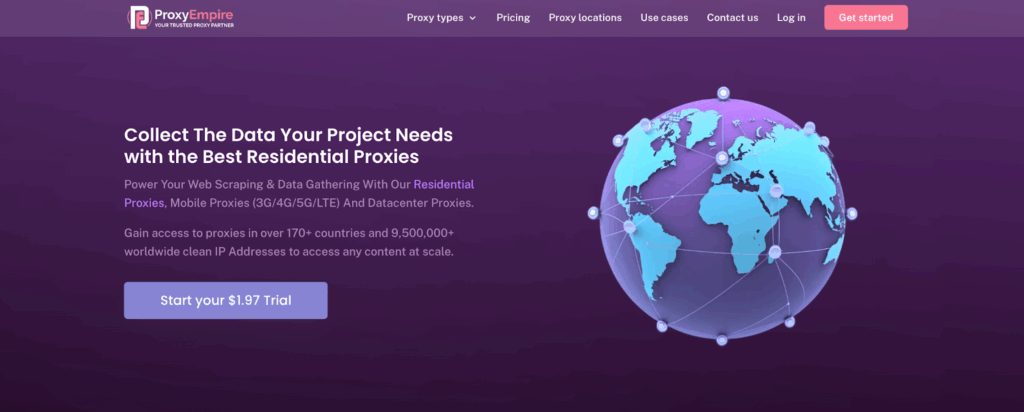
ProxyEmpire is a premium proxy service provider designed to empower web scraping, data collection, and unrestricted internet access through a vast network of ethically sourced residential, mobile, and datacenter proxies. Below is a detailed description based on the provided information:
Overview of ProxyEmpire
ProxyEmpire offers a comprehensive suite of proxy solutions tailored for individuals, businesses, and developers seeking reliable, high-performance tools for data gathering and privacy protection. With over 30 million clean IP addresses spanning 170+ countries, ProxyEmpire provides unparalleled global coverage, ensuring users can access content at scale with a 99.9% uptime and lightning-fast response times (as low as 0.6 seconds).
Proxy Types and Features:
🏘️ Rotating Residential Proxies
Key Benefits
- Global Reach: Access to over 30 million IPs worldwide, covering every major region, with precise targeting options (country, city, state, ASN/ISP).
- High Reliability: A 99.86% uptime ensures uninterrupted service, supported by patented technology for enhanced speed and security.
- Ethical Sourcing: Proxies are responsibly harvested, ensuring quality and compliance.
- Versatile Use Cases: Supports web scraping, price monitoring, sneaker copping, SEO tracking, ad verification, and more.
- Integration-Friendly: Compatible with standard proxy protocols (HTTP, SOCKS5) and third-party tools like Multilogin, Dolphin Anty, Kameleo, Octobrowser, and Gologin.
- No Hidden Fees: Transparent pricing with all features included, starting at a $1.97 trial.
Use case:
FAQ
How do residential proxies differ from other types in bypassing protections?
Residential proxies stand out by drawing from actual household internet connections, which gives them a natural edge in blending with everyday user traffic. This setup helps them navigate strict IP reputation systems that often catch datacenter proxies, known for their server origins. When dealing with protections like those from Akamai or Cloudflare, residential options allow for smoother evasion by maintaining consistent, human-like patterns. Variations such as rotating residential proxies enhance this by automatically cycling through addresses to avoid detection buildup.
What makes a proxy network effective against WAF detections?
An effective network relies on a broad range of clean, ethically obtained IPs that mimic genuine user diversity across regions. Features like automatic rotation and session persistence adapt to different scraping needs, ensuring traffic doesn’t trigger behavioral alarms in web application firewalls. High reliability comes from constant monitoring to keep IPs unflagged, paired with support for advanced protocols that handle secure connections seamlessly. Including options like static residential proxies can provide stability for tasks requiring longer holds without raising suspicions.
Can mobile proxies help with Akamai bypass?
Mobile proxies assist by leveraging carrier-assigned IPs that shift frequently, adding a layer of unpredictability that confuses tracking algorithms. This dynamic nature makes them ideal for emulating smartphone users, which Akamai’s bot management struggles to differentiate from real activity. Combining them with other proxy types creates a hybrid approach that tackles multifaceted detections, such as those involving device fingerprints. For broader applications, rotating mobile proxies offer flexibility in maintaining access during intensive sessions.
Why might bypassing fail even with residential proxies?
Failures can stem from evolving detection methods in systems like Cloudflare, where AI adapts to spot subtle anomalies in request patterns over time. Inconsistent header configurations or mismatched browser environments might still alert firewalls, despite the proxy’s authentic IP. Regular updates to evasion tactics are necessary as protections incorporate new machine learning to counter common bypass strategies.
How to integrate proxies for web scraping success?
Integration begins by configuring your scraping software to route requests through the proxy endpoints, ensuring all traffic appears organic. Adding random delays and varying user agents complements the proxy’s role in mimicking human behavior, reducing the chance of rate limiting. For JavaScript-heavy sites, pairing with headless browsers allows full page rendering while keeping the setup lightweight.
Unlock reliable web access with ProxyEmpire’s residential proxies right away.