In a world where online tasks demand solid connections, finding the right paid proxy can make all the difference. These services help with gathering data, managing accounts, and staying secure without free options’ common pitfalls. Whether you handle market checks or need steady access, the best paid proxies stand out for their speed and dependability.
What Makes a Good Paid Proxy Service?
Paid proxies beat free ones by offering better uptime and fewer restrictions. Look for providers with large IP pools that rotate smoothly, keeping sessions active without interruptions. Support matters too: quick help can fix issues fast. Some services include tools for easy setup, like browser extensions or apps.
Focus on those with strong protocols such as HTTP or SOCKS5 for flexible use. Ethical sourcing keeps IPs clean, reducing ban risks. These features suit business needs like scraping or testing sites. Check compatibility with your software to avoid headaches.
Benefits of Paid Proxies Over Free Alternatives
Free proxies often lag or drop connections, but paid versions deliver consistent performance. They provide dedicated support and advanced controls, like choosing specific regions or carriers for mobile types. This helps in tasks such as ad checks or review tracking. Users gain unlimited sessions, rollover data, and no throttling, making workflows efficient. Plus, they integrate well with tools for automation. In short, investing here saves time and boosts results.
Best Paid Proxies in 2026
1) ProxyEmpire – Best Paid Proxies In 2026

ProxyEmpire is a premium proxy service provider designed to empower web scraping, data collection, and unrestricted internet access through a vast network of ethically sourced residential, mobile, and datacenter proxies. Below is a detailed description based on the provided information:
Overview of ProxyEmpire
ProxyEmpire offers a comprehensive suite of proxy solutions tailored for individuals, businesses, and developers seeking reliable, high-performance tools for data gathering and privacy protection. With over 30 million clean IP addresses spanning 170+ countries, ProxyEmpire provides unparalleled global coverage, ensuring users can access content at scale with a 99.9% uptime and lightning-fast response times (as low as 0.6 seconds).
Proxy Types and Features:
🏘️ Rotating Residential Proxies
Key Benefits
- Global Reach: Access to over 30 million IPs worldwide, covering every major region, with precise targeting options (country, city, state, ASN/ISP).
- High Reliability: A 99.9% uptime ensures uninterrupted service, supported by patented technology for enhanced speed and security.
- Ethical Sourcing: Proxies are responsibly harvested, ensuring quality and compliance.
- Versatile Use Cases: Supports web scraping, price monitoring, sneaker copping, SEO tracking, ad verification, and more.
- Integration-Friendly: Compatible with standard proxy protocols (HTTP, SOCKS5) and third-party tools like Multilogin, Dolphin Anty, Kameleo, Octobrowser, and Gologin.
- No Hidden Fees: Transparent pricing with all features included, starting at a $1.97 trial.
Use case:
2. ResiProx
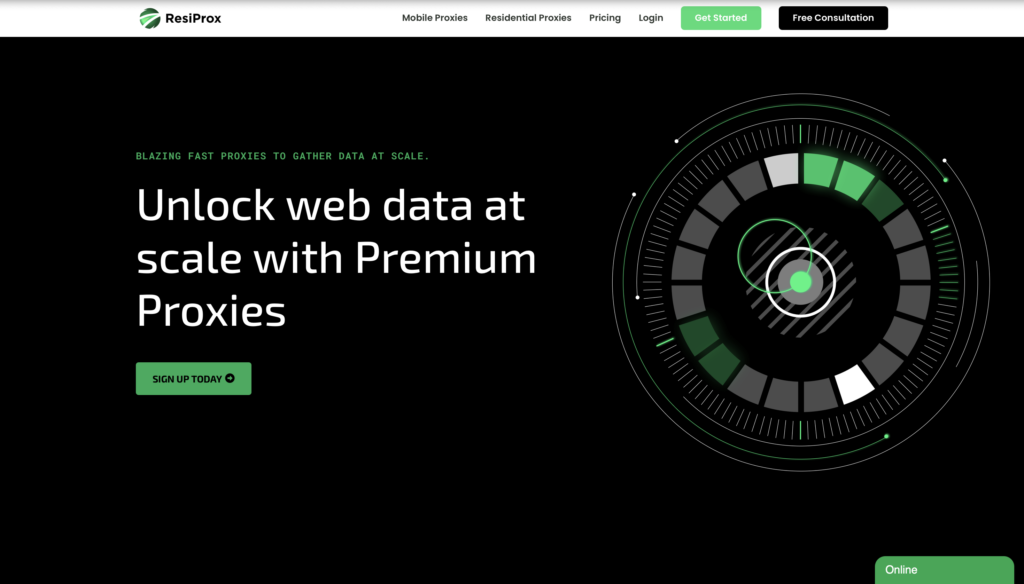
ResiProx excels in providing rotating residential and mobile proxies that emphasize seamless performance and dependability for data collection and online management tasks. Ethically sourced IPs combine with support for HTTPS and SOCKS5 protocols to deliver versatile connectivity options. Users enjoy impressively fast response times that facilitate efficient workflows and uninterrupted sessions. The service allows for sticky sessions to keep connections stable or rotating IPs to introduce variety as needed. An endpoint generator along with detailed documentation makes integration straightforward for developers using popular languages and tools. Round the clock expert support ensures smooth experiences even in complex scenarios. This setup proves particularly effective for web scraping, price monitoring, multi account management, ad verification and a range of other professional applications. ResiProx offers a user centered approach that helps businesses and individuals maximize their online activities with reliable proxy solutions.
- Key features: Rotating sessions, sticky IPs, endpoint generator, multi-protocol support.
- Accurate info: Many users report high success in bypassing restrictions.
- Pros: Fast speeds, easy setup, strong support team.
- Cons: Limited to residential and mobile types.
3. Oxylabs
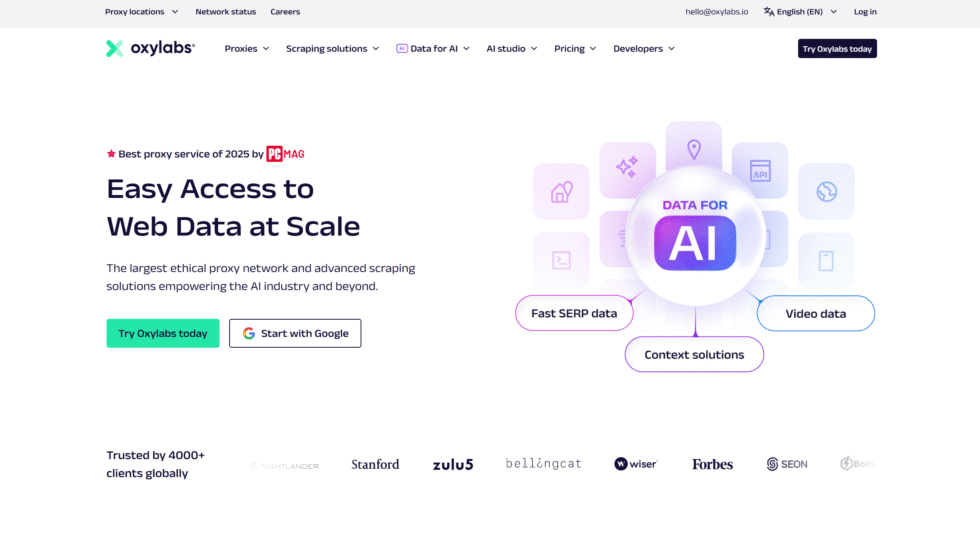
Oxylabs serves as a leading option for enterprise scale proxy needs with its comprehensive selection of residential, mobile, datacenter, and ISP proxies suited to intensive web scraping and market research projects. The platform prioritizes ethical sourcing paired with advanced management tools that enable custom rotation configurations tailored to unique operational demands. Unlimited concurrency supports running multiple connections at once without any restrictions while the web unblocker feature helps overcome barriers on challenging sites. Although the dashboard may involve a brief learning period for beginners it ultimately delivers precise control and consistent results with minimal disruptions. Many organizations rely on Oxylabs for its robust infrastructure and dedicated account management that streamlines large scale data operations. The service continues to stand out for its ability to handle demanding workflows while maintaining high standards of performance and reliability across diverse use cases.
- Key features: Advanced rotation, web unblocker, unlimited threads.
- Accurate info: Many enterprises rely on it for large-scale data ops.
- Pros: Robust tools, high reliability, dedicated managers for big clients.
- Cons: Steeper learning curve for beginners.
4. Bright Data
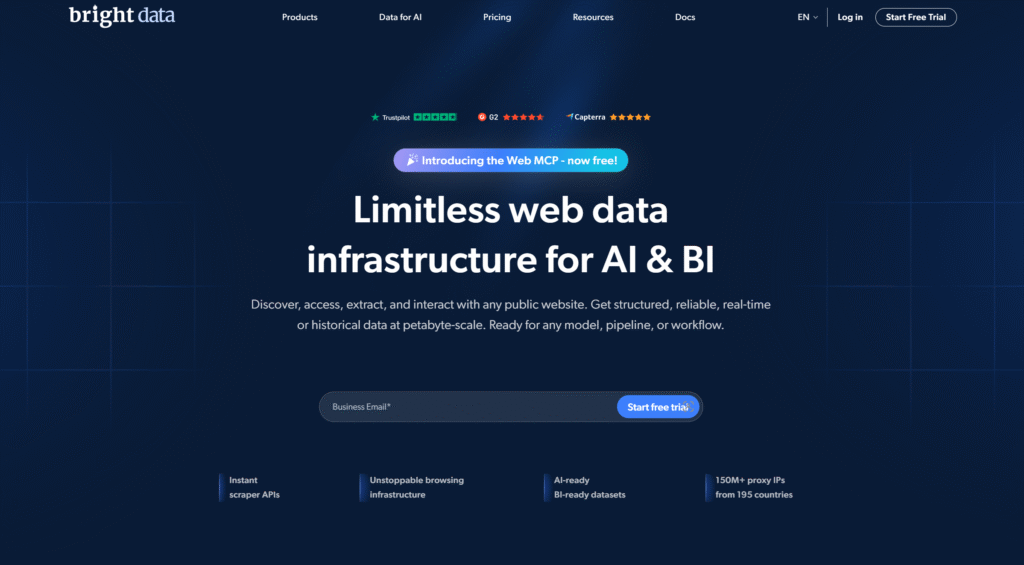
Bright Data offers a robust collection of residential, mobile, ISP, and datacenter proxies built specifically for ambitious data projects and complex online operations. The service includes specialized tools for unlocking restricted sites and managing zones that simplify setup for advanced users. A dedicated proxy manager application eases configuration and monitoring while strong ethical compliance standards appeal to professionals in regulated sectors. Some find the initial implementation process requires extra attention but the platform rewards that effort with exceptional capabilities for tasks such as ad monitoring and fraud detection. Large enterprises frequently choose Bright Data for its versatile proxy types and dependable execution that supports sophisticated data handling requirements. The focus on quality infrastructure and user friendly management features makes it a trusted partner for organizations seeking scalable solutions in competitive digital environments.
- Key features: Proxy manager, zone customization, API access.
- Accurate info: Some sources highlight its use in Fortune 500 companies.
- Pros: Extensive coverage, strong compliance, versatile types.
- Cons: Can feel overwhelming for small users.
5. Decodo
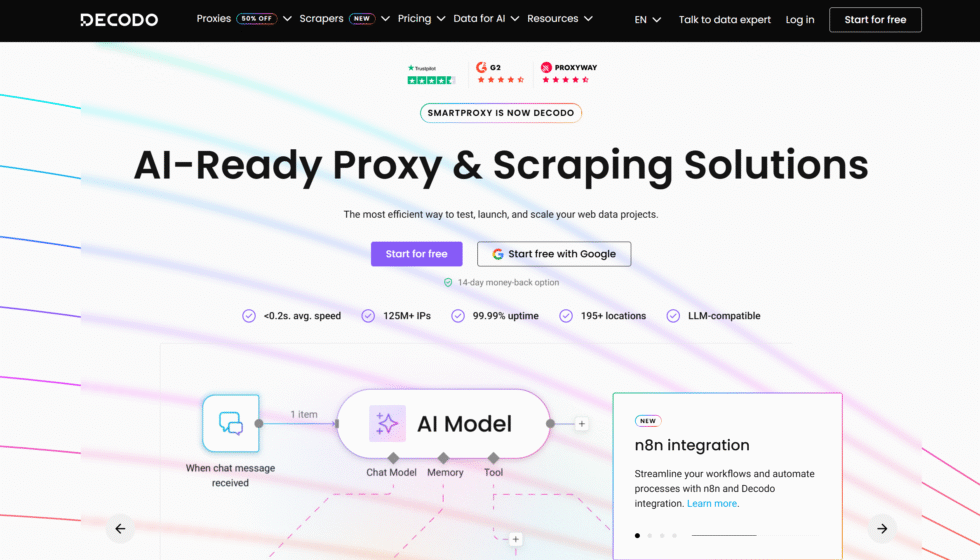
Decodo previously known as Smartproxy brings together residential, mobile, datacenter, and ISP proxies through a user friendly interface that appeals to newcomers and seasoned experts alike. The flexible pay as you go model accommodates different budgets and project scales while clean IP addresses and rapid connections support effective scraping and social media activities. Browser extensions provide quick adjustments during active sessions and the overall design prioritizes simplicity without sacrificing performance. Many testers highlight strong success rates in practical benchmarks and the service integrates well with common automation setups. Although dedicated IP options may present occasional availability constraints the platform delivers reliable outcomes for everyday professional needs. Decodo positions itself as an affordable yet capable entry into premium proxy services with a clear emphasis on ease of use and consistent results across various applications.
- Key features: Browser tools, unlimited bandwidth on some plans, SOCKS5 support.
- Accurate info: Many testers praise its speed in benchmarks.
- Pros: Affordable entry, simple interface, reliable performance.
- Cons: Fewer advanced enterprise features.
6. IPRoyal
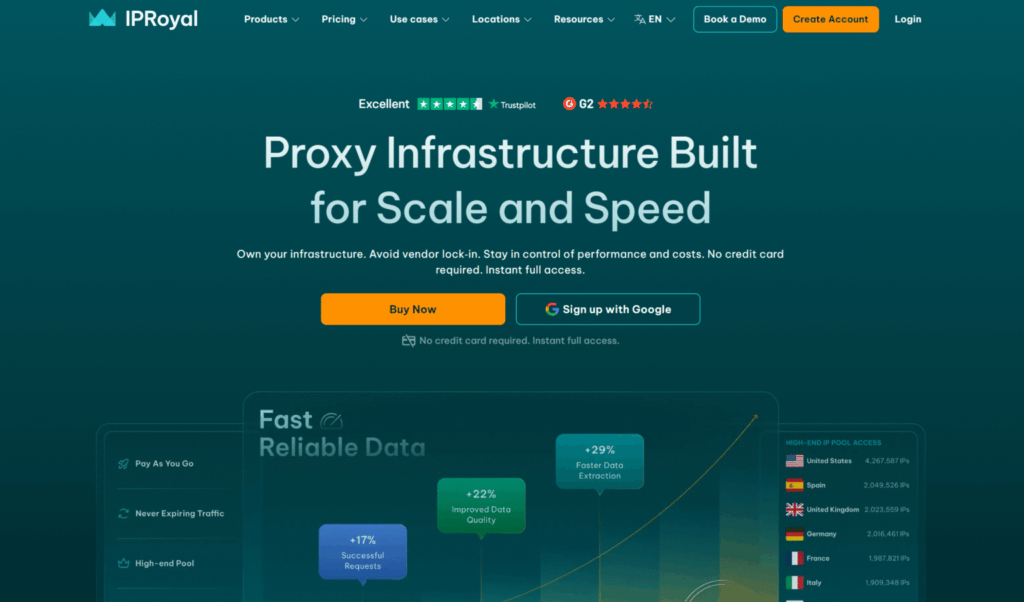
IPRoyal supplies residential, sneaker focused, datacenter, and mobile proxies with an emphasis on affordability and practical functionality for account management and e commerce workflows. Static residential options maintain steady connections while pawn proxies sourced from real devices add an extra layer of authenticity. The service supports precise session controls through HTTP and SOCKS protocols and users appreciate the straightforward targeting capabilities that fit specific operational preferences. Some report variations in IP consistency during high demand periods but the platform generally performs well for SEO tasks and ad verification projects. Quick setup procedures and flexible plans make IPRoyal accessible for teams of all sizes seeking cost effective solutions. The unique sourcing methods contribute to distinctive proxy quality that helps users navigate online challenges with greater confidence and efficiency.
- Key features: Pawn IPs, static sessions, HTTP/SOCKS.
- Accurate info: Some reviews note good results in ad verification.
- Pros: Unique sourcing, flexible options, quick setup.
- Cons: Inconsistent performance at times.
7. SOAX
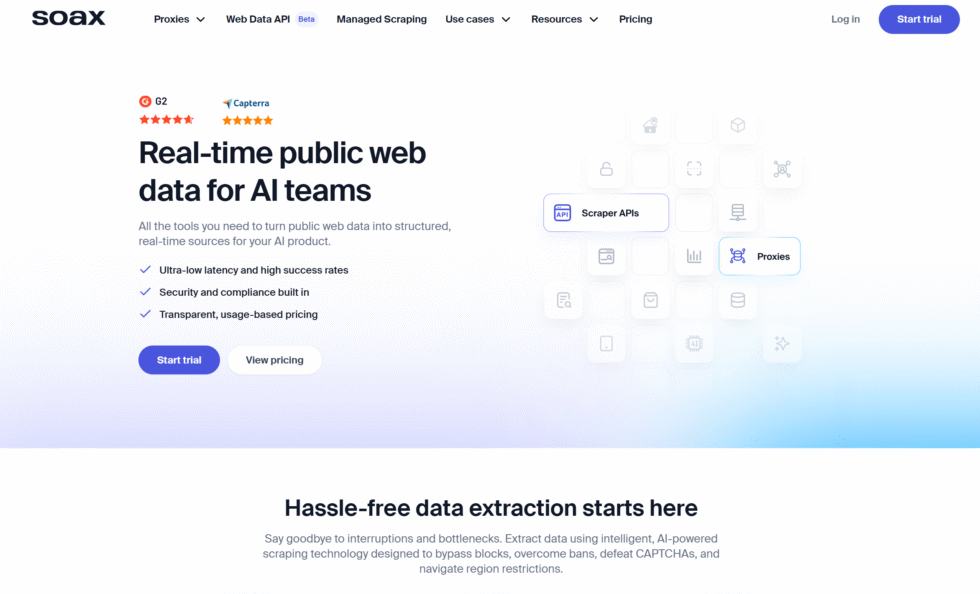
SOAX specializes in clean residential and mobile proxies equipped with granular controls and an efficient backconnect system for smooth scraping and testing procedures. The intuitive dashboard displays real time usage statistics that help users monitor activity and optimize performance on the fly. A convenient whitelist feature enhances security for approved connections and the service supports reliable data collection across multiple applications. Some users adjust settings slightly to achieve peak speeds but the overall interface remains approachable for mid sized operations. SOAX maintains high IP quality standards that reduce the likelihood of interruptions and supports consistent results in professional environments. The platform continues to evolve as a dependable choice for teams focused on quality driven proxy experiences and streamlined management of online activities.
- Key features: Backconnect, whitelist, real-time monitoring.
- Accurate info: Many use it for clean data collection.
- Pros: High IP quality, intuitive controls, good for mid-size tasks.
- Cons: Limited datacenter options.
8. Webshare
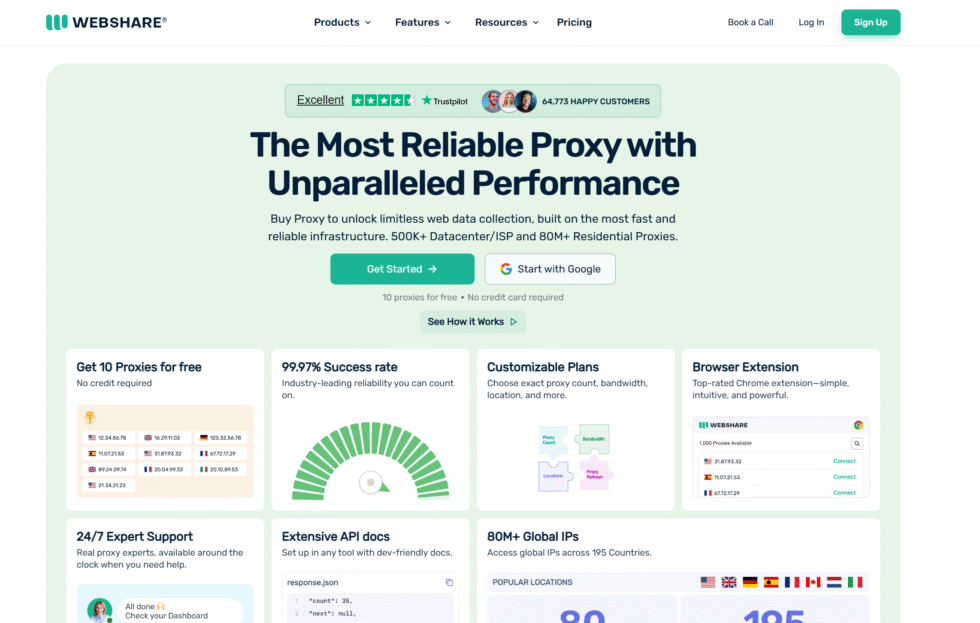
Webshare provides shared and dedicated datacenter proxies alongside residential options at competitive price points ideal for high volume requirements. Unlimited bandwidth on select plans supports sustained operations while the self service dashboard enables easy list refreshes and management of active connections. Many users value the impressive speeds available through datacenter infrastructure even though residential pool sizes may feel more modest in comparison. The platform handles bulk tasks effectively and offers straightforward tools for ongoing maintenance. Webshare appeals to budget conscious professionals who need reliable performance without unnecessary complexity. Its focus on accessible features and consistent delivery makes it a practical selection for automation projects and data intensive workflows that demand dependable connectivity at scale.
- Key features: Auto-refresh, unlimited threads, list management.
- Accurate info: Some benchmarks show low costs for bulk.
- Pros: Budget-friendly, fast datacenter, easy management.
- Cons: Shared IPs may face more blocks.
9. NetNut
NetNut features residential, mobile, and ISP proxies connected directly through ISP partnerships for enhanced stability and reduced latency in demanding sessions. Unlimited concurrency and customizable service level agreements cater to enterprise clients who require consistent performance across extended operations. The infrastructure bypasses traditional peer networks to deliver smoother experiences particularly beneficial for video streaming and data heavy applications. Some note variations in mobile availability depending on specific needs but the service excels at maintaining steady connections overall. NetNut positions itself as a strong enterprise focused provider with emphasis on reliability and direct network advantages. Users benefit from professional grade support and infrastructure designed to handle sophisticated proxy requirements in competitive professional settings.
- Key features: Direct ISP links, custom plans, high uptime.
- Accurate info: Many enterprises choose it for steady sessions.
- Pros: Low latency, enterprise focus, reliable connections.
- Cons: Fewer consumer tools.
10. Proxy-Seller
Proxy-Seller offers datacenter, residential, and mobile proxies with dedicated IP addresses that prioritize speed and privacy for activities including gaming and general browsing. Diagnostic tools help users verify and optimize their configurations while multi protocol support ensures broad compatibility with various software environments. The service includes options for both rotating and static connections that adapt to different workflow preferences. Some users observe occasional differences in rotation smoothness but the platform generally delivers solid privacy protection and quick deployment. Proxy-Seller focuses on practical features that enhance user control and security across diverse online tasks. The combination of dedicated resources and versatile proxy types makes it a suitable choice for professionals seeking dependable anonymity and performance in their daily operations.
- Key features: Diagnostics, dedicated IPs, multi-protocol.
- Accurate info: Some reviews highlight gaming compatibility.
- Pros: Privacy-focused, quick diagnostics, versatile.
- Cons: Rotation inconsistencies occasionally.
11. MyPrivateProxy
MyPrivateProxy delivers private and shared proxies in combination with VPN services that focus on anonymity and optimization for SEO related activities. Enterprise grade hardware across multiple data centers supports high uptime and consistent performance for accessing restricted platforms without detection. Flexible authentication methods including IP based or username password options accommodate individual privacy needs as well as professional web tasks. Instant activation upon purchase enhances convenience for users who require rapid deployment. The service handles secure browsing and data management effectively while maintaining strong infrastructure for reliable connections. MyPrivateProxy stands out for its emphasis on exclusive use proxies that minimize sharing risks and deliver steady results for social media management and content access projects.
However, weaknesses include potentially limited scalability for very large operations due to the fixed number of servers and a support system reliant on ticketing, which might not offer the immediacy of live interactions in all scenarios. The service provides flexible authentication options, including IP-based or username/password, catering to diverse user needs from individual privacy to professional web tasks. Instant activation upon setup enhances user convenience, making it a solid choice for those prioritizing security and speed in online activities.
- Private proxies for exclusive use with HTTP/HTTPS support.
- Shared proxies for cost-effective multiple-user access.
- Enterprise-grade hardware ensuring consistent performance.
- 24/7 customer support through ticketing, email, and live chat.
- Over 220 dedicated servers in 24 global data centers.
- Instant activation for quick deployment.
- Suitable for SEO tools, social media anonymity, and secure browsing.
12. HydraProxy
HydraProxy provides residential and mobile proxies with unlimited bandwidth and customizable rotation controls optimized for data collection and market research applications. The service features clean IPs that lower ban risks and supports multi threaded tools through HTTPS and SOCKS protocols. Granular options for session management allow users to set specific rotation intervals that match their project timelines. Some plans include metered elements for residential usage but the overall flexibility appeals to businesses engaged in quality assurance and aggregation tasks. A money back guarantee reinforces user confidence in the platform. HydraProxy continues to deliver reliable performance for teams that value control and consistency in their proxy powered workflows across various professional scenarios.
Weaknesses encompass metered bandwidth for residential plans, potentially limiting heavy users, and a lack of extensive international mobile options beyond custom setups. The service optimizes for multi-threaded applications, offering HTTPS/SOCKS support and instant access, which appeals to businesses needing flexible, reliable proxy solutions for QA and aggregation tasks. With a money-back guarantee, it emphasizes user satisfaction in a competitive market.
- Mobile proxies with 4G/5G/Wi-Fi networks and unlimited bandwidth.
- Residential proxies featuring 5+ million IPs worldwide.
- Static mobile and ISP proxies for consistent sessions.
- Rotating or sticky IPs with custom rotation times.
- Geo-targeting by country, ISP, city, or ZIP code.
- HTTPS/SOCKS protocol support.
- Optimized for travel aggregation, market research, and website verification.
- High satisfaction for clean, reliable IPs.
13. SquidProxies
SquidProxies supplies datacenter, residential, and customized proxy solutions with a strong focus on high concurrency and unlimited bandwidth for web data extraction projects. Operating for many years the service supports millions of IPs and serves a wide client base from startups to large corporations. Proprietary routing technology contributes to exceptional uptime and scalability that benefits developers tackling volume intensive tasks. The platform offers free consultations and accommodates substantial thread counts per IP for efficient processing. Some setups may lean toward static configurations but the infrastructure delivers cost effective performance through optimized hardware. SquidProxies remains a trusted resource for organizations seeking dependable proxy support and professional guidance in data driven operations.
Weaknesses may involve less emphasis on rotating residential options compared to peers, and a focus on static setups that could limit dynamic needs. The service provides free consultations and supports 100+ concurrent threads per IP, ideal for developers and businesses tackling volume tasks. With 16+ years of experience, it delivers cost savings of 25-75% through efficient infrastructure.
- Dedicated datacenter proxies with unlimited bandwidth.
- Residential proxies for clean, rotating access.
- High concurrency supporting 100+ threads per IP.
- 50-100 Mbps bandwidth per IP on 100+ Gbps network.
- 99.9% uptime guarantee.
- Over 8,000 clients including universities and enterprises.
- 4.8+ ratings on uptime, support, and global coverage.
- Suitable for data extraction, startups, and large-scale operations.
14. Storm Proxies
Storm Proxies specializes in backconnect rotating proxies and private dedicated options optimized for high anonymity and performance in web scraping and social media management. The network includes substantial residential and premium dedicated IPs that enable seamless rotation and unlimited bandwidth for multi threaded applications. In house technology powers unique reverse proxy features with instant delivery and full server ownership for consistent service quality. The service supports specialized packages for platforms such as social networks and ticket purchasing sites. Although protocol options remain limited to HTTP and HTTPS the platform maintains network integrity through appropriate usage policies. Storm Proxies helps users achieve fast anonymous access for SEO projects, bulk registrations, and other automation needs with reliable infrastructure.
Weaknesses involve limited protocol support to HTTP/HTTPS only, without SOCKS options, and restrictions on certain activities like torrents to maintain network integrity. The service caters to users needing fast, anonymous access for SEO, bulk registrations, and sneaker or ticket sites, with specialized packages for social platforms like Instagram and Twitter.
- Backconnect rotating proxies changing IPs per request or timed intervals.
- Private dedicated proxies for fixed high-speed IPs.
- Over 700,000 shared rotating IPs.
- Optimized for scraping, traffic bots, and account creation.
- USA, EU, combined, and worldwide location options.
- Highly anonymous with hidden real IP technology.
- 99% uptime through owned infrastructure.
- Suitable for social sites, sneakers, and tickets.
15. Rayobyte
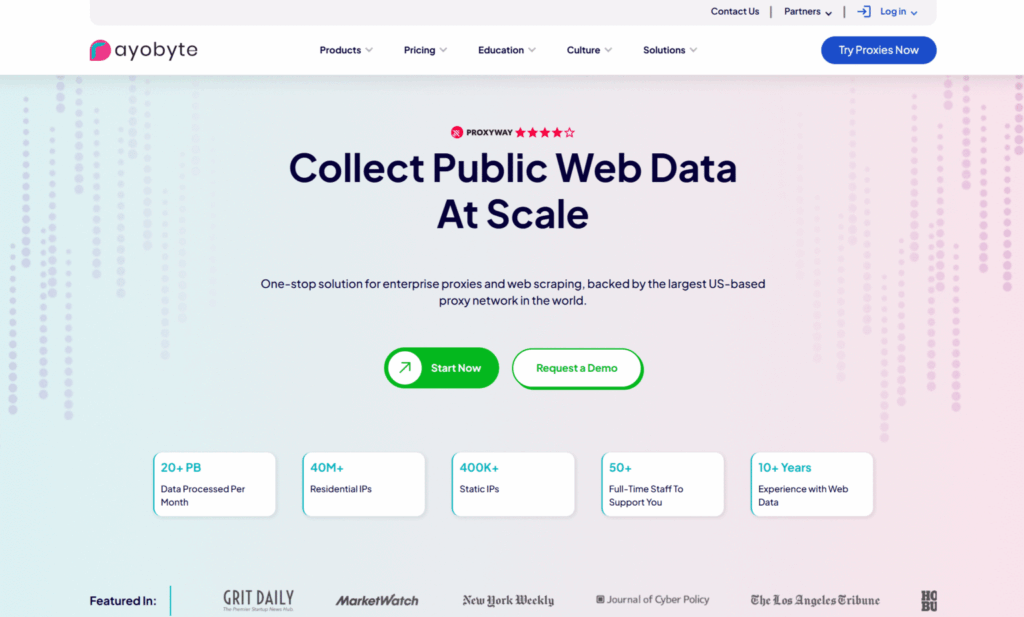
Rayobyte presents a full suite of residential, ISP, datacenter, and mobile proxies focused on ethical data collection for enterprise environments. Diverse proxy types support undetectable scraping while experienced staff provide expert consultations to refine implementations. The service processes significant data volumes monthly and includes tools such as web unblockers and scraping APIs for enhanced usability. Over many years of operation the company has built capabilities suited to e commerce gathering, AI dataset creation, ad verification, and SERP analysis. Some users may find the enterprise orientation more suitable for larger teams but the infrastructure delivers strong results across demanding projects. Rayobyte emphasizes quality and support that help organizations scale their data operations effectively.
Weaknesses may include a heavier emphasis on enterprise-scale operations, potentially overwhelming for smaller users, and a strict ethical code limiting certain applications. The service excels in e-commerce data gathering, AI dataset building, ad verification, and SERP analysis, with tools like web unblocker and scraping API enhancing usability.
- Residential proxies with 36+ million real IPs.
- Rotating and static ISP proxies for speed and authority.
- Datacenter proxies for high-speed affordability.
- Mobile proxies using real carriers.
- Web unblocker handling cookies and headers automatically.
- Scraping API with plug-and-play integration.
- Over 20 PB monthly data processing.
- Geo-located for regional ad and SEO insights.
16. ProxyGuys
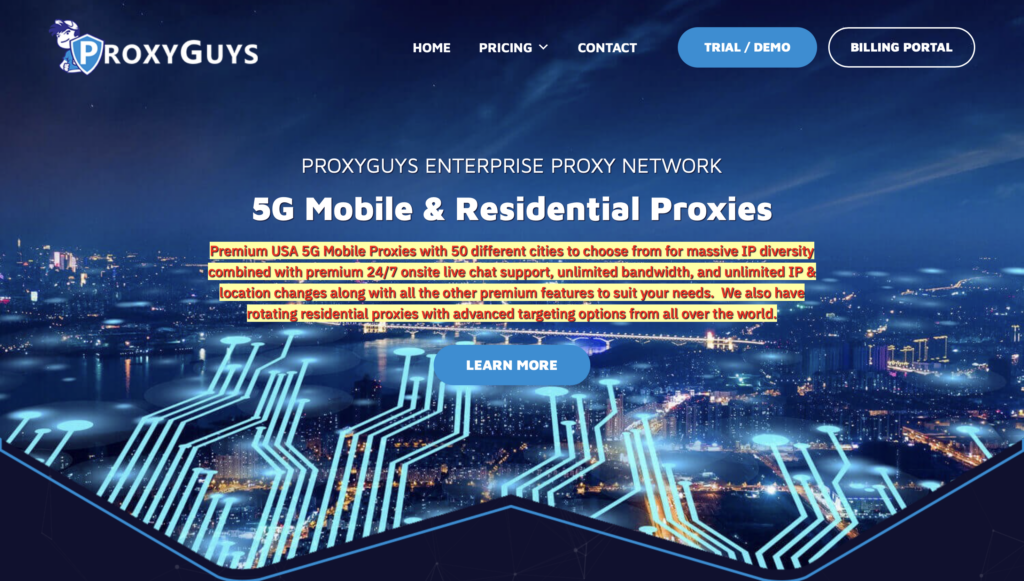
ProxyGuys concentrates on premium mobile and rotating residential proxies that utilize enterprise grade equipment for ethical and log free access. Unlimited bandwidth and the ability to change IPs frequently support diverse operational requirements with solid connection speeds. The service accommodates HTTP, SOCKS5, and VPN protocols along with API and browser plugin integrations for convenient setup. Round the clock support based in the United States assists users during implementation and ongoing use. ProxyGuys proves effective for tasks that demand fast reliable domestic connections and multi account handling. The focus on exclusive access and consistent performance makes it a practical selection for professionals working with specialized proxy needs in competitive markets.
- USA 4G/5G mobile proxies with unlimited bandwidth.
- Rotating residential proxies over 10 million IPs.
- 40-70 Mbps download speeds on mobile.
- Unlimited concurrent IPs and location changes.
- HTTP/SOCKS5 and L2TP VPN support.
- 100% uptime and no logs.
- City/state/country/ISP targeting.
- Ethical sourcing via carrier contracts.
17. NodeMaven
NodeMaven focuses on residential and mobile proxies that prioritize high quality clean IPs for reliable data access and multi account management. An advanced IP filtering algorithm achieves strong clean rates while super sticky sessions extend up to full day durations for sustained operations. Ethical sourcing from actual devices supports HTTP and SOCKS5 protocols with unlimited concurrent sessions. The service optimizes for platforms including social media and search engines through leak prevention measures and rapid response times. Some users appreciate the quality focused approach that suits targeted professional applications. NodeMaven delivers dependable performance for scraping, SEO monitoring, and account related tasks with an emphasis on consistency and user satisfaction.
Weaknesses could involve a quality-over-quantity approach, which might limit options for users needing massive unscreened pools, and a focus on specific use cases like social platforms. The service supports HTTP/SOCKS5 with unlimited sessions, ideal for scraping, SEO monitoring, and platforms like Google, Facebook, and TikTok, backed by advanced leak prevention.
- Residential proxies with 30+ million IPs.
- Mobile proxies on 4G/5G networks.
- IP filtering for 95% clean rate.
- Sticky sessions up to 24 hours.
- Unlimited concurrent sessions.
- Country, region, city-level targeting.
- 99.54% success rate, under 0.8s response time.
- Optimized for social media, scraping, and SEO.
18. High Proxies
High Proxies supplies premium dedicated HTTP and HTTPS proxies along with VPN services protected by strong encryption for brand management and market research activities. Virgin IPs combined with robust cloud infrastructure ensure high uptime and unlimited bandwidth that supports up to numerous simultaneous threads per proxy. Geo options across datacenters contribute to consistent availability while free setup assistance and round the clock support enhance user experience. A money back guarantee provides additional reassurance for new clients. Although the service emphasizes dedicated configurations the platform handles data intensive tasks effectively for engagement and secure browsing purposes. High Proxies appeals to professionals who require stable high availability connections for their operational workflows.
Weaknesses may involve a focus on dedicated setups without extensive rotating options, potentially less flexible for dynamic scraping. The service provides free setup, 24/7 support, and a money-back guarantee, appealing to professionals needing reliable, high-availability proxies for data-intensive tasks.
- Dedicated HTTP/HTTPS proxies with virgin IPs.
- VPN with 256-bit AES encryption.
- Unlimited bandwidth and 100 threads per proxy.
- 99.99% uptime guarantee.
- Geo-targeting across multiple datacenters.
- 24/7 live support.
- Used for market research, brand management, and aggregation.
- Free setup and money-back policy.
19. Ping Proxies
Ping Proxies specializes in residential and ISP proxy services tailored for web scraping, price comparison, brand protection, and automation tasks. The platform maintains substantial residential IP addresses with precise control options and developer friendly API integrations compatible with multiple programming languages. Unlimited concurrent sessions and strong network capacity support reliable data driven operations. Some users monitor bandwidth usage carefully for high volume projects but the service delivers consistent success rates and low latency in key markets. Ethical sourcing practices and comprehensive protocol support make Ping Proxies suitable for analytical and monitoring activities. The platform continues to serve numerous customers seeking dependable automation and market insight capabilities.
- Residential proxies with 35M+ IPs and significant US monthly active pool exceeding 586,000
- Country, region, city, and ISP-level targeting options
- HTTP/SOCKS5 protocol support with unlimited concurrent sessions
- 99.9% uptime and 100 Gbps network capacity
- REST API integrations compatible with Python, JavaScript, and other languages
- 25K+ customers utilizing for automation, monitoring, and market insights
20. Proxys.io
Proxys.io delivers anonymous proxy servers including datacenter, residential, and ISP varieties for bypassing restrictions and maintaining privacy during data collection. Static and dynamic IPv4 and IPv6 configurations alongside residential IPs from trusted connections provide stable performance across numerous applications. Pre sale stability checks and consistent validation ensure only high quality options reach users while HTTPS and SOCKS5 protocol support adds versatility. The free proxy checker tool and round the clock customer assistance facilitate smooth implementations. Although coverage focuses on primary regions the service excels in key operational scenarios for US and international users. Proxys.io positions itself as a reliable provider of anonymous access and dependable connections for professional workflows.
- Datacenter proxies in static and dynamic IPv4/IPv6 configurations
- Residential proxies for enhanced anonymity and website trust
- Coverage across 70+ countries with European and Asian emphasis plus US availability
- HTTPS and SOCKS5 protocol support
- 24/7 customer support and free proxy validation tools
- Pre-sale quality checks ensuring only stable IPs are offered
21. Quantum Proxies
Quantum Proxies offers premium residential, datacenter, ISP, mobile, and IPv6 solutions optimized for high performance data tasks and account management. The extensive pool of unique IP addresses spans broad networks with dedicated strength in residential options. Flexible session controls including rotating and sticky configurations support sustained operations across global applications. The infrastructure leverages authentic residential and cellular sources alongside high speed alternatives for scalable web scraping and social media activities. Some users note the challenge of uniform quality in niche areas but the service adapts well to automation projects. Quantum Proxies delivers versatile proxy types that enhance efficiency for businesses handling diverse online requirements in dynamic environments.
- Residential proxies with city, state, and country targeting plus rotating/sticky sessions
- Datacenter proxies delivering high-speed performance
- ISP and mobile proxies sourced from real networks
- Over 80 million unique IPs spanning 200+ countries
- Strong USA residential proxy availability
- IPv6 proxy support for contemporary applications
22. PrivateProxy.me
PrivateProxy.me provides elite HTTP anonymous proxies in datacenter and residential formats with static and rotating configurations focused on stability for scraping, automation, and SEO efforts. Strong emphasis on high trust scores supports United States and European operations through unlimited connections and unmetered bandwidth. Ethically sourced residential IPs come from direct ISP partnerships that enhance overall reliability. Instant activation and monthly swap options streamline professional workflows that demand consistent domestic proxies. The platform enables seamless connectivity for secure operations across multiple locations and ports. PrivateProxy.me appeals to users seeking stable high performance solutions that integrate smoothly into ongoing business processes and data handling activities.
- Datacenter and residential proxies in static and rotating formats
- Strong US and Europe IP focus with high stability and trust scores
- Unlimited concurrent connections and unmetered bandwidth options
- HTTP(S) protocols with elite anonymity levels
- Ethically sourced residential IPs through ISP partnerships
- Instant activation with one free IP swap per month
23. MarsProxies
MarsProxies delivers versatile residential, ISP, datacenter, mobile, and specialized proxies designed for web scraping, social media management, and e commerce monitoring. Customizable rotation and extended sticky sessions contribute to flexible automation workflows with high uptime standards. The service supports HTTP, HTTPS, and SOCKS5 protocols along with unlimited concurrent connections that accommodate diverse task requirements. Although pool sizing fits smaller to medium operations the platform offers robust session management and ease of integration. MarsProxies helps users achieve reliable IP diversity for projects needing consistent performance and straightforward setup procedures. The combination of proxy types makes it suitable for teams managing varied automation needs in competitive digital landscapes.
- Over 1 million residential IPs across 190+ countries with robust US coverage
- Residential, ISP, datacenter, mobile, and sneaker-specific proxy types
- HTTP, HTTPS, and SOCKS5 protocol compatibility
- Country, state, and city-level geo-targeting
- 99.9% uptime with unlimited concurrent connections
- Flexible sticky sessions and rotation for session management
24. DataImpulse
DataImpulse features an expansive ethically sourced residential proxy network optimized for high volume data collection including price monitoring, ad verification, and SERP tracking. Advanced control options support rotating and sticky sessions with standard protocols that deliver strong success rates and efficient performance. Clean first party IPs improve accessibility while flexible mechanisms maintain consistent operation across analytical and intelligence gathering applications. Some users conduct preliminary testing for highly specific scenarios but the service generally supports seamless data extraction and verification tasks. Round the clock assistance further enhances the user experience. DataImpulse stands out for teams focused on reliable automation and competitive market intelligence in professional environments.
- Over 90 million ethically sourced residential IPs in 195 countries
- Rotating proxies with sticky session support
- Advanced geo-targeting including country, city, ZIP, and ASN options
- HTTP(S) and SOCKS5 protocol compatibility
- High success rates near 97-99% with low latency in US operations
- 24/7 support for seamless data extraction and verification tasks
25. Live Proxies
Live Proxies specializes in private dedicated residential and mobile proxies that minimize shared pool issues for superior stability and reduced detection risks. Rotating and long term static IP options combined with unlimited thread support enhance consistency for e commerce automation, brand protection, and social media operations. Strong state level controls alongside API and dashboard management tools ensure uninterrupted performance across scraping, ad verification, market research, and account management workflows. The service benefits demanding projects that require reliable execution without contention. Live Proxies delivers enhanced dependability for users who prioritize exclusive access and sustained connectivity in their proxy powered activities.
- Private dedicated rotating and static residential proxies
- Mobile proxy options with rotating capabilities
- Targeted coverage including detailed US state-level options
- Unlimited concurrent threads and sessions
- High uptime supported by API and dashboard tools
- Optimized for web scraping, ad verification, SEO, and social media management
26. ProxyWing
ProxyWing operates as a paid proxy provider supplying residential, datacenter, ISP, and mobile proxies with SOCKS5 compatibility. The network reaches substantial IP volumes across numerous regions with high speed connections and exceptional uptime that support steady performance during web scraping and multi account management. Multi protocol support including HTTP, HTTPS, SOCKS5, UDP, and TCP facilitates broad tool integration while dedicated private IPs ensure exclusive access. The management dashboard simplifies setup and monitoring procedures. IP quality and response consistency adapt based on usage levels and regional factors. ProxyWing provides scalable solutions for automation tasks with a clear focus on reliability and user convenience in professional operations.
- Key features: High-speed connections, dedicated and private IPs, multi-protocol support including HTTP HTTPS SOCKS5 UDP TCP, IP rotation capabilities, easy-to-use dashboard, 24/7 support, and scalability for automation tasks.
- Accurate data and information: Network holds 70 million IPs in 200-plus countries with strong counts in the USA UK Germany and Netherlands, 99.99 percent uptime across operations, and full anonymity through undetectable routing.
27. NewIPNow
NewIPNow has delivered private proxies since its early years with a focus on elite anonymous static IPv4 datacenter solutions. Each address remains exclusive to one user delivering undivided performance without sharing. Redundant connections across multiple regions and subnets allow targeted access while unlimited bandwidth pairs with high backbone speeds and strong uptime. Instant IP refresh and configurable options enable quick adaptation for specific sites or tools. The user friendly dashboard and dedicated support enhance overall experience. Response times stay fast even under load though minor variations may occur in certain subnets. NewIPNow continues to serve users seeking dependable anonymous connectivity and flexible proxy management for various online activities.
- Key features: Elite anonymity, unlimited bandwidth, instant IP refresh, IP whitelisting authentication, non-sequential IPs, configurable locations and subnets, and compatibility with HTTP HTTPS tools.
- Accurate data and information: Global coverage across 20-plus countries with USA Europe Canada Asia and Africa locations, over 99.9 percent network uptime, and speeds over 1,000 Mbps on redundant backbones.
28. SSLPrivateProxy

SSLPrivateProxy functions as a paid proxy provider based in the United States specializing in dedicated datacenter proxies and VPN services. Fully private dedicated IPs remain exclusive to single users with limited shared options available for cost conscious choices. The network covers numerous North American cities and select European sites with high speed connections, strong uptime, and unlimited bandwidth. Header removal prevents leaks while authentication methods support exclusive use. The service works effectively for social media management, web scraping, e commerce, and gaming applications. Performance stays consistent across virgin IPs although peak demand may influence shared addresses slightly. SSLPrivateProxy emphasizes anonymity and reliability for targeted professional tasks requiring secure and stable connections.
- Key features: Dedicated private proxies, 1,000 Mbps connections, unlimited bandwidth, no IP leaks, header removal, authentication for exclusive use, and support for PPTP OpenVPN in VPN offerings.
- Accurate data and information: Over 120,000 dedicated IP addresses in 34 North American cities and European locations, 99.99 percent uptime, and high anonymity for targeted tasks such as Twitter management.
29. MountProxies
MountProxies specializes in dedicated mobile proxies sourced from real devices on major carrier networks. These proxies deliver authenticated residential IPs exclusive to one user with rotating or static configurations and unlimited data and thread limits. Premium hardware ensures maximum security and uptime while raw proxy support handles multiple sessions simultaneously. Connection speeds vary by location and carrier conditions but the service accommodates continuous operation across devices and accounts. The platform supports IP whitelisting and user pass authentication for flexible access. MountProxies proves suitable for users who require consistent mobile proxy performance and multi account capabilities in specialized operational environments.
- Key features: Dedicated mobile devices, 4G 5G LTE residential IPs, unlimited data and threads, rotating or static options, IP whitelisting plus user pass authentication, and raw multi-account support.
- Accurate data and information: Huge IP pool from AT&T T-Mobile and Verizon networks across multiple US cities, speeds between 1.1 Mbps and 26 Mbps by location, and 100 percent exclusive residential authentication.
30. ProxyRack
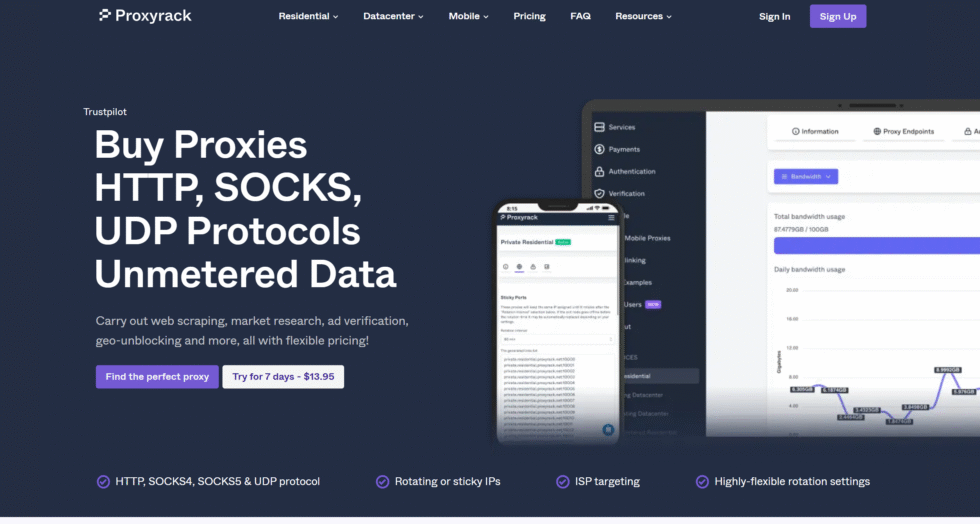
ProxyRack supplies residential datacenter and mobile proxies that deliver versatile connectivity through support for multiple protocols including HTTP HTTPS SOCKS4 SOCKS5 and UDP. The service enables users to handle web data collection scraping automation and other intensive online activities with rotating or sticky port options that maintain session flexibility. City and ISP level selections allow precise alignment with project demands while the intuitive dashboard offers live reporting tools for real time monitoring and issue resolution. Self service setup completes in minutes making it accessible for developers and teams scaling operations across diverse workflows. The platform prioritizes clean IP pools and ethical sourcing that contribute to consistent performance in competitive environments. Some users note that the broad protocol compatibility streamlines integration with existing tools and scripts. ProxyRack continues to serve many professionals seeking dependable proxy infrastructure for sustained productivity without unnecessary complications.
Key features
- Rotating and sticky port configurations for residential datacenter and mobile proxies
- Full protocol support including HTTP HTTPS SOCKS4 SOCKS5 and UDP
- Live dashboard with reporting and troubleshooting capabilities
- API and Docker integration for automation workflows
- City and ISP selection options for session management
Accurate data and information
- Access to extensive IP pools sourced from real devices and data centers across many countries
- Compatibility with popular scraping frameworks and automation software
- Support for high concurrency in multi threaded applications
- Tools for proxy checking IP lookup and DNS testing
- Reseller program available for business growth opportunities
31. Proxy-Cheap

Proxy-Cheap operates as a dedicated proxy service provider delivering static residential ISP rotating residential datacenter and mobile proxies tailored for safe and efficient online operations. The platform emphasizes protection of user information through advanced anonymity features and protocol support including SOCKS5 for superior performance across devices browsers and applications. Extensive location coverage focuses strongly on the United States alongside other key regions enabling users to route traffic effectively for tasks such as account management data scraping ad verification market research and social media activities. A usage analytics dashboard combined with browser extensions simplifies tracking and configuration while round the clock support ensures smooth experiences. The service maintains high efficiency with minimal latency and strong compatibility that benefits teams handling multiple concurrent sessions. Proxy-Cheap appeals to users who value scalable solutions and reliable infrastructure for everyday professional needs.
Key features
- Static and rotating residential ISP datacenter and mobile proxy options
- SOCKS5 protocol with TCP UDP support and high anonymity levels
- Usage analytics dashboard and browser extension tools
- Authentication methods and no logging policy
- 24/7 customer support and network testing capabilities
Accurate data and information
- Strong presence in United States proxy locations with additional international coverage
- Compatibility with various devices applications and automation tools
- Support for multi account creation e commerce and brand protection workflows
- Referral program for expanded business opportunities
- Focus on scalable plans suitable for teams of different sizes
32. Limeproxies
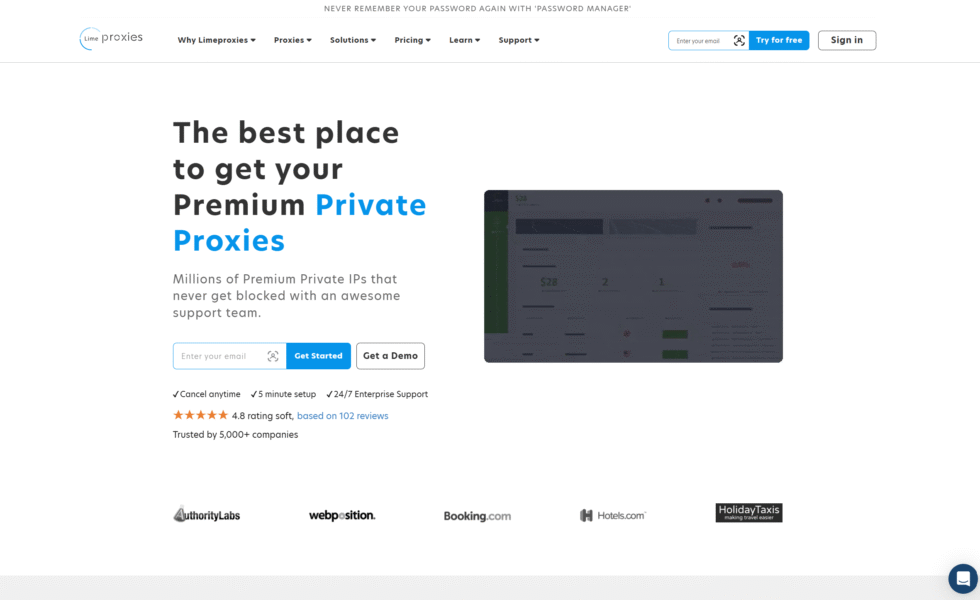
Limeproxies functions as an independent proxy provider headquartered in Walnut California United States offering residential mobile rotating ISP static residential and dedicated datacenter proxies for enterprise level data tasks. With nearly a decade in the industry the service focuses on high speed connections customizable plans and seamless integration options including a dedicated browser extension and comprehensive API documentation. Users engage the proxies for web scraping data mining ad verification price tracking SEO monitoring and website testing across global applications. The platform supports a wide array of tools and software while emphasizing reliability and ease of use for both novice and experienced operators. Some find the extensive customization particularly helpful when scaling projects or adapting to changing requirements. Limeproxies builds its reputation through consistent service quality and responsive expert support that aids professionals in maintaining efficient operations.
Key features
- Residential mobile rotating ISP static residential and datacenter proxy varieties
- Rotating and static configuration options with customizable refresh rates
- Browser extension for simplified access and management
- Extensive API documentation for programmatic integration
- 24/7 expert customer support and tool compatibility
Accurate data and information
- Independent United States based company serving many businesses worldwide
- Trusted for data intensive applications including market research and brand protection
- High compatibility with automation scraping and monitoring software
- Customizable plans adapted to project scale and specific needs
- Strong emphasis on uptime success rates and network performance
33. DynaProx
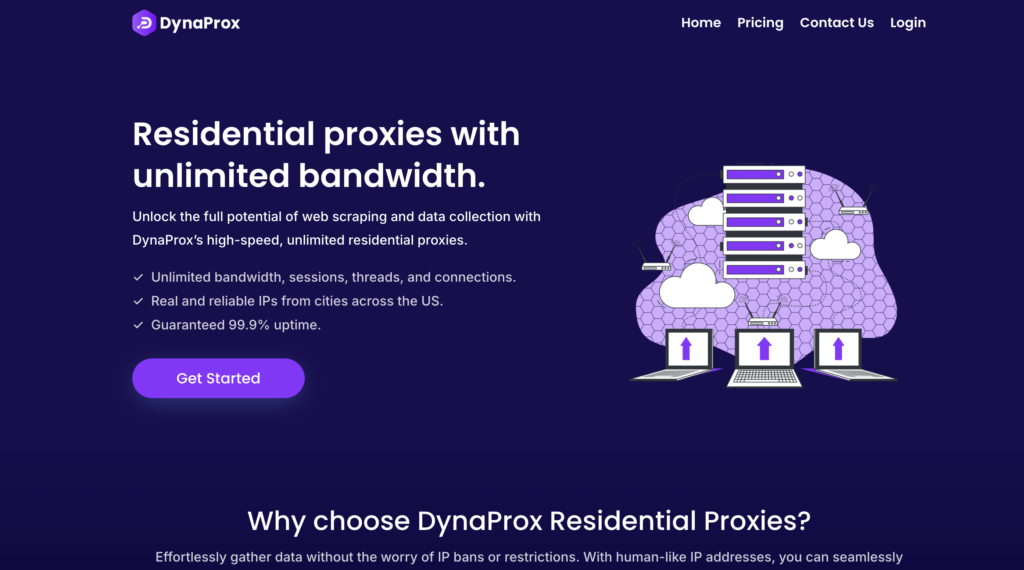
DynaProx specializes in residential proxies that utilize IP addresses from real residential devices to provide authentic and reliable connections for data collection efforts. The service supports web scraping market research ad verification SEO monitoring social media management and cybersecurity applications by mimicking genuine user behavior to reduce detection risks. Unlimited bandwidth combined with automatic IP rotation and high anonymity features enables continuous operations without interruptions or data caps. Advanced options allow selection from specific states and cities within the United States while unlimited concurrent sessions and threads accommodate demanding multi threaded workflows. The platform optimizes for minimal latency and stable performance through protocols such as HTTPS with HTTP support for standard browsing. DynaProx appeals to users requiring scalable solutions that prioritize consistency and ease of deployment in competitive digital landscapes.
Key features
- Residential proxies with automatic IP rotation and sticky session support
- Unlimited bandwidth sessions threads and connections
- State and city level selection within the United States
- HTTPS and HTTP protocol compatibility
- Optimized for high anonymity and low latency operations
Accurate data and information
- Focus on authentic IPs sourced from real residential devices across the United States
- Support for web scraping market research and social media management tasks
- Compatibility with automation tools and concurrent request handling
- Emphasis on network stability and seamless data gathering
- Dedicated support for scaling professional workflows
Proxy Types Explained
Proxies come in different forms, each suited to specific jobs. Residential ones use real home IPs, blending in well for data work. Mobile types draw from device networks, dodging blocks on strict sites. Datacenter proxies run from servers, offering speed for bulk tasks. ISP or static hold addresses longer, good for steady access. Mixing types boosts flexibility. Pick based on your setup to maximize results.
| Proxy Type | Best For | Speed Level | Detection Risk |
| Residential | Data scraping | Medium | Low |
| Mobile | Social media | Medium-High | Very Low |
| Datacenter | High-volume tasks | High | Medium |
| ISP/Static | Account management | High | Low-Medium |
Common Proxy Use Cases
Proxies shine in areas like gathering market info or verifying ads across regions. They help track reviews without alerts. In cybersecurity, they test defenses by simulating attacks. Travel sites use them to compare fares fairly. Our use case guide details these applications. Always match the proxy to the task for best outcomes.
How Proxies Boost Online Security?
Proxies add a layer between you and sites, hiding your real IP to reduce tracking. They filter traffic, blocking harmful content in some setups. For businesses, this means safer data handling. Proxies aid in compliance by controlling access. Our integrations page has secure tool setups. Combine with other measures for full protection.
Integrating Paid Proxies with Popular Tools and Software
When managing multiple online tasks, compatibility between paid proxies and various software plays a key role in maintaining smooth operations. Tools designed for automation often pair well with proxies that offer flexible configurations, allowing for efficient handling of requests across platforms.
Integration processes typically involve setting up proxy details within the tool’s settings, such as entering authentication credentials and selecting protocol options. For software focused on social platform management, proxies that support HTTP and SOCKS5 ensure broad compatibility.
Certain tools benefit from proxies that allow for customized session controls, enhancing overall functionality in repetitive tasks. Blogs detailing specific setups, like those on social media proxies, outline how these integrations work in practice for account handling. Similarly, for verification processes, proxies for ad verification integrate into tools that monitor digital content, supporting accurate assessments.
Advanced software may require proxies with unlimited bandwidth options to handle high-volume operations. In such cases, rotating mobile proxies adapt to mobile-specific tools, providing the necessary IP diversity for app-related automations. Resources on web scraping 101 demonstrate how proxies fit into data extraction software, ensuring compliance with platform policies during integration.
Advanced Proxy Management Techniques
Effective management of paid proxies involves strategies that optimize performance across various applications. Monitoring tools help track connection stability, allowing adjustments to proxy pools as needed. In environments where speed is critical, selecting proxies with low latency, such as rotating datacenter proxies, supports tasks that require quick response times.
Session management techniques include implementing rotation intervals to balance load and prevent overuse of individual IPs. For static needs, static residential proxies offer consistent access, which suits long-term connections in monitoring setups. Combining these with automation scripts enhances control over proxy behavior.
Proxy chaining, where multiple proxies are linked in sequence, adds layers to request routing in complex workflows. This approach works with integrations that support multi-hop configurations, providing additional anonymity for sensitive operations. Guides on proxy use cases illustrate how these techniques apply to different scenarios, from data aggregation to platform testing.
Backup strategies ensure continuity by switching to alternative proxies during downtime. Maintaining a diverse proxy inventory, including both residential and mobile types, allows for quick adaptations. Proxy service comparisons highlight how management techniques evolve with provider offerings.
Streamlining Web Scraping Operations Using Premium Proxy Networks
Organizations handling large-scale data extraction projects often integrate rotating residential proxies to support sustained request volumes and minimize disruptions in their workflows.
These networks complement foundational approaches used for web scraping and outlines effective implementation methods. Static residential proxies offer reliable fixed connections that suit sequential processing needs where IP consistency matters for authentication purposes. Rotating mobile proxies enable teams to emulate standard mobile traffic patterns during extraction from app-based platforms. Dedicated mobile proxies provide users with exclusive access points that enhance customization options for complex scraping architectures. Rotating datacenter proxies supply the rapid response times essential for time-critical data gathering initiatives.
Leveraging Proxies for Social Media Management and Ad Verification Tasks
Social media management teams utilize social media proxies to distribute account activities across varied IP sources and sustain operational flow without platform flags. This setup aligns with practices for handling multiple profiles simultaneously. Ad verification processes rely on proxies for ad verification to accurately assess campaign reach and placement integrity across different environments. Proxy integrations with automation software allow seamless incorporation into existing business systems for improved efficiency in these areas.
How to Choose the Best Paid Proxy Provider in 2026: Buyer’s Guide?
Paid proxy providers offer a range of choices that fit different project needs. Speed often ranks first because quick connections cut down on wait times during busy operations. Many businesses rely on rotating datacenter proxies when they need consistent performance across large data pulls.
Uptime comes in close behind as a major factor. Stable connections keep tasks running without sudden stops. Geo targeting options add real value too since they let users pick exact locations like countries or cities.
Protocol support expands what tools the proxies can handle. Options such as HTTP, HTTPS, and SOCKS5 make setup easier with various software. Session control features give users the ability to keep IPs sticky or rotate them as needed.
Scalability matters for teams that plan to grow. Providers that allow easy plan adjustments support bigger workloads over time. Clear documentation helps developers integrate everything smoothly into their workflows.
Dedicated datacenter proxies stand out in this space for jobs that demand reliable server based addresses through services like rotating datacenter proxies.
Residential vs Mobile vs ISP vs Datacenter Proxies: Which Type Is Right for You?
Proxy types each bring different strengths depending on the job. Dedicated datacenter proxies come straight from data center servers and deliver fast connections for high volume work.
Residential proxies pull addresses from real home internet lines so they blend in better with everyday traffic. Many teams turn to rotating residential proxies for projects where natural looking connections reduce detection risks.
Mobile proxies route through cellular networks and match device behavior closely. Dedicated mobile proxies provide exclusive 4G and 5G access that works well with strict platforms.
ISP proxies mix datacenter speed with stronger trust signals from internet service providers. This middle ground helps in situations that need both performance and legitimacy through static residential proxies.Datacenter proxies shine in automation and data collection because of their low latency. Social media proxies or account management tasks sometimes use a blend of types to match platform rules and get better results overall when paired with rotating mobile proxies.
2026 Paid Proxy Pricing Comparison: Plans, Costs & Best Value
Paid proxy services offer various pricing structures to match different user needs and project scales. Some plans work on a monthly basis while others charge according to data usage levels. This range of choices helps teams select what fits their workflow best from providers like ProxyEmpire.
Many professionals rely on rotating residential proxies when they work on projects that need frequent IP changes. For tasks requiring a fixed connection, static residential proxies provide dedicated addresses that stay consistent. Teams that handle social media or app related work often turn to rotating mobile proxies and dedicated mobile proxies for their specific advantages.
Rotating datacenter proxies attract users who value fast response times and high volume capabilities. The most effective plans usually balance cost with the features that matter most to the workflow. Flexible structures let businesses scale up or adjust as their requirements change over time with options such as unlimited bandwidth residential proxies.
ProxyEmpire Review 2026: Features, Pricing, Pros, Cons & Real Performance
ProxyEmpire delivers a solid set of proxy solutions suited for a range of online tasks. The service covers key categories including rotating residential proxies, static residential proxies, rotating mobile proxies, dedicated mobile proxies, and rotating datacenter proxies. This range gives users the ability to pick the right tool for each job.
Proxy setup works smoothly with common tools and supports standard protocols that most software expects. Pricing options stay adaptable for both smaller operations and bigger campaigns. Users often highlight the reliable connections they get during regular use in areas like web scraping and account handling.
One strong point is the variety of proxy types available which covers most common scenarios. Support responds quickly when questions come up. Some people mention that exploring all the settings takes a little time at first but the performance makes it worthwhile for everyday data work.
Latest News In 2026
Proxy technology keeps advancing as the year progresses. Services now put more effort into making different proxy types work together seamlessly for complex projects. Better dashboard tools help users monitor their connections with greater ease when using residential proxies and mobile proxies.Interest grows in solutions that maintain longer sessions while still offering natural looking traffic. Businesses experiment with combinations of residential proxies and mobile options to improve their success on challenging sites. These developments respond directly to changes in how websites handle incoming connections. New management features appear that simplify large scale operations. The industry focus shifts toward practical tools that reduce manual adjustments during web scraping activities.
FAQ
What are the main differences between residential and datacenter proxies?
Residential proxies draw from actual household connections, which helps them appear more like everyday users during online activities. This setup often leads to better acceptance on websites that check for unusual patterns. Datacenter proxies, on the other hand, operate through server-based networks, allowing for quicker responses in scenarios requiring high throughput. Both types support various protocols, but understanding your specific requirements can guide the best choice.
How do I set up a paid proxy for my browser?
Begin by accessing the provider’s dashboard to generate authentication details tailored to your needs. Many include browser extensions that simplify the process, letting you toggle settings directly. Once configured, proxies can integrate with tools for enhanced functionality. Regular updates to these setups ensure compatibility with evolving web standards.
Can proxies help with managing multiple social accounts?
Proxies enable distinct IP assignments for each account, which supports smoother operations across platforms. This approach aids in maintaining separate sessions without triggering automated flags. Mobile proxies particularly excel by replicating device-like interactions, useful for social media proxies. Proper configuration aligns with platform guidelines to optimize performance.
What should I do if my proxy connection drops often?
First, review your session settings to enable features like extended IP holds for more reliability. Adjusting rotation intervals might stabilize links during intensive tasks. Tools for monitoring can help identify underlying causes. Switching to a more suitable proxy type could also resolve persistent issues.
What protocols do paid proxies typically support?
Paid proxies commonly support HTTP and SOCKS5 protocols, which cater to different needs in data transmission. HTTP suits web-based requests, while SOCKS5 handles a wider range of traffic types, including UDP for applications requiring versatile connectivity. When selecting proxies for software integration, users often choose those compatible with both to cover various operational scenarios.
How do rotation options vary among paid proxy types?
Rotation options in paid proxies differ based on the type, with some offering automatic IP changes at set intervals and others allowing manual control. For dynamic environments, rotating proxies switch IPs per request or session, which fits automation tasks. Static options maintain the same IP for extended use, suitable for consistent access in monitoring activities.
What factors affect the speed of paid proxies?
Proxy speed is influenced by server location, network congestion, and the type of proxy used. Datacenter proxies often deliver higher speeds due to their infrastructure, while residential and mobile types may vary based on real-user connections. Optimizing configurations, such as selecting appropriate rotation settings, helps maintain efficient performance in high-demand situations.
How can proxy performance be monitored effectively?
Monitoring involves using dashboard tools provided by the service to track metrics like uptime and response times. Regular checks on connection success rates ensure issues are identified early. In workflows involving data tasks, integrating monitoring into automation scripts provides real-time insights, allowing for timely adjustments to proxy usage.
What distinguishes residential from mobile paid proxies?
Residential proxies use IPs from home internet connections, mimicking desktop user patterns, whereas mobile proxies draw from cellular networks, reflecting mobile device behavior. Users select residential for tasks aligned with standard web access and mobile for scenarios involving app interactions or variable connectivity.
How do paid proxies handle authentication?
Authentication in paid proxies typically uses username-password combinations or IP whitelisting. This secures access and prevents unauthorized use. In setups requiring multiple users, whitelisting simplifies management by tying access to specific IPs, while credentials offer flexibility for shared environments.
What role do paid proxies play in automation?
Paid proxies facilitate automation by providing IP diversity to avoid detection in repetitive tasks. They integrate into scripts for data handling, ensuring operations run smoothly across platforms. For example, in content verification, proxies support automated checks without triggering restrictions.
How are paid proxies priced?
Pricing for paid proxies is based on factors like bandwidth usage, number of IPs, and type of service. Subscription models offer tiers for different scales, from small operations to enterprise needs. Users match plans to their requirements, such as opting for unlimited options in high-volume scenarios.
What maintenance is required for paid proxies?
Maintenance includes periodic testing of IPs for functionality and updating configurations as workflows change. Services often provide tools for pool management, allowing refreshes of underperforming proxies. Keeping software compatible with proxy updates ensures ongoing reliability.
How do paid proxies support multi-threaded operations?
Multi-threaded operations benefit from proxies that allow concurrent connections without limits. This setup handles parallel requests efficiently, which is common in data-intensive tasks. Selecting proxies with high concurrency support aligns with tools designed for simultaneous processing.
What should businesses evaluate when selecting paid proxies for 2026?
Businesses should evaluate the range of proxy types available such as residential and mobile options along with their compatibility with specific project demands. Factors like uptime consistency, protocol support including HTTP and SOCKS5, and the availability of management dashboards play key roles in long-term suitability. Rotation capabilities and session handling features also determine how well the service aligns with high-volume requirements across global locations and proxy use cases.
How do rotating proxies contribute to project success?
Rotating proxies contribute to project success by cycling through different IP addresses at set intervals or upon request. This mechanism helps maintain access during prolonged activities where repeated use of a single IP could lead to restrictions. Users pair them with tools for handling CAPTCHAs and other target platforms for optimal results in dynamic environments.
When are static residential proxies preferred over other types?
Static residential proxies are preferred in situations that require a persistent IP address for extended durations. Their stability supports activities involving login sessions or verification processes that benefit from unchanging network identifiers. This type integrates well into setups needing reliable connectivity without frequent changes.
What role do mobile proxies play in application development?
Mobile proxies play a significant role in application development by providing network conditions that mirror those experienced by end users on cellular connections. Developers use them to test app performance under realistic scenarios and identify potential issues before full deployment, particularly in Android proxy setups. These proxies add an important dimension to quality assurance procedures.
How can datacenter proxies enhance operational speed?
Datacenter proxies enhance operational speed through their direct server-based connections that typically deliver lower latency. They fit well into environments where quick data transfer rates outweigh other considerations. Many operations combine them with residential alternatives for balanced performance across different task categories and pricing plans.
What security aspects do paid proxies address?
Paid proxies address security aspects by masking original IP addresses and routing traffic through intermediary servers. This process reduces exposure to direct tracking and potential attacks. Advanced features in premium services include support for enhanced protection and elements similar to proxy firewall capabilities that strengthen overall protection levels.
How do proxy services support automation efforts?
Proxy services support automation efforts by offering API access for programmatic control over IP assignments and usage limits. This functionality enables scripts and applications to scale operations efficiently while monitoring performance metrics in real time. Compatibility with popular automation frameworks further extends their utility in repetitive task execution like SEO monitoring.
Are there specific considerations for protocol selection?
Protocol selection considerations include the specific requirements of the target applications and the level of security needed. HTTP protocols work for standard web interactions while SOCKS5 offers greater flexibility for various traffic types including UDP. Most premium proxy providers support multiple protocols to accommodate diverse use cases.
What factors matter most when picking a proxy type?
The compatibility with target platforms stands out as a primary concern. Certain websites respond better to specific connection types based on how they detect traffic patterns. Protocol support such as HTTP, HTTPS, and SOCKS5 also influences the final decision because some tools require particular setups.
Integration capabilities with existing software stacks can make a significant difference in workflow efficiency. Teams building custom solutions often check for strong API access and detailed documentation. The availability of advanced geo-targeting down to city or carrier level helps match real user behavior more closely.
Scalability becomes important as operations grow. Solutions that support unlimited sessions and flexible rotation settings adapt better to changing demands over time.
When do teams use mobile proxies?
Mobile proxies prove valuable for activities involving mobile-first platforms and applications. Their origins in real cellular networks help them pass advanced verification systems that flag other connection types. This makes them suitable for managing multiple accounts across social media and messaging apps.
Ad verification processes frequently rely on mobile proxies to check how advertisements appear to users on cellular data. The natural carrier-level IP addresses provide authentic signals that match typical mobile user traffic.
How do ISP proxies compare to traditional residential options?
ISP proxies deliver stronger performance characteristics while maintaining solid legitimacy signals. The combination of residential registration with datacenter hosting creates a hybrid advantage that many find useful for account management and e-commerce tasks. They often provide better consistency during long sessions compared to standard residential connections.
These proxies bridge the gap between high trust and operational speed. Users running price monitoring tools or SEO monitoring projects benefit from this balance. The static nature of many ISP offerings supports steady connections without frequent changes.
What makes datacenter proxies a popular choice?
Datacenter proxies stand out for tasks that prioritize speed and cost efficiency. Their server-based infrastructure allows for much lower latency which benefits high-frequency operations. Many automation setups use rotating datacenter proxies when dealing with platforms that have lighter security layers.
The predictable performance makes them reliable for internal data processing jobs. Businesses handling large scale scraping or testing environments often include them in their proxy mix. They work particularly well alongside other types when different project requirements exist simultaneously.
Are there good options for unlimited usage?
Unlimited bandwidth residential proxies remove concerns about hitting data limits during intensive campaigns. Heavy users engaged in continuous data collection appreciate the freedom to run operations without tracking usage volume. This approach supports extended projects that involve substantial traffic flow.
Such options work well for teams managing multiple simultaneous tasks. The predictable monthly cost structure helps with budgeting for long-term proxy needs. Many find them practical for web scraping projects and large scale automation.
How important is session control in proxy selection?
Session control features determine how smoothly automation tools perform over time. The ability to maintain sticky sessions helps keep logins active and prevents unnecessary disruptions during data extraction. Custom rotation intervals give users precise control over when new addresses appear.
Advanced settings like request-based IP changes support sophisticated scraping logic. Proper session management becomes essential for tools interacting with platforms that track user behavior across requests. Good control options also improve success rates in social media proxies and sneaker proxies activities.
How do rotating proxies and sticky proxies differ?
Rotating proxies automatically switch addresses at regular intervals or after each request which adds variety to outgoing traffic. Sticky proxies on the other hand keep the same address active for an extended period to support continuous sessions. The rotating approach works particularly well for activities that involve many quick requests while sticky versions suit tasks where consistency matters more such as logging into accounts over longer times. Understanding this difference helps users match the proxy behavior to their workflow needs. Both options appear in services offering rotating residential proxies and static residential proxies.
Which proxy types work well for managing multiple accounts?
Rotating residential proxies and rotating mobile proxies often help when users run several profiles at the same time. The natural patterns from these options reduce the chance of flags from platforms that watch for unusual activity. Mobile versions in particular mimic real device behavior which adds another layer of authenticity for social media and messaging platforms. Dedicated options provide exclusive access points that avoid sharing resources with others. This setup supports smoother operations across different accounts without interference.
Why is protocol support important in paid proxies?
Protocols like HTTP proxies and SOCKS5 determine how well proxies connect with various applications and scripts. HTTP handles standard web browsing requests effectively while SOCKS5 offers broader compatibility for different kinds of traffic including more complex connections. Strong support for multiple protocols gives users greater flexibility when they integrate proxies into their existing tools and automation setups. This versatility becomes especially useful in environments that use a mix of software for data collection and account management. Services that cover both protocols tend to fit into more workflows without requiring extra configuration work.
What should I look for when testing proxy performance?
Pay attention to connection stability and how smoothly requests go through during actual use with target websites. Response times can vary based on the proxy type and current network conditions so testing under realistic loads reveals true capabilities. Many users run small scale tests first to check compatibility with their specific tools and targets. Consistency across different times of day also provides important insights into daily reliability. Thorough testing with rotating residential proxies or other types helps identify the best options before scaling up operations.