Finding solid UK residential proxies matters for anyone handling web tasks. These tools help with smooth browsing and gathering info without issues. Providers like ProxyEmpire stand out with their focus on quality IPs from real homes. Discover the best UK residential proxies in 2026 for reliable online access and data gathering.
What Makes Residential Proxies Stand Out
Residential proxies come from actual home internet connections. They act like regular users online, making them hard to spot or block. This setup works well for tasks needing trust, such as checking ads or pulling public data. Many users pick them over datacenter options because they blend in better with everyday traffic. Providers often include tools for easy setup, like dashboards or apps.
Why Focus on UK-Based Proxies
UK proxies let you handle region-specific work with ease. They connect through local IPs, opening doors to content or sites tied to the area. Businesses use them for market checks or testing how things appear in the UK. Features like city-level picks help target exact spots. These proxies aid in bypassing common blocks. Reliability comes from clean sources, reducing flags from sites.
Best UK Residential Proxies in 2026
1) ProxyEmpire – Best UK Residential Proxies In 2026
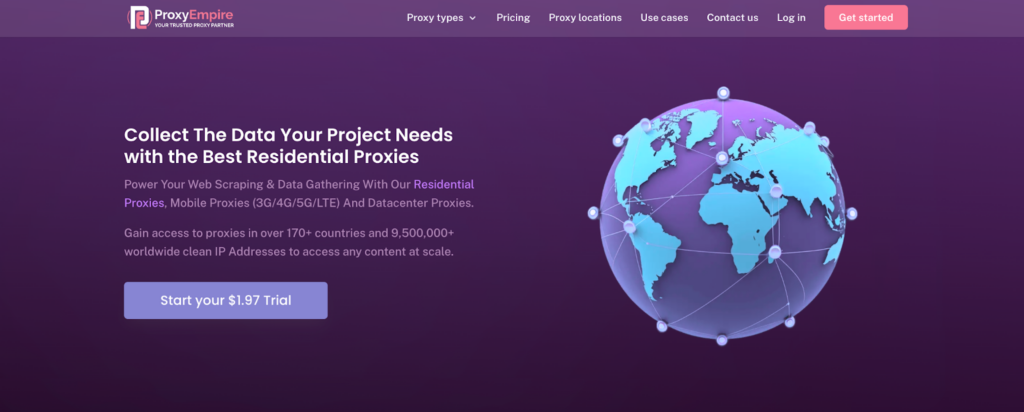
ProxyEmpire is a premium proxy service provider designed to empower web scraping, data collection, and unrestricted internet access through a vast network of ethically sourced residential, mobile, and datacenter proxies. Below is a detailed description based on the provided information:
Overview of ProxyEmpire
ProxyEmpire offers a comprehensive suite of proxy solutions tailored for individuals, businesses, and developers seeking reliable, high-performance tools for data gathering and privacy protection. With over 30 million clean IP addresses spanning 170+ countries, ProxyEmpire provides unparalleled global coverage, ensuring users can access content at scale with a 99.9% uptime and lightning-fast response times (as low as 0.6 seconds).
Proxy Types and Features:
🏘️ Rotating Residential Proxies
Key Benefits
- Global Reach: Access to over 30 million IPs worldwide, covering every major region, with precise targeting options (country, city, state, ASN/ISP).
- High Reliability: A 99.86% uptime ensures uninterrupted service, supported by patented technology for enhanced speed and security.
- Ethical Sourcing: Proxies are responsibly harvested, ensuring quality and compliance.
- Versatile Use Cases: Supports web scraping, price monitoring, sneaker copping, SEO tracking, ad verification, and more.
- Integration-Friendly: Compatible with standard proxy protocols (HTTP, SOCKS5) and third-party tools like Multilogin, Dolphin Anty, Kameleo, Octobrowser, and Gologin.
- No Hidden Fees: Transparent pricing with all features included, starting at a $1.97 trial.
Use case:
2. ResiProx
ResiProx handles residential proxies with a focus on rotation and mobile options. Based in a global setup, it covers many countries including the UK with IPs from real devices. The service suits data collection and automation, offering quick switches to avoid detection. Users appreciate the blend of home and mobile networks for diverse tasks. It integrates with scripts in languages like Python or Node.js. Some find it flexible for scaling operations without limits on sessions.
- Key features: Rotation on demand, support for HTTPS and SOCKS5, city and ISP picks.
- Accurate data and information: High uptime across networks, low response times for smooth runs.
- Pros: Strong anonymity, easy endpoint setup, works well for scraping tools.
- Cons: Setup might need tweaks for beginners.
3. Bright Data
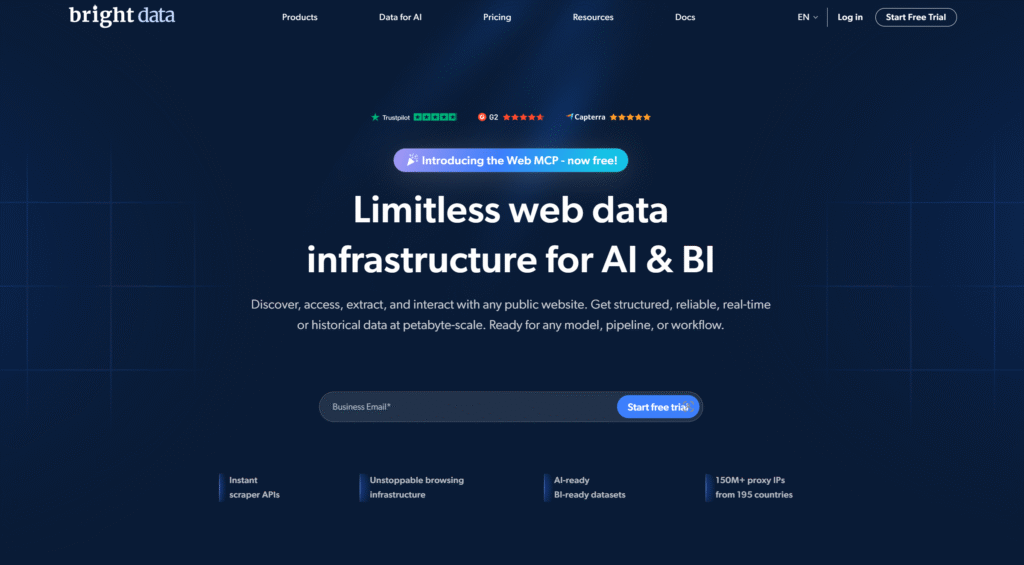
Bright Data runs a large residential proxy network from real user devices worldwide, including UK spots. It fits enterprise needs like large-scale scraping or AI data feeds. The platform combines proxies with scraping APIs for end-to-end solutions. Users can target specific areas or carriers. Compliance stands out, with opt-in peers and strict rules. Some turn to it for handling tough sites that block often.
- Key features: ASN targeting, session control, integration with browser tools.
- Accurate data and information: Covers many countries, supports petabyte-level extraction.
- Pros: Ethical sourcing, dedicated support teams, scalable for big projects.
- Cons: Complex for small users.
4. Oxylabs
Oxylabs provides residential proxies geared toward business data gathering at scale. With IPs from home connections, it targets UK and other regions precisely. The service excels in web scraping with high success in pulling search results or e-commerce info. It offers filters by OS or IP type. Users benefit from code samples for quick starts. Some rely on it for consistent performance in demanding setups.
- Key features: SOCKS5 support, advanced filters, API for management.
- Accurate data and information: Quick average responses, strong retrieval rates.
- Pros: Trusted by many clients, community resources like tutorials.
- Cons: May require learning curve for full use.
5. Decodo
Decodo, once Smartproxy, delivers residential proxies ethically sourced from many locations, including the UK. It targets at city or ASN levels for precise access. The setup aids in bypassing restrictions for market research or SEO. Users get unlimited options and fast swaps for blocked IPs. It pairs well with AI tools for data pipelines. Some choose it for affordability in everyday tasks.
- Key features: Static and rotating types, UDP support, browser extensions.
- Accurate data and information: High uptime, speedy connections.
- Pros: User-friendly for adoption, awards for value.
- Cons: Shared options might slow during peaks.
6. SOAX
SOAX, from the UK, offers residential proxies with home IPs for undetectable scraping. It covers global spots including the UK, with options for sticky or rotating sessions. The service focuses on clean, whitelisted IPs to dodge blocks. Users handle e-commerce monitoring or consumer trends easily. Enterprise support includes custom onboarding. Some value the compliance checks for safe use.
- Key features: UDP and QUIC protocols, custom refresh rates, unlimited bandwidth.
- Accurate data and information: High success in data pulls, low latency.
- Pros: AI-powered tools, dedicated managers.
- Cons: Bundled plans limit choices.
7. NetNut
NetNut supplies rotating residential proxies with direct ISP ties for better speed. It covers many countries including the UK, fitting tasks like AI training or ad verification. Static options offer steady sessions for account management. Users benefit from real-time dashboards to monitor and control usage. The service emphasizes high-speed data transfers and strong security with encrypted connections and no-logging policy. Partnerships with multiple ISPs ensure constant uptime and stable routing. It’s ideal for web scraping, SEO monitoring, and e-commerce insights due to its scalability and integration with various tools. Overall, NetNut stands out for its fast network and user-friendly management features.
- Key features: City and state selection, API access, IP whitelisting, dedicated account manager, no bandwidth limits, optimized for multiple use cases, anonymous IPs.
- Accurate data and information: Vast IP pool worldwide, high-speed connections with low interruptions, stable infrastructure control.
- Pros: Superior speed and stability from direct ISP links, ethical B2B sourcing, comprehensive analytics dashboard, supports popular programming languages.
- Cons: May focus more on large-scale users.
8. IPBurger
IPBurger features rotating and sticky residential proxies from ethical ISP sources worldwide, including the UK. It supports automation for data extraction and web scraping with high anonymity to reduce blocks. Users can choose session types up to certain durations for flexibility. The service offers unlimited concurrent sessions and quick response times. Integration is seamless with developer docs and third-party software. It’s suited for tasks requiring reliable connections like market research or content access. With a focus on precise ISP filtering, it helps in blending with real traffic. Overall, IPBurger appeals to those needing fast, secure proxies for diverse online activities.
- Key features: Rotating and sticky sessions, HTTP and SOCKS5 protocols, user/pass authentication, ASN filtering, concurrent sessions without limits.
- Accurate data and information: Large IP pool across many countries and cities, high success and uptime rates, fast response.
- Pros: Precise control options, strong anonymity for automation, easy setup with docs, fits budget users well.
- Cons: Potential need for tweaks in advanced setups.
9. Proxy-Seller
Proxy-Seller provides rotating residential proxies from real users, covering many countries including the UK. Options include time-based or request rotations, plus sticky sessions for consistency. It supports individual and enterprise needs with custom plans. The setup ensures high trust factors for tasks like SEO analysis or marketplace handling. Users get fast channels and whitelisting for security. With extensive networks and subnets, it maintains steady performance. Compliance with standards like GDPR adds reliability. The dashboard allows easy management with auto features. It’s a solid choice for those wanting flexible, compliant proxies backed by round-the-clock support.
- Key features: SOCKS5 and HTTP protocols, username/password or IP auth, up to high-speed channels, precise ISP picks, unlimited bandwidth in packs.
- Accurate data and information: Broad IP pool from many subnets and networks, strong uptime, quick speeds.
- Pros: Ethical sourcing under agreements, user-friendly dashboard, 24/7 support with refunds, serves many clients over years.
- Cons: Variations based on locations.
10. Proxy-Cheap

Proxy-Cheap offers static and rotating residential proxies with ISP coverage for reliable access, including UK options. It focuses on anonymity and fast speeds for tasks like social media management or data collection. The service supports unlimited bandwidth and no data caps, making it suitable for large-scale activities. Users appreciate the extensive network of locations for flexibility. Residential IPs from real ISPs ensure secure, genuine connections. It’s ideal for bypassing restrictions or gathering insights without detection. With a variety of proxy types, it caters to different needs like e-commerce or research.
- Key features: Static residential IPv4 and IPv6, rotating options, SOCKS5 for speed, no logging, device compatibility.
- Accurate data and information: Extensive proxy locations worldwide, high uptime, low latency connections.
- Pros: Affordable reliability, strong anonymity for sensitive tasks, quick support, versatile for multiple uses.
- Cons: May recycle IPs faster, increasing some block risks.
11. HydraProxy
HydraProxy delivers residential proxies with a large pool of real IPs worldwide, including UK support. It allows unlimited connections and choices between rotating or sticky sessions. The service provides instant access without approvals, fitting for quick setups in travel data or automation. Users get granular control over protocols and networks. Optimized for multi-threaded tools, it ensures high performance. With HTTPS support and no restrictions, it’s versatile for QA testing or content handling. A money-back guarantee adds confidence. Overall, HydraProxy suits those seeking straightforward, reliable proxies for various online operations.
- Key features: Unlimited connections, rotating or sticky IPs, username/password auth, HTTPS support, no setup needed.
- Accurate data and information: Vast IP pool from local devices, reliable networks for smooth runs.
- Pros: Flexible access points, high performance for tools, money-back option, easy for beginners.
- Cons: Limited details on specific area optimizations.
12. IPRoyal
IPRoyal handles residential proxies for scraping or research, with strong UK coverage. It offers manual IP changes, rotating per request, or sticky sessions up to several days. Dedicated options provide exclusive use for stability. Unlimited sessions allow scaling without limits. The self-service dashboard tracks usage and whitelists IPs. Ethical sourcing from household devices ensures high trust scores. It’s great for ad verification or market insights with transparent monitoring. Users benefit from quick responses and continuous pool checks. IPRoyal serves many clients globally with flexible management.
- Key features: Rotating and sticky IPs, dedicated exclusives, API for changes, no session limits, 195+ locations.
- Accurate data and information: Large global IP network, fast response rates, high success and uptime.
- Pros: Ethical high-quality IPs, extensive coverage, no commitments, transparent operations with monitoring.
- Cons: Possible IP bans from overuse.
13) Webshare
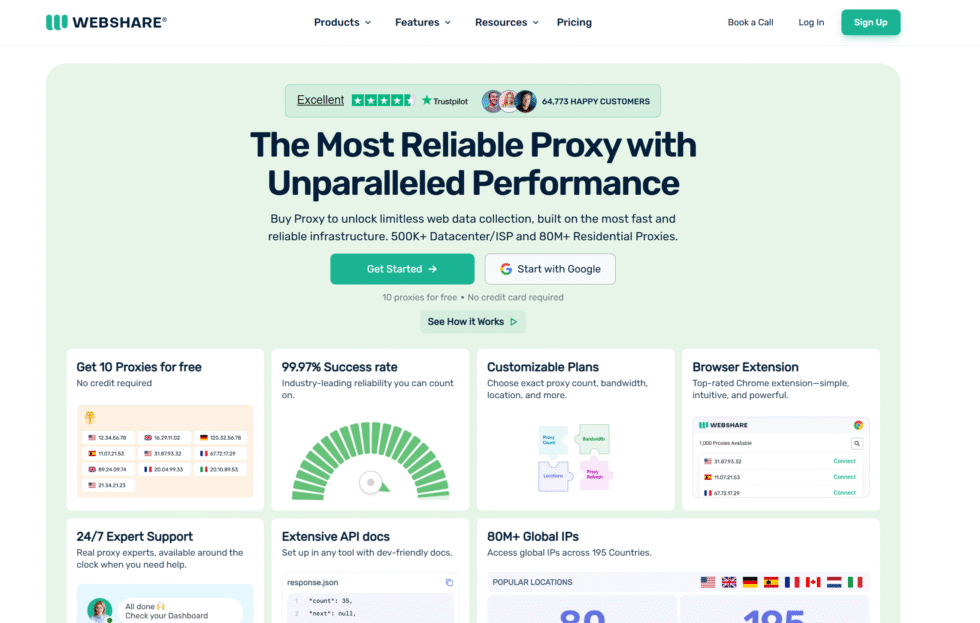
Webshare, headquartered in San Mateo, California, USA, provides residential proxies through an ethical peer-to-peer network established since 2018. The service caters to secure browsing, data aggregation, and anti-fraud applications, emphasizing anonymity and performance. With a vast IP pool spanning numerous countries, it enables users to bypass geo-restrictions effectively. The platform’s infrastructure supports high-volume requests, making it suitable for pricing intelligence and reputation management. Strengths lie in its robust success rate and extensive developer tools, facilitating seamless integration. Weaknesses include potentially less granular targeting in smaller regions compared to specialized competitors, and reliance on peer-sourced IPs which may vary in consistency during peak usage times.
- Pool of over 80 million global IPs across 195 countries, including the UK with 1.5 million+ IPs.
- Customizable plans for proxy count, bandwidth, and specific locations.
- Supports HTTP/HTTPS protocols with browser extensions for easy use.
- 99.97% success rate and handles 650 billion+ monthly proxy requests.
- Serves 64,773 customers worldwide with 120,000 monthly active users.
- Trusted for public data gathering, with industry-leading reliability in secure operations.
14) DataImpulse
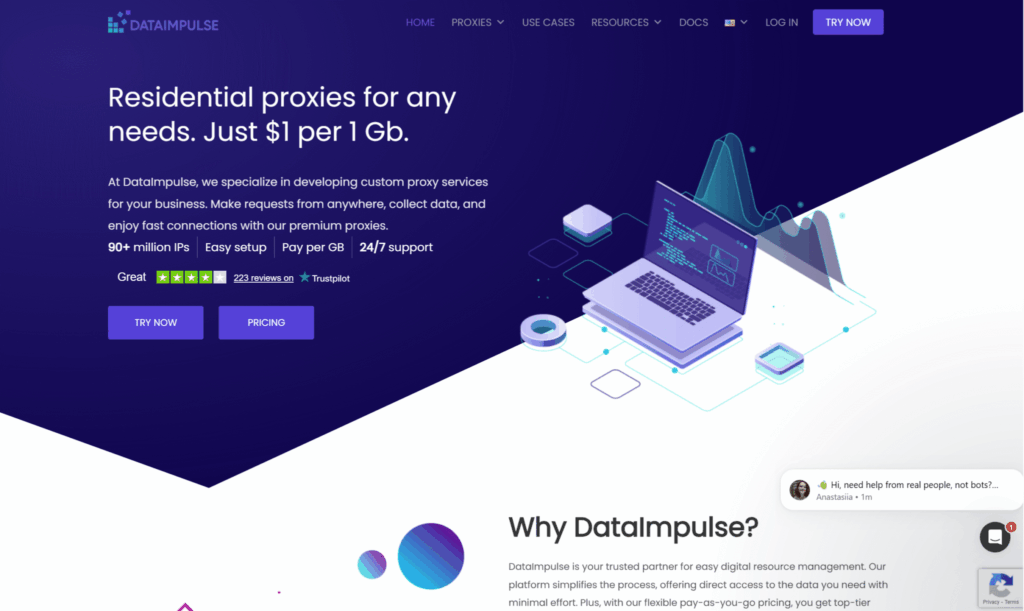
DataImpulse, based in St. Petersburg, Florida, USA, specializes in residential proxies obtained ethically with user consent since its founding in 2022. The service is geared toward web scraping, ad verification, and market research, offering versatile session management for diverse applications. Its network covers a wide array of locations, allowing precise geographic targeting to simulate real-user behavior. Strengths encompass easy integration via API and a user-friendly dashboard for monitoring usage, ensuring efficient operations. Weaknesses involve a pool size that, at 90 million IPs, might not match the scale of top-tier providers for ultra-high-volume needs, and limited publicized performance metrics which could hinder direct comparisons in speed-sensitive scenarios.
- Pool of 90 million IPs worldwide across 195+ locations, supporting the UK.
- Flexible IP rotation with rotating or sticky sessions up to 30 minutes.
- Free country-level targeting, extendable to states, cities, zip codes, or ASNs.
- Supports HTTP(S)/SOCKS5 protocols and IP whitelist authorization.
- Chromium-based rendering for user-like web interactions.
- Utilized by clients for reliable web scraping, with 24/7 human support.
15) PacketStream
PacketStream, headquartered in Los Angeles, California, USA, operates a peer-to-peer residential proxy network since 2018, enabling users to buy bandwidth for anonymous browsing and data collection. The service leverages real residential IPs shared by consented participants, ideal for web scraping, market research, and accessing geo-restricted content. Strengths include ethical sourcing via opt-in users and scalability for automation tasks, with multi-hop tunnels enhancing security. Weaknesses feature a mid-sized 7 million IP pool that may experience variable speeds due to peer reliance, less advanced targeting than enterprise options, and sparse performance transparency, potentially affecting consistency in demanding applications.
- Pool of over 7 million residential IPs across 100+ countries, including the UK.
- Supports HTTP/HTTPS protocols with multi-hop tunneling for secure access.
- Peer-to-peer model ensuring ethical IP sourcing with user consent.
- High success rates for data scraping and privacy protection.
- Flexible integration for tools like Python, Node.js, and PHP.
- Serves users in market research and content verification with global reach.
16) Rayobyte
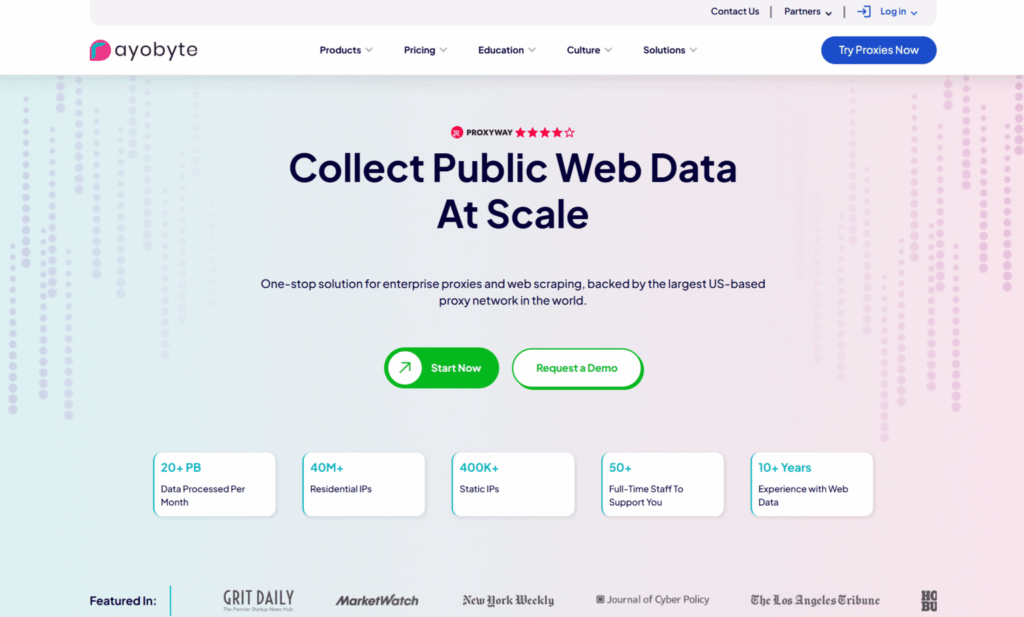
Rayobyte, headquartered in Lincoln, Nebraska, USA, offers residential proxies ethically sourced from real devices, emphasizing low detection for large-scale data collection since its inception over a decade ago. The service supports web scraping APIs and is tailored for e-commerce, AI training, and ad verification. With a focus on compliance and reliability, it provides geo-located access for accurate insights. Strengths highlight its integration capabilities and ethical practices, reducing ban risks. Weaknesses include a 36 million IP pool that is smaller than some rivals, potentially impacting availability in high-demand areas, and vague performance stats without detailed UK support confirmation, limiting transparency for users.
- Pool of 36 million+ real residential IPs for hard-to-detect access.
- Geo-located targeting for regional data accuracy in tasks like SERP analysis.
- Integration with web scraping tools for enterprise-level operations.
- Processes over 20 petabytes of data monthly with low detection rates.
- Backed by 50+ full-time staff for support in data-intensive markets.
- Largest US-based proxy network, serving AI and e-commerce sectors.
17) Storm Proxies
Storm Proxies, based in New York state, USA, provides residential backconnect proxies with in-house developed technology for anonymous browsing and automation. Founded with a focus on HTTP(s) protocols, it offers unlimited bandwidth for tools like social media management and data extraction. The network combines US and EU IPs, enabling broad access without reseller dependencies. Strengths are in its high-speed 1GB network and instant setup, ideal for multi-threaded applications. Weaknesses encompass a 20 million IP pool that may underperform in global diversity compared to bigger providers, no SOCKS support, and limited refunds, with UK inclusion implied but not quantified in EU coverage.
- Pool exceeding 20 million residential IPs, with over 700,000 shared rotating ones.
- IP rotation every HTTP request or 3/15 minutes for anonymity.
- Unlimited bandwidth and high-speed optimization for fast tools.
- Combined USA+EU locations supporting worldwide access.
- 45% of support queries resolved under one hour.
- Unique owned inventory for consistent performance in legal use cases.
18) ProxyGuys
ProxyGuys, situated in Corona, California, USA, delivers rotating residential proxies with worldwide coverage, launched in 2021 for compliant data gathering. The service includes ISP and city-level targeting, suitable for market research and anonymity needs. It features unlimited concurrent sessions and API management for scalability. Strengths involve reliable uptime and custom rotation, ensuring ethical operations via carrier contracts. Weaknesses include a 10 million+ IP pool smaller than industry leaders, speeds averaging 2-20 Mbps that may lag for intensive tasks, and US-centric mobile focus without explicit UK stats, potentially restricting international precision.
- Over 10 million fresh residential IPs in major global cities.
- Targeting by city, state, country, and ISP with custom IP rotation.
- Unlimited concurrent IPs and bandwidth addons with rollover options.
- Supports HTTP(S)/SOCKS5 with 100% uptime and no logs.
- Speeds of 2-20 Mbps for rotating residential proxies.
- Compliant with US laws, used for enterprise proxy needs worldwide.
How to Pick a Strong UK Residential Proxy Provider
- Look at coverage and session options when choosing.
- Providers with broad networks handle diverse tasks better.
- Check integration ease, like APIs or extensions.
- Ethical sourcing matters for long-term use.
| Factor | What to Check | Why It Helps |
| Network Size | Wide IP spread | Covers more areas without gaps |
| Session Types | Rotating or sticky | Matches task flow |
| Support | 24/7 availability | Fixes issues fast |
| Tools | Dashboards, apps | Simplifies management |
Benefits of Residential Proxies for UK Users
These proxies boost privacy by masking your real IP. They enable market insights through local views. Businesses gather competitor data without alerts. Users avoid blocks on sites. Compliance keeps things legal. Many find them key for steady online work.
Common Challenges and Fixes with UK Proxies
Blocks happen from overuse; rotate IPs to stay under radar. Slow speeds? Opt for providers with optimized networks. Setup errors? Use guides or support. Testing tools help spot issues early. For integrations, check proxy tools. Keep sessions varied to mimic real behavior.
Integrating UK Residential Proxies with Automation Tools
When managing multiple online tasks, users often turn to automation tools that require consistent connections, and residential proxies play a key role in supporting these setups. For instance, in scenarios where IP addresses need to change regularly to handle repetitive actions, rotating residential proxies fit well into workflows that involve data gathering or account handling without interruptions. These proxies integrate seamlessly with various browser extensions and software, allowing for smoother operations across platforms.
In cases where stability over longer periods is necessary, static residential proxies provide a reliable option for tasks that benefit from unchanging IPs, such as ongoing monitoring or verification processes. Combining these with automation scripts ensures that connections remain effective, adapting to the demands of different applications.
Additionally, mobile-based options enhance flexibility in dynamic environments. Rotating mobile proxies serve situations where connections mimic real device behavior, useful for testing or interacting with mobile-optimized sites. For dedicated needs, dedicated mobile proxies 4G offer consistent performance in high-demand scenarios, integrating with tools that handle traffic from various sources. Proper setup involves matching proxy types to the tool’s requirements, ensuring compatibility through supported protocols.
Use Cases for Static vs Rotating UK Residential Proxies
Different tasks call for specific proxy configurations, and understanding when to apply static or rotating options helps in optimizing outcomes. In environments focused on long-term access, such as maintaining profiles or continuous tracking, static residential proxies maintain the same IP for extended sessions, reducing the need for frequent adjustments. This approach suits operations where consistency prevents disruptions.
On the other hand, rotating configurations cycle through IPs automatically, which aligns with activities involving high-volume requests, such as collecting public information. The comparison between rotating residential vs static residential types highlights how rotation minimizes detection in fast-paced tasks. For ad-related verification, proxies for ad verification often rely on rotation to simulate varied user patterns. Blending both types can address hybrid needs, where part of the process requires stability and another demands variability.
Latest News In 2026
Early in the year, major tech firms collaborated to disrupt one of the largest proxy networks linked to malicious activities, significantly reducing the pool of compromised devices and impacting affiliated operations. This action highlighted ongoing efforts to address threats from espionage and cyber groups using such networks for obfuscation. In response, providers expanded offerings with new residential IP pools spanning numerous countries, emphasizing ethical sourcing and improved infrastructure for better availability.
Security advancements marked progress, with some achieving ISO 27001 and SOC 2 Type 2 certifications, reinforcing compliance in data handling. New global networks launched, featuring refreshed daily IPs to support scalable connectivity for businesses and developers. Discussions in industry articles emphasized evolving detection systems, where AI influences proxy longevity, and budget options became more viable for mid-sized teams. Overall, the focus shifted toward stable, secure solutions amid growing regulatory attention to proxy usage.
FAQ
What are the main advantages of UK residential proxies over other types?
UK residential proxies provide a layer of authenticity by using IPs from actual household connections, which helps in blending with regular internet traffic. This approach often leads to fewer interruptions during online activities compared to alternatives like datacenter proxies. They excel in scenarios requiring consistent access to region-locked resources, enhancing overall reliability for various web-based operations.
How do residential proxies help with web scraping in the UK?
Residential proxies facilitate efficient data extraction by mimicking genuine user behavior, which minimizes the chances of encountering restrictions on UK-specific websites. They allow for seamless integration with scraping tools, ensuring data collection remains uninterrupted across multiple sessions. This method supports diverse applications, from monitoring trends to gathering insights without alerting site defenses.
Are UK residential proxies suitable for social media management?
UK residential proxies enable secure handling of multiple profiles by assigning local IPs that align with platform algorithms. This setup aids in regional content creation and interaction without triggering account flags. They prove useful for maintaining a natural presence online, supporting tasks like posting and engagement across networks.
What should I consider for proxy security in the UK?
Focus on providers that emphasize secure protocols and regular IP refreshes to maintain privacy during use. Implementing features like encryption and user authentication adds protection against potential vulnerabilities. Regular monitoring of connection quality ensures ongoing safety for sensitive tasks.
What distinguishes rotating residential proxies from static ones in practical applications?
Rotating residential proxies automatically switch IPs at set intervals or per request, which suits tasks with high request volumes where avoiding patterns is key, such as in automation for data extraction. Static residential proxies, by contrast, keep the same IP for the duration of a session, making them suitable for activities needing continuity, like account management. The choice depends on the task’s nature, as outlined in comparisons like rotating residential vs static residential, where rotation handles variability and static ensures reliability.
How do residential proxies support web scraping activities?
Residential proxies facilitate web scraping by providing IPs from real home connections, blending into regular traffic to access public data without triggering blocks. In setups involving tools for extraction, they integrate through APIs or extensions, allowing for multiple sessions. Resources on web scraping 101 explain how these proxies adapt to site requirements, ensuring efficient collection across various platforms.
In what situations do users opt for mobile proxies alongside residential ones?
Users incorporate mobile proxies when tasks involve device-specific interactions, such as app testing or mobile site verification, where dedicated mobile proxies 4G provide consistent carrier-based connections. Combining them with residential options creates versatile setups for diverse needs, enhancing overall flexibility in handling different traffic types.
What role do integrations play in using residential proxies effectively?
Integrations connect proxies to browsers, software, or APIs, simplifying management and deployment. For example, compatibility with anti-detect browsers or automation frameworks allows users to configure settings for optimal performance in tasks like monitoring or verification.
How can proxy performance be maintained over time?
Maintaining performance involves regular rotation to refresh IPs and monitoring connections to avoid overuse. For long-term account stability using static options for key operations while rotating for others, balancing load across the network.
Are there specific proxy types recommended for ad verification?
For ad verification, proxies that simulate varied user behaviors are common, with rotation helping to check placements across sessions. Details on proxies for ad verification show how residential IPs ensure accurate assessments without detection issues.
What considerations arise when selecting proxies for social media management?
Social media management often involves handling multiple profiles, where proxies prevent flags by providing distinct IPs. Approaches in social media proxies demonstrate using residential connections to maintain natural activity patterns.
How do proxy providers ensure ethical sourcing of IPs?
Ethical sourcing involves obtaining IPs from consenting users or legitimate networks, which supports sustainability and reduces risks. This practice is integral to reliable services, as seen in various proxy offerings that prioritize clean pools.
Can residential proxies be used for e-commerce tasks?
In e-commerce, residential proxies assist with price comparison or inventory checks by providing undistinguished access. Rotating types handle frequent queries, while static ones support sustained monitoring, fitting into broader digital strategies.
What are common setup steps for residential proxies?
Setup typically includes selecting the proxy type, configuring authentication, and integrating with the desired tool or browser. Guides often cover protocols like HTTP or SOCKS5, ensuring compatibility for immediate use in operations.