

Rotating proxy pools change IP addresses often to keep online activities hidden and smooth. These setups help with tasks like gathering data from websites without getting caught or slowed down. Bandwidth management keeps your connections efficient, so you don’t waste resources or hit limits too soon. Throttling techniques control how fast requests go out, making sure everything runs steady without alerts from target sites.
Proxy rotation and bandwidth optimization play a big role in handling large-scale operations. For instance, using rotating residential proxies gives real home-like IPs that blend in better. Rotating mobile proxies add device-based options for tougher spots. And static residential proxies offer steady IPs when you need them for longer sessions. All these help balance loads and cut risks in proxy use.
Get started with top bandwidth management in rotating proxy pools at ProxyEmpire.
Understanding Rotating Proxy Pools
Rotating proxy pools work by switching IPs from a big group automatically. This happens for each request or after a set time. It makes your actions look like they come from different people. That way, websites don’t spot patterns and block you. The pool can include residential or mobile IPs for better cover.
You set up these pools through a provider’s system. They handle the switches so you focus on your work. Some pools let you pick regions or types of IPs. This adds flexibility.
Pools vary in size and quality. Larger ones reduce repeat IPs, which helps dodge detection. Quality matters too, with clean IPs that haven’t been flagged before. Providers often mix in fresh ones to keep things running well.
Why Bandwidth Management Matters in Proxies
Bandwidth management stops overuse and keeps speeds consistent. Without it, your proxies might slow down or fail under heavy loads. It ensures fair use across tasks, so no single job hogs everything.
Poor management leads to higher costs and downtime. Sites might throttle you if they see too much traffic from one spot. Good control spreads out the work, making operations last longer without issues.
It also boosts overall efficiency. By watching how much data flows, you spot problems early. This saves time and resources.
Many users face spikes in demand. Management smooths those out, preventing crashes. It ties into security too, as controlled flows reduce attack risks.
Key Bandwidth Management Techniques
Start with rate limiting to cap requests per time frame. This mimics normal user speeds and avoids flags. Set limits based on what the target allows.
Request prioritization puts important tasks first. Give them more bandwidth while others wait. This keeps critical ops fast.
Connection pooling reuses links instead of making new ones each time. It cuts setup time and saves bandwidth. Tools like libraries in code handle this well.
Caching stores repeated data locally. No need to fetch it again, which trims usage. Pair it with proxies for best results.
Monitor tools track flows in real time. Adjust on the fly if something spikes. Our integrations page shows how to link these with proxy setups. Automatic IP rotation distributes requests across many IPs to act like natural behavior.
Throttling Strategies for Rotating Proxies
Throttling slows requests on purpose to stay under radar. Adaptive methods change speeds based on site responses. If a site pushes back, dial it down.
Distribute requests over geo areas. Don’t hit one region hard; spread it to look organic. This cuts throttling chances.
Use sticky sessions for tasks needing the same IP briefly. It throttles by holding steady without full stops. Dev.to notes factors like proxy types affect how well throttling works in scraping.
Exponential backoff retries with waits that grow longer. After a fail, pause more each time to ease pressure.
In code, add delays between requests. Randomize them for human-like patterns.
Implementing Rate Limiting Effectively
- Rate limiting sets max requests per IP or session. Code it into your scripts for control.
- Choose fixed or dynamic limits. Fixed are simple; dynamic adjust to conditions.
- Burst limits allow short high speeds then slow. Good for variable tasks.
- Token buckets release requests at steady rates. Refill over time for smooth flow.
- Test limits against targets to find sweet spots.
- Combine with monitoring to tweak as needed.
Tools and Software for Proxy Optimization
- Proxy managers handle rotations and limits. They often include dashboards for oversight.
- Scraping libraries like in Python support built-in throttling.
- Monitoring apps log usage and alert on issues.
- Caching tools integrate to cut redundant pulls.
Common Challenges in Bandwidth and Throttling
- Overuse leads to blocks. Spread loads to fix.
- Latency from poor pools slows everything. Pick quality providers.
- Cost creeps up without optimization. Use caching and pooling.
- Detection from patterns. Randomize actions.
- Session breaks in rotations. Sticky sessions help here.
Comparing Proxy Providers for Bandwidth Features
Some providers offer large pools but lack fine controls. Others have better management but smaller reach.
Look for unlimited options on bandwidth where possible. Ethical sourcing keeps IPs clean.
Integration ease matters for quick setups.
In comparisons, ProxyEmpire stands out with flexible plans and rollover features. No hidden limits help long runs.
ProxyEmpire’s Approach to Bandwidth and Throttling
ProxyEmpire leads with smart techniques for rotating pools. We focus on efficient bandwidth use through advanced rotations.
Our systems distribute requests evenly to prevent throttling. Adaptive controls adjust in real time.
Large diverse pools mean fewer repeats and steady performance. Unlimited bandwidth on dedicated plans keeps things flowing.
Custom targeting by area or carrier adds precision. This optimizes for specific tasks without waste.
Ethical IPs ensure reliability.
Get reliable bandwidth management in rotating proxy pools with ProxyEmpire.
Here’s a table of techniques:
| Technique | Description | Benefits |
| Rate Limiting | Caps requests per time | Avoids detection, saves resources |
| Connection Pooling | Reuses links | Cuts overhead, boosts speed |
| Caching | Stores data locally | Reduces pulls, lowers costs |
| Adaptive Throttling | Adjusts based on responses | Mimics users, prevents blocks |
| Sticky Sessions | Holds IP for sessions | Maintains continuity, eases tasks |
These build strong setups.
Rotating pools need constant tweaks. Watch trends and update methods.
Combine with secure protocols like HTTPS for safety.
Automation scripts handle much of this.
For mobile focus, our dedicated mobile proxies offer unlimited flows.
ProxyEmpire – Best Rotating Proxy Pools In 2026
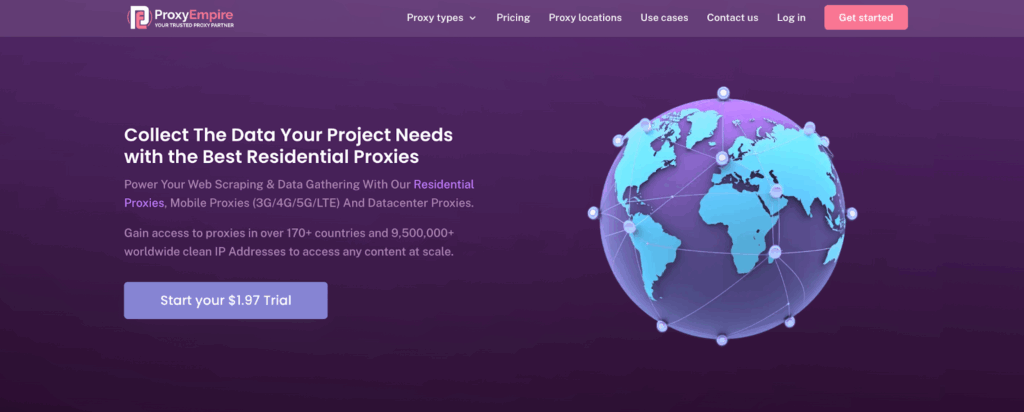
ProxyEmpire is a premium proxy service provider designed to empower web scraping, data collection, and unrestricted internet access through a vast network of ethically sourced residential, mobile, and datacenter proxies. Below is a detailed description based on the provided information:
Overview of ProxyEmpire
ProxyEmpire offers a comprehensive suite of proxy solutions tailored for individuals, businesses, and developers seeking reliable, high-performance tools for data gathering and privacy protection. With over 30 million clean IP addresses spanning 170+ countries, ProxyEmpire provides unparalleled global coverage, ensuring users can access content at scale with a 99.9% uptime and lightning-fast response times (as low as 0.6 seconds).
Proxy Types and Features:
🏘️ Rotating Residential Proxies
Key Benefits
- Global Reach: Access to over 30 million IPs worldwide, covering every major region, with precise targeting options (country, city, state, ASN/ISP).
- High Reliability: A 99.86% uptime ensures uninterrupted service, supported by patented technology for enhanced speed and security.
- Ethical Sourcing: Proxies are responsibly harvested, ensuring quality and compliance.
- Versatile Use Cases: Supports web scraping, price monitoring, sneaker copping, SEO tracking, ad verification, and more.
- Integration-Friendly: Compatible with standard proxy protocols (HTTP, SOCKS5) and third-party tools like Multilogin, Dolphin Anty, Kameleo, Octobrowser, and Gologin.
- No Hidden Fees: Transparent pricing with all features included, starting at a $1.97 trial.
Use case:
Frequently Asked Questions
What makes rotating proxy pools better for bandwidth control?
Rotating proxy pools distribute data traffic across a wide range of IPs, which supports handling high-volume tasks without straining specific connections. This setup integrates well with features like data rollover, where unused bandwidth carries over to future use for better resource allocation. In addition, APIs for setting traffic limits help maintain control over consumption in dynamic environments. Such pools work effectively with rotating residential proxies to ensure consistent speeds during extended operations.
How do throttling techniques help avoid website blocks?
Throttling techniques adjust request speeds to resemble everyday user activity, which lowers the chance of activating site protections. Approaches like rate limiting cap the number of actions in a given period, while exponential backoff adds increasing pauses after errors to allow recovery. Pairing these with user-agent variations further disguises patterns, supporting longer access in restricted areas. For mobile-specific scenarios, rotating mobile proxies enhance this by providing device-like behaviors.
Can I use sticky sessions with rotating proxies?
Sticky sessions are compatible with rotating proxies, holding onto a single IP temporarily for tasks that need ongoing stability, such as form submissions or multi-step verifications. This method combines the benefits of rotation for anonymity with fixed IP reliability to minimize interruptions in complex workflows. Configuration options often allow setting the sticky duration based on task requirements, offering flexibility in proxy management. In cases where longer-term steadiness is key, static residential proxies provide a similar foundation.
What tools help monitor bandwidth in proxy pools?
Dashboards from proxy services deliver real-time views of data usage, helping identify trends in consumption across pools. Code libraries enable embedding limits and logging directly into applications for precise oversight. Connecting with external monitoring systems adds layers of alerts for unusual spikes, promoting proactive tweaks. Details on setup can be found through integrations that support various tools for enhanced tracking.
Why choose residential over datacenter for throttling?
Residential proxies draw from actual home networks, making them appear more like regular users and thus facing fewer throttling triggers from sites. Their varied origins help blend into general traffic, supporting sustained throttling strategies in demanding applications. Datacenter options, while fast, often stand out due to their server-based nature, leading to quicker restrictions. Comparing types, rotating datacenter proxies suit speed-focused needs, but residential ones excel in evasion.
Get efficient bandwidth management and throttling in rotating proxy pools at ProxyEmpire.