In a world where online tasks demand reliability and speed, 4G LTE mobile proxies stand out as a smart choice. These tools help users handle public data collection, account management workflows, and view public web experiences across supported locations. Discover the best 4G LTE mobile proxies in 2026 for secure browsing and data tasks.
With many providers available, finding one that fits your setup matters. For instance, options like rotating mobile proxies offer flexibility for various projects. Variations such as LTE proxies or mobile IP solutions provide similar benefits, focusing on real device connections for better results.
What Are 4G LTE Mobile Proxies?
These proxies connect through actual mobile networks, using IP addresses from cell carriers. This setup makes them appear as regular phone users to websites, supporting activities like public data collection and ad verification with authentic mobile traffic patterns. Unlike datacenter options, they rely on real devices for authenticity. Many users turn to them for tasks requiring high trust levels from platforms. Providers often include features like IP rotation to keep connections fresh.ย
Benefits of Using 4G LTE Mobile Proxies
One major plus is their ability to support reliable access for market research and social media workflows. They provide stable connections from carrier networks, reducing downtime during key operations. Users often see better success in automation because of the natural IP behavior. For ad verification, they help review campaigns across regions. They also support social media workflows for running separate profiles and research activities.
Best 4G LTE Mobile Proxies in 2026
1) ProxyEmpire – Best 4G LTE Mobile Proxies In 2026

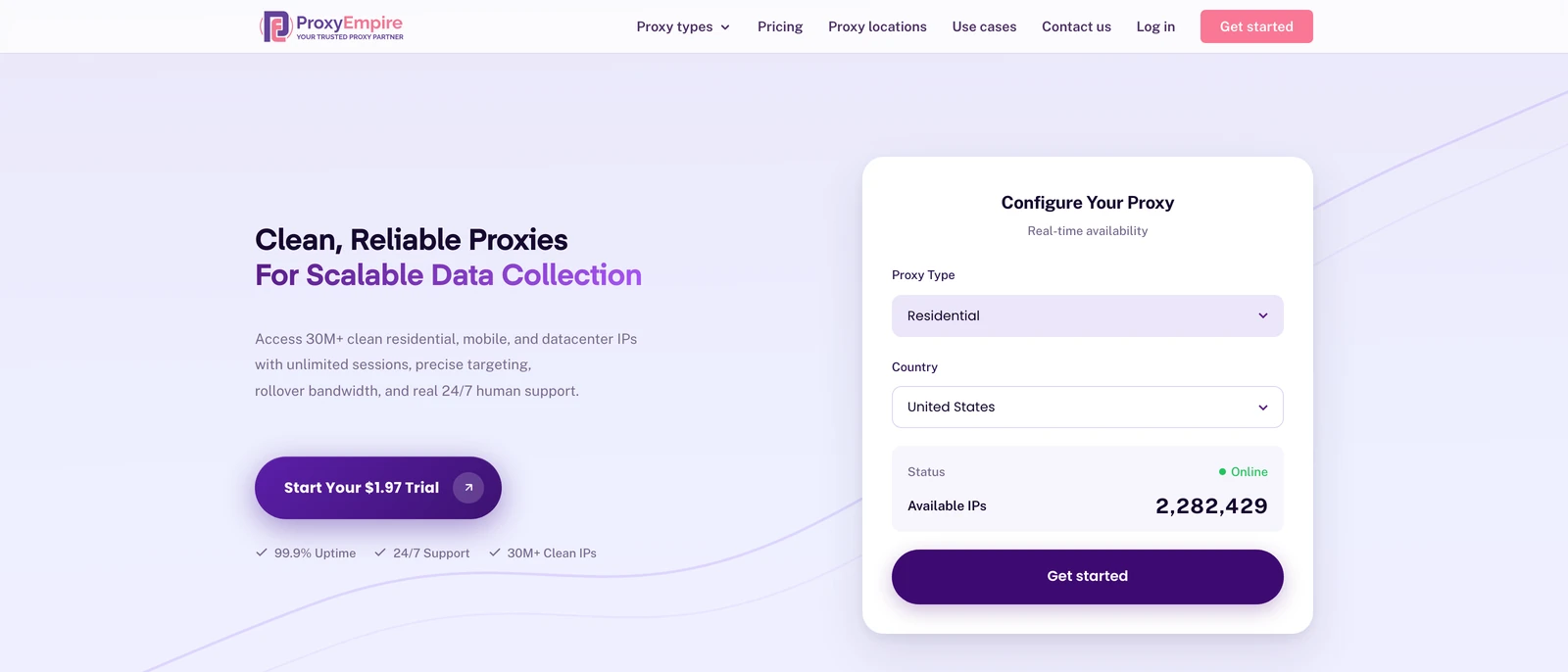
ProxyEmpire is a premium proxy service provider designed to empower public data collection and viewing public web experiences across supported locations through a vast network of ethically sourced residential, mobile, and datacenter proxies.
Overview of ProxyEmpire
ProxyEmpire offers a comprehensive suite of proxy solutions tailored for individuals, businesses, and developers seeking reliable, high-performance tools for data gathering and privacy protection. With over 30 million clean IP addresses spanning 170+ countries, ProxyEmpire provides unparalleled global coverage, supporting large-scale public data collection with a 99.9% uptime and lightning-fast response times (as low as 0.6 seconds).
Proxy Types and Features:
๐๏ธ Rotating Residential Proxies
๐ Static Residential Proxies
๐ Rotating Datacenter Proxies
Key Benefits
- Extensive Network Coverage: Access to over 30 million IPs worldwide across every major region, supporting public data collection with selection options by country, city, state, and ASN/ISP
- High Reliability: A 99.86% uptime ensures uninterrupted service, supported by patented technology for enhanced speed and security.
- Ethical Sourcing: Proxies are responsibly harvested, ensuring quality and compliance.
- Versatile Use Cases: Supports public data collection, price monitoring, market research, SEO tracking, ad verification, automation, and viewing public web experiences across supported locations. Rotating residential proxies and rotating mobile proxies are best for large-scale public data collection, market research, and workflows that benefit from automatic IP rotation. Static residential proxies are better when a longer, consistent session is required.
- Integration-Friendly: Compatible with standard proxy protocols (HTTP, SOCKS5) and third-party tools like Multilogin, Dolphin Anty, Kameleo, Octobrowser, and Gologin.
- No Hidden Fees: Transparent pricing with all features included, starting at a $1.97 trial.
Use case:
2. ResiProx

ResiProx delivers rotating mobile proxies built for 4G, LTE, and 5G networks, with a clear focus on public data extraction and account management workflows. The service draws from ethically sourced addresses across an extensive global pool that spans many countries, giving users solid flexibility for different project requirements. It performs reliably in areas such as SEO monitoring and price intelligence, where steady connections support consistent results. Teams appreciate the choice between rotating and sticky sessions, along with selection options based on country, region, city, or ISP. Integration works smoothly with common development languages like Python and Node.js, as well as tools such as Selenium, keeping operations efficient with responsive connection times. Round-the-clock support and the ability to manage many concurrent sessions make it practical for larger or scaled projects. Some users mention that initial setup can involve a short learning period for those less familiar with proxy tools, and occasional variability appears in certain regions. Overall, ResiProx offers a versatile solution for professionals who need adaptable mobile IP options across varied operational demands.
Key features
- Rotating and sticky IP options.
- HTTPS and SOCKS5 protocol support.
- API for easy integration.
- Comprehensive documentation available.
Accurate data and information
- Covers many countries with premium IP quality.
- Fast average response times.
- High success rates in operations.
Pros
- Versatile for web scraping and ad verification.
- Supports multi-platform use.
- Reliable technical support.
3. Oxylabs

Oxylabs provides a premium mobile proxy service with support for 3G, 4G, LTE, and 5G connections drawn from real carrier networks. It targets business-level work such as large-scale public data collection, e-commerce monitoring, and brand protection. Automatic rotation helps maintain steady performance throughout extended operations. Users value the detailed filtering that covers continent, country, state, city, and ASN levels for greater control. The infrastructure supports high reliability and works well with scraping APIs and unlimited sessions, making it suitable for demanding environments. Headquartered in Vilnius, Lithuania, the company assigns dedicated account managers to enterprise clients, which many teams find useful for complex setups. While the platform offers advanced capabilities that benefit larger organizations, some users note that the feature-rich interface can feel complex at first for simpler tasks. Overall, Oxylabs serves as a robust choice for professionals who require strong infrastructure and precise control in mobile proxy workflows.
Key features
- Automatic IP rotation.
- Detailed filtering options.
- Integration with APIs.
- Unlimited concurrent connections.
Accurate data and information
- Large IP pool from real carriers.
- High uptime guarantees.
- Fast connection speeds.
Pros
- Ideal for enterprise-scale operations.
- Strong in bypassing restrictions.
- Dedicated support for big users.
Cons
- Steeper learning curve.
- Higher complexity for simple tasks.
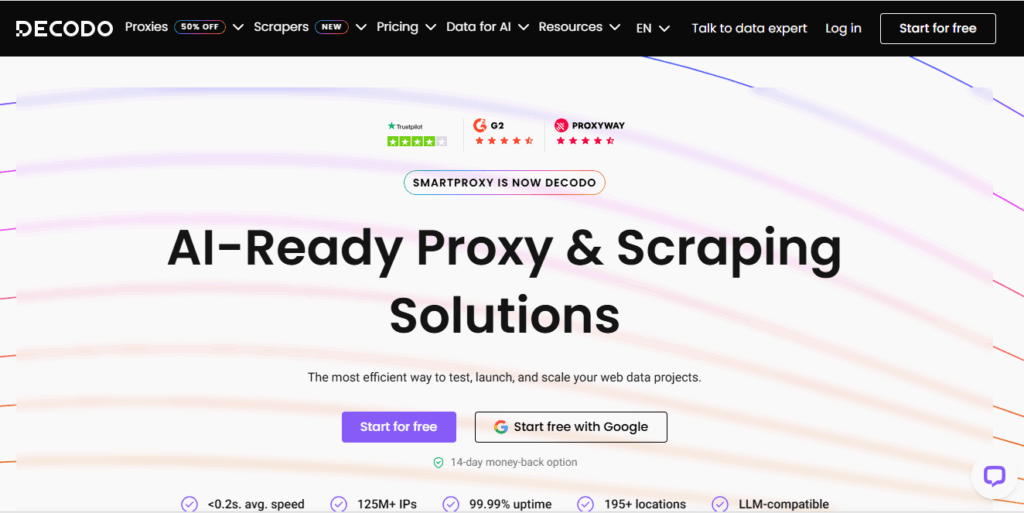
4. Decodo

Decodo, formerly known as Smartproxy, supplies cost-efficient mobile proxies with 3G, 4G, LTE, and 5G capabilities sourced from a diverse carrier base. It appeals to users who need quality addresses for public data collection, ad testing, and market research without excessive expense. The service maintains a large pool across numerous locations and includes city-level selection along with rotating or sticky session choices. Response times remain quick, supporting efficient data handling in everyday operations. Integration stays straightforward with browsers and common automation software through user-friendly management tools. While the feature set covers core needs effectively, it offers fewer advanced customizations than some premium alternatives, and occasional IP variability can appear in high-traffic areas. Overall, Decodo provides a practical balance of performance and simplicity for mid-scale projects that benefit from reliable mobile connections.
Key features
- Rotating and sticky sessions.
- City and carrier targeting.
- HTTP/SOCKS support.
- Easy proxy management tools.
Accurate data and information
- Diverse carrier options.
- Quick response times.
- High success in data tasks.
Pros
- Good value for features.
- Simple integration.
- Effective for mid-scale projects.
Cons
- Limited advanced customizations.
- Some IP variability.
5. SOAX

SOAX supplies mobile proxies powered by 3G, 4G, LTE, and 5G networks from real devices, making it well suited for web intelligence and multi-account management activities. It draws from a vast pool spanning numerous locations and supports flexible selection by country or ASN. Automatic rotation helps keep sessions fresh during ongoing work. Users often praise the dashboard for clear usage tracking and monitoring. The service prioritizes ethical practices and supports unlimited threads with good compatibility for popular scrapers. Headquartered in London, the platform emphasizes reliable performance in avoiding common access challenges during geo-specific content work. Some users mention that initial setup takes a bit more time for newcomers, and speeds can vary in remote areas. Overall, SOAX stands as a solid option for teams that value ethical sourcing and effective tools for research and monitoring workflows.
Key features
- Auto-rotation of IPs.
- ASN and country filters.
- Unlimited threads.
- Usage tracking dashboard.
Accurate data and information
- Vast IP coverage.
- Reliable uptime.
- Effective CAPTCHA evasion.
Pros
- Great for geo-tasks.
- Ethical IP sourcing.
- Solid for team use.
Cons
- Initial setup time.
- Variable speeds regionally.
6. IPRoyal

IPRoyal offers rotating mobile proxies with 3G, 4G, LTE, and 5G support drawn from authentic carrier networks. It focuses on fast browsing, account management, and public data gathering tasks. The service provides addresses from many carriers and includes sticky session options for set durations. Connections deliver good speeds that help with quick turnaround on daily operations. It maintains a no-log policy and works with standard HTTP and SOCKS protocols plus browser extensions. While efficient for most routine needs, the pool size in some regions may not match larger providers, and advanced targeting options remain somewhat limited. Overall, IPRoyal suits budget-conscious users who want dependable mobile access without unnecessary complexity for standard research and monitoring activities.
Key features
- Rotating IPs with timers.
- Sticky session support.
- HTTP/SOCKS protocols.
- Browser compatibility.
Accurate data and information
- Authentic carrier IPs.
- Fast download speeds.
- No logs for privacy.
Pros
- Quick for everyday tasks.
- Easy to set up.
- Privacy-focused.
Cons
- Targeting could improve.
- Smaller pool in spots.
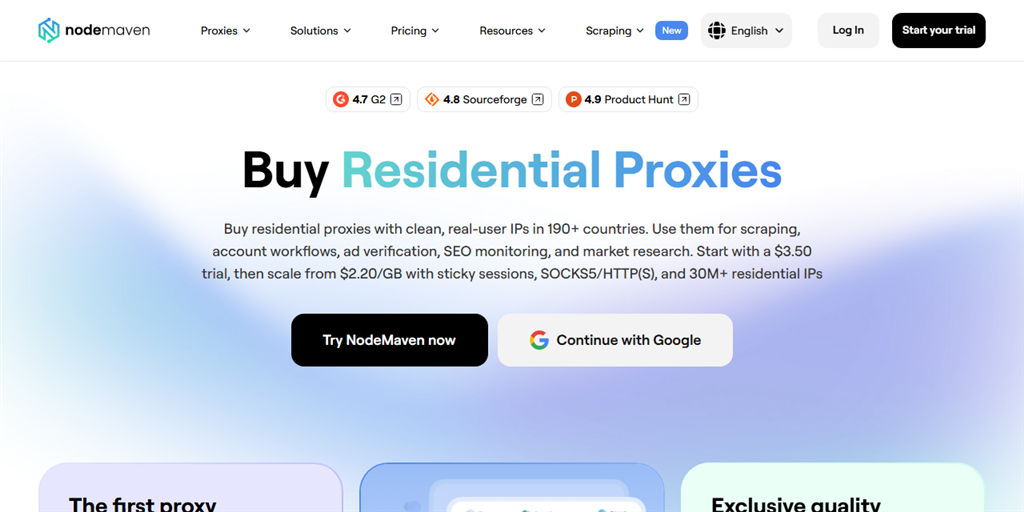
7. NodeMaven

NodeMaven specializes in true 4G, LTE, and 5G mobile proxies designed for stealth-sensitive operations such as public data collection and multi-account workflows. It uses pre-filtered addresses from real carriers to support high trust levels and covers many countries with city and carrier selection. Sessions rotate to maintain freshness, and users benefit from low latency connections. The service emphasizes quality over sheer volume and supports SOCKS5 and HTTP protocols with unlimited concurrency. While performance holds steady in demanding scenarios, the feature set stays more focused and may feel limited for users who need broader options. Overall, NodeMaven works well for professionals who prioritize clean, reliable mobile IPs for automation and research tasks where connection quality matters most.
Key features
- Pre-filtered IPs.
- City-level targeting.
- Low latency setup.
- Unlimited concurrency.
Accurate data and information
- High trust scores.
- Real carrier sources.
- Stable performance.
Pros
- Strong stealth capabilities.
- Quality-focused.
- Good for automation.
Cons
- Niche feature set.
- Less broad options.
8. Proxidize

Proxidize delivers dedicated 4G LTE and 5G mobile proxies through hardware setups such as modems, targeting advanced users in public data collection and automation. It focuses on US-based addresses with full user control over rotation. The service relies on real carrier connections for authentic traffic patterns and supports HTTP and SOCKS protocols along with unlimited threads. Speeds stay consistent for most operations. Some users note the hardware dependency as a consideration, and coverage remains narrower than broader global providers. Overall, Proxidize fits power users who need robust, device-based mobile proxies for high-trust domestic workflows and precise control over their connections.
Key features
- Hardware-based proxies.
- Rotation controls.
- HTTP/SOCKS support.
- Unlimited threads.
Accurate data and information
- Consistent speeds.
- High uptime.
- Real device IPs.
Pros
- Reliable for power tasks.
- Strong trust levels.
- Custom controls.
Cons
- Narrower coverage.
- Hardware reliance.
9. Marsproxies

Marsproxies provides fast 5G, 4G, LTE, and 3G mobile proxies with dedicated addresses and no traffic caps. It supports access that mimics real user behavior, making it suitable for public data collection and ad verification work. The network includes SOCKS5 support and maintains strong speeds across supported locations. Integration with common tools stays simple. While options feel straightforward, some regional performance differences can appear. Overall, Marsproxies appeals to users who want uncomplicated, effective mobile solutions for everyday research and monitoring without added complexity.
Key features
- Dedicated IPs.
- SOCKS5 support.
- No traffic limits.
- Easy integration.
Accurate data and information
- Fast network speeds.
- Real user simulation.
- High success rates.
Pros
- Simple and effective.
- Unlimited use.
- Good for basics.
Cons
- Basic targeting.
- Regional variations.
10. Infatica

Infatica supplies mobile proxies with 3G, 4G, LTE, and 5G support from ethical sources, aimed at data collection and SEO-related activities. It maintains a large pool across many locations and offers country-level selection with automatic rotation to keep sessions current. Uptime remains reliable for most business needs, and the service supports unlimited sessions plus API access. While strong in core functionality, some users report slower support response times, and the interface could benefit from further refinement. Overall, Infatica serves teams that need scalable mobile access for research and monitoring projects with a focus on ethical IP practices.
Key features
- Ethical IP sourcing.
- Country targeting.
- Unlimited sessions.
- API support.
Accurate data and information
- Large pool size.
- Reliable uptime.
- Scalable for business.
Pros
- Good for SEO tasks.
- Ethical practices.
- Team-friendly.
Cons
- Slower support.
- Interface tweaks needed.
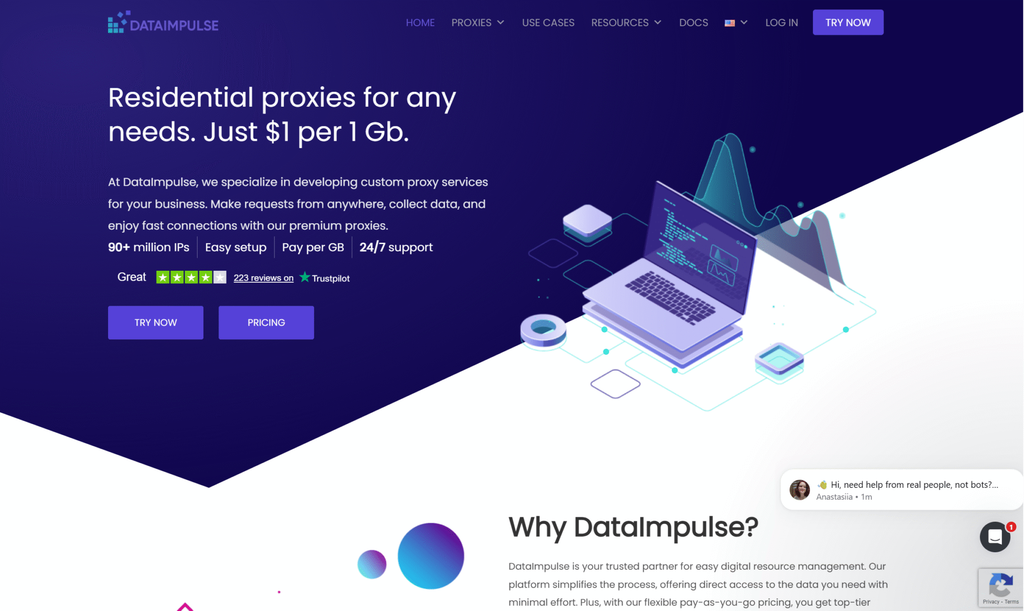
11. DataImpulse

DataImpulse offers mobile proxies that support 5G, 4G, 3G, and LTE connections through carrier networks. It uses a pay-per-traffic model that suits data-focused users who prefer flexibility. Features include free country selection and both sticky and rotating session options. Connections stay quick and help maintain reliable access during collection tasks. While effective for targeted data work, it serves more niche applications and may feel limited for broader or high-volume needs. Overall, DataImpulse provides a practical option for users who want efficient, usage-based mobile proxy access for specific research and monitoring activities.
Key features
- Pay-per-traffic model.
- Sticky and rotating.
- Country targeting.
- 24/7 support.
Accurate data and information
- All network support.
- Quick connections.
- Block avoidance.
Pros
- Flexible for data work.
- Good support.
- Efficient targeting.
Cons
- Niche applications.
- Limited broad use.
12. Rayobyte

Rayobyte supplies US-exclusive 4G LTE mobile proxies that leverage real mobile carriers and devices to deliver addresses with strong resistance to detection. The service supports 3G and 4G networks and targets users who need reliable access for public data collection and automation focused on the American market. It emphasizes ethical sourcing and genuine device integrations that support consistent performance in domestic workflows. While success rates remain solid for US-based tasks, the exclusive focus on North American coverage limits versatility for international operations. Overall, Rayobyte offers a dependable choice for specialized projects that require authentic US mobile IPs and high-trust connections.
- 4G LTE and 3G network compatibility for versatile mobile access.
- US-only IP locations with carrier-level sourcing.
- High ban resistance due to real device integrations.
- Support for data-intensive tasks like web scraping.
- Ethically sourced IPs ensuring long-term reliability.
- Solid success rate reported in US proxy operations.
- Market focus on North American data infrastructure needs.
- Rebranded in 2022 to emphasize advanced proxy solutions.
13. ProxyGuys

ProxyGuys delivers dedicated USA mobile proxies through enterprise-grade 5G modems paired with AT&T Wireless for authentic 4G and 5G connections. Headquartered in the United States, the service covers over fifty premium locations, enabling diverse selection for location-specific research and social media automation tasks. It supports unlimited IP and location changes along with near-perfect uptime and fast speeds. HTTP and SOCKS5 protocols work alongside browser plugins for easy setup. While the US-only scope restricts global use, the infrastructure delivers strong reliability for domestic projects. Overall, ProxyGuys suits users who need high-performance, dedicated mobile proxies within the American market.
- 4G/5G network support via dedicated modems.
- Over 50 US locations for precise geo-targeting.
- Unlimited IP and location rotations without restrictions.
- HTTP(S) and SOCKS5 protocol support.
- Firefox and Chrome plugins for easy integration.
- 40 Mbps download speeds for high-performance tasks.
- Virtually 100% uptime with reliable connections.
- Serves over thousands of users in US proxy market.
14. IPBurger

IPBurger provides rotating mobile proxies with broad global coverage and a strong US presence, drawing from a large pool across many countries. It supports 4G LTE networks and facilitates real mobile connections for public data collection and access to restricted content in approved scenarios. High success rates and selection down to country and state levels support precise operations with minimal interruptions. Integration works well with scraping tools and includes helpful documentation for developers. While the vast pool occasionally includes less optimal addresses, the service maintains strong overall performance. Overall, IPBurger serves as a reliable option for users who need versatile mobile proxy access across numerous locations.
- 4G LTE mobile network compatibility.
- IP pool exceeding 10 million rotating addresses.
- Coverage in 100+ countries, including major US regions.
- Country, state, and city-level targeting.
- Integration with multiple programming languages and code examples.
- 99.7% success rate for rotating proxies.
- Trusted by over 24,100 global clients.
- Focus on public data access with high anonymity.
15. Proxyrack

Proxyrack provides mobile proxies with 3G/4G/5G connections, offering access to monthly unique IPs from real devices across 140+ countries, including comprehensive US coverage. The service emphasizes geo-targeting for specific cities or ISPs, suitable for web scraping and ad verification. Strengths feature high-speed, reliable connections with transparent API reporting for monitoring performance, ensuring seamless operations. Weaknesses comprise a broad but not exclusively mobile-focused network, which may dilute specialization in LTE-specific tasks, and potential variability in IP quality across diverse locations. It supports multiple protocols, making it adaptable for various applications with consistent reliability.
- 3G/4G/5G network support for dynamic connections.
- Geo-targeting in 140+ countries, including US cities.
- HTTP, SOCKS, and UDP protocol compatibility.
- Rotating or sticky port options for integration.
- API for live performance reporting on connections.
- High speed and reliability for data collection.
- Millions of unique monthly IPs in the pool.
- Serves diverse market needs like scraping and browsing.
16. Proxy-Cheap

Proxy-Cheap supplies static and rotating mobile proxies through real 3G, 4G, and 5G networks, with strong availability across many US locations. It caters to app testing, ad verification, and social media workflows, offering shared or dedicated options for added control. High anonymity with clean addresses and robust uptime support fast connections for low-latency tasks. Browser extensions simplify management, and API documentation aids advanced integrations. While the location count stays moderate compared with larger providers, the service maintains solid performance for most standard uses. Overall, Proxy-Cheap appeals to users who want straightforward, affordable mobile proxy solutions with good domestic coverage.
- 3G/4G/5G network support for rotating and static proxies.
- 47+ locations, including major US regions.
- HTTP, HTTPS, and SOCKS protocol compatibility.
- Google Chrome and Firefox extensions for setup.
- API documentation for advanced integrations.
- Uptime exceeding 99% with minimal latency.
- Over 45,000 satisfied clients globally.
- Focus on anonymity and device compatibility.
17. MountProxies

MountProxies specializes in dedicated USA 4G and 5G LTE mobile proxies built from real cell phones connected directly to authentic carrier networks. It provides access across multiple United States cities through major carriers, with each proxy fully dedicated and unshared. Unlimited bandwidth and support for concurrent connections and threads enable intensive multitasking. City-level selection supports precise localized activities, while no-log policies help maintain privacy. The setup integrates well with automation tools and bots for web scraping, SEO monitoring, and social media management. Speeds vary by location but remain practical for most operations. Overall, MountProxies fits users who need exclusive, device-based mobile proxies for demanding domestic workflows.
Unlimited bandwidth and no restrictions on concurrent connections or threads support intensive multitasking across devices and software. City-level targeting enables precise localized activities while no-logging policies maintain strong privacy and anonymity. The infrastructure integrates seamlessly with automation tools, bots, and operating systems for versatile applications in web scraping, SEO monitoring, and social media management. Enterprise contracts with wireless providers ensure compliance and reliability, though speeds vary by location from approximately 1 to 26 Mbps depending on the specific city.
- Key features: Real cell phone based dedicated connections; unlimited threads, connections, and bandwidth; custom rotation intervals or static mobile IPs; multi-city US geo-targeting; compatibility with broad automation tools and bots; 100 percent authenticated residential mobile IPs.
- Accurate data and information: Millions of IPs from multiple US network providers; speeds ranging 1.1 to 26 Mbps by city; maximum uptime guarantee; optimized for localized SERP rankings, large-scale data scraping, and multi-account management; backed by direct wireless provider contracts for legal compliance.
18. GridPanel

GridPanel provides premium USA 4G mobile proxies with automatic IP rotation through dedicated modems and fresh SIM cards. It covers key American cities across major networks and delivers unlimited 4G data without throttling. The proxies maintain strong anonymity and high IP reputation. Users can switch between HTTP and SOCKS5 protocols via the dashboard and trigger on-demand rotation through links or API. Hosted in reliable US data centers, the service prioritizes stability for automation tasks such as managing multiple profiles and collecting public data. While international coverage stays limited, domestic performance remains consistent. Overall, GridPanel serves users focused on high-volume US-based research and monitoring with dedicated infrastructure.
Users can switch between HTTP and SOCKS5 protocols directly via the dashboard and trigger on-demand rotation through links or API calls. Hosted in world-class United States data centers featuring redundant power and network infrastructure, the setup prioritizes stability and compatibility for automation tasks. Ideal for managing multiple social media accounts, scraping publicly available data, and accessing geo-restricted content, the fully dedicated US-based proxies provide strong performance in domestic workflows, although international coverage remains more limited.
- Key features: Automatic rotating IP pool with on-demand options; dedicated modem and SIM card per proxy; HTTP and SOCKS5 protocol support; username/password or IP whitelist authentication; unlimited data allowance.
- Accurate data and information: 99.99 percent uptime; 10 GB per day guaranteed for 4G and 15 GB per day for 5G networks; coverage across multiple major US cities; 100 percent anonymous with high IP reputation; designed for social media automation, public data extraction, and content access with redundant US data center hosting.
19. Coronium

Coronium operates a marketplace for dedicated 4G, 5G, and LTE mobile proxies featuring genuine carrier IPs assigned to individual physical devices. US-focused options draw from carriers such as AT&T, Verizon, and T-Mobile in regions like Florida and New York. Unlimited bandwidth and flexible rotation controls via API, dashboard, or scheduled intervals support smooth project scaling. Multi-protocol support including HTTP, SOCKS5, and OpenVPN enhances integration versatility. The dedicated modem setup ensures isolation and reliability for enterprise-level tasks. While rotation intervals require some planning for time-sensitive work, the service excels at mimicking organic patterns for public data collection and account management. Overall, Coronium provides a strong option for users who need authentic, device-level mobile proxies with enterprise-grade controls.
Speeds range from 10 to 100 Mbps with 95 percent plus trust scores that minimize detection and CAPTCHA issues. The dedicated modem setup ensures isolation and high reliability for enterprise-level tasks while multi-protocol support including HTTP(S), SOCKS5, and OpenVPN enhances integration versatility. The service excels in mimicking organic user behavior for web scraping, ad verification, and multi-account management across US locations, although rotation intervals of 10 to 20 seconds may require planning for time-sensitive real-time applications.
- Key features: Dedicated physical modems with native carrier SIM cards; on-demand, scheduled, or API-controlled IP rotation; support for HTTP(S), SOCKS5, and OpenVPN protocols; city and country geo-targeting; CGNAT technology for genuine routing.
- Accurate data and information: 95 percent plus trust scores on major platforms; 99.5 percent plus uptime; connection speeds averaging 10 to 20 Mbps and up to 100 Mbps; thousands of unique IPs per country with focused US availability; utilized by over 100 enterprises for data collection, ad verification, and account management.
20. LTESock

LTESocks delivers LTE, 4G, and 5G mobile proxies through thousands of real devices connected via high-speed links and an AI-managed infrastructure. In the United States it covers a large number of addresses from primary mobile operators for clean and reliable access. Unlimited traffic and sessions combine with rotation options through manual commands or scheduled intervals. Full protocol support including SOCKS5, HTTPS, OpenVPN, and Shadowsocks ensures broad compatibility. The private channel setup with TCP fingerprint adjustments supports demanding applications such as public data parsing, price comparison, and affiliate marketing. While availability outside popular US operators can show natural variability, the emphasis on controlled devices delivers strong uptime. Overall, LTESocks suits users who need flexible, high-performance mobile proxy infrastructure for intensive research and automation workflows.
Speeds reach up to 150 Mbps on 5G networks while full protocol support including SOCKS5, HTTPS, OpenVPN, and Shadowsocks ensures broad compatibility. The private channel infrastructure with TCP fingerprint changes and no traffic restrictions supports demanding applications such as web scraping, competitor analysis, market research, and social media account handling. Strong emphasis on own controlled devices provides zero downtime transfers and high anonymity, although availability outside popular US operators can show natural variability tied to carrier networks.
- Key features: Real LTE and 5G device connections; manual or scheduled IP rotation without delay; unlimited traffic and concurrent sessions; full support for SOCKS5, HTTPS, OpenVPN, and Shadowsocks protocols; API and Telegram bot management; TCP fingerprint spoofing.
- Accurate data and information: 150,000 plus US IPs from two operators; 99.9 percent plus uptime with seamless device failover; speeds up to 150 Mbps on 5G; thousands of LTE and 5G devices in distributed infrastructure; optimized for data parsing, price comparison, affiliate marketing, and brand protection tasks.
21. HydraProxy

HydraProxy offers 4G and 5G mobile proxies sourced from real devices on leading US carriers, with coverage spanning every state. It features unlimited bandwidth without throttling and flexible rotation schedules ranging from short intervals to extended sticky sessions. State-level selection allows precise control for region-specific operations. HTTPS and SOCKS5 protocol support along with per-port access integrates easily with testing, analytics, and automation workflows. The combination of mobile carrier and optional Wi-Fi ISP connections broadens adaptability. Focused on domestic US performance, the real device-based proxies deliver consistent stability for public data collection, competitor research, and secure browsing activities. Overall, HydraProxy provides a reliable choice for users who need authentic nationwide mobile proxy access with customizable session management.
HTTPS and SOCKS5 protocol support along with per-port access integrates easily with testing, analytics, and automation workflows. The combination of mobile carrier and optional Wi-Fi ISP connections broadens adaptability for mixed environments. Focused on domestic US performance, the real device-based proxies deliver consistent stability for web scraping, competitor research, and secure browsing, though manual IP changes are unavailable and rotation remains automatic only.
- Key features: Real 4G and 5G mobile IPs with optional Wi-Fi combinations; unlimited bandwidth and no throttling; customizable rotation intervals or extended sticky sessions; full state-level geo-targeting across all 50 US states; HTTPS and SOCKS5 protocol support.
- Accurate data and information: Over 200,000 US mobile IPs with complete nationwide state coverage; 0 percent spam and fraud scores for high legitimacy; optimized for testing, analytics, ad tracking, and multi-account operations; balanced IP pool management for long-term network health and reliability.
22. LiveProxies

LiveProxies delivers rotating mobile proxies built on real 4G and 5G carrier connections, with a strong emphasis on the United States market. Founded in California, the service supports public data collection, ad verification, and application testing by providing authentic mobile traffic that aligns with everyday user patterns. It offers flexible controls that combine per-request rotation with sticky sessions, allowing teams to maintain consistent connections during longer research or monitoring activities. Selection options include country, city, and specific carriers, which proves especially useful for domestic workflows. Integration works well with automation frameworks and browser management tools, enabling smooth operation of separate QA and research processes. While performance stands out in US locations thanks to partnerships with major carriers, some international plans offer more limited options compared to fully global providers. Overall, LiveProxies serves professionals who need dependable mobile proxy access focused on approved business activities within the American market.
Key features
- Real 4G and 5G connections sourced from major mobile carriers
- Per-request rotation options paired with sticky session support
- Selection by country, city, and individual carrier networks
- Compatibility with HTTP, SOCKS5 protocols and popular automation tools
- Dashboard and API tools for managing sessions and locations
Accurate data and information
- Strong coverage across major US carriers for authentic mobile experiences
- Reliable performance reported in public data collection and market research tasks
- Suitable for workflows involving ad verification and application testing
- Flexible configurations that support both individual users and larger team operations
23. NetNut

NetNut provides mobile proxy services that route traffic through real user devices on 4G, LTE, and 5G networks. The platform focuses on fast and stable connections that benefit large-scale public data collection, market research, and brand protection activities. It includes personalized rotation controls and the ability to create sticky sessions, giving users practical flexibility for different workflow durations. Country-level selection supports precise access needs across supported regions. The backconnect gateway infrastructure simplifies integration with scripts and third-party tools, which many teams use for ongoing automation projects. While it delivers strong results for experienced users handling volume, those new to proxy setups may require additional time to explore the full range of configuration options. Overall, NetNut offers an efficient solution for professionals who prioritize speed and control in approved mobile proxy operations.
Key features
- Real carrier mobile connections with fast response times
- Customizable IP rotation and sticky session capabilities
- Country-level selection for supported locations
- Backconnect gateway for simplified script integration
- Support for multiple concurrent sessions in approved use cases
Accurate data and information
- Performs well for large-scale public data extraction and market research
- Maintains consistent speeds across supported carrier networks
- Positive feedback on reliability for brand protection and research workflows
- Compatible with common programming languages and proxy management software
24. Proxy-Seller

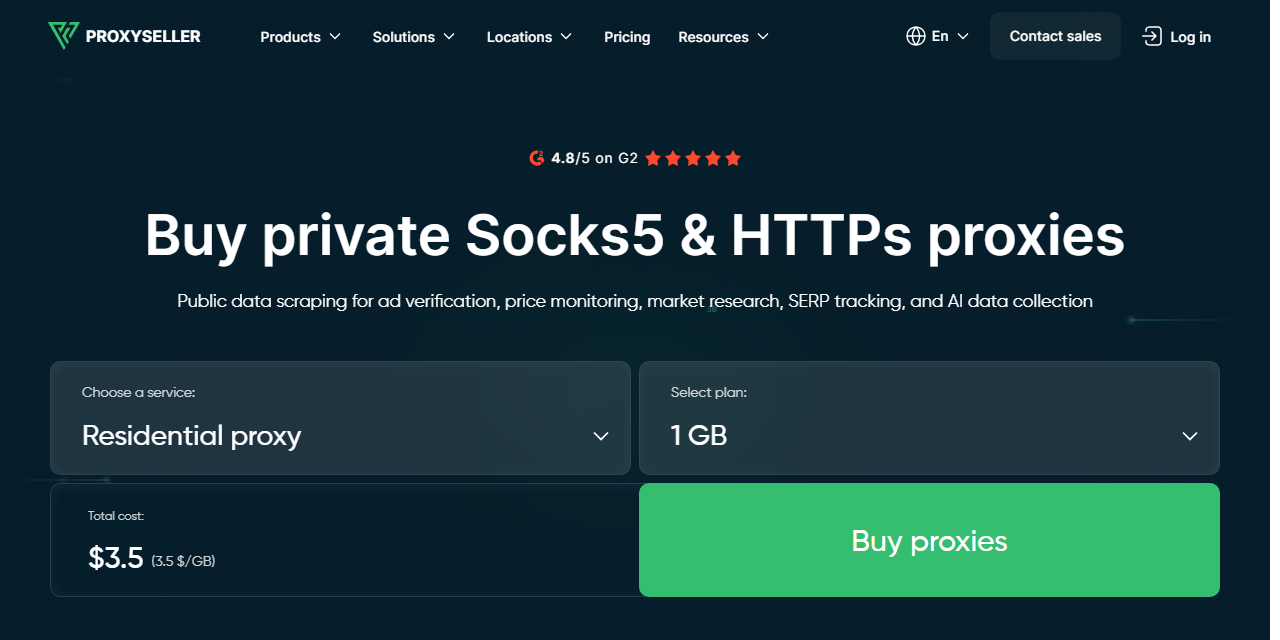
Proxy-Seller supplies rotating mobile proxies drawn from real 4G and 5G carrier networks, including major United States providers. The service supports both shared and dedicated options, allowing users to choose the level of exclusivity that fits their public data collection or monitoring needs. IPs remain dynamic, with rotation that helps maintain fresh connections during extended tasks such as price monitoring and ad verification. Users can select specific network generations and carriers at setup, which aids in matching requirements for different projects. Integration stays straightforward with standard protocols and automation environments. While the focus on real carrier sources delivers authentic traffic patterns, some users note that advanced dedicated setups benefit from technical familiarity during initial configuration. Overall, Proxy-Seller provides a practical choice for teams seeking versatile mobile proxy access with strong domestic carrier support for approved business workflows.
Key features
- Real 4G and 5G IPs from top carriers including US networks
- Rotating and dedicated plan options
- Dynamic IP behavior with user-controlled rotation
- Support for shared and private configurations
- Compatibility with HTTP, SOCKS protocols and common tools
Accurate data and information
- Covers major carriers for authentic mobile traffic simulation
- Effective for public data collection and ad verification activities
- Flexible plans that accommodate different project scales
- Reliable integration reported with automation and scripting environments
25. Froxy

Froxy offers mobile proxies powered by 4G and 5G connections from real carrier sources across a wide network of locations. The service emphasizes automatic rotation and ISP-level selection, which supports consistent performance in public data collection, market research, and monitoring tasks. With presence in many cities worldwide, it provides options for users who need access to varied regional perspectives through authentic mobile patterns. The platform includes tools for managing sessions and integrates readily with popular browsers and automation software. Many professionals value the stability during high-volume operations, though some find that achieving optimal results in less common locations may require testing different rotation settings. Overall, Froxy delivers a capable mobile proxy solution for teams focused on approved workflows that benefit from broad location options and reliable carrier-based connections.
Key features
- 4G and 5G mobile connections from real carrier infrastructure
- Automatic rotation with options for session control
- ISP-level and location-based selection capabilities
- Broad network coverage across numerous cities and regions
- Integration support for browsers, scripts, and management tools
Accurate data and information
- Suitable for public web data collection and market research across supported areas
- Maintains stable connections for extended monitoring and verification tasks
- Compatible with standard protocols and automation platforms
- Positive user experiences reported in high-volume approved business activities
26. MassiveProxies

MassiveProxies focuses on mobile proxy offerings that utilize real 4G, LTE, and 5G connections for users engaged in data-intensive activities. The service supports rotation and sticky session modes, helping teams balance freshness with consistency during public data collection and research projects. It provides selection options that include major carriers and locations, with particular strength in domestic United States coverage. Integration with common development environments and proxy tools allows for efficient setup of automation and monitoring workflows. While the network performs reliably for many standard use cases, some users mention that very specialized international requirements may need additional configuration adjustments. Overall, MassiveProxies serves as a solid option for professionals who need authentic mobile IP solutions tailored to approved business tasks with flexible session management.
Key features
- Real carrier 4G, LTE, and 5G mobile connections
- Rotating and sticky session support for varied workflow needs
- Carrier and location selection options
- Compatibility with automation tools and scripting languages
- Management interface for session and rotation control
Accurate data and information
- Strong performance in US-focused public data collection and market research
- Reliable for ad verification and ongoing monitoring activities
- Supports many concurrent operations in approved configurations
- Effective integration with popular proxy management and browser tools
How to Choose the Right 4G LTE Mobile Proxy Provider
Picking a provider starts with matching your needs, like rotation frequency or session types. Look for compatibility with your tools and scripts. Reliability comes from real carrier sources that support consistent performance for public data collection and research tasks. Consider support quality for quick fixes. Uptime and response times help long-term. Check integration ease, as some offer APIs for seamless setups. For diverse projects, broad location coverage matters. Avoid providers with hidden limits that slow you down. Also, think about ethical sourcing for sustained access.
| Factor | What to Look For | Why It Matters |
| Network Type | 4G/LTE support | Ensures fast, stable connections |
| Targeting Options | Country/carrier filters | Allows precise access |
| Session Management | Rotating/sticky | Fits different task types |
| Uptime | High reliability | Reduces interruptions |
| Support | 24/7 availability | Quick issue resolution |
Future Trends in Mobile Proxies for 2026
As tech evolves, expect more 5G integration for faster speeds in proxies. Providers will likely add AI-driven rotations to boost efficiency. Sustainability pushes ethical IP sourcing higher. Hybrid models combining mobile and residential will grow for versatility. Security features like better encryption will become standard. Users may see expanded carrier partnerships for wider coverage. Automation tools will tie in tighter, simplifying workflows. These shifts aim to handle rising data demands without compromising trust.
Common Use Cases for 4G LTE Mobile Proxies
These proxies shine in gathering market insights by accessing regional sites naturally. They help manage social profiles across accounts for research and monitoring workflows. Ad teams use them to verify campaigns from various views. For deeper dives, see proxy use cases. They aid in SEO by checking rankings from different spots. E-commerce pros monitor competitorsโ prices through authentic mobile perspectives. Automation scripts run smoothly with them for public data collection and research activities.
How 4G LTE Mobile Proxies Support Web Scraping Operations
In web scraping operations, 4G LTE mobile proxies act as intermediaries that route traffic through cellular networks, allowing for the collection of data from various online sources. These proxies utilize IP addresses assigned by mobile carriers, which supports reliable access when collecting data from various online sources. For instance, when extracting information from dynamic websites, rotating mobile proxies become useful in situations where frequent IP changes are necessary to maintain continuous data flow. This approach is particularly relevant in scenarios involving large-scale data gathering, where maintaining session continuity without interruptions is key.
Integrating these proxies with scraping tools can streamline the process, and resources like those found in web scraping 101 provide foundational knowledge on setting up such systems. Additionally, for users managing multiple accounts or automating tasks, combining mobile proxies with integrations tailored to specific software enhances efficiency. In cases where stability over extended periods is required, dedicated mobile proxies 4G offer a consistent connection, suitable for ongoing scraping projects that demand reliable performance.
Pros and Cons of 4G LTE Mobile Proxies
4G LTE mobile proxies route traffic through real cellular networks so the IP addresses appear as regular mobile users to websites. Rotating mobile proxies give flexibility for projects that need frequent IP changes while keeping the authentic mobile signature.
Many users choose these proxies because the IPs come from actual carrier networks. This setup supports tasks that benefit from natural mobile behavior. Rotating mobile proxies work well for large-scale public data collection and workflows that gain from automatic IP rotation. Dedicated options provide a fixed connection when longer consistent sessions matter more.
Some proxy setups allow sticky sessions that keep the same IP for a chosen period. This helps with research or monitoring projects where continuity adds value. The mobile nature also fits ad verification, price monitoring, and market research because the traffic patterns match everyday phone usage.
On the other side, speeds can vary depending on local carrier conditions and network load. Some users find the cost higher than other proxy types, especially when they need broad location coverage or high volumes of traffic. Setup can require extra steps for beginners who want to integrate the proxies with specific tools or scripts.
Overall, 4G LTE mobile proxies deliver strong results when the project needs authentic mobile IPs. They may not suit every budget or every simple task where basic connections work fine.
4G LTE Mobile Proxies Pricing Guide 2026
Pricing for 4G LTE mobile proxies usually follows a few common models. Some providers charge based on the amount of traffic used, while others offer plans tied to ports or dedicated access. The choice often depends on whether the user needs rotating IPs or prefers sticky sessions that stay consistent for longer periods.
Factors that influence cost include the level of location targeting, the number of concurrent connections allowed, and whether the plan covers rotating or dedicated mobile proxies. Plans with more advanced session controls or wider carrier options tend to sit at the higher end of the range.
Many services include flexible options so users can start with smaller amounts and scale as needed. Trials or entry-level plans appear frequently because they let people test performance before committing to larger volumes. Dedicated mobile proxies often carry different pricing than shared rotating pools because they provide exclusive access.
Users should compare how each plan handles session management and protocol support. This helps match the pricing to the actual workflow, whether it involves short frequent requests or longer stable connections.
Differences Between Rotating and Dedicated 4G LTE Mobile Proxies
Rotating 4G LTE mobile proxies automatically switch IP addresses at set intervals or per request, making them suitable for large-scale public data collection, market research, and workflows that benefit from automatic IP rotation. This type of proxy draws from a pool of mobile IPs, providing variability that aligns with activities like market research or content aggregation. On the other hand, dedicated 4G LTE mobile proxies assign a single IP for exclusive use, which is beneficial in situations where a stable, unchanging address is needed for prolonged sessions.
When comparing these to other options, such as rotating datacenter proxies, the mobile variants leverage cellular networks for a more organic traffic pattern. Users often select rotating proxies for social media proxies applications, where managing profiles across platforms requires adaptability. Dedicated versions, however, shine in specialized uses like ad verification, ensuring consistent monitoring without IP shifts disrupting the process.
Applications of 4G LTE Mobile Proxies for Data Extraction Projects
Professionals building their knowledge base often start with foundational materials such as the web scraping 101 resource when initiating data extraction projects. 4G LTE mobile proxies deliver network simulations that align well with platforms for public data collection and approved research activities. Rotating mobile proxies facilitate tasks that demand frequent connection resets during extensive data collection cycles. Dedicated mobile proxies support scenarios where a consistent device-like connection benefits detailed parsing and monitoring over longer sessions. Many extraction setups incorporate rotating residential proxies to add layers of flexibility in hybrid proxy configurations. The proxy use case documentation details how these elements integrate into broader data workflows.
Implementing 4G LTE Mobile Proxies in Social Media and Verification Tasks
4G LTE mobile proxies replicate typical mobile traffic patterns that platforms expect from genuine users engaged in account activities. Resources focused on social media proxies provide context for running separate profiles and research workflows through such connections. Verification processes for advertisements rely on the authenticity offered by these mobile network simulations to deliver accurate assessments. Overviews in proxies for ad verification highlight practical integration methods for campaign monitoring systems. The proxy use case section covers additional applications in these management areas.
Latest News In 2026
Mobile proxy technology continues to advance with wider support for newer network generations. Providers focus on improving connection stability and reducing latency so the high-quality proxies handle demanding automation tasks more smoothly.
Ethical sourcing of IPs remains a priority across the industry. This approach helps maintain long-term access and reduces the risk of sudden changes in how websites treat the traffic. Hybrid setups that combine mobile connections with other proxy types grow in popularity. These combinations let users balance speed, trust level, and session control for different parts of a project.
Automation tools integrate more tightly with proxy services. Better API options and session management features make it easier to run complex workflows without manual adjustments. Interest in dedicated mobile options rises for projects that need consistent mobile identities over extended periods. At the same time, rotating options stay popular for tasks that benefit from frequent IP changes during public data collection or monitoring activities.
FAQ
What makes 4G LTE mobile proxies better than other types?
These proxies leverage authentic carrier-based IP addresses that websites view as genuine mobile traffic, which enhances their effectiveness for tasks requiring authentic mobile traffic patterns and consistent connections. Unlike alternatives, they provide a more organic online presence, supporting tasks that require consistent and trustworthy connections over extended periods. For users dealing with dynamic content, this means smoother integration with tools designed for residential proxies, allowing for hybrid approaches in complex setups.
How do mobile proxies help with web scraping?
Mobile proxies facilitate efficient public data collection by simulating real user behavior through carrier networks, supporting reliable access during large-scale operations. They enable seamless handling of large-scale operations where maintaining anonymity is key, often complementing scripts and automation frameworks. Exploring web scraping basics reveals how these proxies adapt to varying site protocols, ensuring reliable access to public resources without disruptions.
Can I use 4G LTE proxies for social media management?
Absolutely, as they allow for operation of multiple profiles by providing IPs that align with everyday mobile user patterns, supporting content scheduling and audience engagement across accounts. This capability supports features like content scheduling and audience engagement across different accounts. When paired with social media proxies, they offer enhanced control over interactions, making it easier to maintain a natural footprint on various networks.
What should I consider for proxy security?
Focus on services that prioritize ethical IP acquisition and implement strong privacy measures, such as avoiding data logging to protect user activities. Incorporating encrypted protocols like HTTPS ensures that traffic remains secure during transmission. Regular IP changes help maintain fresh connections during extended research and monitoring activities, and understanding proxy use cases can help identify scenarios where additional safeguards are beneficial for long-term reliability.
What are 4G LTE mobile proxies?
4G LTE mobile proxies supply IP addresses that come from real mobile devices operating on cellular carrier networks. These IPs carry the traffic patterns and trust signals associated with everyday phone usage because they route through actual SIM-based connections and cell towers. The setup gives websites the impression of standard mobile visitors rather than server-based traffic. Many providers build in controls for how often the IP changes during a project, including options available through rotating mobile proxies.
How do 4G LTE mobile proxies differ from datacenter proxies?
4G LTE mobile proxies originate from consumer cellular infrastructure while datacenter proxies come from dedicated server environments. This difference in source creates distinct behavioral fingerprints that some platforms evaluate differently when reviewing incoming connections. Mobile options often align better with tasks that benefit from device-like patterns, whereas datacenter connections prioritize raw speed and volume in other scenarios. The selection usually depends on how the target sites respond to each type of origin.
What is the role of rotating in 4G LTE mobile proxies?
Rotating in 4G LTE mobile proxies involves changing the IP address periodically to handle multiple requests without raising flags. This feature is relevant when conducting repetitive online activities, and rotating residential proxies can sometimes complement mobile setups for added versatility.
When would someone choose dedicated over rotating 4G LTE mobile proxies?
Dedicated 4G LTE mobile proxies provide a fixed IP for the duration of use, which is ideal in scenarios needing consistent access without changes. This contrasts with rotating types and aligns with tasks like ongoing monitoring.
How can 4G LTE mobile proxies be used for social media management?
4G LTE mobile proxies facilitate managing multiple social media accounts by providing mobile IPs that reduce the risk of blocks. In such applications, they support activities like posting and interacting across platforms.
What about compatibility with different tools for 4G LTE mobile proxies?
4G LTE mobile proxies are compatible with various software and browsers, often integrating seamlessly for automation or data tasks. Checking specific targets helps ensure they work with intended websites or applications.
Are there options for static IPs in 4G LTE mobile proxies?
Yes, static IPs are available through dedicated setups in 4G LTE mobile proxies, offering unchanging addresses for users who require them. This is similar to static residential proxies but leverages mobile networks.
How do 4G LTE mobile proxies handle ad verification?
In ad verification, 4G LTE mobile proxies allow checking advertisements from mobile perspectives, ensuring they display correctly across devices. This use case benefits from the authentic nature of mobile IPs.
What are the primary applications for 4G LTE mobile proxies in current projects?
4G LTE mobile proxies power numerous automation systems that depend on authentic mobile network signatures for consistent access. They prove valuable in environments where platforms differentiate between desktop and cellular traffic patterns. These connections help maintain smooth operation during extended research and monitoring activities across various digital channels. Their natural routing behavior supports complex workflows that combine multiple data sources effectively.
How do rotating mobile proxies contribute to ongoing operations?
Rotating mobile proxies deliver dynamic IP changes while preserving the quality of 4G LTE mobile connections throughout active sessions. This capability supports long-running processes that involve frequent interactions with target platforms. The rotation process helps distribute activity in ways that align with normal mobile user patterns. When layered with other services, they create resilient setups for continuous data handling requirements.
In what situations do dedicated 4G mobile proxies prove particularly useful?
Dedicated 4G mobile proxies provide fixed connection points that deliver reliable performance for projects needing session stability over time. They work well in scenarios involving detailed account maintenance where consistency matters more than volume. The persistent nature of these connections benefits operations requiring the same mobile identity across multiple interactions. Integration within larger systems often enhances control over specific workflow segments.
Can 4G LTE mobile proxies integrate with other proxy varieties?
4G LTE mobile proxies combine effectively with different proxy types to create hybrid configurations tailored to specific operational needs. Mixing them with rotating residential proxies allows users to balance speed and authenticity in complex setups. Such combinations expand the range of tasks that can run simultaneously without triggering restrictions. Many automation frameworks support these mixed environments through standard protocol compatibility.
What considerations arise when applying these proxies to social media tasks?
Social media tasks benefit from 4G LTE mobile proxies through their ability to simulate everyday mobile user behavior on cellular networks. Proper configuration helps maintain natural activity patterns that align with platform expectations for regular traffic. The social media proxies approach focuses on creating realistic interaction flows across multiple profiles. Attention to session management and timing contributes to smoother performance in these environments.
How do these proxies assist in advertisement related activities?
Advertisement related activities leverage 4G LTE mobile proxies to replicate real mobile viewer conditions during verification processes. These connections help assess ad visibility and placement accuracy across different network conditions. Resources covering proxies for ad verification describe how mobile network traits support more reliable testing outcomes. The authentic traffic signatures contribute to better evaluation of campaign delivery mechanisms.
What developments characterize mobile proxy usage entering 2026?
Mobile proxy technology has advanced with better compatibility across modern automation platforms and updated network protocols. Enhanced features now support more complex integration requirements in evolving digital landscapes and application environments. Service improvements focus on increased reliability and expanded functionality for automation users.
Are there resources for understanding broader proxy implementations?
Various guides explore different proxy configurations and their roles in comprehensive automation strategies. These materials help clarify how 4G LTE mobile proxies function within larger technical setups and multi-proxy environments. Understanding these relationships allows for more strategic implementation across different project types. The proxy use case area contains extensive information on multiple implementation approaches.
What is the difference between rotating and dedicated 4G LTE mobile proxies?
Rotating versions shift to a new IP from the pool at regular intervals or with each new request, spreading activity across multiple mobile addresses. Dedicated versions keep one IP assigned for the full length of the session or plan, maintaining a single consistent identity. Rotating mobile proxies fit workflows where variety across many addresses supports the overall process. Dedicated mobile proxies work when the task requires the same mobile identity to stay in place through several connected steps.
How can 4G LTE mobile proxies support public data collection projects?
These proxies supply mobile IPs that match the connection style of regular phone users accessing public websites. This alignment helps approved data gathering activities run with traffic patterns that fit common mobile access methods. Automatic rotation in some plans keeps the flow moving across different addresses during longer collection periods. The cellular source also adds separation that suits research and monitoring activities focused on publicly available information through resources like web scraping guides.
In what situations do mobile proxies help with ad verification and price monitoring?
Mobile connections let teams review how content and advertisements appear through typical phone networks and interfaces. The same mobile perspective supports price comparisons as they show to everyday users in different supported locations. This approach gives accurate visibility into campaign delivery and competitive details from a consumer device standpoint. Session controls allow context to remain steady when moving between multiple checks in one workflow focused on ad verification and price monitoring.
How do mobile proxies fit into social media management workflows?
Mobile IPs reflect the connection behavior many people use when accessing platforms through phones in daily routines. This match supports activities that involve separate profiles or testing across accounts without unusual patterns. Rotation and sticky options let users adjust between variety and consistency based on the current stage of the work. The overall behavior aligns with normal mobile usage that platforms encounter from regular visitors in social media management workflows.
What influences the speed and reliability of 4G LTE mobile proxies?
Speed and reliability depend on local cellular signal strength and real-time demand on the carrier network in the selected area. Some locations deliver steady performance while others show more variation due to network conditions at that moment. The specific carrier and routing path also play roles in how consistently the connection holds during active use. Providers often adjust routing to maintain stable performance across common task types.
What session management options exist for mobile proxies?
Session options typically include rotating setups that change the IP on a timer or per request and sticky setups that hold one IP for a chosen duration. Rotating sessions distribute activity across a wider set of mobile addresses when that approach improves results. Sticky sessions keep one identity active through a sequence of related actions. The best choice depends on the workflow requirements and how the platforms involved respond to IP changes.