
When you need to pull data from Google search results, the right proxies make all the difference. They help you stay under the radar, handle large requests, and get consistent results. In 2026, residential proxies stand out as the go-to choice for Google scraping because they look like regular user traffic. Explore the best Google scraping proxies in 2026.
Why Proxies Matter for Google Scraping
Google uses strong defenses to spot automated activity. Without proxies, your IP can get blocked after just a few requests. Proxies solve this by spreading your activity across different IPs.
Residential proxies work especially well here. They come from real devices, so Google sees them as normal visitors. This approach leads to fewer interruptions and better data flow. Many teams rely on them for tasks like tracking rankings, monitoring ads, or gathering market insights. Datacenter proxies can work in some cases, but they often trigger flags faster.
The key is finding proxies with strong rotation and wide coverage. These features keep your operations running without sudden stops.
Key Factors to Consider When Choosing Proxies for Google
Pick proxies that match your project size and needs. Look for fast response times and reliable uptime. Rotation helps avoid patterns that Google might detect.
Support for HTTP, HTTPS, and SOCKS5 protocols adds flexibility. Wide location options let you pull region-specific results. Easy integration with your tools saves time.
Some providers offer extras like API access or dashboard controls. These make managing large jobs simpler. Always test a small batch first to confirm everything fits your setup.
Best Google Scraping Proxies in 2026
1) ProxyEmpire – Best Google Scraping Proxies In 2026
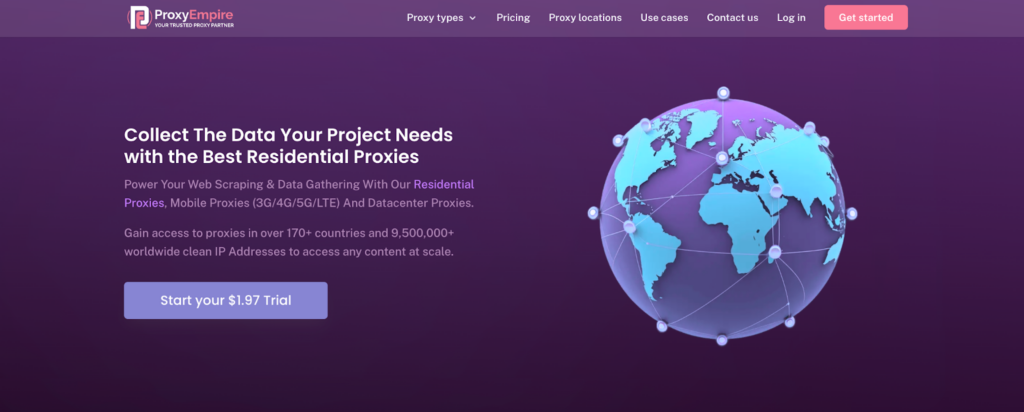
ProxyEmpire is a premium proxy service provider designed to empower web scraping, data collection, and unrestricted internet access through a vast network of ethically sourced residential, mobile, and datacenter proxies. Below is a detailed description based on the provided information:
Overview of ProxyEmpire
ProxyEmpire offers a comprehensive suite of proxy solutions tailored for individuals, businesses, and developers seeking reliable, high-performance tools for data gathering and privacy protection. With over 30 million clean IP addresses spanning 170+ countries, ProxyEmpire provides unparalleled global coverage, ensuring users can access content at scale with a 99.9% uptime and lightning-fast response times (as low as 0.6 seconds).
Proxy Types and Features:
🏘️ Rotating Residential Proxies
Key Benefits
- Global Reach: Access to over 30 million IPs worldwide, covering every major region, with precise targeting options (country, city, state, ASN/ISP).
- High Reliability: A 99.86% uptime ensures uninterrupted service, supported by patented technology for enhanced speed and security.
- Ethical Sourcing: Proxies are responsibly harvested, ensuring quality and compliance.
- Versatile Use Cases: Supports web scraping, price monitoring, sneaker copping, SEO tracking, ad verification, and more.
- Integration-Friendly: Compatible with standard proxy protocols (HTTP, SOCKS5) and third-party tools like Multilogin, Dolphin Anty, Kameleo, Octobrowser, and Gologin.
- No Hidden Fees: Transparent pricing with all features included, starting at a $1.97 trial.
Use case:
2. Bright Data
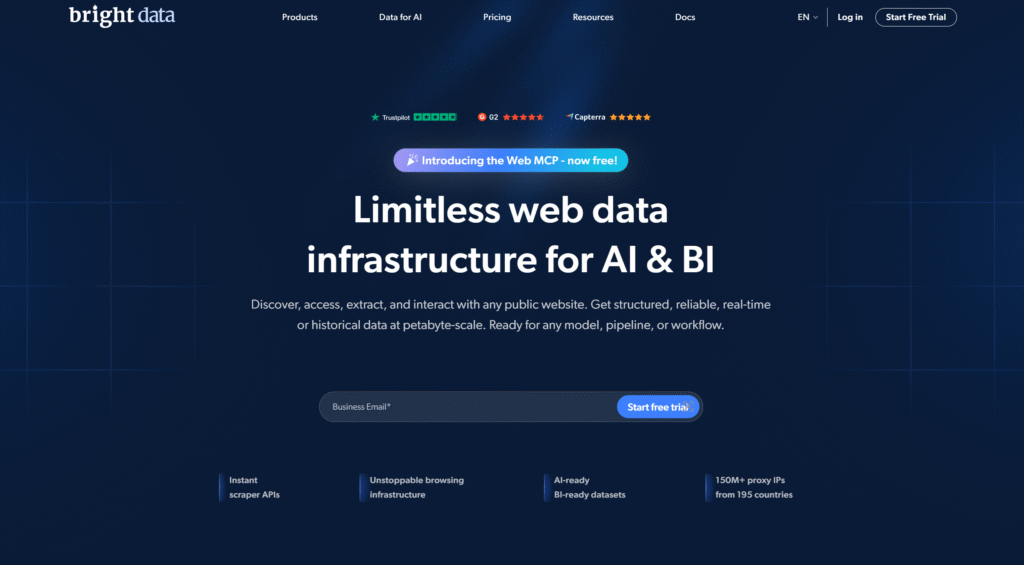
Bright Data supplies a large selection of residential and other proxy types that many use for web scraping. Their network draws from diverse sources, offering good coverage in key markets. The platform supports advanced rotation and session controls.
It handles big projects well, with tools for custom setups. Some users note the interface takes time to learn, but it offers deep options once mastered.
Key features
- Large IP selection across regions
- Flexible rotation and sticky sessions
- Multiple protocol support
- Built-in tools for data handling
Pros
- Strong performance on major sites
- Useful for complex scraping jobs
Cons
- Setup can feel involved at first
3. ResiProx
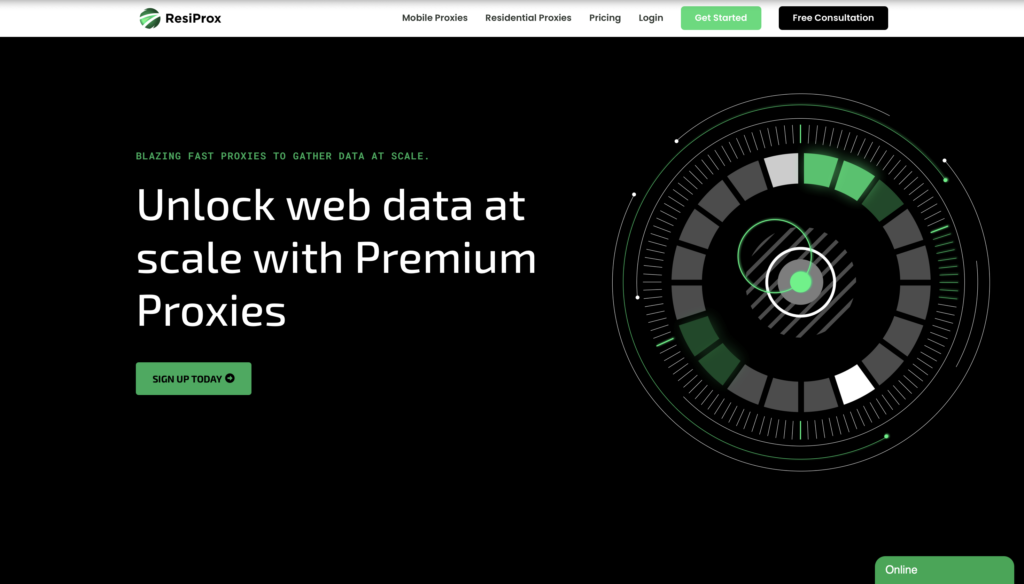
ResiProx provides rotating residential and mobile proxies that suit data collection tasks, including Google scraping. The service pulls from a wide pool of IPs spread across many countries. It emphasizes quick response times and high uptime.
Targeting options include country, region, city, and ISP levels. The system supports both rotating and sticky sessions, which gives flexibility based on the task. Support runs around the clock.
Key features
- Rotating and static session options
- HTTPS and SOCKS5 protocols
- Precise location targeting
- Unlimited concurrent connections
Pros
- Solid speed and reliability
- Good coverage in major regions
4. Oxylabs
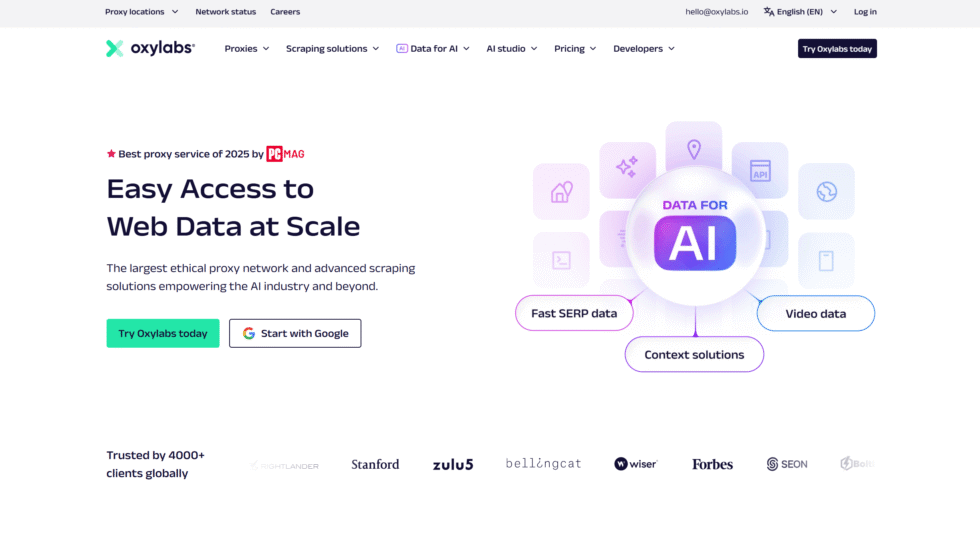
Oxylabs, a leading proxy provider, offers residential proxies ideal for Google scraping tasks. Their network supports high-volume data extraction with seamless integration into various tools. Users benefit from quick setup using code samples in multiple languages. The service emphasizes ethical sourcing and certified data centers for reliability. With advanced filters like operating systems and IP versions, it adapts to specific needs. Oxylabs has earned accolades such as Best Proxy Service of 2025 by PCMag and Leader in G2 Enterprise Grid Report. This makes it suitable for teams handling large-scale scraping without frequent interruptions. While specifics on network size aren’t detailed, the focus on speed and success rates stands out.
Key features
- Advanced targeting with OS and IP version filters
- HTTP/HTTPS protocol support
- Integration with over 30 tools
- Code samples for easy implementation
Pros
- Average response time under 1 second
- Over 99% data retrieval success rate
- Trusted by thousands of clients globally
Cons
- Lacks detailed info on rotation frequency
- Setup might require some technical knowledge
5. SOAX
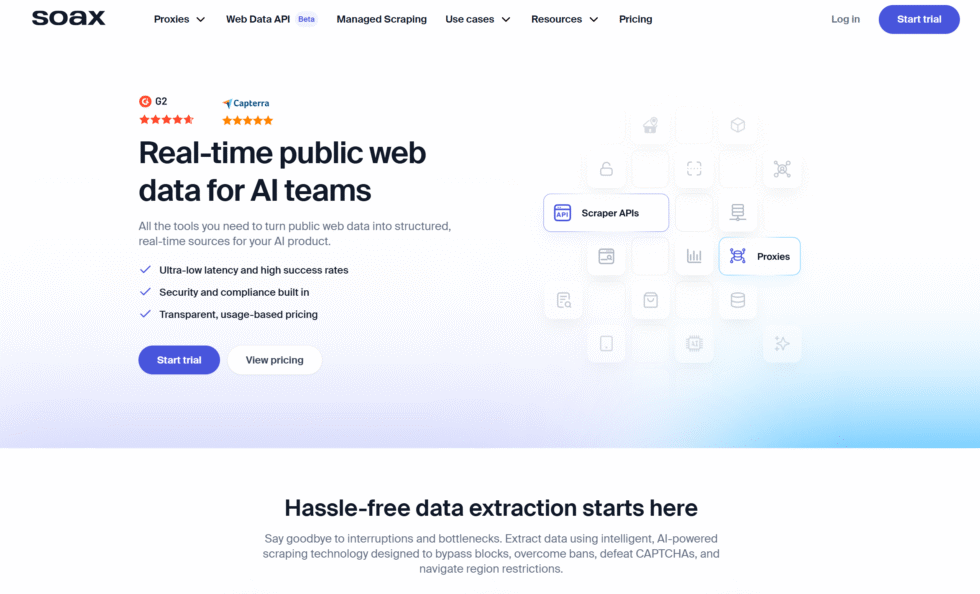
SOAX provides residential and mobile proxies designed for effective Google scraping. Their large pool of ethically sourced IPs ensures high anonymity and bypasses restrictions like CAPTCHAs. The service supports customizable sessions, making it flexible for various project sizes. With coverage in over 195 countries, users can target specific locations accurately. SOAX integrates AI-powered tools for automated data handling, which simplifies complex tasks. Performance remains strong with low latency and high uptime. This setup benefits market research and SEO monitoring by delivering consistent results. Established in the UK, SOAX prioritizes compliance with certifications in progress.
Key features
- Over 191 million IPs including residential and mobile
- HTTP(S), SOCKS5, UDP, and QUIC protocols
- Country, region, city, and ISP targeting
- Unlimited connections and bandwidth
Pros
- Success rates above 99.5%
- AI integration for seamless scraping
- Responsive support and ethical sourcing
Cons
- May need monitoring for suspicious activity
- Bundled plans could require scaling for big projects
6. IPRoyal
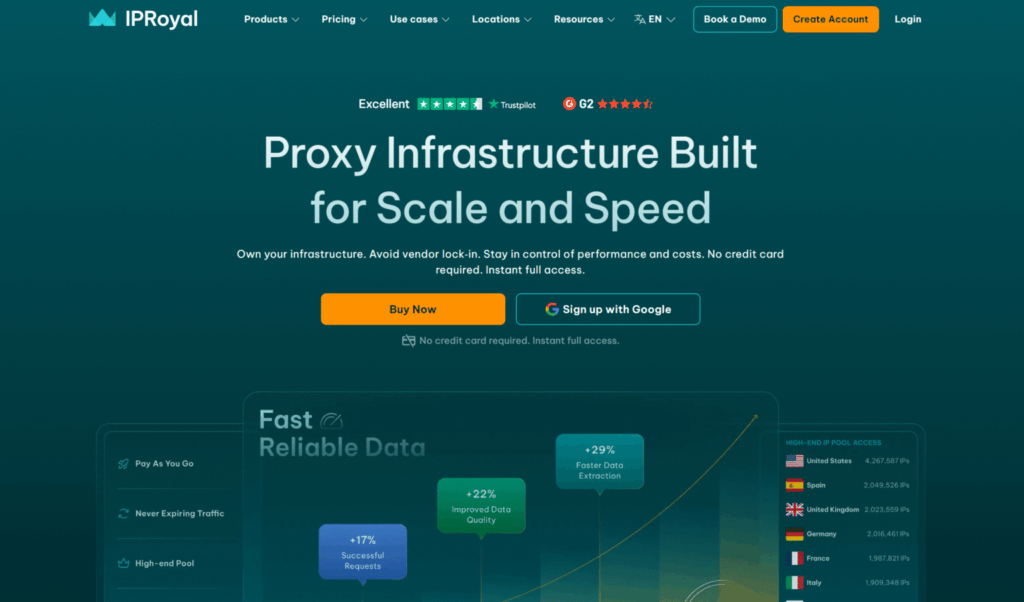
IPRoyal delivers residential proxies focused on anonymity and scalability for Google scraping. Their pool covers diverse locations with precise targeting options. The service supports high-volume operations without expiring traffic, appealing to ongoing projects. Security features like KYC and 2FA add protection. IPRoyal integrates with hundreds of third-party tools via API, streamlining workflows. Users report reliable performance across many sites. This makes it a good fit for SEO tasks and data collection. While protocol details are general, the emphasis on ethical sourcing and redundancy ensures steady access.
Key features
- 32 million+ IP pool
- City and state-level targeting
- API-first design with extensive integrations
- Non-expiring traffic options
Pros
- Over 95% success rate on websites
- Strong security measures
- Scalable for large operations
Cons
- Limited details on rotation specifics
- No free trial mentioned
7. NetNut
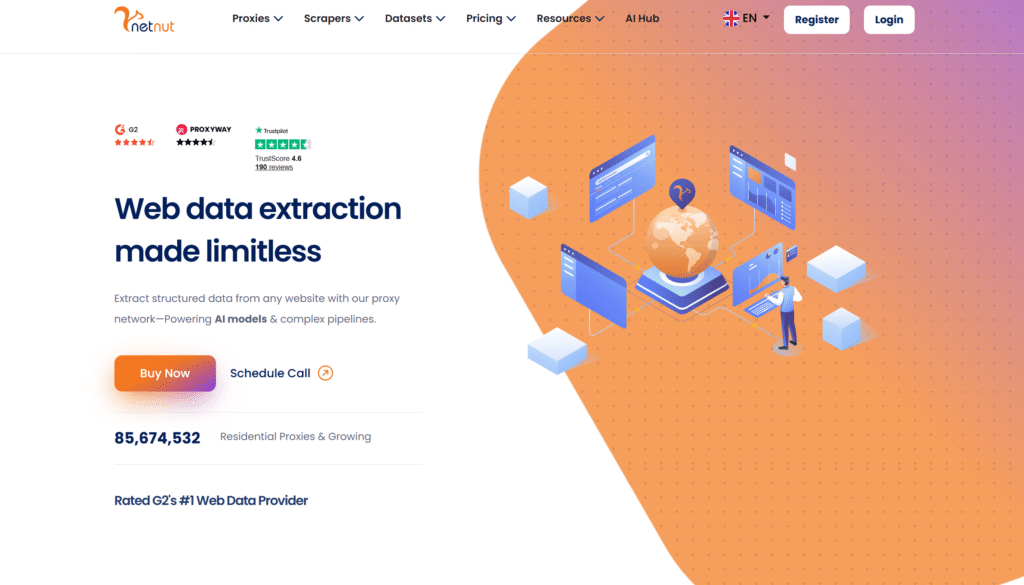
NetNut specializes in residential and ISP proxies for Google scraping, offering a vast network to avoid detections. Their rotating proxies handle large-scale data needs with global coverage. Static options provide consistent sessions for targeted work. Mobile IPs add variety using real carrier connections. The service boasts high uptime and no blocks in claims. Users gain from real-time management tools and dedicated support. This suits AI training and web extraction projects. With allocations in key countries, NetNut ensures broad access. The focus on direct connectivity boosts speed.
Key features
- Over 85 million rotating residential IPs
- HTTP/HTTPS/SOCKS5 protocols
- City and state targeting
- Unlimited concurrency
Pros
- 99.99% uptime
- Cost-effective for premium performance
- Helpful account managers
Cons
- Billing includes all transmitted data
- Limited niche location coverage
8. Decodo
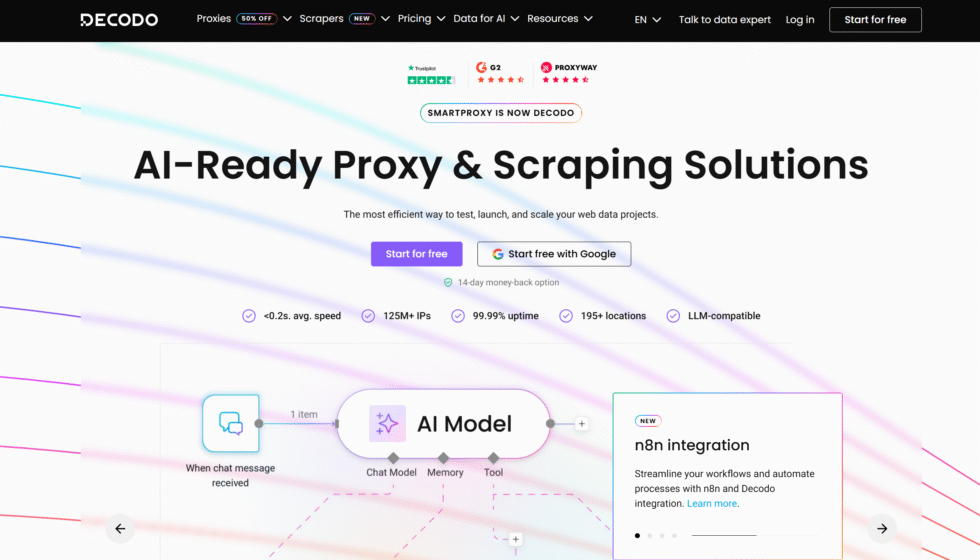
Decodo, formerly Smartproxy, offers residential proxies for Google scraping with a massive ethical IP pool. Their service supports rotation to maintain anonymity during sessions. Targeting reaches ASN levels for precision. Tools like browser extensions and AI integrations enhance usability. Performance includes quick speeds and high uptime. Users appreciate free resources for setup and testing. This aids in SERP collection and market analysis by overcoming blocks. Decodo serves a large client base with award-winning features. The emphasis on UDP and sticky options adds flexibility.
Key features
- 125 million+ IPs across 195 locations
- SOCKS5 and rotating support
- State, city, and ASN targeting
- IP replacement without downtime
Pros
- Average speed under 0.2 seconds
- 99.99% uptime
- AI tools for data parsing
Cons
- Potential blocks if not rotated properly
- Compliance risks with random IPs
9. Webshare
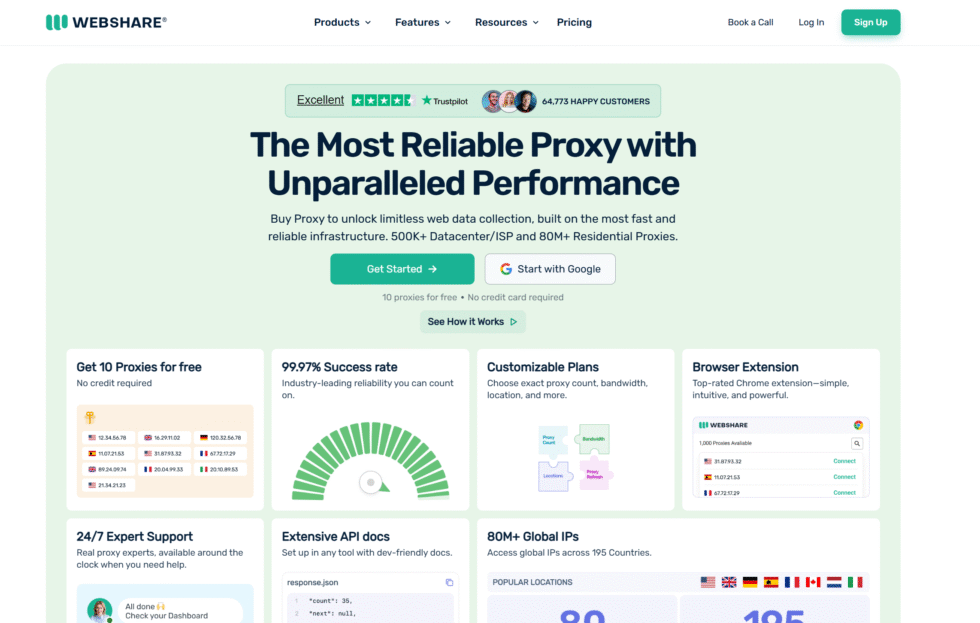
Webshare provides residential proxies for Google scraping, emphasizing affordability and ease. Their global network supports anonymous data gathering for various uses. Customizable plans allow tailored bandwidth and locations. A browser extension simplifies access. The service handles high request volumes with strong uptime. Users benefit from expert support and API docs. This fits pricing intelligence and social monitoring tasks. With IPs in major countries, Webshare ensures reliable coverage. The free plan offers a low-entry barrier.
Key features
- 80 million+ IPs in 195 countries
- HTTP/S and SOCKS5 protocols
- Customizable proxy counts
- Browser extension for Chrome
Pros
- 99.97% success rate
- 99.7% uptime
- Scalable for business needs
Cons
- Rotation details not specified
- Residential pricing not detailed
10. Proxy-Seller
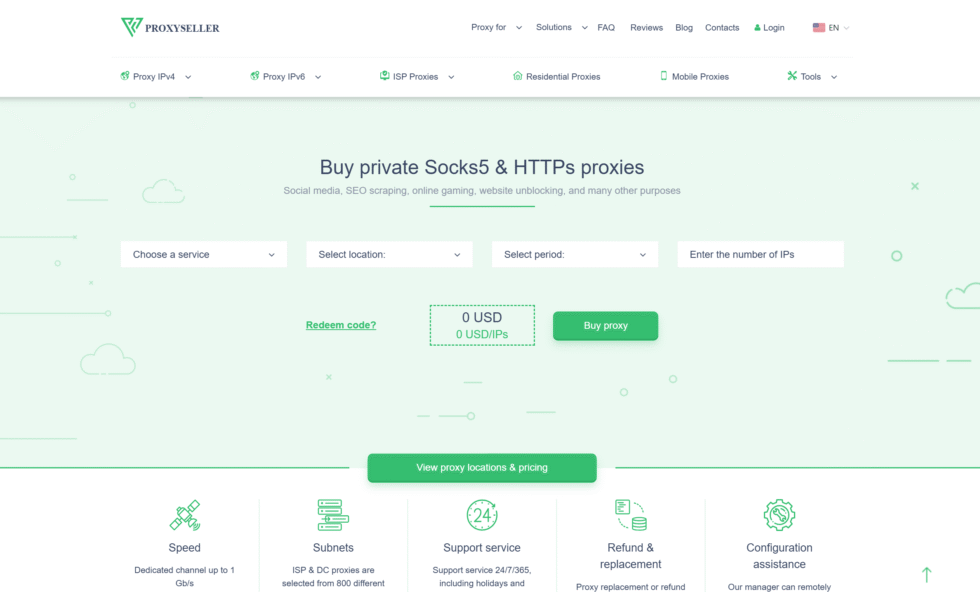
Proxy-Seller supplies residential proxies for Google scraping with a large rotating pool. Sourced from real users, they offer high trust to evade blocks. Targeting includes ISP levels for accuracy. Options for session types provide control. The service supports fast speeds and stable connections. Users gain from round-the-clock support and quick replacements. This enables SEO analysis and ad verification effectively. With extensive GEO options, Proxy-Seller covers diverse needs. Custom plans adapt to specific requirements.
Key features
- Over 20 million IPs
- SOCKS5 and HTTP(S) protocols
- Country, city, and ISP targeting
- Rotation by time or request
Pros
- Up to 1 Gb/s speeds
- 99% uptime
- 24/7 support with configuration help
Cons
- Traffic plans start small
- No user drawbacks highlighted
11. Rayobyte
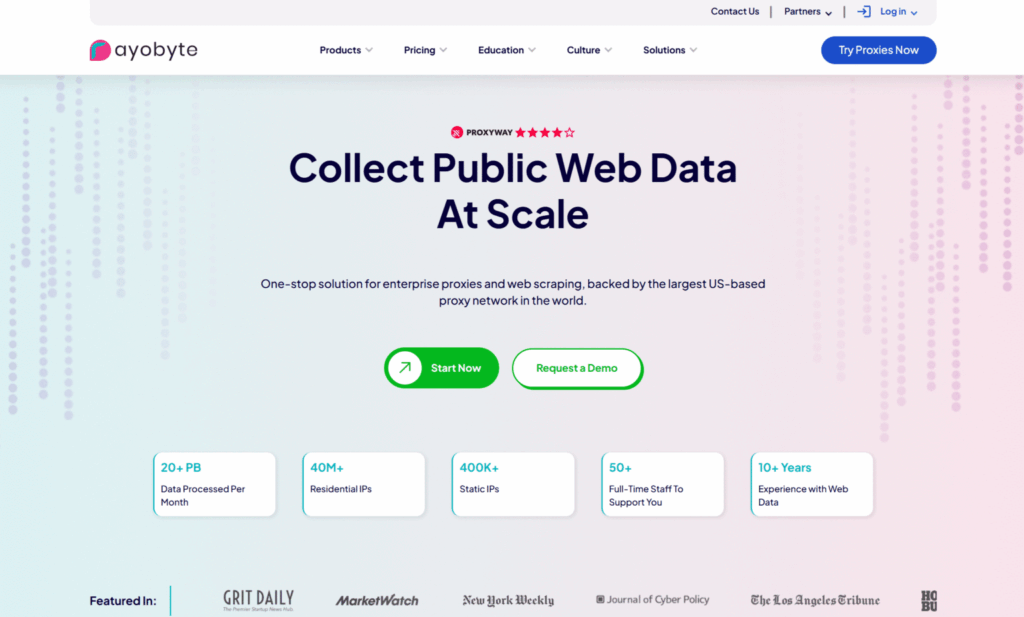
Rayobyte, headquartered in the United States, specializes in proxy solutions optimized for web scraping, including challenging targets like Google search results. With more than 10 years in the industry, the company focuses on ethical IP sourcing from real residential and ISP networks, ensuring compliance with data privacy standards. This approach enhances reliability for large-scale operations such as AI model training and market research.
Strengths lie in its expansive US-centric infrastructure, which reduces latency for North American users and offers robust anti-detection through diverse IP pools. However, weaknesses include potential variability in connection speeds across residential proxies due to reliance on consumer networks, which may affect high-throughput tasks. Overall, Rayobyte provides a solid option for businesses seeking transparent and scalable proxy access without compromising on ethics or performance.
- Vast IP pool exceeding 36 million residential addresses and 400,000 static IPs across global locations.
- Supports multiple proxy types including residential, rotating ISP, static ISP, datacenter, and mobile for versatile scraping needs.
- Geo-targeting capabilities for region-specific data collection, ideal for ad verification and SERP monitoring.
- Designed for high-volume use, handling enterprise-level requests with emphasis on low ban rates through ethical sourcing.
12. MarsProxies
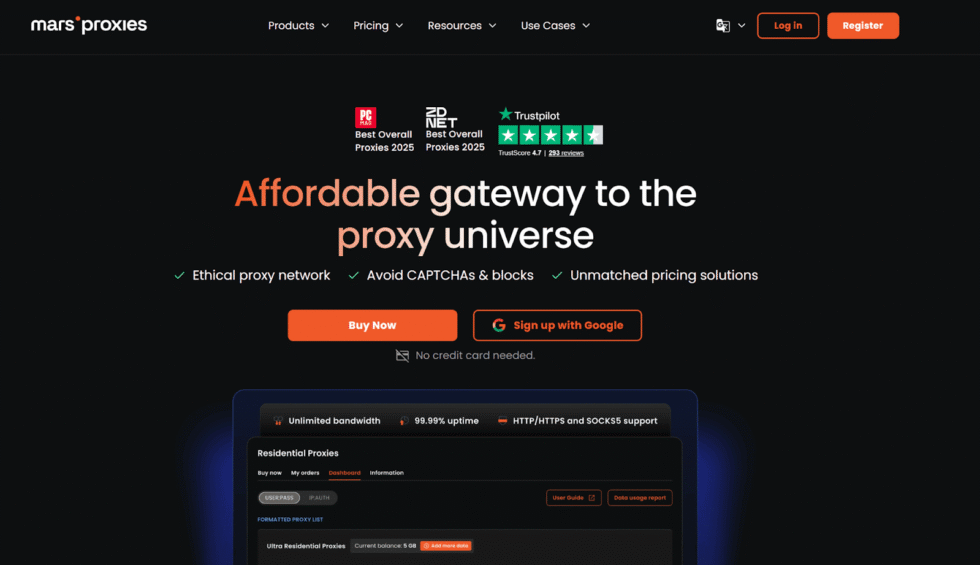
MarsProxies delivers proxy services geared toward efficient web scraping, particularly for platforms like Google where anonymity is crucial. Operating a network of fresh residential IPs, the company ensures users can bypass restrictions and gather data without interruptions. Strengths encompass a broad international reach, enabling precise geo-located scraping, and compatibility with various tools for automated processes.
On the downside, as a residential-focused provider, it may experience occasional speed fluctuations inherent to peer-to-peer networks, potentially impacting real-time applications. MarsProxies stands out for its user-friendly setup, making it accessible for small to medium teams engaged in market intelligence or content aggregation, while maintaining a commitment to secure and reliable connections.
- Network featuring 1 million IPs across 195 countries, supported by over 334,000 servers.
- Offers residential, datacenter, ISP, sneaker, mobile, and IPv6 proxies for diverse capabilities.
- Automatic IP freshness to minimize detection, with no traffic expiration for ongoing sessions.
- High data throughput, with more than 344 terabytes consumed collectively by users.
13. SimplyNode
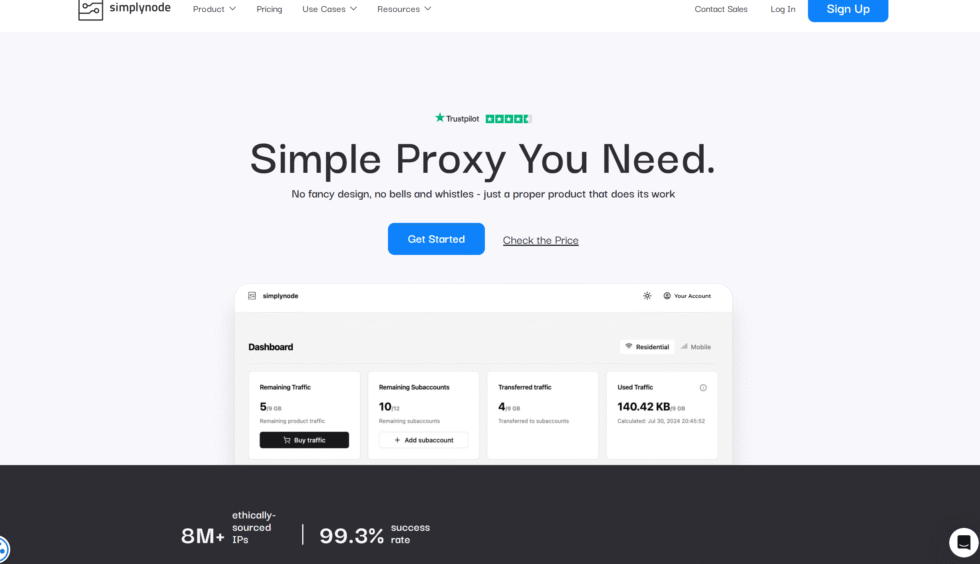
SimplyNode offers residential and mobile proxy solutions designed for web scraping tasks, including Google data extraction, with a focus on ethical sourcing and reliability. The provider maintains a large pool of IPs suitable for maintaining anonymity and accessing restricted content. Strengths include production-grade performance without excessive complexity, making it suitable for users needing consistent access for SEO, market research, or automation.
Weaknesses may involve limited advanced customization options compared to enterprise providers, potentially requiring additional setup for highly specialized scraping. SimplyNode appeals to those seeking balanced, fair solutions for ongoing data collection in a compliant manner.
- Over 50 million ethically sourced IPs covering residential and mobile types.
- Supports rotating proxies for enhanced anonymity and bypassing detection mechanisms.
- Geo-targeting across 100+ countries with emphasis on high availability.
- Rated highly for success in scraping, with user reviews noting 99% uptime and low failure rates.
14. ProxyScrape
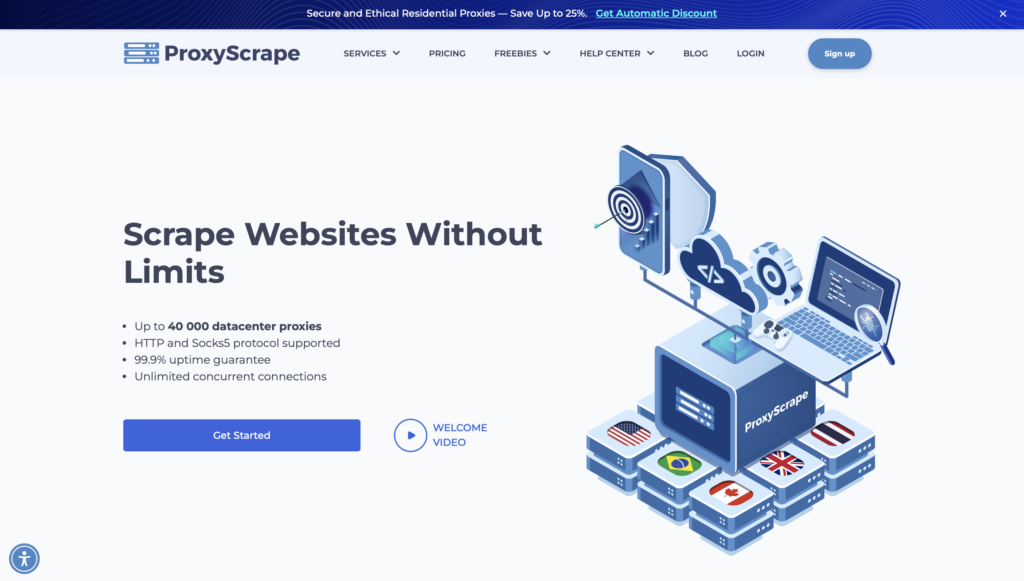
ProxyScrape offers proxy solutions optimized for web scraping scenarios, such as extracting Google data, with a focus on rotating residential IPs to maintain anonymity. The service boasts a large ethical network, ensuring compliant access for tasks like automation and geo-testing. Strengths feature high uptime and unlimited bandwidth, supporting heavy usage without throttling. However, residential proxies may encounter latency under 1000ms, posing challenges for ultra-fast operations. ProxyScrape appeals to developers and businesses needing cost-effective, scalable tools for ongoing scraping projects.
- Extensive pool with 55 million+ rotating residential IPs and 40,000 datacenter proxies.
- Includes residential, unlimited residential, premium datacenter, and dedicated types with HTTP/SOCKS5 support.
- Geo-targeting by country, state, and city, plus unlimited concurrent connections.
- 99.9% uptime guarantee, serving over 37,000 customers with low failure rates.
15. Roundproxies
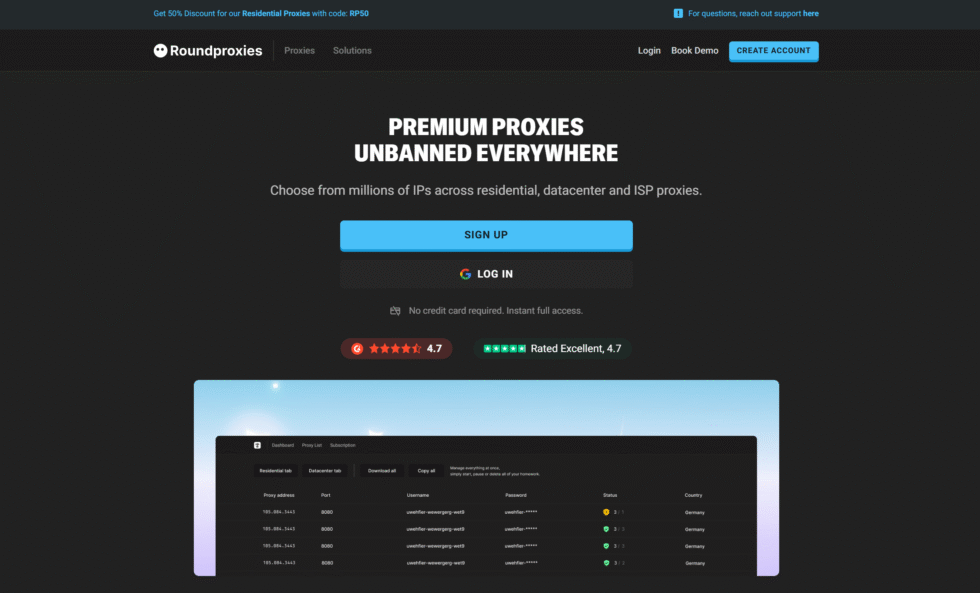
Roundproxies provides premium proxy solutions for data collection, including Google scraping, with unbanned IPs and rapid connections. The service covers extensive global locations, enabling human-like browsing to avoid restrictions. Strengths highlight exceptional success rates and gigabit speeds, suited for e-commerce and intelligence gathering. Weaknesses may stem from reliance on residential networks, leading to variable performance in peak times. Roundproxies targets businesses seeking reliable, fast access for scalable operations.
- 50 million+ residential IPs and 10 million+ mobile IPs across 195 countries.
- Types include residential, ISP, datacenter, mobile, and sneaker proxies.
- Free city-level geo-targeting with unlimited concurrent sessions.
- 99.9% success rate and over 1Gbps speeds, trusted by thousands worldwide.
16. Infatica
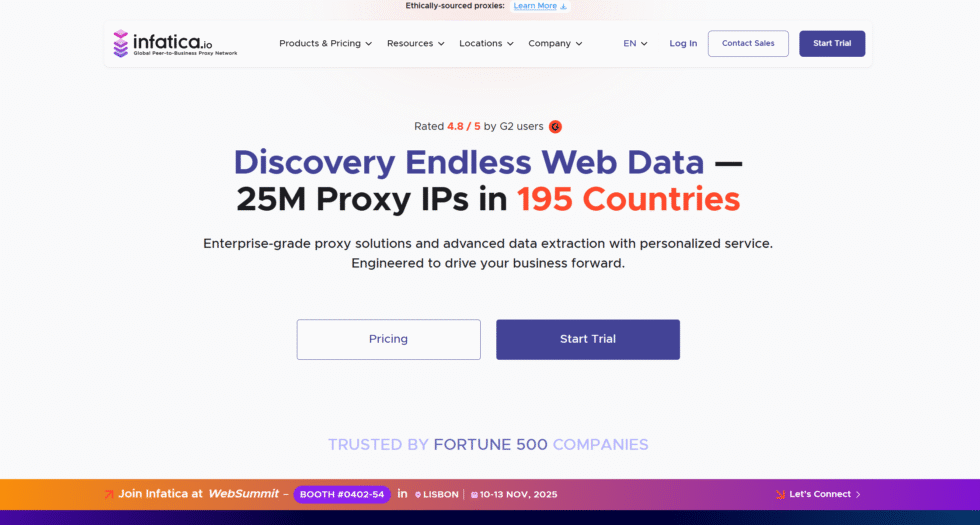
Infatica provides proxy services for web scraping, including Google, with ethically sourced residential and mobile IPs to ensure low detection. The network supports advanced use cases like SEO and price aggregation. Strengths feature high uptime and quick response times, enabling efficient large-scale operations. Weaknesses could include slower mobile IP performance due to real-device sourcing. Infatica is favored by enterprises for its compliance and versatility.
- 40 million+ proxies across 195 countries, with 35 million residential IPs.
- Residential, premium IPv6 residential, and mobile proxies with HTTP/SOCKS.
- Customizable geo-targeting at country, region, city, and ISP levels.
- 99.9% uptime and 0.4-second response time, rated 4.8/5 by users.
17. PrivateProxy.me
PrivateProxy.me offers dedicated proxy servers for web scraping, including Google search, with clean IPs sourced directly from ISPs. The service ensures exclusive use per user, enhancing security for bots and research. Strengths encompass stable, fast connections and a growing pool for localized needs. Weaknesses may arise from limited rotation in static options, increasing ban risks if not managed. With 15+ years experience, it’s suited for professional scraping.
- Wide pool of datacenter and residential proxies in US and Europe.
- Elite HTTP(S) anonymous, static, and rotating proxy types.
- Multiple geo-locations with instant activation and free monthly swaps.
- Super fast speeds, serving thousands of clients since 2011.
18. Massive
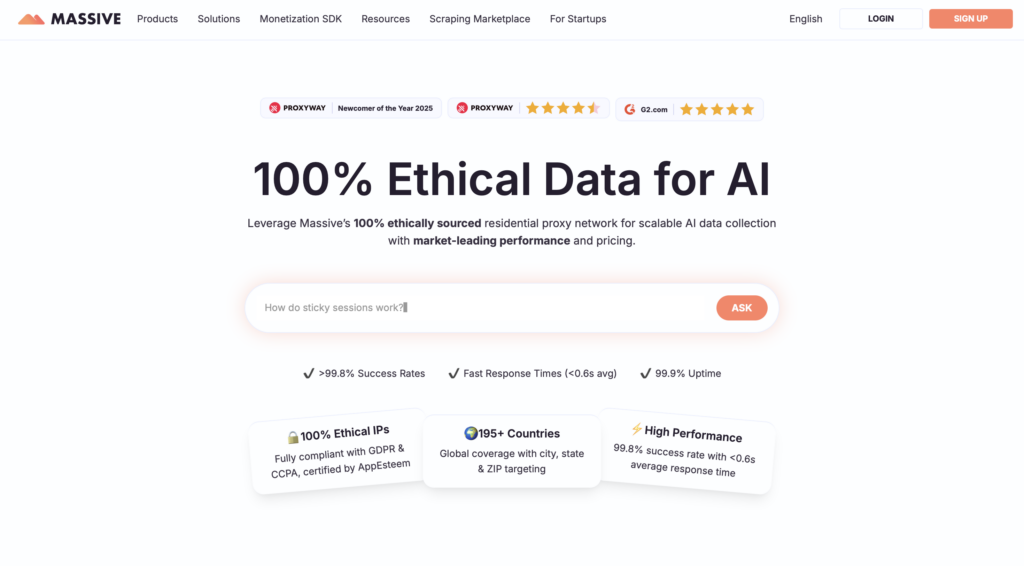
Massive, headquartered in the United States, supplies ethically sourced proxies for web scraping, including Google SERP, with focus on AI data needs. The network prioritizes consent-based IPs for legal compliance. Strengths include superior success rates and low latency, ideal for OSINT and e-commerce. Weaknesses might involve smaller pool sizes relative to giants, potentially limiting diversity in high-demand regions. Massive excels in secure, scalable data collection.
- Residential and ISP proxies with back-connect rotation across 195+ countries.
- City, state, ZIP, and ASN geo-targeting for precise access.
- 99.8% success rate, <0.6s response time, and 99.9% uptime.
- U.S.-based with GDPR/CCPA compliance, rated highly for ethics.
19. DataImpulse
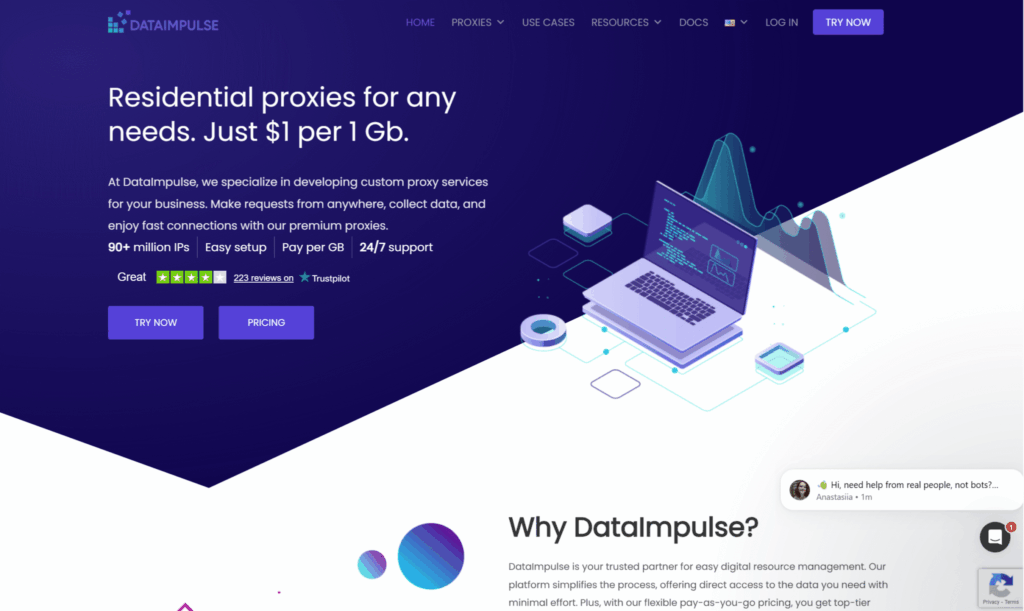
DataImpulse delivers a comprehensive proxy network ideal for Google scraping operations in 2026. The provider maintains a vast collection of ethically sourced residential, mobile, and datacenter IPs that enable users to navigate search engine restrictions with high authenticity. This setup supports large-scale SERP data extraction by offering dynamic rotation and precise location targeting.
Strengths of the service lie in its extensive global coverage and flexible session controls which contribute to consistent performance across various scraping intensities. Weaknesses can include occasional variations in connection quality depending on pool selection and higher demand periods affecting response consistency. DataImpulse serves as a practical choice for enterprises and researchers requiring reliable access to Google results for competitive analysis and market insights.
- Over 90 million IPs across 195 countries with residential and mobile options.
- Advanced geo-targeting including country, state, city, ZIP code, and ASN levels.
- HTTP(S) and SOCKS5 protocol support with rotating and sticky session capabilities.
- Strong success rates for web scraping tasks and efficient data collection tools.
20. HypeProxies
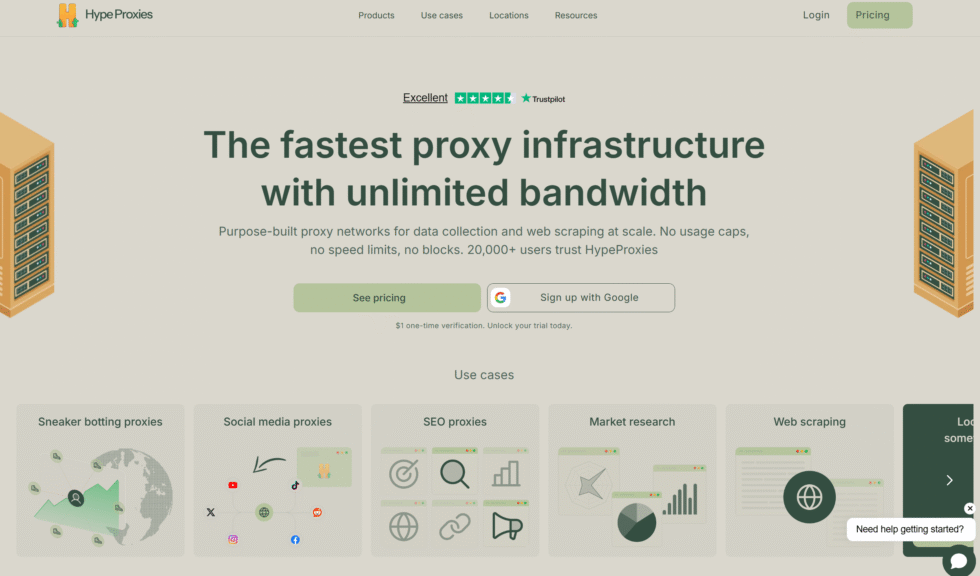
HypeProxies focuses on high-performance ISP and residential proxy solutions with a primary emphasis on the United States, making it well-adapted for targeted Google scraping within the US market. Utilizing IPs from trusted domestic carriers across all states, the service helps maintain low detection rates when pulling search results and related data.
Strengths include superior connection speeds and bandwidth provisions that facilitate high-volume operations without limitations. Weaknesses may involve more restricted international reach, limiting its effectiveness for global Google data gathering compared to broader networks. As a US-headquartered provider, it appeals to businesses prioritizing domestic data accuracy and stability in their scraping workflows.
- 500,000+ ISP IPs alongside residential pools covering all 50 US states.
- High-speed performance with capabilities reaching 10Gbps and unlimited bandwidth features.
- City and state-level targeting options with 99.9% uptime reliability.
- Ethical sourcing practices and optimized for automation and scraping applications.
21. NodeMaven
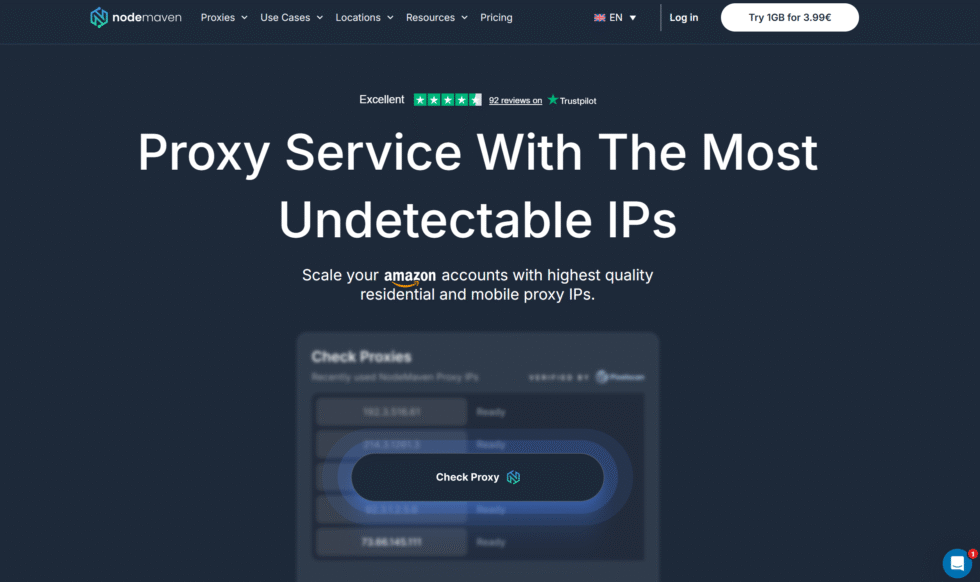
NodeMaven provides quality residential and mobile proxies designed to support advanced Google scraping projects through real-time IP filtering and quality assurance. Its network of clean IPs from genuine sources helps evade advanced anti-bot measures employed by search engines. The service excels with customizable targeting and session management tools that enhance data accuracy and collection efficiency.
Strengths encompass high success rates and low latency connections ideal for sustained scraping sessions. Weaknesses might surface in the form of pool size constraints relative to larger competitors during extremely large-scale deployments. NodeMaven caters effectively to developers and teams seeking dependable proxies for SEO monitoring and search data aggregation.
- 30 million+ residential IPs and additional mobile proxies across 150+ countries.
- Granular geo-targeting at country, city, ASN, and ISP levels with quality filtering.
- HTTP and SOCKS5 protocols supporting unlimited concurrency and up to 24-hour sticky sessions.
- Average success rates exceeding 99% with sub-second response times in testing environments.
22. Geonode
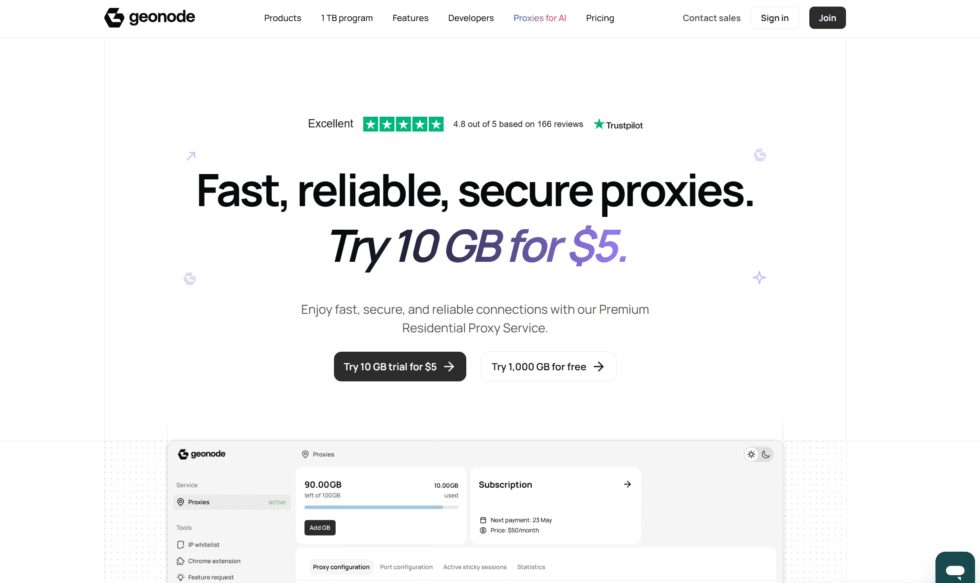
Geonode offers an accessible residential proxy network suitable for Google scraping initiatives with its substantial IP inventory and straightforward configuration options. The provider sources IPs ethically to ensure they appear as legitimate traffic when interacting with Google services. It stands out through extensive country coverage and rotation flexibility that aids in avoiding rate limits and blocks.
Strengths include user-friendly features and competitive performance for mid-scale operations. Weaknesses can be noted in potentially less advanced enterprise-level tools or support structures for very complex scraping architectures. Geonode positions itself as a solid option for businesses and individuals conducting search engine data extraction and analysis.
- 30 million+ residential IPs spanning over 190 countries worldwide.
- City-level and advanced ASN targeting capabilities with rotating and sticky sessions.
- Support for HTTP, HTTPS, and SOCKS5 protocols with real-time IP management.
- Reliable uptime and success metrics optimized for web scraping and data intelligence tasks.
23. Storm Proxies
Storm Proxies supplies rotating residential proxy solutions focused primarily on US and European locations, providing a straightforward approach for Google scraping requirements. The backconnect system automatically refreshes IPs to maintain anonymity during extended data pulls from search platforms.
Strengths of this offering center on unlimited bandwidth and ease of integration for users managing multiple sessions. Weaknesses include a comparatively modest IP pool size which may necessitate careful usage planning for continuous high-intensity scraping. Established as a US-based service, Storm Proxies remains relevant for targeted regional data collection projects involving Google search results.
- Access to hundreds of thousands of rotating residential IPs concentrated in the US and EU.
- Automatic IP rotation options including per-request or timed intervals with unlimited bandwidth.
- HTTP and HTTPS protocol compatibility designed for scraping and automation.
- Stable connections suited for consistent performance in web data extraction scenarios.
Common Challenges in Google Scraping and How Proxies Help
Google updates its defenses often, making it harder to pull data without interruptions. Proxies spread your requests and hide patterns. Residential types reduce detection because they match real user behavior.
Rotation refreshes IPs regularly. This keeps sessions active longer. Combining proxies with smart delays and header changes adds another layer of protection. Many teams see smoother runs when they layer these methods.
Tips for Better Results with Google Scraping Proxies
Start small to test your setup. Monitor response codes and adjust rotation speed if needed. Use headers that match real browsers.
Rotate user agents along with IPs. Handle CAPTCHAs or blocks by pausing and switching IPs. Keep your tools updated. These steps help maintain steady progress over time.
Integrating Proxies with Scraping Tools
When setting up a scraping environment, developers often incorporate proxies directly into their code or frameworks to manage IP rotation seamlessly. For instance, in Python-based projects using libraries like Scrapy or BeautifulSoup, rotating residential proxies become essential when handling multiple requests to avoid detection mechanisms. These proxies allow for dynamic IP changes without interrupting the data flow, which is particularly useful in scenarios where sustained access to search engines is required.
Similarly, rotating mobile proxies come into play for tasks that mimic mobile user behavior, providing an additional layer of authenticity to the requests. Understanding web scraping 101 helps in configuring these setups properly, ensuring that the proxy pool aligns with the tool’s requirements for efficient operation.
Maintaining Proxy Pools for Long-Term Projects
In extended scraping initiatives, keeping proxy pools active and responsive involves regular monitoring and adjustments. Static residential proxies offer stability for sessions that demand consistent connections, such as those involving prolonged data extraction from complex sites. On the other hand, proxy integrations with automation tools can automate the refresh of IPs, reducing manual intervention.
Exploring various proxy use cases reveals how different types suit specific project durations, with datacenter options sometimes serving as backups for high-speed needs. When scaling up, incorporating a SERP scraping API simplifies the process by handling proxy management internally, allowing focus on data analysis rather than infrastructure maintenance.
Proxy Rotation Best Practices for Sustained Google Access
Many scraping operations on search engines rely on effective IP rotation when using residential proxies to distribute requests smoothly across different sessions. Session management techniques involve adjusting rotation frequencies based on response patterns observed during extraction. This approach helps in prolonging the usability of each connection while gathering search-related information.
Tools that support custom rotation rules allow users to fine-tune parameters according to project requirements when working with web scraping proxies. Proxy pools benefit from regular refresh cycles, where new addresses replace those showing signs of reduced performance. Combining rotation with other evasion methods strengthens overall resilience, especially when leveraging solutions available through unlimited bandwidth residential proxies, precise targeting in proxy locations, and advanced web scraping proxies.
Leveraging Mobile Proxies for Enhanced Google Scraping Capabilities
Mobile proxies introduce connection profiles that align closely with typical user interactions on search platforms. Their integration into scraping setups provides an additional layer of authenticity that supports reliable data retrieval over time.
Rotating mobile proxies enable dynamic shifts that correspond to standard network behaviors, making them suitable for tasks where prolonged or varied request volumes are involved. These solutions are frequently applied in specialized Google proxies setups for search data collection.These options work alongside other residential offerings in mixed configurations designed for comprehensive coverage of search engine data needs. Advanced users often integrate them within broader web scraping frameworks for optimal performance in sustained operations.
Latest News In 2026
Early in the year, Google took action to disrupt a large proxy network involved in cyber activities, impacting the availability of certain IP resources for data collection tasks. This event highlighted the ongoing evolution of anti-bot measures and the need for ethical proxy sourcing. Meanwhile, discussions around the future of web scraping emphasized the role of residential proxies in promoting transparent and sustainable data practices.
New frameworks like Crawlee gained attention for their built-in support for proxy rotation and anti-detection features, making them suitable for modern scraping workflows. Additionally, advancements in AI-powered tools for scraping were noted, aiming to streamline processes without requiring extensive coding or proxy setup. Reports on best practices for proxy servers in scraping underscored the importance of diverse IP pools for maintaining access to platforms like search engines.
FAQ
What makes residential proxies better for Google scraping than datacenter ones?
Residential proxies draw from actual home networks, blending your requests with genuine user patterns that Google’s systems find harder to question. This setup supports sustained access during detailed searches or competitor analysis without quick restrictions. Users often turn to them for projects needing varied IP behaviors, as they adapt well to evolving detection methods.
Can mobile proxies work well for Google scraping?
Mobile proxies tap into carrier-assigned IPs that shift often, providing a dynamic layer of protection against repetitive request flags. They excel in scenarios where diversity in traffic sources keeps operations discreet and effective over time. Rotating mobile proxies fit seamlessly into setups requiring this kind of flexibility for consistent results.
How often should I rotate IPs during a Google scraping project?
Rotation timing hinges on factors like request density and the specific data targets, with quicker switches suiting high-volume efforts to mimic natural browsing. Slower cycles might work for lighter tasks, allowing stable connections while still dodging scrutiny. Experimenting with intervals based on real-time feedback ensures the approach aligns with Google’s current monitoring tactics.
Do I need special tools alongside proxies for Google scraping?
While proxies manage IP variety, combining them with scraping frameworks enhances control over headers, cookies, and parsing logic for cleaner data extraction. These additions help navigate page structures and handle dynamic content without manual tweaks. Integration simplifies workflows, especially for ongoing monitoring or large datasets.
What are the main types of proxies used in Google scraping?
Proxies for Google scraping generally fall into categories like residential, mobile, and datacenter, each offering distinct advantages based on the project’s scale and requirements. Residential proxies, sourced from real user devices, blend in with organic traffic, making them ideal for evading sophisticated detection systems. Mobile proxies, connected through cellular networks, simulate mobile browsing patterns, which can be beneficial for scraping mobile-optimized search results. Datacenter proxies provide high-speed connections from server farms, often chosen for their affordability in less detection-prone tasks. Selecting the appropriate type depends on factors like request volume and the need for IP diversity.
How do rotating proxies enhance Google scraping efficiency?
Rotating proxies automatically cycle through different IPs during a scraping session, preventing any single address from being flagged due to excessive requests. This mechanism supports continuous data collection by distributing the load across a pool, which is crucial for large datasets from search engines. In practice, rotating residential proxies are frequently utilized in situations where maintaining a low profile is key, as they mimic varied user accesses. Similarly, rotating mobile proxies are applied when the scraping involves app-like interactions or mobile-specific content, ensuring smoother operations over time.
What role do static proxies play in Google scraping?
Static proxies maintain the same IP for the duration of a session, offering reliability for tasks that require unbroken connections, such as detailed page analysis or sequential data pulls. Static residential proxies stand out in long-term projects where consistency outweighs the need for frequent changes, providing a stable foundation without triggering alerts from repeated IP shifts. These are particularly relevant in setups where the scraping tool benefits from persistent access, allowing for deeper exploration of search results without interruptions.
How can proxies be integrated with common scraping frameworks?
Integration typically involves configuring proxy settings within the framework’s middleware or request handlers. For example, in Scrapy, proxies can be added via extensions that handle rotation and authentication. Proxy integrations facilitate this by offering compatible APIs or plugins that connect seamlessly with tools like Selenium or Puppeteer for browser-based scraping. When dealing with search engine data, ensuring the integration supports HTTPS and SOCKS protocols enhances security and compatibility.
What challenges arise when scaling Google scraping with proxies?
Scaling introduces issues like managing larger proxy pools and optimizing rotation intervals to match increasing request rates. In such cases, drawing from proxy use cases helps identify patterns where certain proxy types perform better under load. For instance, combining residential and mobile proxies can address diversity needs, while monitoring tools track performance to prevent bottlenecks.
Are there APIs that simplify proxy usage in Google scraping?
Yes, specialized APIs handle both scraping and proxy management in one package, reducing the complexity of custom setups. A SERP scraping API abstracts the proxy layer, allowing users to focus on query parameters and data output rather than IP configurations. This approach is common in automated workflows where efficiency is prioritized.
How do mobile proxies differ from residential ones for Google scraping?
Mobile proxies operate over cellular networks, offering IPs that change with carrier assignments, which adds an extra dimension of variability compared to residential proxies tied to home connections. Rotating mobile proxies are often selected for their ability to emulate mobile device traffic, useful in scraping scenarios involving mobile-specific search variations.
What maintenance is required for proxies in ongoing Google scraping?
Regular checks for IP health, rotation efficacy, and connection speeds ensure sustained performance. Referring to web scraping 101 resources provides foundational knowledge on troubleshooting common issues like blocked IPs or slow responses, helping maintain an effective proxy setup over multiple sessions.
What role does IP rotation play in successful Google scraping?
IP rotation distributes requests across numerous addresses to sustain access during prolonged interactions with search platforms. This method supports session persistence options that keep certain parameters stable while cycling underlying connections. Advanced configurations often utilize HTTP and SOCKS5 protocols alongside rotation to handle varied request formats effectively. Many scraping setups rely on rotating residential proxies to enable fine control over rotation intervals tailored to search data projects.
What advantages do dedicated mobile proxies offer for data extraction?
Dedicated mobile proxies assign exclusive connections from specific carrier lines with unlimited bandwidth allowances. This exclusivity minimizes contention and supports intensive scraping without shared resource limitations. Users gain greater authority over refresh timing and location parameters during extended operations.
How can proxy pools improve large-scale Google scraping projects?
Proxy pools organize collections of addresses for efficient allocation across concurrent scraping threads. Management interfaces allow monitoring of performance metrics and automatic failover when needed. Such organization streamlines handling of high-volume search result extraction at scale. Effective pool systems work seamlessly with available scraping API tools and datacenter proxies.
Does combining proxy types enhance scraping outcomes on search engines?
Combining multiple proxy categories creates layered approaches that address different aspects of platform defenses. Mixing connection speeds with authenticity levels leads to more adaptable extraction frameworks. Hybrid configurations often balance performance and reliability across various search query volumes. Rotating datacenter proxies work effectively when mixed with residential solutions and rotating datacenter proxies.
What is the benefit of using a SERP scraping API with proxies?
A SERP scraping API structures extracted search data into clean formats like JSON for immediate analysis. Proxy integration ensures the API calls maintain uninterrupted delivery of ranking information and featured elements. This combination simplifies handling of pagination and localized result variations. The SERP scraping API delivers clean structured data when integrated properly with proxy infrastructure.
How do integrations support proxy usage in scraping tools?
Integrations connect proxy services directly to established scraping libraries and automation platforms. Pre-built connectors reduce configuration time while enabling automated address management during runtime. Compatibility extends to both browser-based and headless environments for comprehensive coverage.
Are rotating datacenter proxies suitable for certain Google scraping needs?
Rotating datacenter proxies deliver rapid response times ideal for initial broad searches or testing phases. Their infrastructure supports high throughput that complements slower but stealthier options in mixed setups. Address cycling within datacenter ranges helps avoid rate limitations on bulk operations.