
In today’s online world, private residential proxies help users stay secure and access content without issues. These tools use real home IP addresses, making them tough to spot. They support tasks like gathering data or managing accounts. If you’re searching for the best private residential proxies, this guide covers key options.
What Are Private Residential Proxies?
Private residential proxies act as middlemen between your device and the internet. They route traffic through real home IPs, which come from actual users. This setup makes your actions look natural to websites. Unlike datacenter options, these mimic everyday browsing. They help avoid detection during activities such as web scraping. Users often pick them for their authenticity. Providers source these IPs ethically, ensuring steady connections. This type stands out for tasks needing trust from sites.
Benefits of Private Residential Proxies
These proxies offer strong security by hiding your real IP. They let you handle multiple tasks without raising flags. Speed and uptime matter a lot here. Many users see better results in data collection or account handling. They work well for ad verification too. Compared to other types, they blend in easily. This reduces blocks and improves access. Businesses use them to gather insights without hassle. Overall, they provide a reliable way to navigate online limits.
Best Private Residential Proxies in 2026
1) ProxyEmpire – Best Private Residential Proxies In 2026
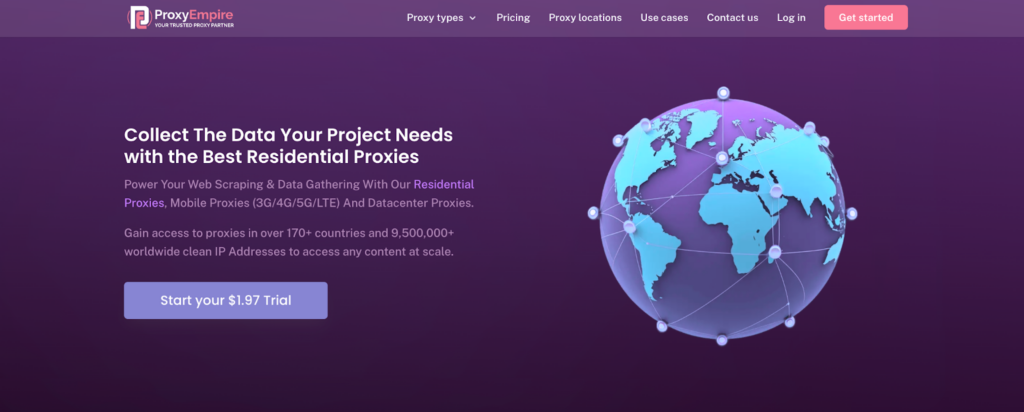
ProxyEmpire is a premium proxy service provider designed to empower web scraping, data collection, and unrestricted internet access through a vast network of ethically sourced residential, mobile, and datacenter proxies. Below is a detailed description based on the provided information:
Overview of ProxyEmpire
ProxyEmpire offers a comprehensive suite of proxy solutions tailored for individuals, businesses, and developers seeking reliable, high-performance tools for data gathering and privacy protection. With over 30 million clean IP addresses spanning 170+ countries, ProxyEmpire provides unparalleled global coverage, ensuring users can access content at scale with a 99.9% uptime and lightning-fast response times (as low as 0.6 seconds).
Proxy Types and Features:
🏘️ Rotating Residential Proxies
Key Benefits
- Global Reach: Access to over 30 million IPs worldwide, covering every major region, with precise targeting options (country, city, state, ASN/ISP).
- High Reliability: A 99.86% uptime ensures uninterrupted service, supported by patented technology for enhanced speed and security.
- Ethical Sourcing: Proxies are responsibly harvested, ensuring quality and compliance.
- Versatile Use Cases: Supports web scraping, price monitoring, sneaker copping, SEO tracking, ad verification, and more.
- Integration-Friendly: Compatible with standard proxy protocols (HTTP, SOCKS5) and third-party tools like Multilogin, Dolphin Anty, Kameleo, Octobrowser, and Gologin.
- No Hidden Fees: Transparent pricing with all features included, starting at a $1.97 trial.
Use case:
2. ResiProx
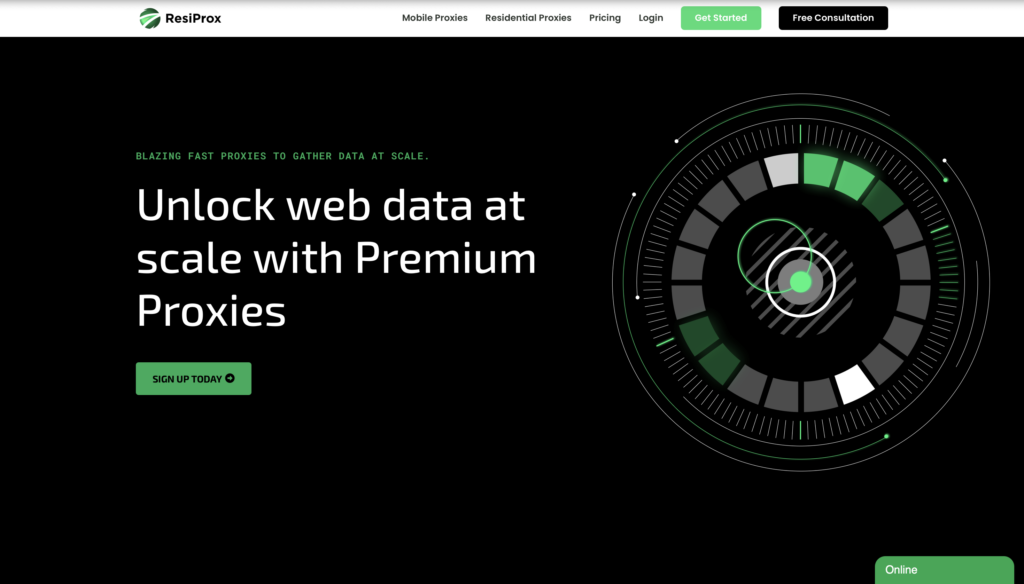
ResiProx provides rotating residential proxies focused on data gathering, security, and insights. Their network covers many countries with ethically sourced IPs. It includes sticky and rotating sessions, plus HTTPS and SOCKS5 support. Users get unlimited concurrent sessions and detailed targeting by country, region, city, and ISP. A dynamic endpoint generator creates custom setups. The service integrates with various tools and languages like Node.js, Python, and Selenium. It excels in web scraping, price intelligence, multi-accounting, ad verification, SEO monitoring, brand protection, market research, dynamic pricing, travel aggregation, app testing, limited offers, sneaker botting, sentiment analysis, and academic work. With fast speeds and high uptime, it suits scaled operations. However, setup might take time for new users.
- Key features: Rotating and sticky options, protocol variety, unlimited sessions, precise targeting, API access.
- Accurate insights: Many IPs from global sources, quick response times in tests.
- Pros: Broad use case support, ethical IPs for authenticity, seamless tool integration.
3. Oxylabs
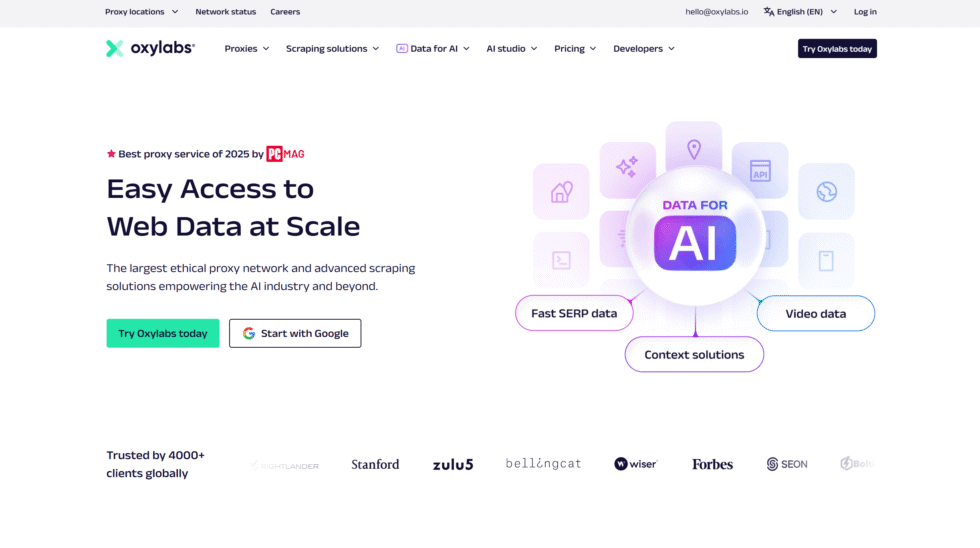
Oxylabs offers residential proxies tailored for enterprise scraping and large-scale data needs. Headquartered in Vilnius, Lithuania, they provide a vast network with IPs from many locations. Their service includes advanced management tools, adaptive parsing, and custom solutions. It supports rotating and static sessions, with options for country and city targeting. Users benefit from high success rates in tough sites. The proxies work for market research, e-commerce monitoring, and brand protection. They emphasize ethical sourcing and compliance. Integration is straightforward with APIs and dashboards. Some users note the learning curve for full features. Overall, it’s a premium pick for businesses needing robust performance.
- Key features: Adaptive tools, rotating IPs, detailed targeting, API integration, custom setups.
- Accurate insights: Many IPs worldwide, strong performance in enterprise tasks.
- Pros: Scalable for big projects, ethical practices, reliable for complex scraping.
- Cons: Interface can feel complex at first.
4. Bright Data
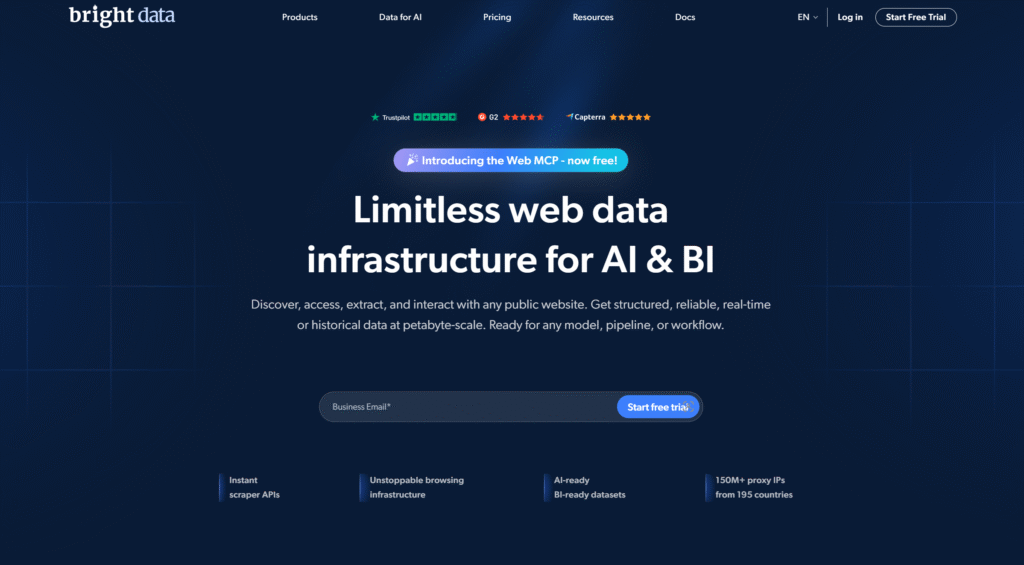
Bright Data delivers residential proxies for web scraping, ad verification, and market insights. Based in Tel Aviv, Israel, their network features IPs from many countries. It offers unblocker tools, browser extensions, and proxy managers. Sessions can rotate or stick, with support for multiple protocols. Targeting includes ASN and postal codes for precision. The service handles high-volume data collection and geo-testing. Ethical sourcing ensures IP quality. Dashboards provide real-time stats. It integrates with scrapers and bots easily. A few report occasional speed variations. It’s suited for enterprises with diverse needs.
- Key features: Unblocker tech, extensions, managers, precise targeting, protocol options.
- Accurate insights: Many global IPs, effective in bypassing restrictions.
- Pros: Versatile tools, ethical focus, strong for data-heavy work.
- Cons: Speed dips in peak times.
5. Decodo
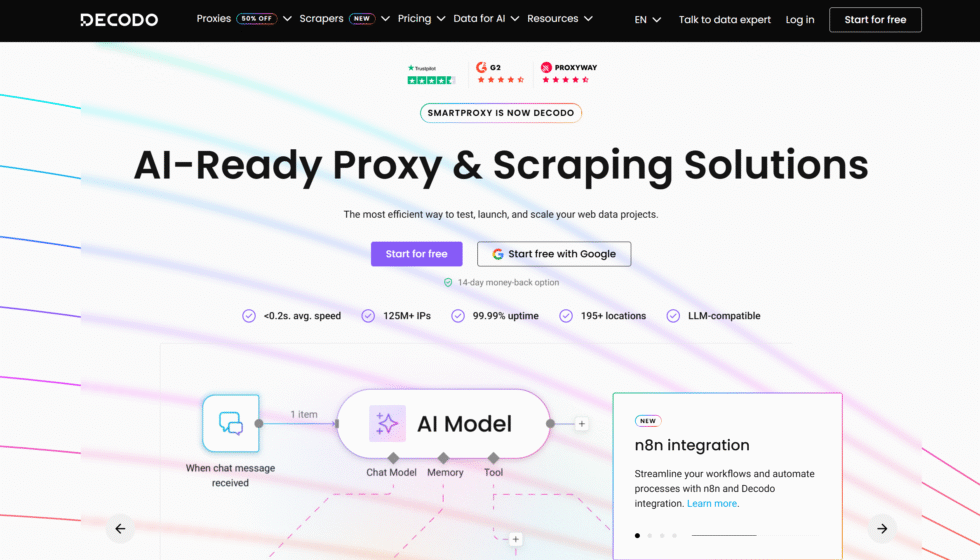
Decodo, formerly Smartproxy, provides residential proxies for web tools and social media. Located in Vilnius, Lithuania, they offer a large pool of ethical IPs across many spots. Features include rotating proxies, unlimited threads, and easy dashboards. Targeting covers countries and cities. It supports HTTP/HTTPS and SOCKS5. Users apply it for scraping, automation, and research. The service boasts quick setup and browser extensions. Some find the rebrand confusing initially. It excels in developer-friendly environments with API access.
- Key features: Rotating sessions, unlimited threads, dashboards, city targeting, protocol support.
- Accurate insights: Many ethical IPs, good for automation.
- Pros: User-friendly, fast integration, reliable for devs.
- Cons: Recent changes may need adjustment.
6. SOAX
SOAX specializes in residential and mobile proxies for scraping and research. Headquartered in London, UK, their network spans many countries with clean IPs. It includes auto-rotation, whitelists, and flexible plans. Targeting options cover regions and carriers. Protocols like HTTP and SOCKS5 are supported. The service aids price monitoring, SEO, and ad checks. Ethical sourcing keeps IPs fresh. Dashboards track usage. Integration works with various tools. Occasional connectivity hiccups occur. It’s great for budget-conscious users seeking quality.
- Key features: Auto-rotation, whitelists, regional targeting, protocol variety, dashboards.
- Accurate insights: Many clean IPs, solid for monitoring.
- Pros: Flexible, ethical, easy tracking.
- Cons: Rare connection issues.
7. NetNut
NetNut offers residential proxies for global marketers and scraping. Based in Tel Aviv, Israel, they provide direct ISP connections for speed. The network covers many locations with rotating IPs. Features include unlimited bandwidth on some plans and ASN targeting. It supports multiple protocols. Users employ it for e-commerce, SEO, and data extraction. Ethical practices ensure reliability. APIs and managers simplify use. Some note higher entry barriers. It performs well in high-speed tasks.
- Key features: ISP links, rotating IPs, ASN targeting, protocol support, APIs.
- Accurate insights: Many locations, fast connections.
- Pros: Speedy, ethical, good for marketing.
- Cons: Steeper start for newbies.
8. IPROYAL
IPROYAL provides residential proxies for basic scraping and automation. Headquartered in Vilnius, Lithuania, their pool includes ethical IPs from various places. It offers pawns for earning and flexible rotations. Targeting by country and state. Supports HTTP/HTTPS/SOCKS. The service suits e-commerce and research. Dashboards are simple. Integration is quick. A few mention pool size limits. It’s a solid entry-level option.
- Key features: Flexible rotations, state targeting, protocols, simple dashboards.
- Accurate insights: Some ethical IPs, effective for basics.
- Pros: Affordable entry, quick setup, versatile.
- Cons: Smaller pool compared to giants.
9. Webshare
Webshare delivers residential proxies for beginners and scraping. Based in San Francisco, USA, they offer shared and dedicated options. The network features many IPs with rotations. Includes self-service dashboards and custom lists. Targeting by country. Supports multiple protocols. Users apply it for web data and testing. Ethical sourcing is key. Easy APIs. Some report shared IP risks. It fits small teams well.
- Key features: Shared/dedicated, rotations, dashboards, country targeting, protocols.
- Accurate insights: Many IPs, good for testing.
- Pros: Beginner-friendly, custom options, ethical.
- Cons: Shared risks.
10. Rayobyte
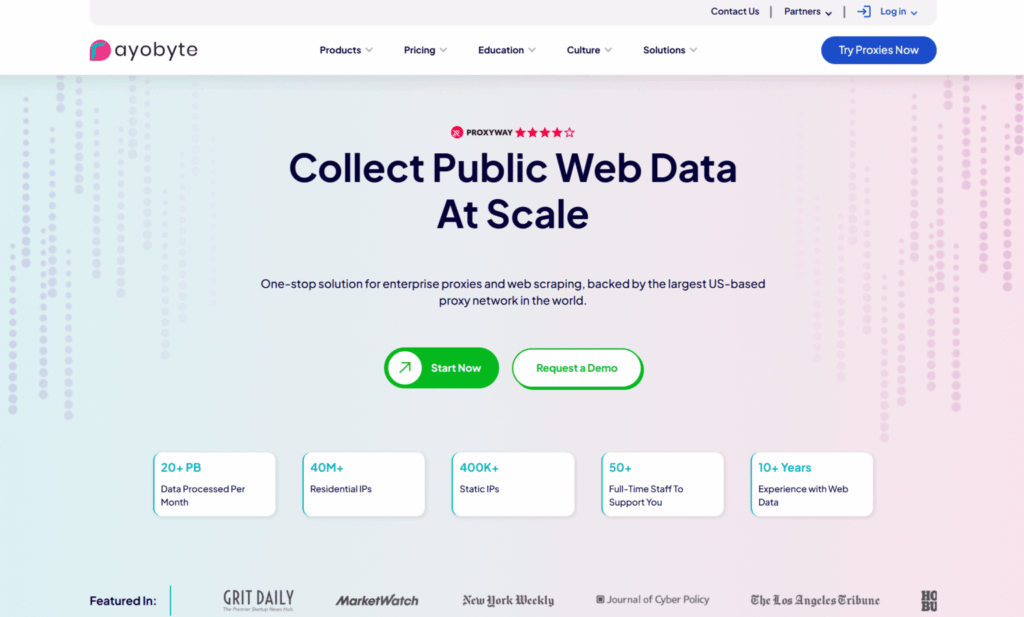
Rayobyte provides residential proxies for scraping and automation. Headquartered in Cheyenne, USA, their network includes ethical IPs across spots. Offers rotating and static sessions. Features dashboards and APIs. Targeting by country. Supports protocols. The service aids SEO and market research. Integration is smooth. Some find support response slow. It’s reliable for mid-level tasks.
- Key features: Rotating/static, dashboards, APIs, country targeting, protocols.
- Accurate insights: Some ethical IPs, steady performance.
- Pros: Versatile sessions, smooth integration.
- Cons: Support delays.
11. ProxyGuys
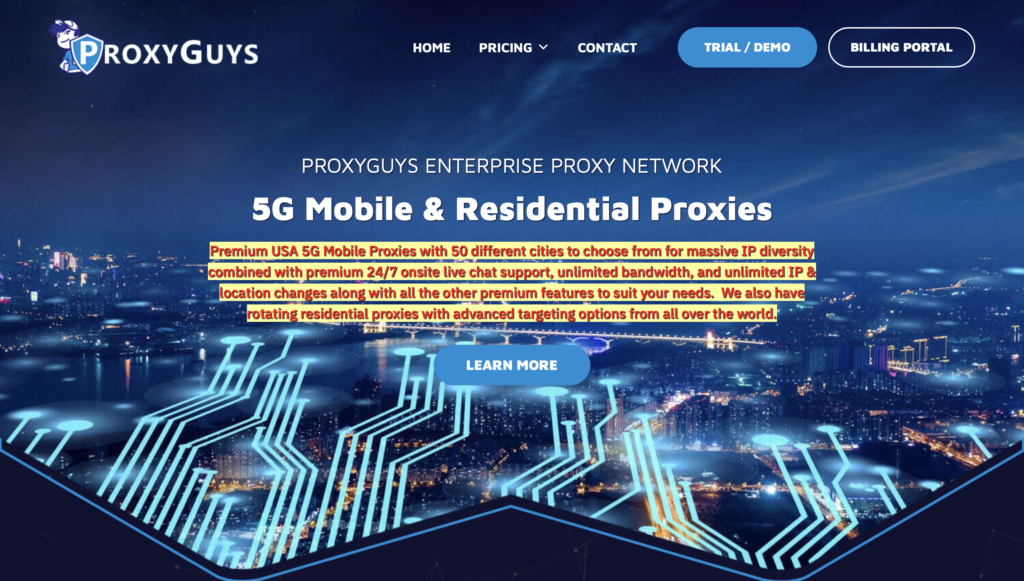
ProxyGuys, headquartered in Corona, California, United States, provides residential proxies with a focus on high-quality, authentic IP addresses sourced from real user connections. The company maintains a network exceeding 10 million residential IPs across global locations, emphasizing stability and performance for various online activities. Users benefit from precise location targeting capabilities that allow selection down to specific cities and ISPs, making it suitable for targeted data gathering and bypassing regional restrictions, especially within the United States. Its infrastructure supports seamless integration for tasks such as competitive analysis and social media management. The service stands out for its reliability in long-duration sessions but operates with a network size that caters effectively to small and medium-sized operations rather than ultra-large scale deployments requiring expansive pools. Protocols include standard options for broad compatibility with scraping tools and automation software.
- Key features:
- Over 10 million residential IPs with worldwide coverage
- Advanced geo-targeting by country, city, region, and ISP
- HTTP and SOCKS5 protocol support
- Stable connections optimized for extended use
- Concurrent session handling capabilities
- Accurate data and information:
- Significant presence in US locations for localized tasks
- Proven utility in market research and ad verification projects
- US-based operations supporting responsive customer infrastructure
- Network designed for low detection rates in automation workflows
12. ProxyWing
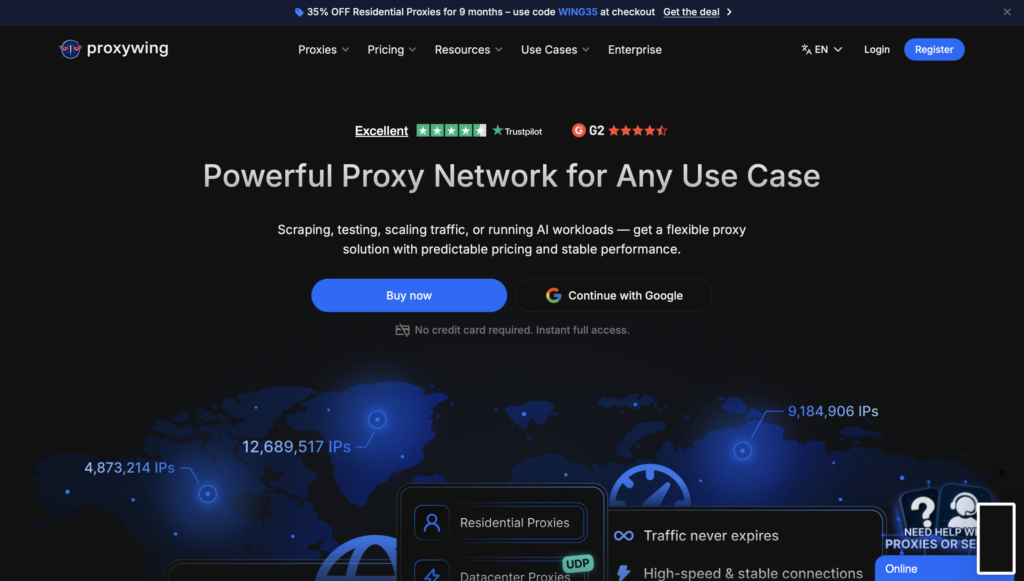
ProxyWing, headquartered in Middletown, Delaware, United States, delivers a comprehensive residential proxy network aimed at delivering undetectable and secure connections for businesses and individuals. Boasting tens of millions of IPs from over 190 countries, the service prioritizes ethical sourcing and high uptime to ensure consistent performance across diverse use cases. Geo-targeting features enable selection by country, city, or specific ISP, facilitating precise operations in international markets or focused US campaigns. The platform’s technical setup includes support for multiple protocols and rotation options that help maintain anonymity during intensive data extraction or verification processes. While the extensive coverage provides strong global reach, performance can vary based on specific location density in less common regions. Overall, it serves as a solid option for projects needing broad accessibility and reliable masking of online identity.
- Key features:
- 70 million IPs spanning 190+ countries
- Detailed geo-targeting including city and ISP levels
- Support for HTTP, SOCKS5, UDP, and TCP protocols
- 99.99% uptime with high-speed connections
- User-friendly dashboard for proxy management
- Accurate data and information:
- Over 400,000 servers contributing to network stability
- High user satisfaction with IP quality and speed in major markets
- Total data throughput exceeding hundreds of terabytes historically
- Effective for web scraping, SEO monitoring, and brand protection tasks
13. PrivateProxy.me
PrivateProxy.me specializes in providing clean residential proxies derived directly from ISP pools, offering users legitimate and trustworthy IP addresses for sensitive online operations. With a strong emphasis on US and European locations, the service allows for both rotating and static sessions tailored to specific project needs. City-level targeting is available for many regions, enabling fine-tuned access for localized research or account management activities. The proxies are engineered to appear as regular residential traffic, reducing the risk of blocks on major platforms and websites. The provider’s approach focuses on transparency and quality control in IP selection, supporting various protocols for flexibility in integration with existing systems. Its network size and options make it appropriate for users prioritizing stability over sheer volume in their proxy usage.
- Key features:
- Residential IPs sourced from real ISP assignments
- Options for static sticky sessions and rotating proxies
- Geo-specific targeting for US and European countries
- Clean IP addresses with high trust scores
- Compatibility with HTTP and SOCKS5 connections
- Accurate data and information:
- Extensive pool of geo-targeted proxies in key markets
- Supports city-specific selections where available
- Utilized for web scraping, online surveys, and gaming applications
- Emphasis on transparent and high-quality residential connections
14. DataImpulse
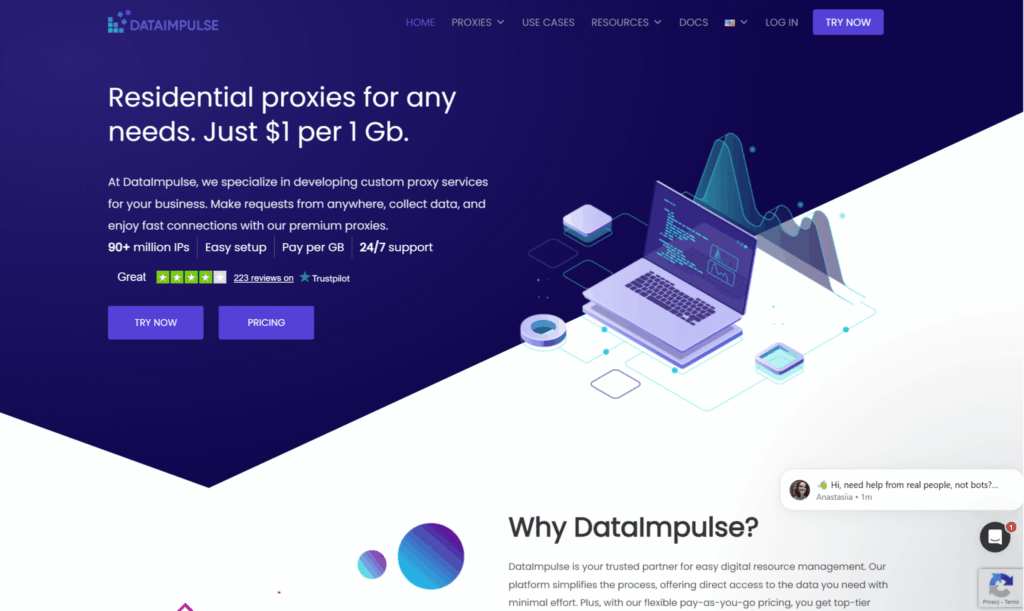
DataImpulse, headquartered in St. Petersburg, Florida, United States, offers residential proxy solutions tailored for businesses and developers seeking reliable connections for data collection, web surfing, and online security. The network spans nearly 200 global locations with customizable options that support a range of applications from large-scale scraping to everyday browsing needs. Emphasis on speed and consistency helps users maintain effective operations across varied environments, with targeting features allowing selection by region or city for precise access. The infrastructure accommodates multiple proxy types while focusing on stable performance that integrates well with automation tools and scripts. Although the service excels in personalized setups, its scale suits operations that value flexibility and reach without requiring the absolute largest available pools in the industry. Support for standard protocols ensures broad usability in competitive analysis and market intelligence tasks.
- Key features:
- Residential proxies in 194 worldwide locations
- Custom solutions for business-specific requirements
- High-speed connections with global coverage
- Geo-targeting by country, region, and city
- Compatibility across residential, mobile, and datacenter formats
- Accurate data and information:
- US headquarters in Florida supporting operational infrastructure
- Network optimized for stable performance in data-driven projects
- Significant utility in web scraping and security workflows
- Broad accessibility across major and emerging markets worldwide
How to Choose a Private Residential Proxy Provider
Picking the right provider starts with your needs. Look at network size for coverage. Check speed and uptime for smooth work. Ethical sourcing avoids blocks. See if they offer easy tools like APIs or apps. For datacenter alternatives, focus on authenticity. Read reviews from sites for real feedback. Consider integration with your setup. Test trials to gauge fit. This ensures you get value without surprises.
| Factor | What to Check | Why It Matters |
| Network Coverage | Global reach | Access diverse locations |
| Speed | Response times | Efficient tasks |
| Support | 24/7 availability | Quick fixes |
| Tools | APIs, dashboards | Easy management |
Current Trends in the Residential Proxy Market
The market grows as data needs rise. Providers focus on ethical IPs to meet rules like GDPR. Mobile integration increases for better access. AI helps in smarter rotations. From reports by Mordor Intelligence, demand surges in e-commerce. Businesses seek compliant options. Innovation in tools like unblockers is common. Users want seamless blends with scrapers. This shift emphasizes quality over quantity.
Common Challenges and Solutions
Blocks happen from overuse. Rotate IPs often to avoid this. Poor speeds? Pick providers with optimized networks. Compliance issues arise; choose ethical sources. Integration troubles? Use APIs for smooth fits. For mobile needs, ensure compatibility. Testing helps spot weak spots early. These steps keep operations running well.
Private Residential Proxies for Web Scraping and Data Extraction
Web scraping and data extraction projects increasingly rely on private residential proxies to access large volumes of information while maintaining natural connection patterns. Many professionals implement rotating residential proxies to cycle through different residential IPs during extended scraping sessions. Static residential proxies offer consistent access points beneficial for structured data collection tasks where session persistence improves accuracy.
Private Residential Proxies for Social Media Management and Ad Verification
Social media management and ad verification activities benefit from private residential proxies that present authentic user behaviors across platforms. Systems managing multiple accounts integrate social media proxies alongside residential options for better profile handling.
Ad verification processes often combine private residential proxies with proxies for ad verification to monitor campaign performance from realistic network environments. Rotating mobile proxies add another layer of flexibility in scenarios requiring mobile network simulation during verification tasks.
Latest News In 2026
The landscape for private residential proxies has seen significant refinements throughout 2026 with improved stability and connection diversity. Enhanced features in rotating residential proxies support more sophisticated data extraction workflows.
Static residential proxies have gained additional capabilities for long-term dedicated usage in enterprise environments. Advancements have also strengthened hybrid approaches that mix residential solutions with rotating datacenter proxies and dedicated mobile proxies.Better integrations now allow smoother connections between different proxy types for complex automation setups.
FAQ
What makes private residential proxies different from other types?
Private residential proxies stand out because they rely on IP addresses from actual residential networks, which helps them appear as genuine user traffic to websites. This authenticity reduces the chance of being flagged compared to options that use server-based IPs. For activities like web scraping, they provide a more natural approach, allowing smoother navigation through online restrictions. They also support a range of protocols, enhancing compatibility with various tools and applications.
How do private residential proxies help with data collection?
These proxies enable efficient data gathering by masking your origin and rotating through real IPs, which prevents sites from limiting access. They are particularly useful for compiling information across different platforms without interruptions. In social media management, they facilitate pulling insights from multiple accounts seamlessly. Overall, they streamline the process, making it easier to handle large-scale collection tasks with minimal downtime.
Are private residential proxies secure for online tasks?
Private residential proxies enhance security by concealing your true IP address, which protects against tracking during online activities. They often come from ethical sources, ensuring the IPs are not associated with suspicious behavior. When used for ad verification, they add a layer of anonymity to check content without exposing your setup. Pairing them with secure connections like HTTPS further bolsters protection against potential threats.
Can private residential proxies improve ad verification?
By simulating views from various residential sources, these proxies allow for accurate testing of ad placements and performance. They help identify discrepancies in how ads appear across different networks. For businesses involved in datacenter alternatives, this means more reliable verification without detection issues. This approach ensures campaigns run as intended, catching problems early in the process.
How do private residential proxies improve web scraping operations?
Private residential proxies enable access to websites using real residential IP addresses which reduces the likelihood of access restrictions during data extraction. When combined with rotating residential proxies, these setups maintain continuous operation by distributing requests across varied connections. The natural appearance helps sustain longer extraction sessions without triggering defensive mechanisms on target sites.
What makes static residential proxies suitable for data extraction tasks?
Static residential proxies deliver fixed IP addresses that support consistent sessions required in certain data extraction processes. Their stability pairs effectively with dynamic solutions like rotating residential proxies depending on the specific requirements of each project phase. This consistency aids in maintaining data integrity throughout repeated collection cycles.
How are private residential proxies applied in social media account management?
Private residential proxies provide authentic connection profiles that support the operation of multiple social media accounts simultaneously. Integration with social media proxies creates reliable environments for account handling across different platforms. The residential nature helps projects simulate genuine user activity patterns.
Why do ad verification processes benefit from private residential proxies?
Ad verification benefits from private residential proxies because they allow monitoring from realistic residential network perspectives. These proxies work alongside specialized proxies for ad verification to ensure accurate assessment of ad placement and performance. The authentic connections contribute to more representative verification results.
When do rotating mobile proxies complement residential proxy setups?
Rotating mobile proxies complement residential proxy configurations in situations requiring mobile network characteristics. Their integration expands testing parameters when combined with rotating residential proxies or static residential proxies. This combination supports more comprehensive coverage in management and verification activities.
What advantages do dedicated mobile proxies offer in 2026 proxy strategies?
Dedicated mobile proxies supply exclusive connections with substantial bandwidth suitable for intensive operations. Their dedicated nature integrates well with static residential proxies in hybrid environments needing reliable high-performance access. The exclusive usage helps maintain quality during demanding tasks.
How have proxy integrations evolved for private residential proxies by 2026?
Proxy integrations have become more sophisticated allowing seamless operation between various proxy types including rotating residential proxies and rotating datacenter proxies. This evolution supports complex workflows that require switching between different connection styles. Improved compatibility has enhanced overall system performance in data-related activities.
What factors contribute to the effectiveness of private residential proxies in brand protection?
Private residential proxies enable consistent monitoring across platforms while presenting as standard residential connections. Their use in brand protection supports extended observation periods when paired with rotating residential proxies. The realistic profiles facilitate more effective detection processes in ongoing protection efforts.