
Finding solid rotating residential proxies can make all the difference in smooth web scraping. These tools let you switch IP addresses from real home networks, helping you act like everyday users and dodge restrictions. If you’re into market research or tracking prices, options like rotating residential proxies stand out for their reach and speed. They cover many locations and keep connections steady. Stick around as we break down what works best this year.
What Are Rotating Residential Proxies?
Rotating residential proxies pull IP addresses from actual home internet connections and switch them often. This setup comes from devices like computers or phones volunteered by users. Each proxy acts as a middleman between your device and the web, hiding your real IP. The rotation happens every few requests or minutes, based on what you set.
They differ from datacenter proxies, which come from servers in big facilities and can get spotted easier. Residential ones look more natural because sites see them as regular traffic. For web scraping, this means fewer bans. Providers source these ethically, often with user consent, to avoid legal snags. Check out guides on web scraping basics if you’re new to this. Many setups support HTTP, HTTPS, or SOCKS5 protocols for easy hookup with tools like Python’s Requests library.
Why Use Rotating Residential Proxies for Web Scraping?
Web scraping pulls info from sites, but many platforms fight back with blocks or captchas. Rotating residential proxies help by changing your IP often, making your actions blend in with normal browsing. This cuts down on detection risks and keeps data flowing.
One big plus is access to location-specific content. Say you need prices from a certain country; these proxies let you target that area without travel. They also handle high-volume tasks better than fixed IPs, which might overload and fail. For businesses, this means reliable intel for decisions. Overall, they boost success rates and save time fixing issues.
Top Rotating Residential Proxies for Web Scraping in 2026
1) ProxyEmpire – Best Rotating Residential Proxies for Web Scraping In 2026
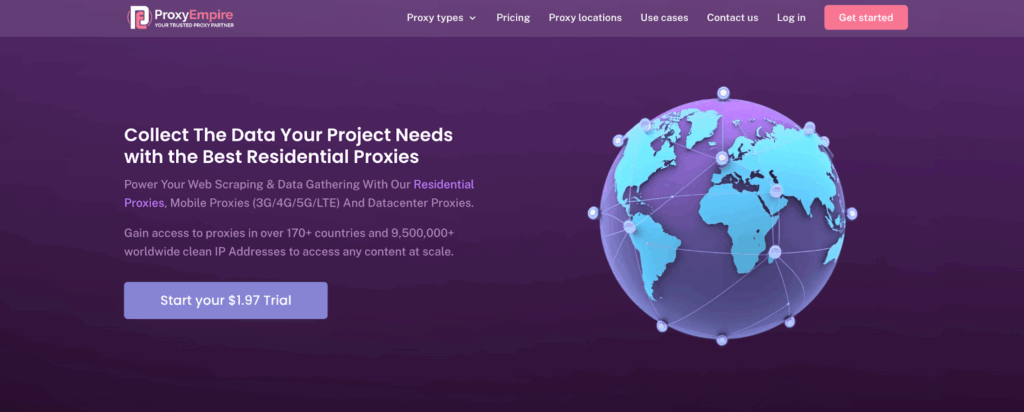
ProxyEmpire is a premium proxy service provider designed to empower web scraping, data collection, and unrestricted internet access through a vast network of ethically sourced residential, mobile, and datacenter proxies. Below is a detailed description based on the provided information:
Overview of ProxyEmpire
ProxyEmpire offers a comprehensive suite of proxy solutions tailored for individuals, businesses, and developers seeking reliable, high-performance tools for data gathering and privacy protection. With over 30 million clean IP addresses spanning 170+ countries, ProxyEmpire provides unparalleled global coverage, ensuring users can access content at scale with a 99.9% uptime and lightning-fast response times (as low as 0.6 seconds).
Proxy Types and Features:
🏘️ Rotating Residential Proxies
Key Benefits
- Global Reach: Access to over 30 million IPs worldwide, covering every major region, with precise targeting options (country, city, state, ASN/ISP).
- High Reliability: A 99.86% uptime ensures uninterrupted service, supported by patented technology for enhanced speed and security.
- Ethical Sourcing: Proxies are responsibly harvested, ensuring quality and compliance.
- Versatile Use Cases: Supports web scraping, price monitoring, sneaker copping, SEO tracking, ad verification, and more.
- Integration-Friendly: Compatible with standard proxy protocols (HTTP, SOCKS5) and third-party tools like Multilogin, Dolphin Anty, Kameleo, Octobrowser, and Gologin.
- No Hidden Fees: Transparent pricing with all features included, starting at a $1.97 trial.
Use case:
2. ResiProx
ResiProx offers rotating residential proxies suited for large-scale data collection. Their network pulls from ethically sourced IPs, covering many countries with options for city or ISP targeting. Users appreciate the low response times and high uptime, which keep scraping sessions running smooth. The service supports HTTPS and SOCKS5, making it compatible with most scraping scripts. For web scraping, it helps bypass restrictions on e-commerce or search engines. Sticky sessions are available if you need steady connections for certain tasks. Overall, ResiProx provides a solid balance of speed and anonymity, though some users note occasional slowdowns during peak hours. It’s a good pick for teams handling ongoing data pulls.
- Key Features: Rotating and sticky options. Global coverage with precise targeting. Unlimited concurrent sessions.
- Accurate Data and Information: High success rates for tough sites. Low latency for faster scrapes.
- Pros: Blazing speeds. Easy integration with coding languages like Python.
- Cons: Can face minor delays in high-traffic times.
3. Bright Data
Bright Data provides residential proxies with rotation capabilities for efficient web scraping. Their large pool draws from many countries, allowing detailed targeting by city or carrier. This helps in collecting region-locked data without issues. The service includes a proxy manager for custom rules and APIs for automation. Scrapers benefit from high uptime and optimized routing that cuts lag. However, the complexity might overwhelm beginners. It’s strong for enterprise-level tasks like price monitoring or SEO analysis. Ethically compliant sourcing adds peace of mind.
- Key Features: Advanced targeting including ASN. Full API access. Integrated with web unlocker tools.
- Accurate Data and Information: Near-perfect uptime. High success in evading anti-bot systems.
- Pros: Scales well for big projects. Minimizes maintenance needs.
- Cons: Steeper learning curve for setup.
4. Oxylabs
Oxylabs focuses on residential proxies that rotate for human-like scraping. Their pool covers many locations with free geo-targeting. Unlimited sessions allow heavy usage without caps. For web scraping, it automates session handling to avoid blocks. The ethical procurement from partners ensures quality IPs. Users get city-level precision for accurate data pulls. Some find the dashboard intuitive for tracking usage. It’s ideal for e-commerce or market research, but integration might require tweaks for custom scripts.
- Key Features: Automated rotations. City targeting in many countries. Supports major protocols.
- Accurate Data and Information: Strong performance on dynamic sites. Reliable for large-scale ops.
- Pros: No session limits. Human-like behavior reduces detections.
- Cons: May need adjustments for specific tools.
5. Decodo
Decodo, formerly Smartproxy, delivers rotating residential proxies for seamless data extraction. Their IPs come from real households, offering genuine behavior to slip past restrictions. Coverage spans many locations with ASN targeting. High uptime and fast speeds support continuous scraping. The service works well with AI tools and includes site unblockers. For beginners, the API simplifies setups. It’s effective for price aggregation or ad verification, though some report variable speeds in remote areas.
- Key Features: State and city targeting. LLM compatibility. Ethically sourced network.
- Accurate Data and Information: Quick average speeds. Solid success against captchas.
- Pros: User-friendly for new scrapers. Full anonymity.
- Cons: Speeds can vary by location.
6. SOAX
SOAX supplies rotating residential proxies with whitelisted IPs for undetectable scraping. Their pool includes many home addresses, enabling country or ISP targeting. Unlimited bandwidth suits high-volume tasks. The service handles UDP and QUIC for versatile use. Web scraping benefits from low latency and captcha bypassing. Custom refresh rates add control. It’s great for social media or search data, but the interface could be more streamlined.
- Key Features: Sticky and rotating modes. Advanced protocols. AI-powered tools.
- Accurate Data and Information: High success on e-commerce sites. Clean IP pool.
- Pros: Bypasses tough defenses. Flexible sessions.
- Cons: Interface might confuse some users.
7. IPRoyal
IPRoyal’s rotating residential proxies support web scraping with non-expiring traffic. Coverage reaches many countries with city targeting. Flexible rotations keep IPs fresh. For data collection, it offers anonymity and scalability. The API integrates easily with scrapers. Users like the security features like whitelisting. It’s useful for SEO or research, though support response times vary.
- Key Features: State-level precision. No traffic expiration. Protocol support.
- Accurate Data and Information: Consistent performance. High-volume capability.
- Pros: Scalable for growth. Secure setups.
- Cons: Support can be slow at times.
8. NetNut
NetNut provides auto-rotating residential proxies for web data collection. Their network spans many countries with unlimited concurrency. Zero blocks come from real user prefixes. For scraping, it includes captcha solving. Static options are available too. It’s strong for AI training or profiles, but costs might add up for small users.
- Key Features: City targeting. API for management. Mobile IPs included.
- Accurate Data and Information: Perfect success on some tasks. Fast extraction.
- Pros: No captchas. Effortless integration.
- Cons: Higher entry for casual use.
9. Webshare
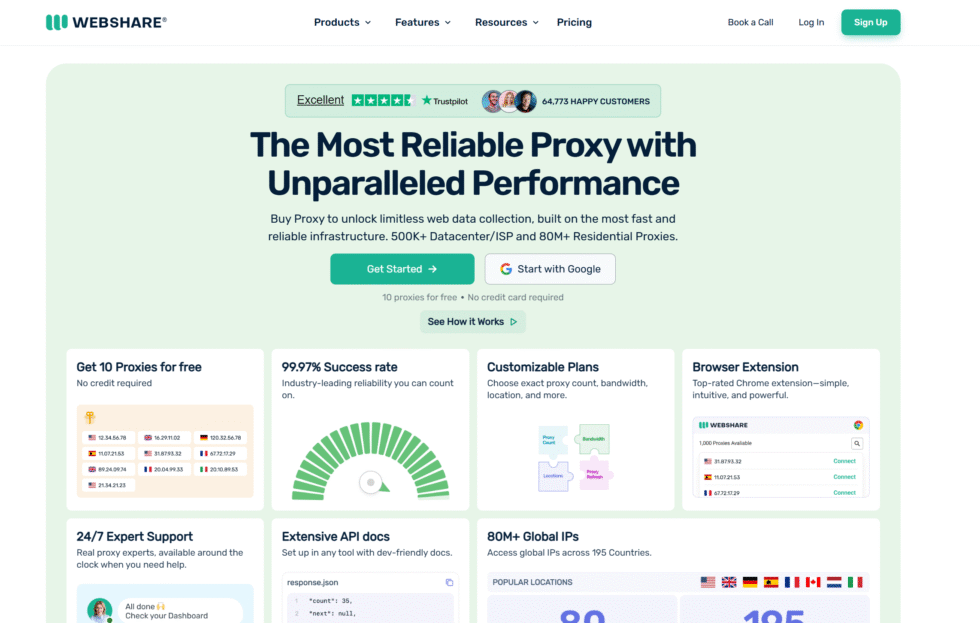
Webshare offers rotating residential proxies with global IPs. Custom plans let you pick locations and bandwidth. High success rates aid scraping without interruptions. The service supports fraud prevention and market research. Expert support helps with setups. It’s reliable for ongoing pulls, though customization takes time.
- Key Features: Rotating and static modes. API docs. 24/7 help.
- Accurate Data and Information: Strong reliability. Global access.
- Pros: Tailored to needs. Good for data gathering.
- Cons: Setup time for custom options.
10. MarsProxies
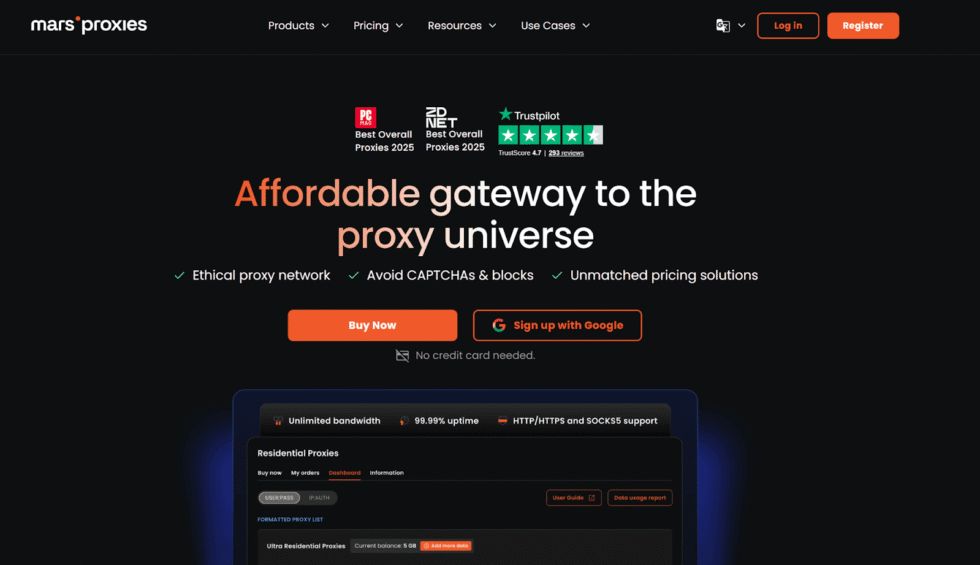
MarsProxies delivers residential proxies with rotation for scraping. Ethically sourced IPs avoid blocks. No traffic limits fit daily use. Compatibility with tools makes it versatile. For web data, it bypasses restrictions smoothly. Support is available round the clock. It’s budget-friendly for starters, but pool size is smaller.
- Key Features: Fresh IPs per country. Pay-as-you-go. Tool integration.
- Accurate Data and Information: High availability. Ethical network.
- Pros: No contracts. Quick support.
- Cons: Limited compared to giants.
11. ScrapingBee
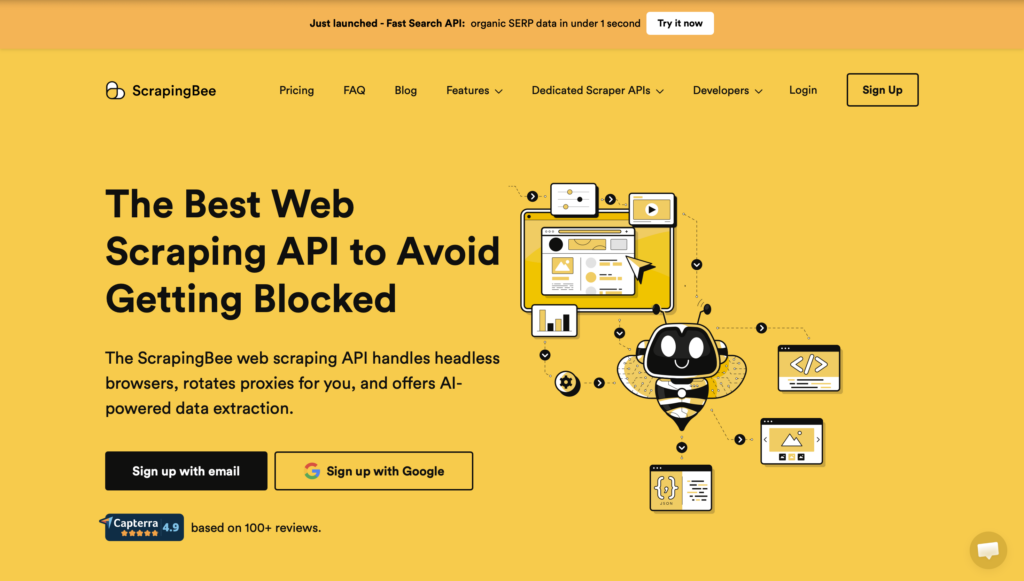
ScrapingBee combines rotating proxies with a scraping API. Their pool rotates to dodge limits. JavaScript rendering handles dynamic sites. AI extraction pulls structured data. For web scraping, it manages browsers and proxies. Custom scripts add flexibility. It’s handy for reviews or prices, but advanced features need higher plans.
- Key Features: Geotargeting in plans. Screenshot capture. JSON outputs.
- Accurate Data and Information: Fast responses. Block avoidance.
- Pros: Simplifies complex scrapes. No failed charges.
- Cons: Some tools locked behind tiers.
12. PacketStream
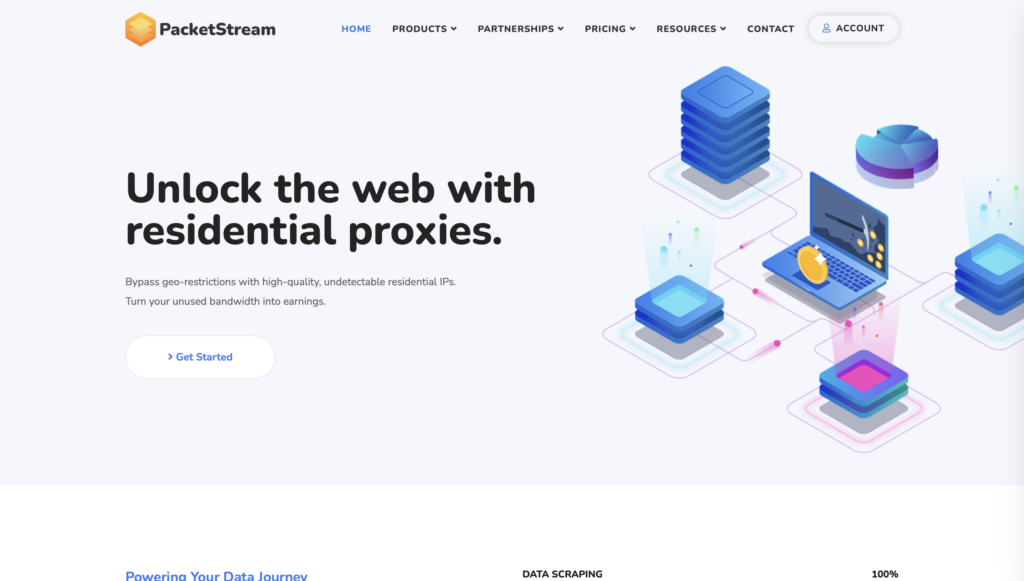
PacketStream, headquartered in Sheridan, Wyoming, provides a peer-to-peer residential proxy network focused on secure and anonymous web access. The service leverages real residential IPs from global users who share unused bandwidth, enabling effective bypassing of geo-restrictions and anti-bot measures. It supports large-scale data collection for tasks like market research and AI training, with automatic IP rotation to maintain anonymity. Strengths include a scalable model that ensures high success in data scraping and browser automation, backed by ethical sourcing. Weaknesses involve potential variability in speed due to peer reliance and limited detailed metrics on pool size. Overall, it’s suited for businesses needing reliable, unrestricted data gathering without traditional infrastructure limits.
- Key features: Peer-to-peer IP sourcing, multi-hop proxy tunnels, IP anonymization, support for data scraping and geolocation spoofing, easy integration with automation tools.
- Accurate data and information: Claims 100% success rate for data scraping and browser automation, global coverage from individual users worldwide, serves over thousands of businesses for market insights and content verification.
13. RayoByte
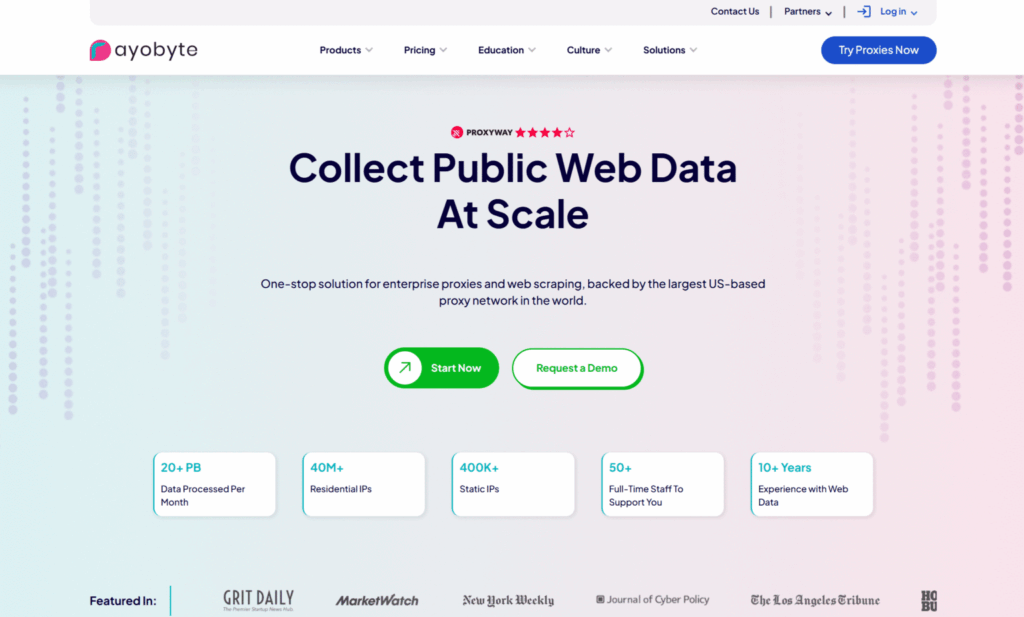
RayoByte, based in Lincoln, Nebraska, offers residential proxies emphasizing ethical data collection for enterprise-level web scraping. The service provides access to real residential IPs, designed to evade detection during high-volume data gathering. It integrates with scraping APIs and supports various use cases like market research and ad verification. Strengths lie in its large IP pool and focus on reliability, with human expert support for custom solutions. Weaknesses include less emphasis on rotation specifics, potentially requiring additional configuration for complex tasks. This makes it a solid choice for users prioritizing transparency and US-based infrastructure in their proxy needs.
- Key features: Ethically sourced residential IPs, integration with web scraping tools, support for high-volume data collection, customizable enterprise packages.
- Accurate data and information: Over 36 million IPs available, processes 20+ petabytes of data per month, largest US-based proxy network, 10+ years of experience in web data handling.
14. Webshare
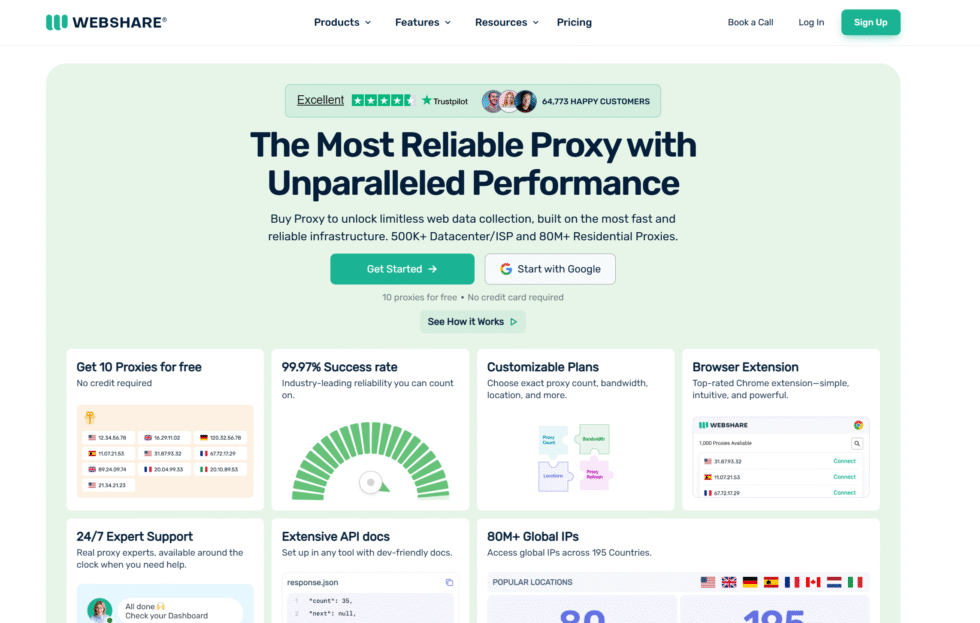
Webshare, headquartered in San Mateo, California, provides rotating residential proxies tailored for web scraping and multi-account management. The service offers access to a vast pool of real residential IPs with automatic rotation to prevent detection and ensure high success rates. It supports geo-targeting and unlimited bandwidth, making it suitable for tasks like SEO monitoring, e-commerce data collection, and social media automation. Strengths include fast connections and flexible proxy types, including static options for consistent sessions. Weaknesses may involve higher detection risks on very strict sites without additional tools. Overall, it’s an efficient choice for developers and businesses seeking affordable, scalable proxy solutions with strong US presence.
- Key features: Rotating residential proxies, HTTP/HTTPS/SOCKS5 support, country/city targeting, unlimited bandwidth and threads, API integration for automation.
- Accurate data and information: Over 80 million IPs in pool, coverage in 50+ countries, 99% uptime, serves thousands of users for high-volume scraping and proxy needs.
15. DataImpulse
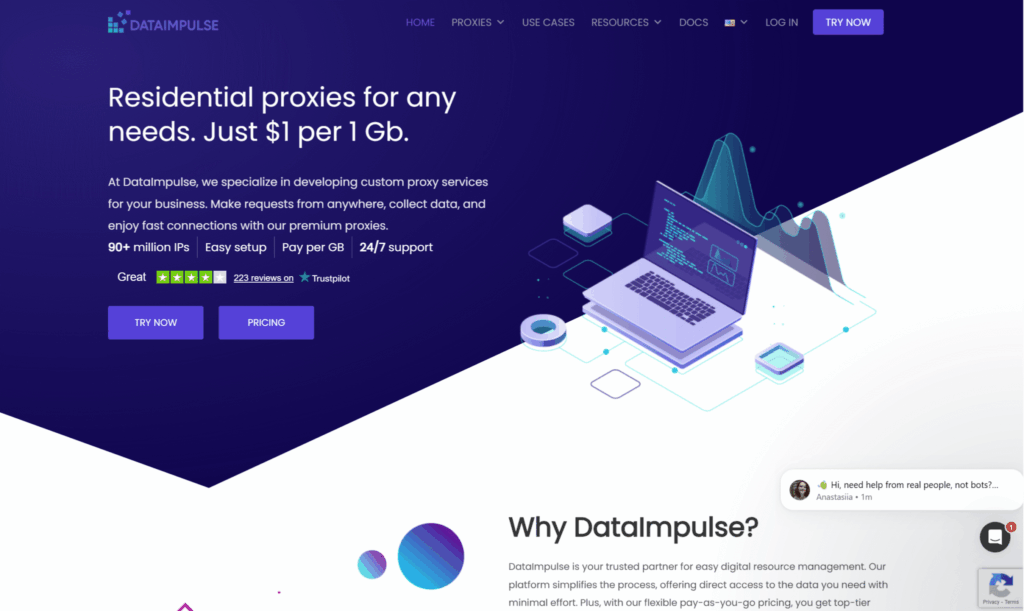
DataImpulse, with headquarters in St. Petersburg, Florida, specializes in ethically sourced residential proxies for global web access and data extraction. The service offers rotating and sticky sessions, allowing flexible IP management for tasks like scraping and market analysis. IPs are regularly updated from a vast network, ensuring low detection rates. Strengths encompass worldwide coverage and user-friendly tools for monitoring usage, supported by 24/7 assistance. Weaknesses could include metered traffic potentially affecting cost predictability for heavy users. This positions it well for developers and businesses requiring stable, compliant proxy solutions.
- Key features: Rotating and sticky sessions, HTTP(S)/SOCKS5 protocols, country/state/city/ASN targeting, unlimited concurrent sessions, dashboard with usage analytics.
- Accurate data and information: Over 90 million unique IPs, coverage in 195+ countries, 99.9% uptime guarantee, serves 500,000+ customers over 4 years for data-driven insights.
16. Storm Proxies
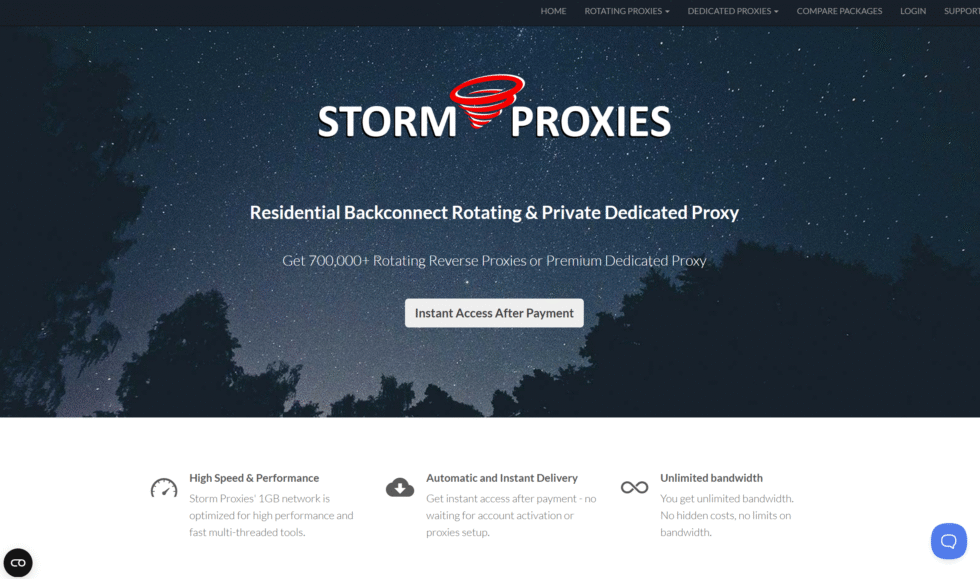
Storm Proxies provides rotating residential proxies optimized for high-anonymity tasks like web scraping and SEO monitoring. Headquartered in the USA, it owns its entire inventory, ensuring control over performance on a 1GB network. IPs rotate automatically per request or timed intervals, sourced from residential connections for authenticity. Strengths feature unlimited bandwidth and instant activation, ideal for multi-threaded tools. Weaknesses involve no SOCKS support and restrictions on certain activities, limiting versatility. It’s a reliable option for users needing fast, anonymous access without reseller dependencies.
- Key features: Automatic IP rotation per request or 3/15 minutes, HTTP(S) protocols, backconnect system, USA/EU/Worldwide targeting, unlimited bandwidth.
- Accurate data and information: Over 20 million residential IPs, 700,000+ shared rotating IPs monthly, optimized for 100% anonymity, used by thousands for bulk scraping and bot operations.
17. ProxyGuys
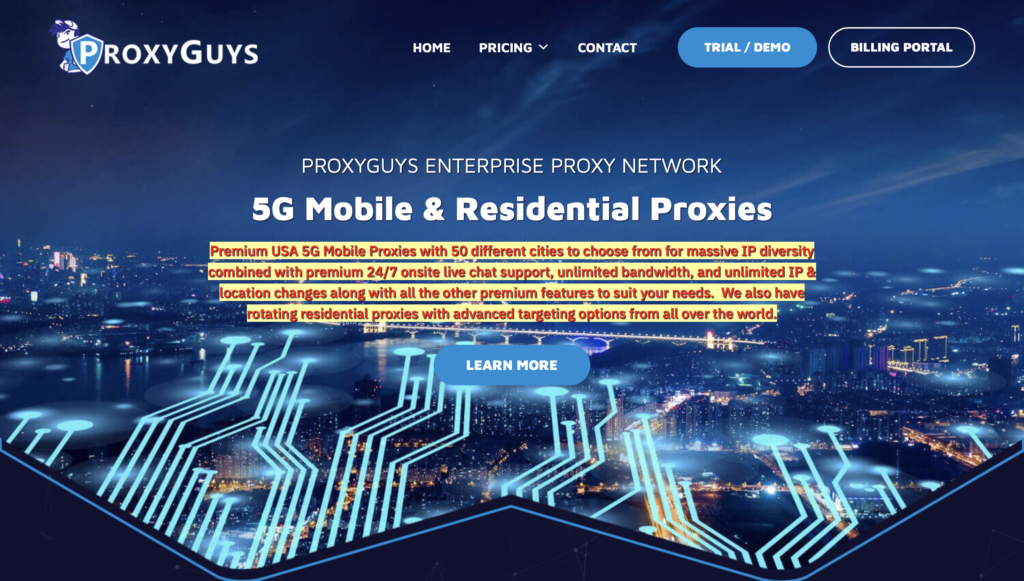
ProxyGuys, based in the USA, offers rotating residential proxies with enterprise-grade quality for web scraping and geo-targeted access. Launched in 2021, it sources IPs ethically from mobile carriers, providing fresh addresses to minimize blocks. Rotation is customizable with unlimited concurrent connections. Strengths include premium speeds and 24/7 live support, enhancing usability for complex projects. Weaknesses may stem from bandwidth-based metering, which could impact high-volume operations. This service suits businesses seeking compliant, high-performance proxies for global data collection.
- Key features: Custom IP rotation times, HTTP(S)/SOCKS5 protocols, city/state/country/ISP targeting, unlimited threads, pay-for-bandwidth model.
- Accurate data and information: Over 10 million fresh IPs, speeds of 2-20mbps for residential, nearly 100% uptime, compliant with US laws, used for scraping on major sites.
18. ProxyRack
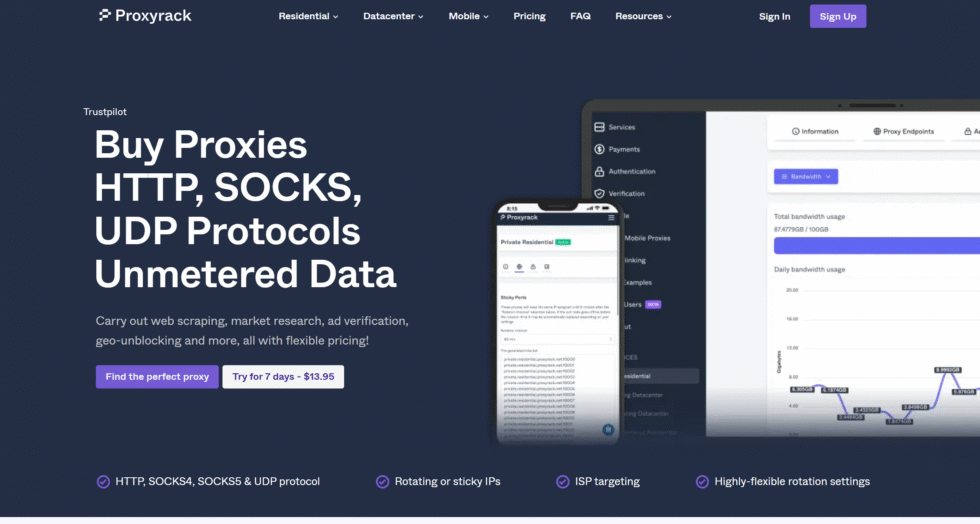
ProxyRack delivers residential proxies for web scraping and geo-unblocking, with a focus on high success rates through real IP sourcing. The USA-oriented service supports rotating or sticky sessions via its API, allowing granular control. Strengths include extensive protocol compatibility and transparent monitoring tools for usage. Weaknesses might involve variable success on premium plans, requiring plan selection based on needs. It’s effective for market research and large-scale data tasks needing reliable global access.
- Key features: Rotating/sticky ports, HTTP/HTTPS/SOCKS4/SOCKS5/UDP protocols, geo-targeting to cities/ISPs, 140+ countries coverage, self-service setup.
- Accurate data and information: Huge monthly unique IPs, 3,000+ customers, high success rates for challenging sites, 7-day trial available, monitors for ethical usage.
How to Choose the Right Rotating Residential Proxy Provider
Picking a provider starts with your scraping goals. Look at network size for variety in IPs, which helps avoid patterns that trigger bans. Targeting options matter if you need data from specific spots. Check protocol support to match your tools.
Ease of use counts too. A simple dashboard saves time on managing sessions. Integration with APIs or extensions, like those for ad verification proxies, can speed things up. Ethical sourcing protects against risks. Test with trials to see real performance. Focus on uptime and speed for steady results.
| Feature | Importance for Scraping | What to Look For |
| IP Pool Size | High | Large for rotation variety |
| Targeting Levels | Medium | City/ISP for precision |
| Uptime | High | 99%+ to minimize downtime |
| Protocols | Medium | HTTP/SOCKS5 support |
| Sessions | High | Unlimited for scale |
Trends in Residential Proxies for Web Scraping in 2026
The market keeps evolving with more focus on AI integration. Providers now offer tools that pair proxies with data parsers for quicker insights. Ethical practices gain traction, as users demand compliant networks.
Growth comes from rising data needs in e-commerce and research. Verified Market Research highlights steady expansion. Lower costs open doors for smaller teams. Security features like fingerprinting help beat advanced bots. Blending with mobile proxies tackles app-based scraping. Overall, expect smarter, faster options ahead.
Integrating Rotating Residential Proxies with Web Scraping Tools
When setting up a web scraping project, incorporating rotating residential proxies ensures that IP addresses change automatically during data collection sessions. This setup helps in managing multiple requests without interruptions. Developers often integrate these proxies with libraries like Scrapy or BeautifulSoup in Python, where the proxy configuration is added to the request headers or middleware.
For instance, in scenarios requiring sustained access to dynamic websites, users turn to rotating residential proxies as they provide a pool of IPs from real devices, facilitating smoother operations over extended periods. Similarly, when projects involve mobile-specific data, rotating mobile proxies become relevant for emulating user behavior on wireless networks.
Adjusting rotation intervals based on the target’s rate limits is a common practice, and combining this with headless browsers like Puppeteer allows for automated navigation while maintaining proxy rotation. In cases where consistency in sessions is needed alongside rotation, blending with static residential proxies offers flexibility for hybrid approaches in complex scraping tasks.
Scaling Web Scraping Operations Using Rotating Residential Proxies
Large-scale web scraping requires efficient management of proxy pools to handle high volumes of data extraction. As operations grow, the ability to distribute requests across a diverse set of IPs prevents bottlenecks. Professionals handling extensive datasets often rely on rotating datacenter proxies for speed in less sensitive tasks, while reserving residential options for stricter environments.
Understanding the comparison between rotating and static residential proxies aids in deciding the appropriate type for expansion, especially when maintaining session persistence is key in some phases. For AI-driven projects, using proxies in AI data collection integrates well with scaling efforts, as they support model training through diverse data sources. Monitoring proxy performance during upscale becomes essential, with tools tracking success rates and response times to optimize the setup.
Latest News In 2026
Advancements in proxy technology have introduced AI-powered rotation mechanisms that adapt to website behaviors in real time, enhancing efficiency for web scraping tasks. New integration templates for popular automation frameworks like Selenium and Playwright have simplified setups, allowing developers to incorporate proxies seamlessly into their workflows.
Ethical data collection practices are gaining emphasis, with updated guidelines focusing on responsible request throttling and session management to align with web standards. Innovations in bandwidth management within proxy pools are addressing challenges in high-volume operations, providing better control over traffic distribution. Additionally, hybrid proxy models combining residential and other types are emerging as solutions for diverse scraping needs, supporting a broader range of applications in data-driven industries.
FAQ
What makes rotating residential proxies better than datacenter ones for scraping?
Rotating residential proxies draw from authentic home networks, allowing scrapers to blend in with genuine user patterns and reduce the likelihood of detection on advanced platforms. This approach distributes requests across a diverse set of addresses, complicating efforts by sites to identify automated activity through traffic analysis. For tasks involving protected content, they maintain steadier access by mimicking organic behavior, which proves useful in long-term data extraction projects. When combined with web scraping basics, these proxies support more reliable operations across various online environments.
How do I integrate rotating proxies into my scraping script?
Begin by configuring your script to cycle through proxy addresses automatically, such as using a backconnect server that handles rotations without manual input for each request. In languages like Python, libraries can manage proxy settings to assign fresh IPs per session, ensuring seamless switches during data pulls from multiple pages. This setup often involves API calls to fetch new credentials dynamically, which keeps the process efficient for high-volume tasks. Resources on integrations provide examples for hooking up with common tools and protocols.
Are there risks in using residential proxies for web scraping?
While residential proxies offer strong anonymity, they can encounter issues like variable connection stability if the underlying network faces disruptions from real-user devices. Legal considerations arise when scraping violates site policies, so aligning with ethical guidelines helps mitigate potential account flags or access denials. Over-reliance without proper rotation strategies might still trigger defenses on vigilant platforms, emphasizing the need for balanced usage. Web scraping fundamentals reveal ways to navigate these challenges effectively.
Can rotating proxies handle JavaScript-heavy sites?
Rotating proxies work well alongside tools that render dynamic content, such as headless browsers, to load and extract elements from pages reliant on client-side scripts. By masking the scraper’s origin across multiple addresses, they allow sustained access without immediate blocks, even as the browser processes interactive features. This combination simulates real-user navigation, enabling the capture of data that appears only after JavaScript execution. For complex sites, incorporating unblocking mechanisms enhances the overall effectiveness in gathering complete information.
What distinguishes rotating residential proxies from other proxy types in web scraping?
Rotating residential proxies stand out by sourcing IPs from genuine home networks, which helps in presenting traffic as typical user activity during data gathering. This approach contrasts with datacenter-based options that might face quicker detection due to their server origins. Ethically obtained from authorized devices, these proxies support protocols like HTTP and SOCKS5 for broad compatibility in web scraping environments. Their design includes advanced filtering for precise control, making them suitable for tasks requiring high trust levels.
How do rotating residential proxies function in a typical web scraping setup?
In a standard configuration, rotating residential proxies cycle IPs automatically through a single entry point, allowing seamless request handling without manual intervention. This backconnect method ensures each query uses a fresh address from a vast pool, adapting to the demands of scraping scripts. Integration often involves developer tools like endpoint generators for easy setup in proxy use cases such as automated data pulls. Public APIs further enable management of sub-users and traffic, streamlining operations in custom-built systems.
In what situations do users prefer rotating residential proxies for data extraction?
Users opt for rotating residential proxies in scenarios involving frequent requests to platforms with anti-scraping measures, where IP variety maintains continuous access. These proxies prove valuable for tasks like review aggregation across multiple sites, simulating diverse user interactions. In ad verification, they allow checking content delivery from various perspectives without disruptions. Their ethical sourcing ensures reliability for ongoing projects needing clean, high-quality connections.
What role do rotating residential proxies play in maintaining data integrity during scraping?
Rotating residential proxies contribute to data integrity by minimizing interruptions from IP bans, ensuring complete datasets from restricted sources. By rotating addresses, they prevent partial extractions that could skew analysis in applications like market research. Compatibility with integrations such as browser extensions enhances control over sessions, preserving accuracy in collected information. This setup supports consistent performance across varied scraping needs, reducing errors from connection failures.
How can one optimize the use of rotating residential proxies in custom scraping scripts?
Optimization starts with configuring rotation based on script requirements, using APIs to adjust parameters for better efficiency. Incorporating tools like Chrome extensions allows quick IP management within development workflows. For complex scripts, blending with static residential proxies in hybrid models can balance speed and persistence.
Are there legal considerations when using rotating residential proxies for web scraping?
Legal considerations involve complying with website policies to avoid unauthorized data access, ensuring proxies are used responsibly. Ethically sourced proxies help align with regulations by providing clean IPs that respect platform terms. In many regions, such tools are permissible for legitimate purposes like social media proxies, as long as they do not facilitate misuse. Awareness of data protection standards is key to maintaining lawful operations.
What maintenance is required for effective use of rotating residential proxies in ongoing projects?
Maintenance includes regular checks on IP pool quality to ensure only active addresses are in rotation, supporting uninterrupted scraping. Updating configurations via public APIs helps manage traffic and sub-users efficiently. For long-term projects, leveraging rollover data features prevents resource waste. Tools like Android apps assist in on-the-go monitoring of proxy performance.
How do rotating residential proxies support multi-threaded web scraping?
Rotating residential proxies facilitate multi-threaded operations by distributing unique IPs across threads, enabling parallel data pulls without overload. This capability enhances throughput in high-volume tasks, with unlimited concurrent connections allowing scalable setups. In dedicated mobile proxies, similar rotation supports mobile-emulated threads for diverse applications. Patented technology ensures quick responses, aiding synchronized extractions.
In which web scraping scenarios might combining rotating residential proxies with other tools be beneficial?
Combining rotating residential proxies with CAPTCHA solvers addresses multi-layered defenses, where proxies handle IP rotation while solvers manage verification prompts. In setups involving user-agent switching, this integration strengthens evasion tactics for robust scraping. For AI-related collections, pairing with rotating datacenter proxies offers speed in initial phases before switching to residential for sensitive data. Such combinations prove useful in comprehensive data pipelines.
What factors influence the performance of rotating residential proxies in web scraping?
Performance is affected by the infrastructure supporting fast rotations and high uptime, ensuring reliable connections. The quality of ethically sourced IPs plays a role in evading detections effectively. Features like precise targeting by ISP enhance adaptability to various sites. Integration support, including dev docs, impacts how well proxies perform in custom environments.