An HTTP proxy is a server that sends your web requests for you, so the website sees the proxy’s IP address instead of yours. Despite the name, it carries HTTPS traffic too, through an encrypted tunnel, which is why almost every browser, scraper and API client supports it. To find the best HTTP proxies for 2026 we compared 13 paid providers on what decides it: how you log in, whether you can get static IPs as well as rotating residential proxies, what their documentation says about HTTP and HTTPS, and what you pay.
Quick answer
ProxyEmpire is the best HTTP proxy provider in 2026. HTTP, HTTPS and SOCKS5 work on all five of its proxy products, with 30M+ residential IPs in 179 countries and territories, 4M+ mobile IPs in 174, and targeting down to city, ZIP, ISP and ASN at no extra charge. Residential starts at $3.50/GB and falls to $1.50/GB, static residential IPs cost $3.50 → $2.00 per IP a month in 24 countries, and a trial costs $1.97.
Best HTTP proxies compared
All 13 providers at a glance| # | Provider | Login options | Static IPs (monthly) | Residential price | Best for |
|---|---|---|---|---|---|
| 1 | ProxyEmpire | Username and password | $3.50 → $2.00/IP | $3.50 → $1.50/GB | Best overall |
| 2 | Oxylabs | Login or IP whitelist | $3.20 → $2.50/IP | $6.00 → $2.50/GB | HTTPS to the proxy |
| 3 | ResiProx | Username and password | — | $3.50 → $1.75/GB | Residential and mobile on a budget |
| 4 | Proxy-Seller | Login or IP allowlist | $3.00 → $2.25/IP | $3.50 → $1.45/GB | One login for every protocol |
| 5 | Decodo | Login or IP whitelist | $3.33 → $2.60/IP | $4.00 → $2.00/GB | Same setup on every product |
| 6 | Byteful | Login; IP on static | $3.00 → $2.75/IP | $3.25 → $1.95/GB | Traffic that never expires |
| 7 | NodeMaven | Username and password | $2.99/IP | $5.31 → $2.75/GB | Quality-filtered IPs |
| 8 | Webshare | Login or IP | $3.70 → $1.80/IP | $3.50 → $1.50/GB | Free starter plan |
| 9 | SOAX | Login or IP allowlist | — | $5.00 → $1.50/GB | HTTP(S) plus UDP |
| 10 | IPRoyal | Login or IP whitelist | From $2.70/IP | $7.00 → $3.36/GB | Long sticky sessions |
| 11 | MarsProxies | Login or IP whitelist | $2.99 → $2.09/IP | $4.99 → $2.10/GB | Cheap datacenter IPs |
| 12 | Bright Data | Login, plus allowlist | $3.50 → $2.50/IP | $4.00 → $2.50/GB | Enterprise tooling |
| 13 | DataImpulse | Login or IP | — | $1.00/GB flat | Lowest flat price |
The residential column shows the regular rate on the smallest plan, then the lowest per-GB rate published at 1 TB or less; promotions are covered in the reviews. Bright Data is shown at its current 50% discount (list $8.00 → $5.00/GB). The static column is the monthly price of one ISP or static residential IP, from the smallest order to the largest published volume; “—” means the provider sells no static per-IP product. Login options come from each provider’s own documentation. All figures were checked on 26 September – 1 October 2026.
How we compared HTTP proxy providers
Every provider says “HTTP(S) supported”; the detail decides itEvery provider here supports HTTP and HTTPS. What differs is how you log in, whether you can buy a fixed IP or only rotating traffic, how deep targeting goes, and what a realistic volume costs.
The 13 best HTTP proxies in 2026
Detailed reviews
ProxyEmpire
Best overallProxyEmpire supports HTTP, HTTPS and SOCKS5 on rotating residential, rotating mobile, static residential, dedicated mobile and rotating datacenter proxies, and residential and mobile share one endpoint, v2.proxyempire.io on port 5000, for every protocol.
- 30M+ residential and 4M+ mobile IPs, with sticky sessions or rotation on every request, and bandwidth that rolls over
- Static residential HTTP proxies at $3.50 → $2.00 per IP a month in 24 countries, 99.9% uptime and 24/7 support from real people
- Username and password only, with no IP whitelisting, so a tool that cannot send proxy credentials needs a workaround

Oxylabs
HTTPS to the proxyOxylabs documents three ways into its residential network: plain HTTP, HTTPS to the proxy itself (an https:// entry point that encrypts the hop to the proxy), and HTTP/3 over MASQUE for UDP traffic.
- The most detailed HTTP protocol documentation of any provider here, with code examples
- Oxylabs lists 175M+ residential IPs, with targeting down to ZIP, coordinates and ASN
- The smallest plan is 5 GB for $30, there is no pay-as-you-go option and no residential trial
ResiProx
Residential and mobile on a budgetResiProx sells rotating residential and rotating mobile proxies over HTTPS and SOCKS5, with country, region, city and ISP targeting on every plan.
- ISP-level targeting from the first gigabyte, and unused traffic rolls over
- Pay by card, PayPal or crypto
- Rotating proxies only — no static, ISP or datacenter IPs for jobs that need a fixed HTTP proxy
Proxy-Seller
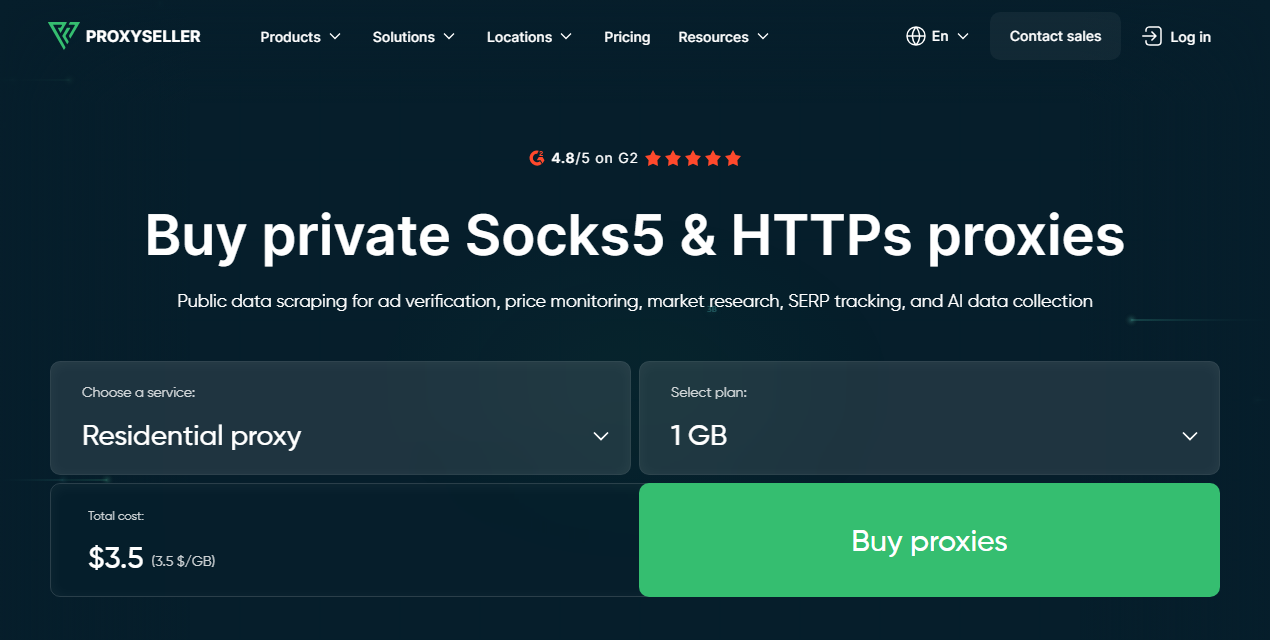
One login for every protocolProxy-Seller supports HTTP, HTTPS and SOCKS5, and the same credentials work across all three, whether you log in with a username and password or an IP allowlist.
- $1.45/GB at 1 TB, the lowest tiered residential rate among the top ten here
- IP allowlisting for older tools that cannot send proxy credentials
- Residential traffic expires 30 days after purchase, and per-IP prices on its location pages are one-week rentals
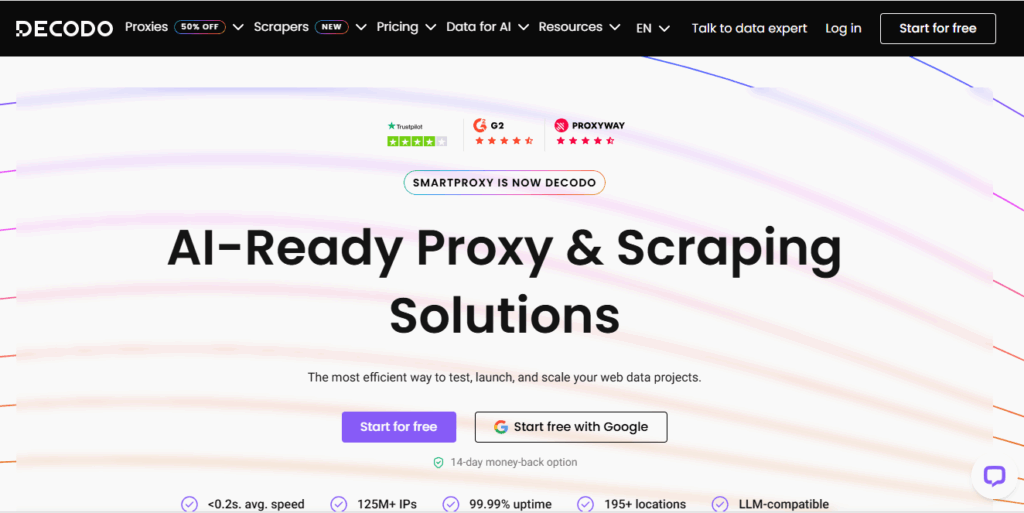
Decodo (formerly Smartproxy)
Same setup on every productDecodo states that all its proxies, residential, mobile, ISP and datacenter, support HTTP(S) and SOCKS5, and its residential plans accept a login or whitelisted IPs.
- A free three-day trial with 100 MB, and targeting down to ZIP and ASN
- Dedicated datacenter HTTP proxies from 3 to 2,000 IPs, self-serve
- City, state or ZIP targeting can’t be combined with ASN, and dedicated datacenter IPs cover only the US, UK, Germany and Japan
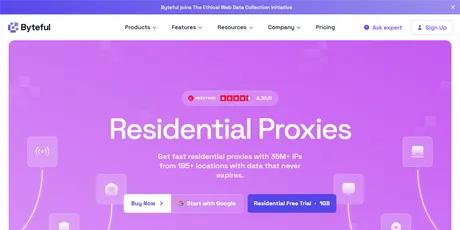
Byteful
Traffic that never expiresByteful, formerly Ping Proxies, sells residential, static residential, datacenter and mobile proxies over HTTP and SOCKS5, with IP authentication on its static proxies.
- Residential bandwidth never expires, and a 1 GB free trial lets you test first
- Datacenter IPs from one at a time, with no minimum order
- The smallest residential plan is 10 GB, and static residential needs at least 10 IPs
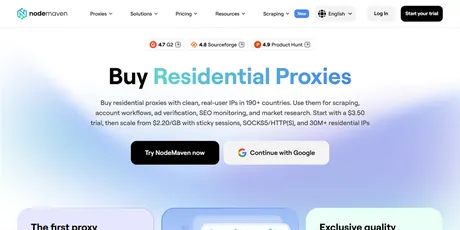
NodeMaven
Quality-filtered IPsNodeMaven offers HTTP(S) and SOCKS5 residential proxies with unlimited concurrent sessions, and screens every IP for quality before assigning it.
- A current 20% discount brings residential to $4.25 → $2.20/GB, and unused traffic rolls over
- ISP proxies at $2.99 per IP for 30 days with unlimited traffic, and a $3.50 trial with 750 MB
- No datacenter proxies, and its regular residential rate is higher than most here
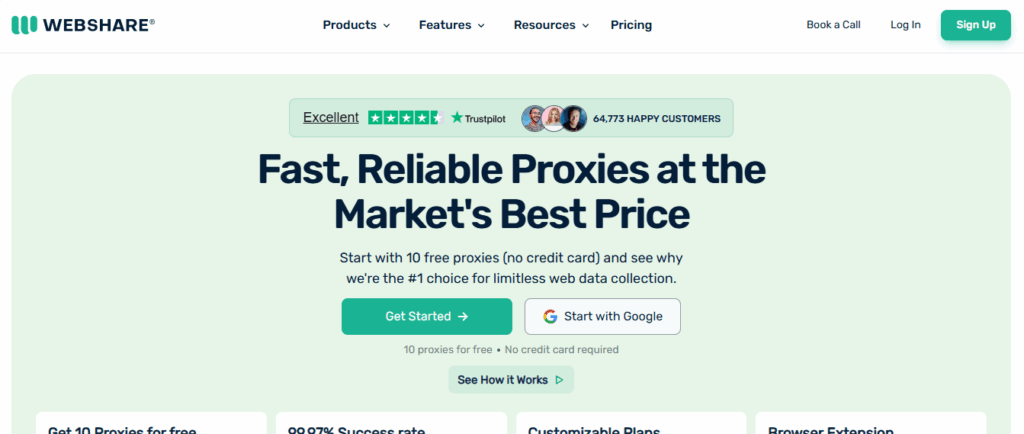
Webshare
Free starter planWebshare lets you use the same proxy servers as HTTP or SOCKS5, sells datacenter proxies in bulk, and offers IP authorization on its datacenter plans.
- Shared datacenter HTTP proxies from 100 for $2.99 a month, about three cents each
- $1.50/GB residential at 1 TB
- No mobile network, and unused residential bandwidth does not roll over
SOAX
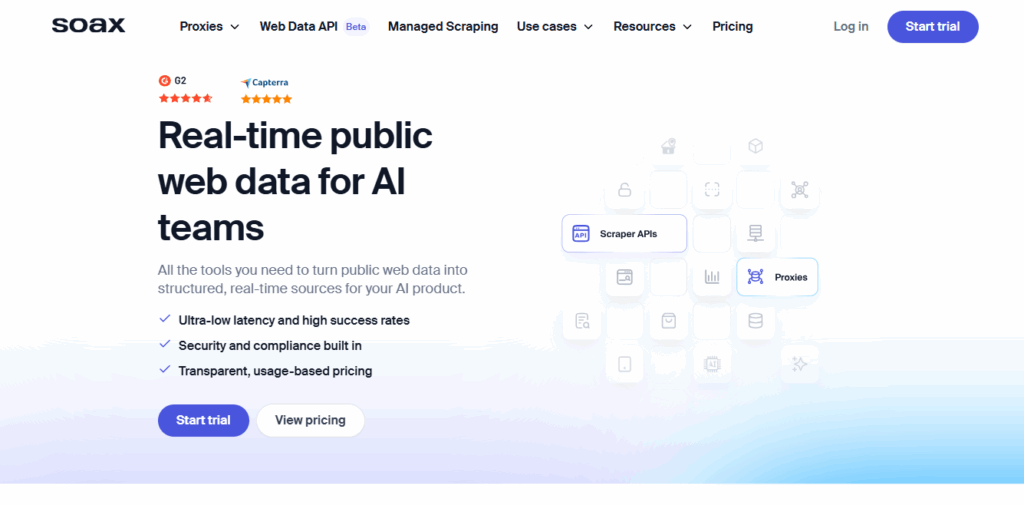
HTTP(S) plus UDPSOAX says its residential proxies work with HTTP(S), SOCKS5 and UDP/QUIC, and lets you connect with a username and password or an IP allowlist.
- Region, city and ISP or ASN targeting on residential and mobile
- $1.50/GB on its 1 TB plan
- Residential and mobile only on its current pricing, with no static IPs, and credits expire after 60 days

IPRoyal
Long sticky sessionsIPRoyal runs HTTP/HTTPS and SOCKS5 on separate ports, and its documentation states that residential connections are TCP only.
- Residential traffic never expires
- ISP proxies from $2.70 for 30 days, alongside datacenter and mobile
- One of the pricier options at volume: $3.36/GB even at 1 TB
MarsProxies
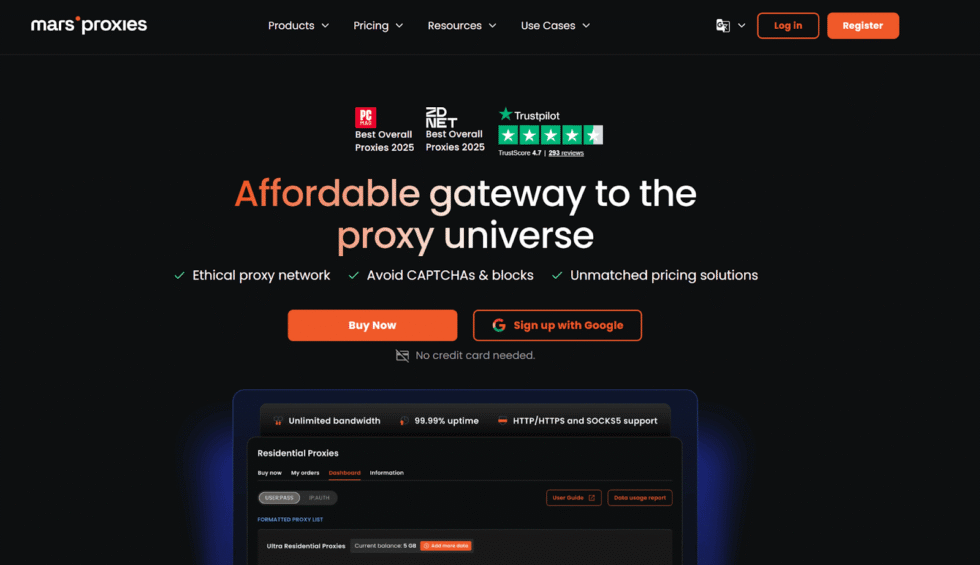
Cheap datacenter IPsMarsProxies documents HTTP, HTTPS and SOCKS5 support and dual authentication, a username and password or IP whitelisting.
- Residential, ISP, datacenter and mobile from one account, with 24/7 support
- Residential traffic does not expire
- MarsProxies lists 1M+ residential IPs, a small pool next to the others here, and there is no free trial
Bright Data
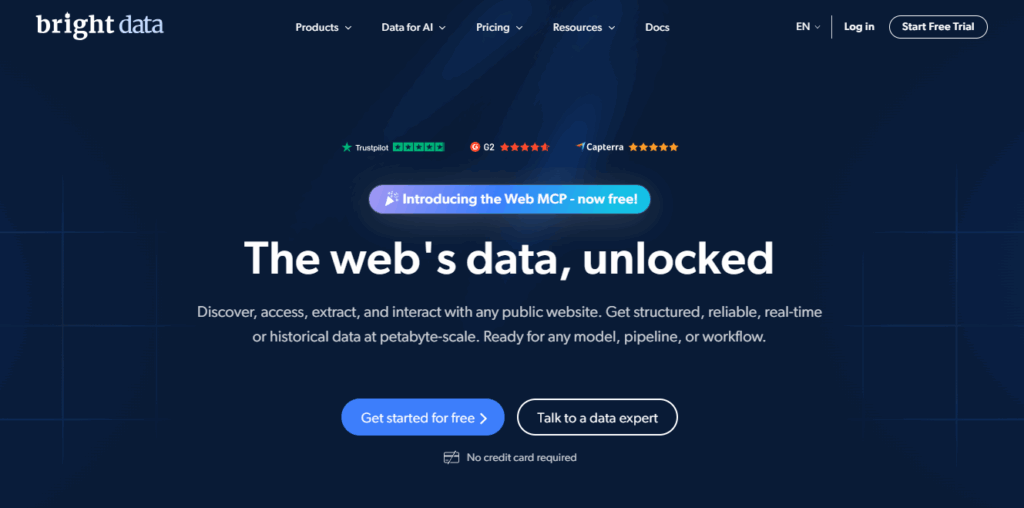
Enterprise toolingBright Data supports HTTP(S) and SOCKS5 across residential, mobile, ISP and datacenter networks, and an IP allowlist adds a lock on top of the zone login.
- The current 50% discount halves its list price of $8.00 → $5.00/GB
- Scraping APIs and datasets alongside the proxies for enterprise teams
- Strict KYC checks for new users, and monthly commitments do not roll over
DataImpulse
Lowest flat priceDataImpulse sells residential HTTP(S) and SOCKS5 proxies at one flat per-GB price, pay as you go, with login or IP authorization.
- The lowest entry price here, with no subscription
- 24/7 human support
- City, state, ZIP and ASN targeting cost extra, and there are no static per-IP proxies
How an HTTP proxy works
Plain forwarding for HTTP, a tunnel for HTTPSAn HTTP proxy speaks the protocol of the web itself, defined in RFC 9110 (HTTP Semantics) and RFC 9112 (HTTP/1.1), and handles two kinds of request differently.
Plain HTTP: forwarding. For an http:// address, your client sends the proxy the full URL, for example GET http://example.com/ HTTP/1.1 (the “absolute form” in RFC 9112, section 3.2.2). The proxy makes the request from its own IP and returns the response. Because nothing is encrypted, the proxy can read, cache or change that traffic.
HTTPS: the CONNECT tunnel. For an https:// address, the client sends CONNECT example.com:443 instead (RFC 9110, section 9.3.6). The proxy opens a TCP connection to that host, replies with a 200 status and from then on forwards bytes blindly in both directions. TLS runs end to end between your client and the website, so the proxy sees the host name and port but not the pages, cookies or form data.
Logging in. Paid proxies ask for credentials in the Proxy-Authorization header (RFC 9110, section 11.7.2), usually with the Basic scheme from RFC 7617. If they are missing or wrong, the proxy answers 407 Proxy Authentication Required; our guide to fixing proxy 407 errors covers the usual causes. Basic credentials are only base64-encoded, so on a plain http:// connection to the proxy they are readable in transit.
What “HTTPS proxy” means. Most providers use it for an HTTP proxy that tunnels HTTPS sites through CONNECT. A few, such as Oxylabs, also accept a TLS connection to the proxy itself (an https:// proxy URL), which encrypts the hop to the proxy, credentials included. Both hide your IP; neither makes a site you reach over plain HTTP secure.
HTTP vs HTTPS vs SOCKS5 proxies
Which protocol to pick| HTTP proxy | HTTPS (CONNECT) proxy | SOCKS5 proxy | |
|---|---|---|---|
| Carries | Plain web requests | Encrypted web traffic in a tunnel | Any TCP connection; UDP if supported |
| Proxy can read content | Yes | No, only host and port | No, it relays bytes |
| Defined in | RFC 9110, RFC 9112 | RFC 9110, section 9.3.6 | RFC 1928 |
| Browser login | Supported | Supported | Chrome cannot send SOCKS5 credentials |
| Best for | Legacy sites, caching | Browsers, scrapers, API clients | Apps, bots and non-web tools |
In practice “HTTP proxy” and “HTTPS proxy” are the same endpoint: your client decides per request whether to forward or tunnel. For scraping and browsing, HTTP(S) and SOCKS5 give the same IPs, so pick whichever your tool handles best. Our SOCKS vs HTTP proxy guide goes deeper, and the best SOCKS5 proxies list compares providers on SOCKS5 alone.
How to use an HTTP proxy
Host, port, username and passwordEvery paid HTTP proxy comes down to four values, usually written as one URL: http://USERNAME:PASSWORD@host:port. With ProxyEmpire the residential and mobile host is v2.proxyempire.io and the port is 5000; targeting such as country or city goes into the username. With curl, pass the proxy with -x; add -v to see what curl sends to the proxy.
# fetch an HTTPS page through the proxy
curl -v -x http://USERNAME:PASSWORD@v2.proxyempire.io:5000 https://example.com/
# curl opens the tunnel first:
> CONNECT example.com:443 HTTP/1.1
> Host: example.com:443
> Proxy-Authorization: Basic VVNFUk5BTUU6UEFTU1dPUkQ=
# the proxy answers 200, then TLS runs end to end
Python and other code. In Python requests, set the same http:// proxy URL for both the http and https keys; the https key still uses an http:// proxy address, because the client tunnels with CONNECT.
Browsers, anti-detect browsers and phones. Enter the host, port, username and password in the proxy settings and choose HTTP as the type; the browser asks for the login when the proxy first replies 407. On Android, ProxyEmpire’s free Proxy Manager app handles the setup; see our Android proxy guide.
Are free HTTP proxy lists worth it?
Why we publish no listFree HTTP proxy lists are mostly open proxies: servers left misconfigured or taken over, which anyone can use. They are blocked on most sites, often die within hours, and a stranger’s HTTP proxy can read and change every unencrypted page you load, so we publish no list. If budget is the issue, start with ProxyEmpire’s $1.97 trial, Webshare’s free plan of 10 datacenter proxies, Byteful’s 1 GB free trial or Decodo’s free three-day trial. Whatever you use, the site’s terms and local laws still apply.
HTTP proxy FAQ
Short answersWhat is the best HTTP proxy provider?
ProxyEmpire, in our 2026 comparison. HTTP, HTTPS and SOCKS5 work on all five of its proxy products, targeting down to ZIP, ISP and ASN is included, and residential falls to $1.50/GB. Oxylabs is the pick if you need a TLS connection to the proxy itself.
What is the difference between an HTTP and an HTTPS proxy?
Usually none: the same proxy forwards plain HTTP requests and tunnels HTTPS sites with the CONNECT method. Some providers also accept an encrypted TLS connection to the proxy, which is what an HTTPS proxy means in the strict sense.
Does an HTTP proxy encrypt my traffic?
No. It changes your IP address, not your encryption. HTTPS sites stay encrypted end to end through the tunnel, while plain http:// pages are readable by the proxy.
Should I use an HTTP or a SOCKS5 proxy?
For websites and APIs, use HTTP(S); it works in every browser and library. Choose SOCKS5 when a tool only speaks SOCKS or the traffic is not web traffic. ProxyEmpire uses the same endpoint and login for both.
What port does an HTTP proxy use?
There is no fixed port. Self-hosted servers often use 8080 or 3128, and each provider sets its own; ProxyEmpire residential and mobile proxies use port 5000.
What does a 407 error mean?
The proxy did not get a valid username and password. Check the credentials and the proxy URL format.
Are residential or datacenter HTTP proxies better?
Residential IPs belong to home internet connections and get blocked far less, so they suit scraping and account work. Datacenter proxies are faster and cheaper per GB; ProxyEmpire’s rotating datacenter plans run from $0.625 to $0.35/GB at 5 TB.
Can I get HTTP proxies in the USA?
Yes. Every provider here covers the US. ProxyEmpire adds state, city, ZIP and ISP targeting on residential and mobile, and sells static residential US IPs by the month.
Can I use an HTTP proxy for any website?
For most, yes. ProxyEmpire blocks financial, government and other high-risk sites such as banks, payment processors and crypto exchanges on all its proxies.
Are free HTTP proxies safe?
Rarely. Most are open servers with unknown operators and blocked IPs. A cheap paid trial is the safer test.
Get HTTP and HTTPS proxies in minutes
HTTP, HTTPS and SOCKS5 on residential, mobile, static residential and datacenter proxies, with country-to-ZIP, ISP and ASN targeting at no extra charge, sticky or rotating sessions, 24/7 support from real people and bandwidth that rolls over. Try ProxyEmpire for $1.97.