
In today’s online world, finding solid private proxies that won’t break the bank matters a lot. These tools help with tasks like web scraping, managing accounts, or just staying private. People often search for affordable options that still perform well. Private proxies give you dedicated IPs, keeping things smooth and secure. Discover the best cheap private proxies in 2026 for secure online tasks and data gathering.
What Makes Private Proxies Essential
Private proxies act as middlemen between your device and the internet. They hide your real IP address, letting you browse without leaving tracks. This setup boosts privacy and helps bypass blocks on sites. Many users turn to them for gathering info from the web or testing apps. They come in types like residential or datacenter, each with strengths. Residential ones look like home connections, making them harder to spot. Datacenter versions run faster but might get flagged more often. Knowing these basics helps pick the right one for your goals.
Benefits of Choosing Affordable Private Proxies
Affordable private proxies offer value without skimping on quality. They let small teams or individuals handle big tasks efficiently. Speed remains key, with many providers ensuring quick responses. Security features protect data during transfers. Users enjoy unlimited sessions, which suits ongoing projects. These options scale easily as needs grow. They support protocols like HTTP and SOCKS5 for broad use. PCMag highlights how budget proxies aid in market research.
Best Cheap Private Proxies in 2026
1) ProxyEmpire – Best Cheap Private Proxies In 2026
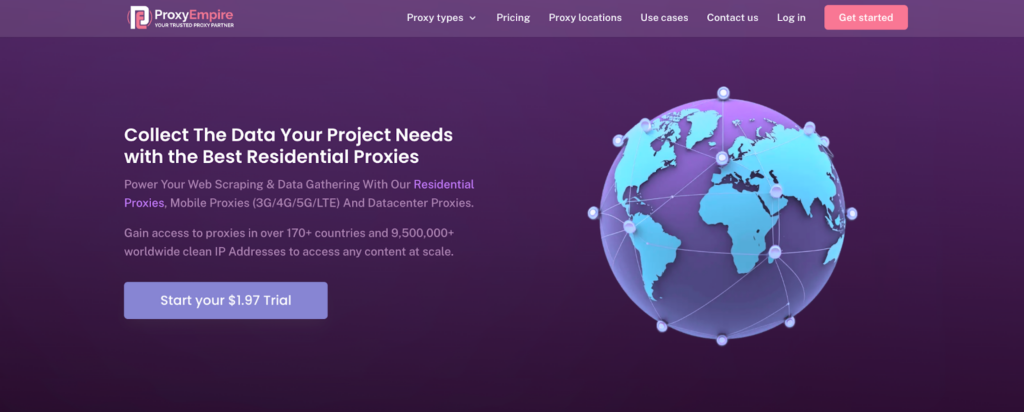
ProxyEmpire is a premium proxy service provider designed to empower web scraping, data collection, and unrestricted internet access through a vast network of ethically sourced residential, mobile, and datacenter proxies. Below is a detailed description based on the provided information:
Overview of ProxyEmpire
ProxyEmpire offers a comprehensive suite of proxy solutions tailored for individuals, businesses, and developers seeking reliable, high-performance tools for data gathering and privacy protection. With over 30 million clean IP addresses spanning 170+ countries, ProxyEmpire provides unparalleled global coverage, ensuring users can access content at scale with a 99.9% uptime and lightning-fast response times (as low as 0.6 seconds).
Proxy Types and Features:
🏘️ Rotating Residential Proxies
Key Benefits
- Global Reach: Access to over 30 million IPs worldwide, covering every major region, with precise targeting options (country, city, state, ASN/ISP).
- High Reliability: A 99.86% uptime ensures uninterrupted service, supported by patented technology for enhanced speed and security.
- Ethical Sourcing: Proxies are responsibly harvested, ensuring quality and compliance.
- Versatile Use Cases: Supports web scraping, price monitoring, sneaker copping, SEO tracking, ad verification, and more.
- Integration-Friendly: Compatible with standard proxy protocols (HTTP, SOCKS5) and third-party tools like Multilogin, Dolphin Anty, Kameleo, Octobrowser, and Gologin.
- No Hidden Fees: Transparent pricing with all features included, starting at a $1.97 trial.
Use case:
2. ResiProx
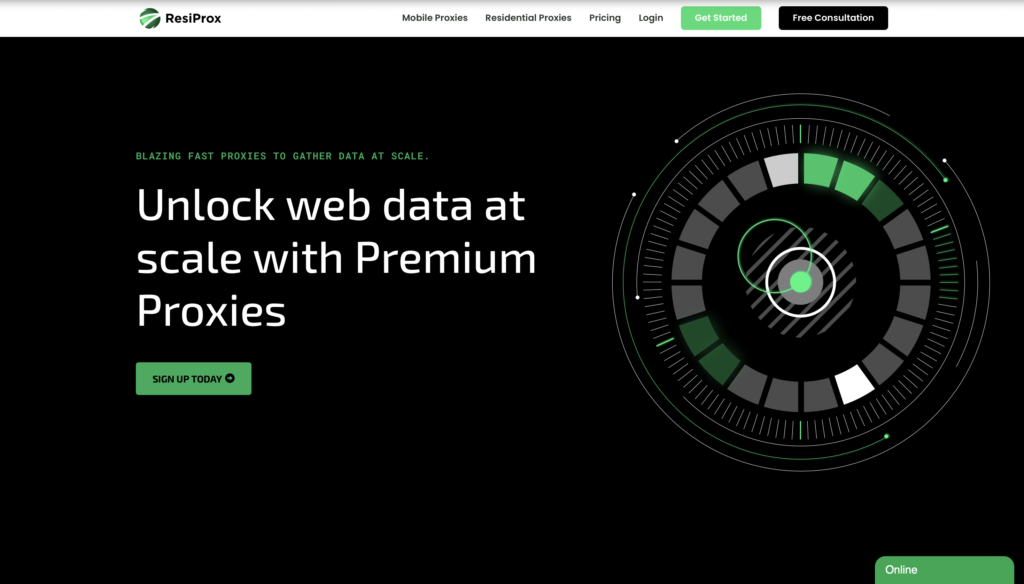
ResiProx provides rotating residential and mobile proxies suited for data collection and online privacy. Their setup includes many IPs from real devices, making connections appear natural. Users can target specific areas for precise access. The service supports HTTPS and SOCKS5, working with most tools. Response times average under a second, aiding fast tasks. Sessions rotate or stick as needed, giving flexibility. Integration covers languages like Python and Node.js. Support runs around the clock for quick help. Some users note occasional slowdowns during peak hours, but overall reliability holds up. It’s a good fit for scraping or monitoring without drawing attention.
- Key features: Rotating and sticky sessions, country and city targeting, HTTPS/SOCKS5 support.
- Accurate info: Many IPs from ethical sources, low response times, high success rates.
- Pros: Flexible for various tasks, easy to integrate, strong uptime.
- Cons: Can experience minor delays in busy periods.
3. Decodo
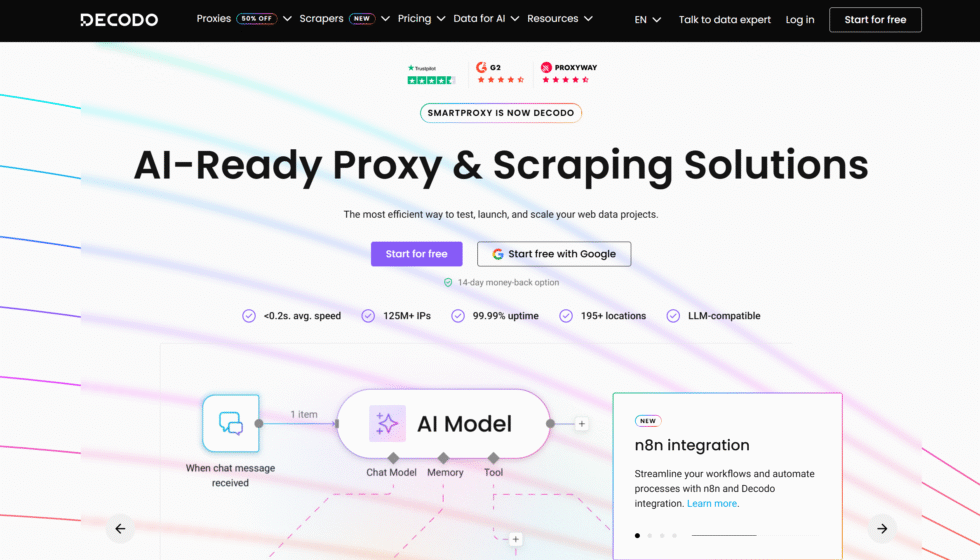
Decodo, once known as Smartproxy, offers a balanced mix of residential proxies for everyday needs. Their pool draws from many ethical sources, ensuring clean IPs. Targeting goes down to city level in some areas. Protocols include HTTP and SOCKS5 for compatibility. Sessions can rotate every request or hold longer. Dashboard tools make management simple. Many integrations support automation scripts. Uptime stays consistent, with few drops reported. It’s popular for small to medium projects like SEO checks or ad tests. Some find the interface intuitive right away. Limitations include less coverage in remote spots.
- Key features: City targeting, rotating sessions, API access.
- Accurate info: Ethical IPs, steady performance, user-friendly dashboard.
- Pros: Affordable for starters, quick setup, reliable for basic scraping.
- Cons: Limited in some less common locations.
4. Oxylabs
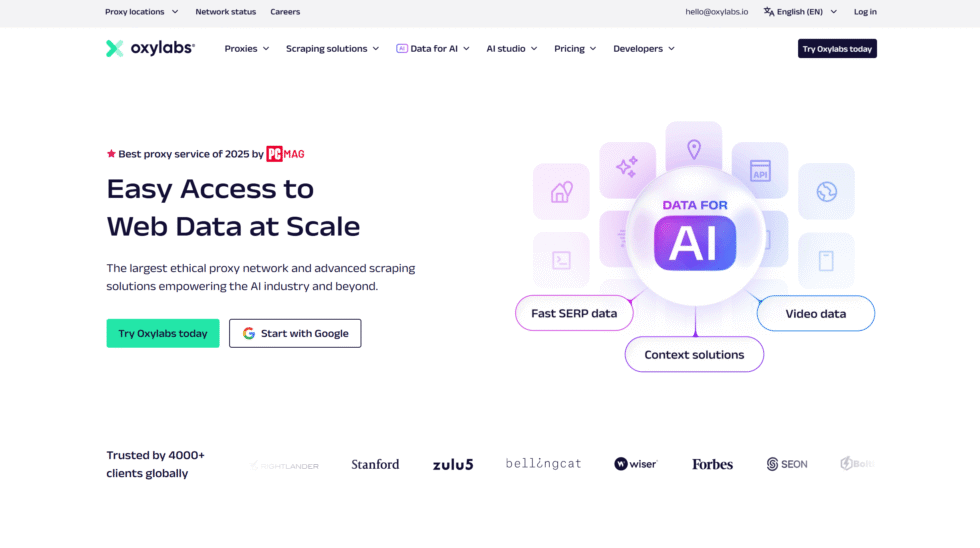
Oxylabs stands as a premium choice with a vast residential network. They source IPs ethically from many places worldwide. Advanced targeting covers countries, cities, and more. Support for multiple protocols ensures wide use. Sessions rotate intelligently to avoid detection. Their API allows custom controls. Performance shines in large-scale data pulls. Users value the detailed stats on usage. It’s ideal for enterprise-level ops like market analysis. Some report excellent speeds across tests. A drawback might be the learning curve for new users.
- Key features: Advanced targeting, intelligent rotation, robust API.
- Accurate info: Vast IP pool, high speeds, detailed monitoring.
- Pros: Handles big volumes well, strong for complex tasks, ethical practices.
- Cons: Setup might feel complex at first.
5. Bright Data
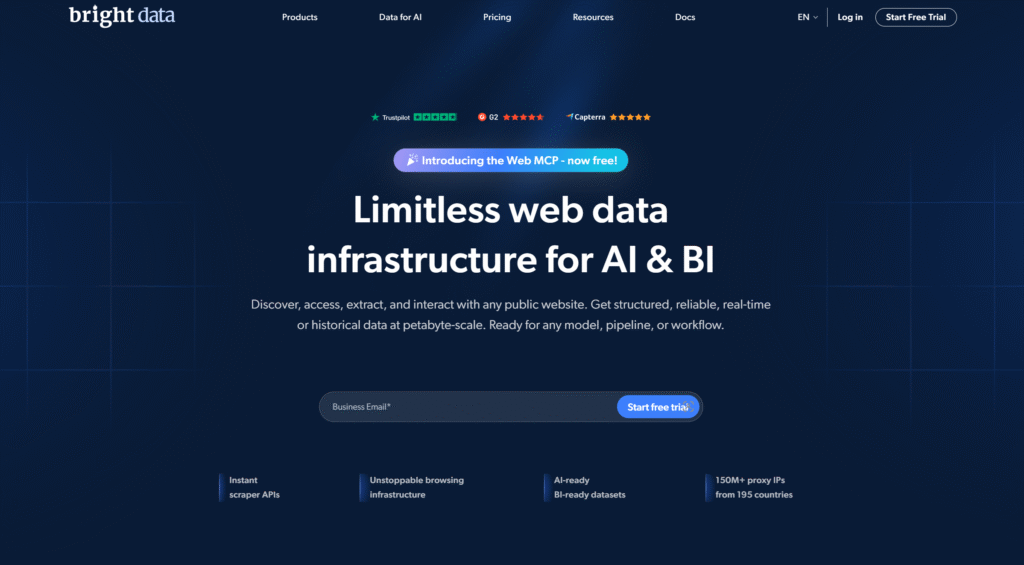
Bright Data leads with a huge proxy network for demanding users. Their residential IPs come from ethical peers globally. Targeting is precise, down to specific carriers in some cases. Protocols cover all basics. Sessions can be sticky or rotating. Tools include a manager for easy control. Performance excels in scraping tough sites. Many use it for research and verification. Support provides expert guidance. It’s built for scale, suiting big teams. Some note occasional IP refreshes needed.
- Key features: Precise targeting, session control, proxy manager.
- Accurate info: Large network, high success, ethical sourcing.
- Pros: Great for heavy use, versatile tools, reliable support.
- Cons: May require tweaks for optimal results.
6. IPRoyal
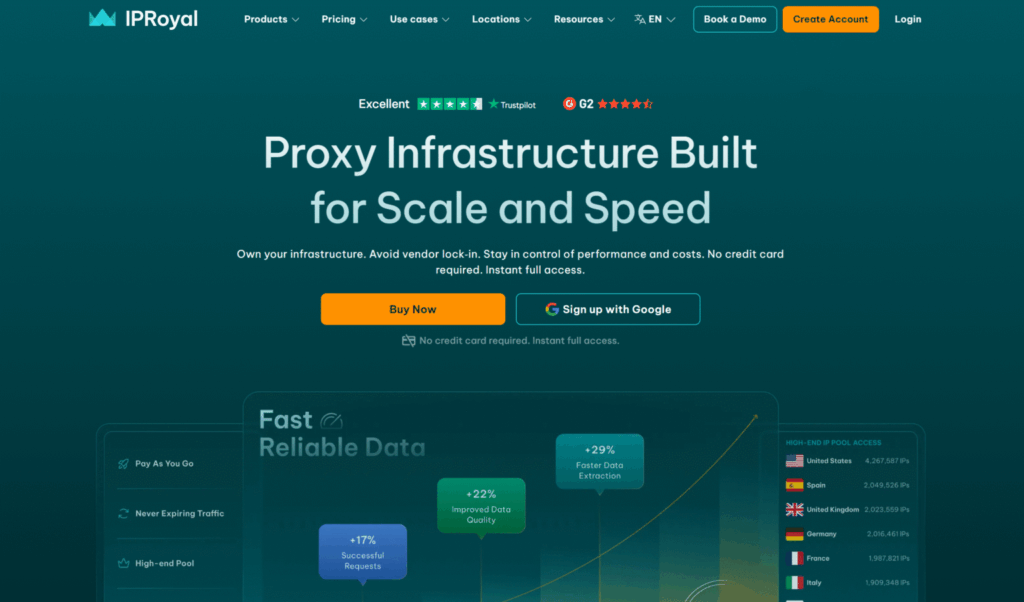
IPRoyal delivers residential proxies with a focus on simplicity. Their IPs stem from real users in many countries. Targeting includes regions and ISPs. HTTP and SOCKS5 are standard. Sessions rotate or stick based on needs. Integration is easy with common code. Speeds hold up for most tasks. It’s favored for account management and browsing. Dashboard offers clear views. Some appreciate the no-fuss approach. Limits show in very niche areas.
- Key features: Regional targeting, flexible sessions, easy integration.
- Accurate info: Real user IPs, consistent speeds, simple dashboard.
- Pros: User-friendly, good for beginners, steady performance.
- Cons: Less options in rare spots.
7. Webshare
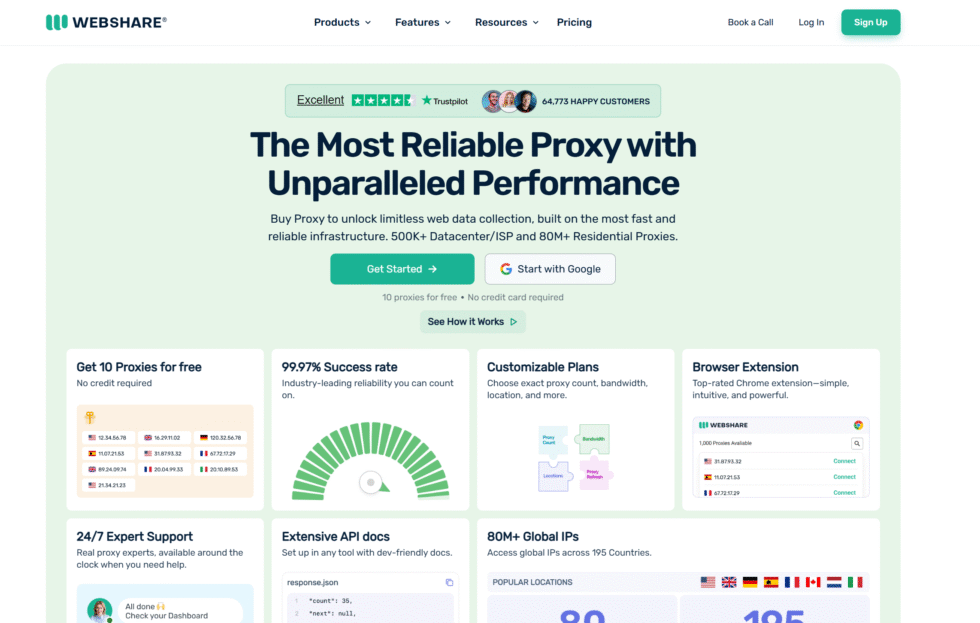
Webshare provides datacenter and residential proxies for budget-conscious folks. Their network pulls from many servers and homes. Basic targeting covers countries. Protocols like SOCKS5 work well. Sessions rotate automatically. Free tier lets users test. It’s quick for light scraping or testing. Many like the low entry barrier. Performance is solid for simple jobs. Some find it efficient for quick setups. Drawbacks include shared IPs sometimes.
- Key features: Auto rotation, country targeting, free testing.
- Accurate info: Mixed IP types, fast connections, basic tools.
- Pros: Easy to start, quick for small tasks, versatile.
- Cons: Shared options may limit privacy.
8. SOAX
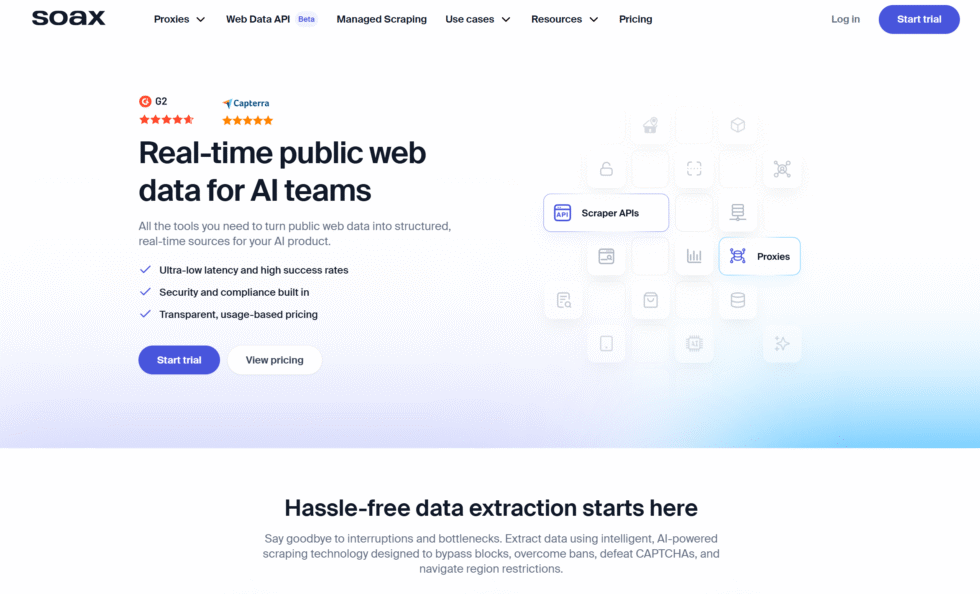
SOAX offers residential and mobile proxies with strong coverage. IPs come from ethical mobile users in many places. Targeting reaches cities and carriers. Supports HTTPS and more. Sessions can hold up to hours. API access aids automation. It’s effective for ad checks and geo tests. Uptime impresses users. Some highlight the mobile focus. Limitations in datacenter options.
- Key features: Carrier targeting, long sessions, API support.
- Accurate info: Mobile IPs, high uptime, ethical.
- Pros: Strong for mobile tasks, flexible, reliable.
- Cons: Fewer datacenter choices.
9. NetNut
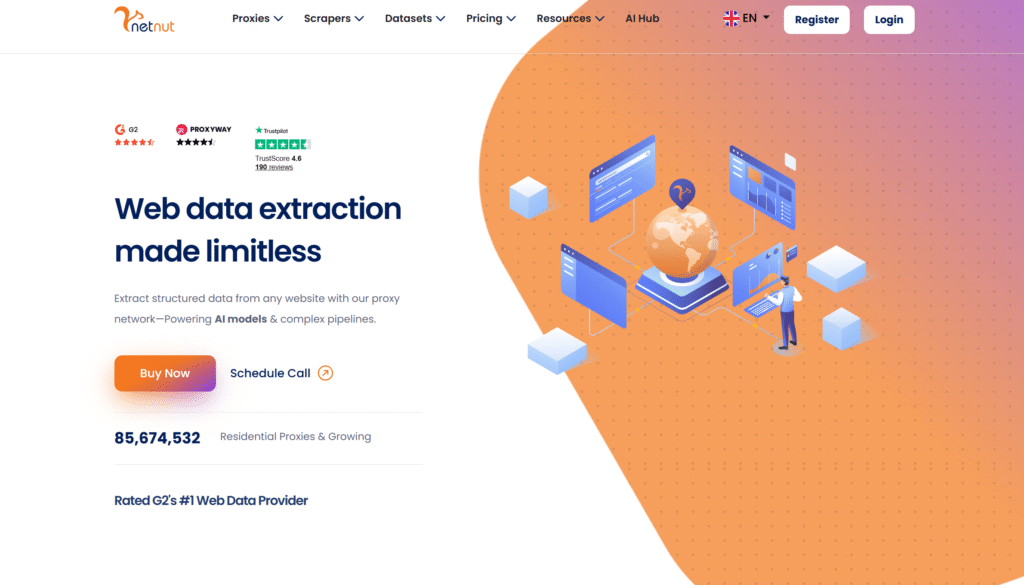
NetNut specializes in ISP proxies that mimic residential ones. Their network uses direct ISP links for speed. Coverage spans many countries. Protocols include all standards. Rotations happen per request. Tools for management are robust. It’s great for fast data access. Users note low ban rates. Some use it for e-commerce. A con could be focus on speed over variety.
- Key features: ISP links, per-request rotation, management tools.
- Accurate info: Direct connections, low bans, fast access.
- Pros: Speedy, low detection, good for commerce.
- Cons: Less variety in types.
10. Proxy-Seller
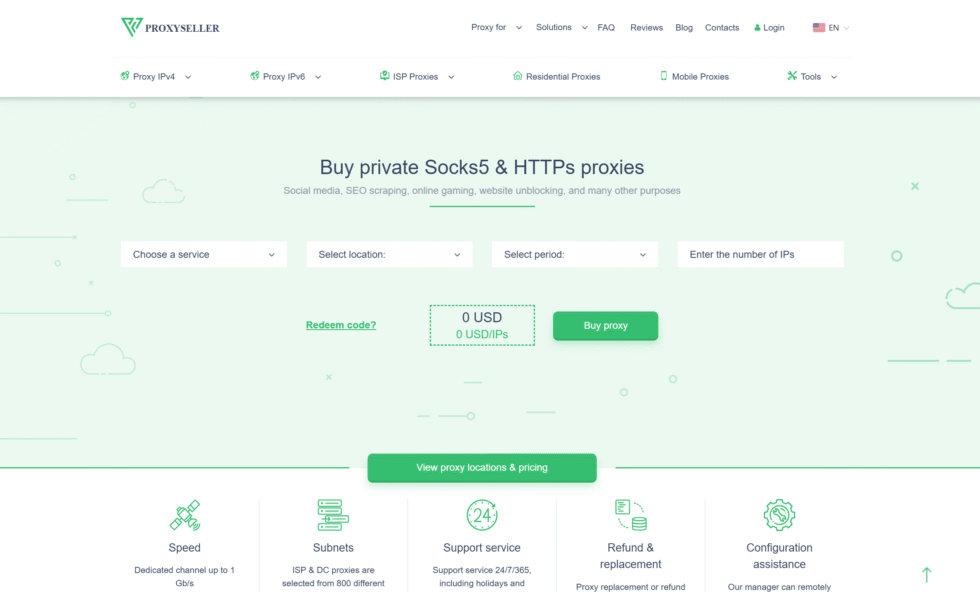
Proxy-Seller supplies private proxies for specific needs. Their IPs are dedicated from datacenters. Targeting by country. SOCKS5 and HTTP supported. Unlimited bandwidth appeals. It’s simple for individual use. Many pick it for social media. Setup is fast. Some report steady connections. Limits in residential options.
- Key features: Dedicated IPs, country targeting, unlimited use.
- Accurate info: Datacenter focus, steady links, simple.
- Pros: Easy for personal tasks, reliable, quick start.
- Cons: Mainly datacenter.
11. Storm Proxies
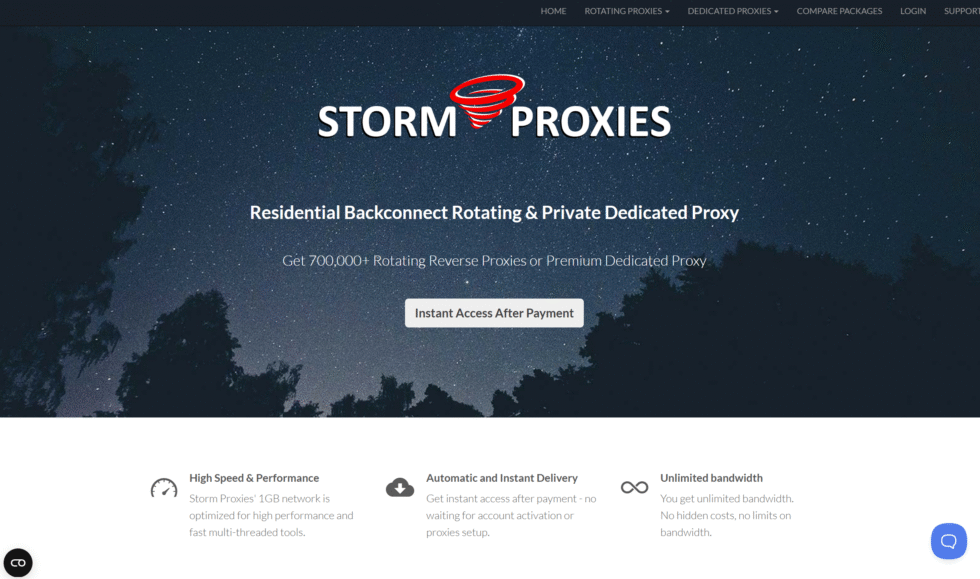
Storm Proxies focuses on rotating backconnect proxies. Their setup uses many IPs that switch often. Basic country targeting. Protocols cover essentials. It’s geared toward sneaker bots and tickets. Speeds are decent for bursts. Users like the rotation frequency. Some find it affordable for niches. A drawback is basic features.
- Key features: Backconnect rotation, basic targeting, essential protocols.
- Accurate info: Frequent switches, niche focus, decent speeds.
- Pros: Good for quick buys, rotating well, niche suited.
- Cons: Limited advanced options.
12. MyPrivateProxy
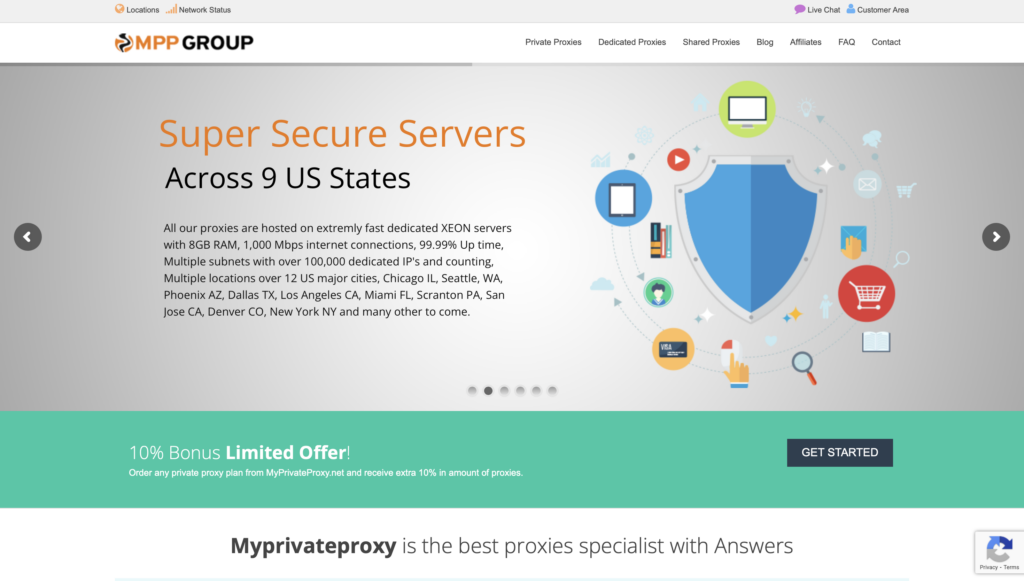
MyPrivateProxy focuses on delivering private datacenter proxies tailored for SEO professionals, internet marketers, and users seeking reliable anonymity online. Each proxy is assigned exclusively to one user for the subscription duration, ensuring no sharing occurs and providing a high level of control and privacy. The service operates servers across 16 major cities in the United States along with additional European data centers, offering good coverage for domestic targeting needs. Unlimited bandwidth allows for continuous usage without restrictions, while support for HTTP and HTTPS protocols with options for IP or username/password authentication simplifies integration with various tools. The automated dashboard facilitates quick management of proxies and authentication settings. Performance remains consistent for marketing campaigns and account management, though the overall IP pool is better suited for moderate volume operations as opposed to ultra-high scale scraping projects that demand enormous diversity. This specialization in white-hat applications makes it a steady choice for targeted online activities.
- Key features: Exclusive dedicated IPs, unlimited bandwidth, HTTP/HTTPS protocols, dual authentication methods including IP whitelisting, user-friendly control panel, header disabling for elite anonymity.
- Accurate data and information: Presence in 16 US major cities and multiple European locations; typical connection success rates at or above 80% for standard use cases; optimized for SEO tools, social media, and e-commerce platforms; supports up to multiple authenticated IPs per account with 24/7 customer support options.
13. SSLPrivateProxy
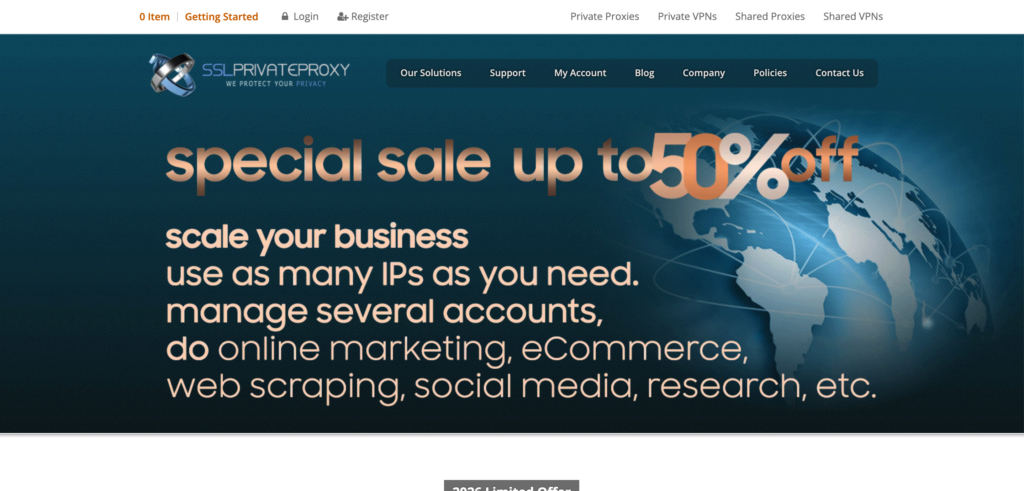
SSLPrivateProxy offers dedicated private proxies hosted on powerful Intel Xeon servers equipped with 1Gbps connections, emphasizing speed and reliability for various online tasks. The service maintains an extensive network spanning 34 major cities across the United States and Canada, plus several European sites, enabling precise regional targeting particularly strong in North America. All IPs are exclusively assigned to single users, enhancing security and reducing the risk of interference or blacklisting from shared usage. The infrastructure guarantees near-perfect uptime and is engineered for applications like social media management, advertising campaigns, and secure browsing. Users benefit from high-speed connections and elite anonymity features. While excelling in US and Canadian coverage and performance consistency, the service has more limited options outside these primary regions. The setup supports standard protocols and is built for long-term stability in demanding environments.
- Key features: 1Gbps dedicated server connections, exclusive private IPs, multiple subnets and prefixes, high anonymity with header control, Intel Xeon hardware infrastructure, support for HTTP and HTTPS protocols.
- Accurate data and information: Over 34 North American city locations with additional European presence; 99.99% uptime guarantee; extensive IP management exceeding hundreds of thousands of dedicated addresses; suitable for social media, marketing, and automation with consistent low latency performance across supported geographies.
14. Proxyrack
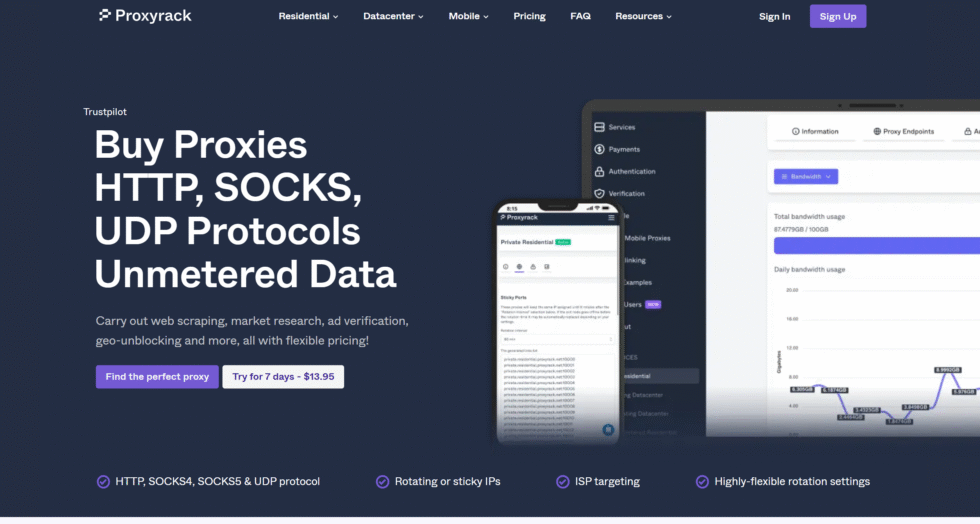
Proxyrack provides private unmetered residential proxies featuring exclusive IP addresses sourced from real residential connections. These private exit nodes ensure dedicated access for the user without public sharing, supporting a wide range of protocols including HTTP, SOCKS, and UDP for versatile application compatibility. Geo-targeting capabilities extend to country, city, or ISP levels, with options for custom rotation times or sticky sessions to maintain consistent IPs during sessions. The service allows unlimited data usage, making it practical for prolonged scraping or automation sessions without bandwidth concerns. Its network draws from substantial residential sources across numerous countries, contributing to improved success rates on websites with strict anti-bot measures. While offering strong flexibility in rotation and protocol support, users note that concurrent thread limits apply depending on configuration. This approach suits users needing unmetered private residential access for data collection and account handling.
- Key features: Unmetered bandwidth with exclusive private residential IPs, HTTP/SOCKS/UDP protocol support, geo-targeting by country/city/ISP, customizable rotation intervals, sticky session options, sub-user account management.
- Accurate data and information: Access to millions of residential IPs from 140+ countries; private proxies avoid public exit nodes for better anonymity; high success rates for web scraping and automation; supports various thread configurations and full control over proxy ports for customized setups.
15. Infatica
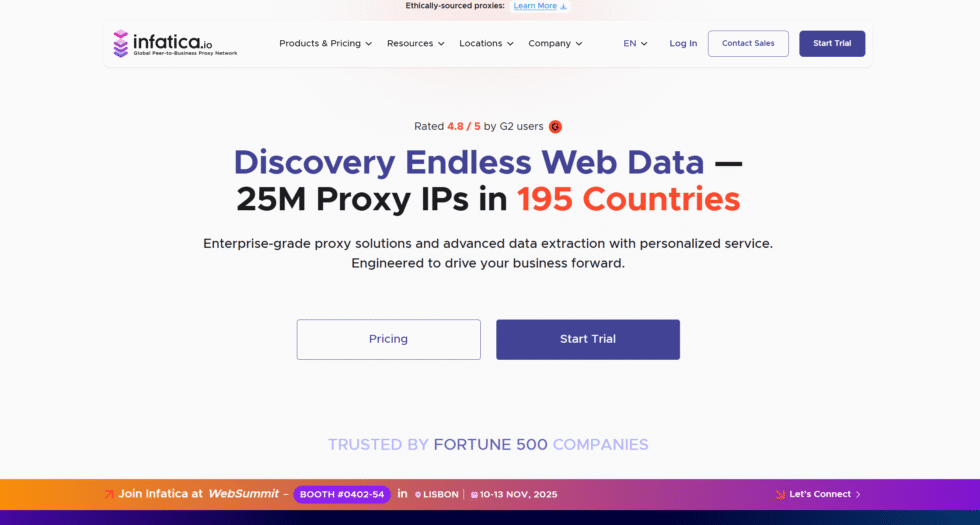
Infatica supplies dedicated private proxies as part of its broader portfolio that includes residential and mobile options, with a strong commitment to ethical sourcing and performance. The global network includes significant coverage in the United States and other key markets, delivering 99.9% uptime and low response times ideal for uninterrupted operations. Users receive private IP assignments with configurable rotation settings and end-to-end encryption to protect data transmissions. The modern backend infrastructure facilitates seamless integration with automation tools and APIs, supporting tasks from web scraping to market intelligence gathering. Strong US presence aids in local data access, while the private nature minimizes detection risks. The service maintains a balanced approach suitable for both individual and business users, though its datacenter IP pool is more focused than some larger competitors in terms of sheer volume. Overall, it provides reliable private connectivity with emphasis on quality and security.
- Key features: Private dedicated IPs with global portfolio, 99.9% uptime, low response times, rotation configuration options, end-to-end encryption, support for HTTP and SOCKS5 protocols.
- Accurate data and information: Strong presence in US and European locations; ethically sourced IPs across extensive network; average response times around 0.4 seconds in testing scenarios; high success rates for data extraction and privacy-focused applications; infrastructure supports modern proxy management and integrations.
How to Pick the Best Private Proxy for Your Needs
Choosing a provider starts with your goals. Think about speed if you handle lots of data. Look for ethical sourcing to avoid issues. Coverage matters for global access. Check protocol support for your tools. User reviews from sites help gauge reliability. Test trials to see fit. For mobile tasks, prioritize those options. Vary session types based on project length. Ensure the dashboard fits your workflow.
| Factor | Residential Proxies | Datacenter Proxies | Mobile Proxies |
| Source | Home connections | Servers | Device carriers |
| Speed | Moderate | High | Variable |
| Detection Risk | Low | Higher | Lowest |
| Best For | Scraping | Testing | Ads |
Trends Shaping Private Proxies in 2026
New tech boosts proxy speeds and security. AI helps manage rotations smarter. Ethical practices gain ground. Providers add more integrations for ease. ProxyEmpire’s integrations show this shift. Focus shifts to sustainable sourcing. Some innovate with hybrid models. Automation tools pair better with proxies now. Users seek customizable APIs. Overall, the field evolves for better user control.
Rotating Residential Proxies for Versatile Applications
Rotating residential proxies deliver a continuous supply of fresh IP addresses from real residential networks, which makes them effective for operations that involve frequent requests or the need to maintain low visibility. These rotating residential proxies cycle through millions of IPs automatically, supporting tasks where consistency in identity is less critical than avoiding restrictions. Rotating residential proxies work well for web scraping, social media proxies activities, and general proxy use case needs. They suit scenarios where users require broad coverage across multiple regions and have high success rates in accessing protected resources.
Dedicated Mobile Proxies for Maximum Anonymity
Dedicated mobile proxies operate on genuine mobile carrier networks using 4G and 5G connections, providing exclusive IP usage that remains under the control of a single account. This setup ensures that the IP is not shared with others, which contributes to stable performance during extended sessions. Users turn to dedicated mobile proxies when applications demand the highest level of trust from target systems, such as in environments sensitive to IP reputation. They complement other offerings like rotating mobile proxies, which provide similar carrier-based origins but with automatic IP rotation.
Latest News In 2026
In 2026, the private proxy sector will continue to advance with stronger emphasis on ethical IP sourcing and network integrity. Industry disruptions of malicious proxy networks have underscored the value of reputable providers that maintain strict standards for IP usage. Mobile proxy technologies have progressed to better support emerging network standards, resulting in improved speeds and connection reliability for users. There is also increased integration of proxy services with automation and management tools, allowing smoother workflows for data-related activities. Providers are expanding their focus on uptime and protocol compatibility to address growing demands for dependable private connections through static residential proxies, rotating datacenter proxies, and detailed proxy service comparison insights.
FAQ
What are the main types of private proxies?
Private proxies mainly include residential, datacenter, and mobile varieties, each designed to route traffic through different sources for varied applications. Residential proxies pull from actual household connections, blending seamlessly with regular user behavior to handle tasks requiring authenticity. Datacenter proxies operate via server farms, providing robust bandwidth for high-volume operations like data analysis. Mobile proxies leverage cellular networks, offering dynamic IPs that mimic smartphone usage for scenarios needing frequent changes. Understanding these distinctions aids in selecting proxies that align with specific online requirements, such as automation or content access.
How do private proxies improve online privacy?
By routing your internet requests through an alternate IP, private proxies shield your original address from exposure, reducing the chance of personal data leaks during browsing. This intermediary layer encrypts connections in some setups, adding a barrier against unauthorized monitoring on public networks. They also enable session isolation, keeping different activities separate to prevent cross-tracking by websites or services. Such features prove handy for maintaining discretion in professional research or multi-account management.
Can private proxies help with web scraping?
Private proxies facilitate web scraping by distributing requests across multiple IPs, which helps maintain access to target sites without triggering restrictions. They support concurrent threads, allowing efficient data extraction from diverse sources like e-commerce platforms or forums. Advanced configurations often include backconnect options for automatic IP switches, enhancing adaptability during long sessions. Ethical implementation ensures compliance with site policies, focusing on legitimate data collection for insights.
What should I look for in a proxy provider?
A solid proxy provider should offer diverse IP pools to match various project scales, ensuring flexibility in handling traffic loads. Compatibility with standard protocols like HTTPS allows seamless integration into existing workflows or software. Dashboard features for real-time monitoring help track performance and adjust settings as needed. Prioritizing providers with strong encryption protocols adds an extra layer of data protection.
What are private proxies?
Private proxies consist of dedicated IP addresses assigned exclusively to one user or group. This exclusive allocation leads to more reliable connections and better overall control during extended usage periods. They come in multiple forms including residential and mobile variants to match different operational requirements. Many businesses rely on static residential proxies when fixed addresses are preferred for consistent sessions.
How do rotating residential proxies function in practice?
Rotating residential proxies automatically switch between different residential IP addresses from real user networks at regular intervals. The rotation mechanism helps distribute requests across a vast pool to prevent detection patterns from forming. Advanced implementations allow customization of rotation timing to better align with specific project needs.
What advantages do static residential proxies offer?
Static residential proxies maintain the same residential IP address throughout the subscription period. This consistency proves valuable for platforms that require ongoing authentication or account verification processes. The residential origin adds an extra layer of authenticity that many systems recognize as legitimate traffic that provides consistent experience effectively.
In what ways do mobile proxies enhance privacy?
Mobile proxies source connections directly from cellular carrier infrastructures, making them appear as regular smartphone traffic. This origin type often bypasses stricter filtering systems designed to catch server-based connections. Both rotating and dedicated variants support different privacy levels depending on session requirements. Rotating mobile proxies provide frequent changes while maintaining the mobile network signature.
How do datacenter proxies compare to residential options?
Datacenter proxies utilize high-speed server infrastructure instead of real user connections. They typically deliver faster response times suitable for bandwidth-intensive tasks. The different origin creates a distinct profile that serves specific technical requirements. Rotating datacenter proxies combine this speed with automated IP switching capabilities.
What role do private proxies play in ad verification?
Private proxies facilitate accurate testing of advertisements from multiple network perspectives at the same time. They help confirm correct ad display and functionality across various global markets. Clean dedicated connections contribute to more precise verification outcomes.
Are there resources for implementing proxies in web scraping?
Effective web scraping depends on proper proxy configuration to sustain continuous data collection flows. Different proxy categories perform optimally depending on the target site protections and project scale. Advanced implementation techniques can significantly raise overall success rates using web scraping strategies and methods.