An IPv4 proxy sends your traffic through another IPv4 address, the classic four-number format (such as 203.0.113.7) that almost every website, API and tool still expects. Buyers use IPv4 proxies for web scraping, price monitoring, SEO rank tracking, ad checks and managing accounts. The same label covers very different products: rotating residential and mobile IPs billed per GB, and private IPv4 addresses rented by the month from ISPs or data centres. We compared 13 providers on both, with real monthly prices. ProxyEmpire’s rotating residential proxies are included.
Quick answer
ProxyEmpire is the best IPv4 proxy provider in 2026. Its exit IPs are mostly IPv4, with some IPv6, across 30M+ residential IPs in 179 countries and territories and 4M+ mobile IPs in 174, from $3.50/GB down to $1.50/GB at 1 TB. Fixed ISP IPs cost $3.50 falling to $2.00 per IP a month. If you only need cheap private datacenter IPv4 addresses, Proxy-Seller rents a US IP for $1.80 a month.
Best IPv4 proxy providers compared
All 13 providers, per GB and per IP| # | Provider | Residential, per GB | ISP IP, per month | Datacenter | Best for |
|---|---|---|---|---|---|
| 1 | ProxyEmpire | $3.50 → $1.50 | $3.50 → $2.00/IP | $0.625 → $0.35/GB | Best overall |
| 2 | Proxy-Seller | $3.50 → $1.45 | $3.00 → $2.25/IP | $1.80 → $1.17/IP | Private IPv4 by the IP |
| 3 | Decodo | $4.00 → $2.00 | $3.33 → $2.60/IP | $1.85 → $1.15/IP | Dedicated IPv4 at volume |
| 4 | Byteful | $3.25 → $1.95 | $3.00 → $2.75/IP | $2.50 → $1.40/IP | Private IPs, no minimum |
| 5 | ResiProx | $3.50 → $1.75 | — | — | Residential IPv4 on a budget |
| 6 | NodeMaven | $5.31 → $2.75 | From $2.99/IP | — | Quality-filtered IPs |
| 7 | Oxylabs | $6.00 → $2.50 | $3.20 → $2.50/IP | $2.25 → $1.20/IP | Enterprise scraping |
| 8 | Bright Data | $4.00 → $2.50 | $3.50 → $2.50/IP | $2.20 → $1.30/IP | Largest listed network |
| 9 | MarsProxies | $4.99 → $2.10 | $2.99 → $2.09/IP | $1.99 → $1.19/IP | Small private orders |
| 10 | IPRoyal | $7.00 → $3.36 | From $2.70/IP | From $1.57/IP | Long sticky sessions |
| 11 | Webshare | $3.50 → $1.50 | $3.70 → $1.80/IP | Shared: $0.0299 → $0.0179/IP | Cheapest shared IPv4 lists |
| 12 | Rayobyte | $3.50 → $0.70 | $5.00/IP | $2.50 → $1.88/IP | Lowest per-GB rate at 1 TB |
| 13 | Infatica | $4.00 → $2.60 | From $1.95/IP | $1.00–$1.50/IP | Low-cost fixed IPs |
Residential shows the regular price on the smallest plan, then the lowest regular per-GB rate each provider publishes at 1 TB or less; Bright Data is shown at its current 50% discount. ISP IP and Datacenter per IP are monthly prices for one private IP, from the smallest order to the lowest published volume rate; weekly and daily rates are excluded. ProxyEmpire’s datacenter proxies rotate and are billed per GB, and Webshare’s datacenter figure is for shared proxies. — means the provider does not sell that product. “From” means only a starting price is published. Proxy-Seller and Rayobyte per-IP prices are for US IPs. Prices were read on each provider’s own site between 26 September and 1 October 2026.
How we compared IPv4 proxy providers
What decides the bill and the resultsAn IPv4 proxy is only as good as the network behind it and the way you pay for it. We read each provider’s own pages and compared the products an IPv4 buyer actually chooses between: rotating IPs per GB and private IPs per month.
The 13 best IPv4 proxies in 2026
Rotating and private IPv4 proxies, reviewed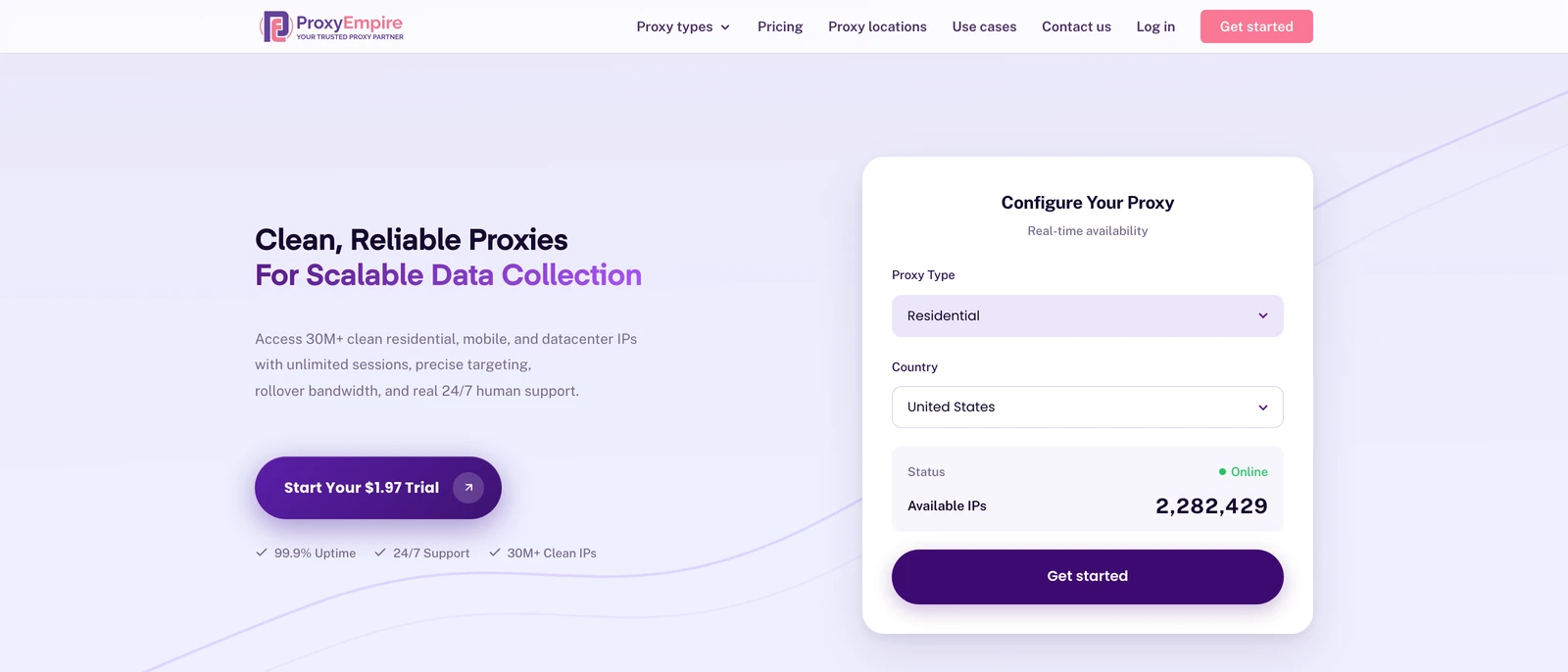
ProxyEmpire
Best overallProxyEmpire covers every common IPv4 proxy type from one account: 30M+ rotating residential IPs in 179 countries and territories, 4M+ mobile IPs in 174 countries, ISP proxies in 24 countries and rotating datacenter IPs in 62. Its exit IPs are mostly IPv4, with some IPv6. Residential and mobile traffic can be targeted by country, region, city, ZIP, ISP, ASN and OS fingerprint at no extra cost, and unused bandwidth rolls over.
- Residential, mobile, ISP and datacenter IPv4 on one login, with HTTP, HTTPS and SOCKS5
- 99.9% uptime and 24/7 support from real people
- No cheap dedicated datacenter IPv4 by the IP (its datacenter proxies rotate, per GB), and no dedicated IPv6 product
Proxy-Seller
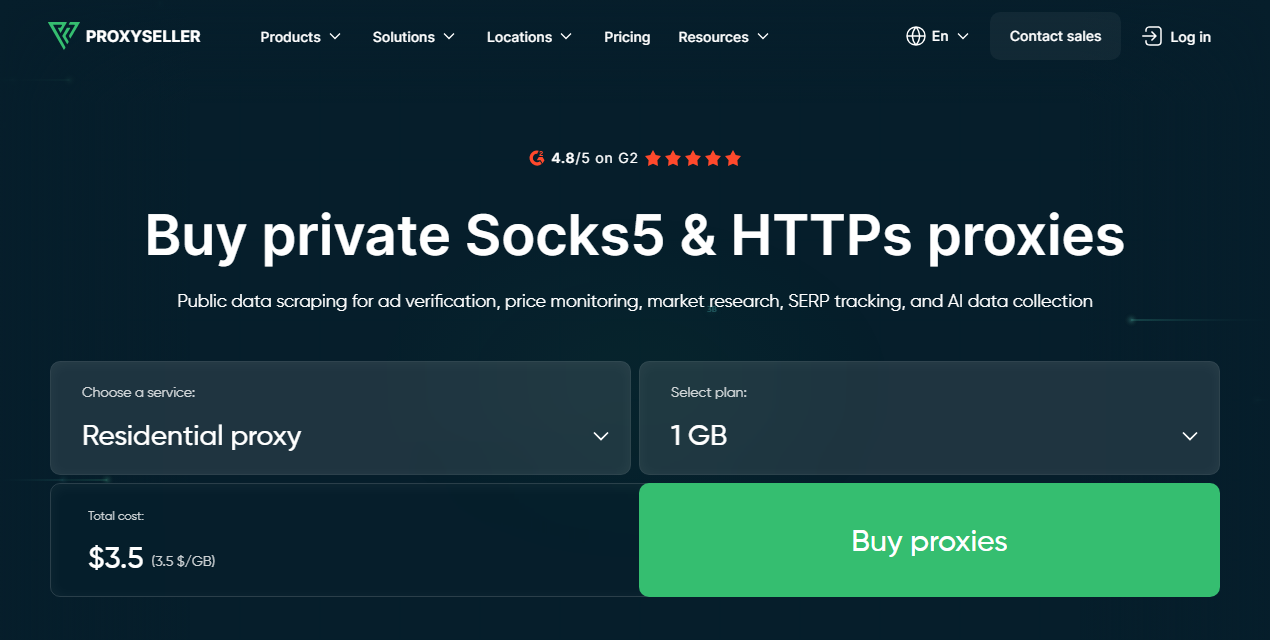
Private IPv4 by the IPProxy-Seller is built around private IPv4 rentals: a dedicated US datacenter IPv4 address costs $1.80 for a month and $1.17 each at 500, with unlimited bandwidth. It also rents IPv6 in bulk and sells residential traffic.
- Each private IPv4 is yours alone, with HTTP, HTTPS and SOCKS5
- IPv4, IPv6, ISP, residential and mobile from one provider
- The calculator opens on one-week rentals, and residential traffic expires after 30 days
Decodo (formerly Smartproxy)
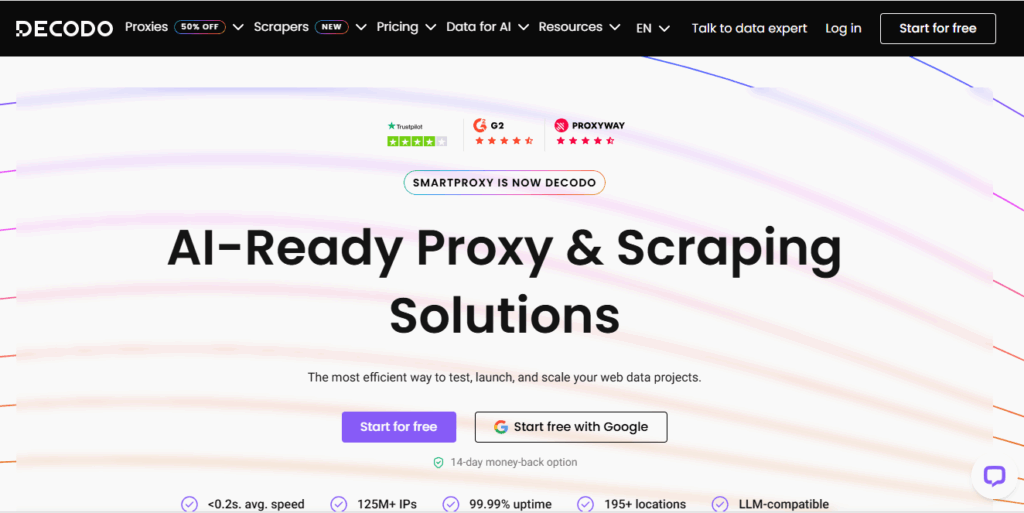
Dedicated IPv4 at volumeDecodo sells dedicated datacenter IPs from three for $5.55 a month down to $1.15 each at 2,000, the lowest volume rate here, next to 115M+ residential IPs it lists in 195+ locations.
- Sticky sessions up to 24 hours on residential
- A 14-day money-back guarantee on the first purchase
- Dedicated IPs only in the US, UK, Germany and Japan, and city, state or ZIP targeting can’t be combined with ASN
Byteful
Private IPs, no minimumByteful, formerly Ping Proxies, rents private datacenter IPs from $2.50 for a single IP down to $1.40 each at 1,000, and lists 35M+ residential IPs with bandwidth that never expires.
- No minimum on datacenter IPs, with unlimited concurrent sessions
- Residential, mobile, static residential and datacenter from one provider
- Static residential needs at least 10 IPs, and the smallest residential plan is 10 GB
ResiProx
Residential IPv4 on a budgetResiProx sells rotating residential and mobile traffic at low prices, with country, region, city and ISP targeting on every plan and unused traffic that rolls over.
- HTTPS and SOCKS5, paid by card, PayPal or crypto
- One trial covers both residential and mobile proxies
- Rotating proxies only — no static, ISP or datacenter IPs
NodeMaven
Quality-filtered IPsNodeMaven lists 30M+ residential and 295K mobile IPs and screens each IP for quality before assigning it. Its plans currently show 20% off, at $4.25 falling to $2.20/GB, and its ISP proxies start at $2.99 a month with unlimited traffic.
- Sticky sessions up to 24 hours, and unused traffic rolls over
- Also lists a separate IPv6 proxy product
- No datacenter proxies, and no 1 GB plan

Oxylabs
Enterprise scrapingOxylabs lists 175M+ residential IPs in 195+ countries and sells dedicated datacenter IPs from $2.25 down to $1.20 each at 1,000, plus dedicated ISP IPs from $3.20.
- Targeting down to ZIP and coordinates on residential
- A dedicated account manager and scraper APIs
- No residential pay as you go: the smallest plan is 5 GB for $30, and dedicated ISP IPs start at five
Bright Data
Largest listed networkBright Data calls itself the largest IPv4 proxy network, lists 400M+ monthly residential IPs and also sells residential IPv6. Residential traffic is currently half price: $4.00/GB, falling to $2.50/GB on the 798 GB plan.
- ZIP, ASN and carrier targeting on a very large network
- It currently matches your first deposit up to $500
- Strict KYC for new users, and monthly plans do not roll over
MarsProxies
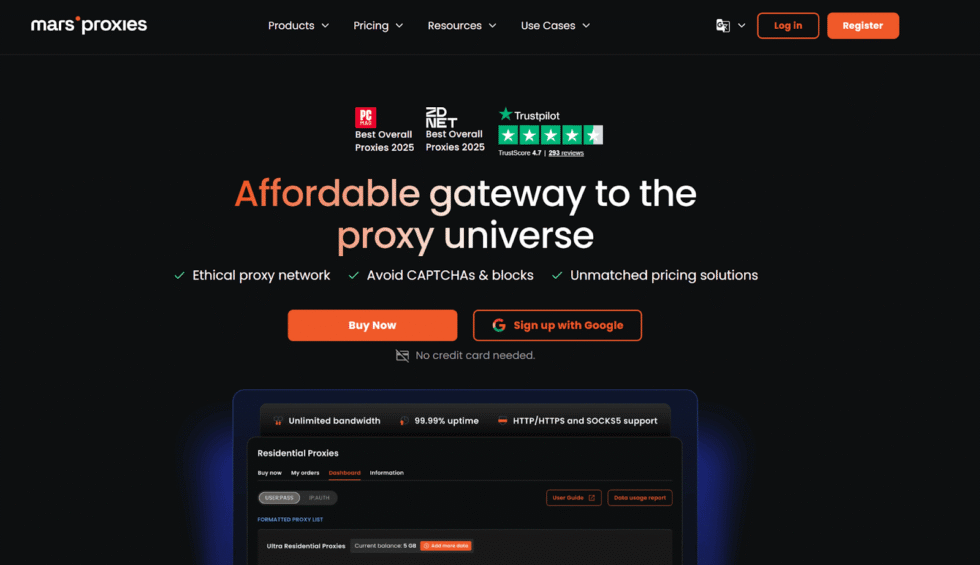
Small private ordersMarsProxies rents dedicated datacenter IPs one at a time: $1.99 for one, $1.45 each at 100 and $1.19 at 1,000, all with unlimited traffic. ISP IPs cost $2.99 falling to $2.09.
- No minimum order, with discounts from two IPs
- Residential traffic that does not expire
- No free trial, and it lists 1M+ residential IPs, a small pool figure

IPRoyal
Long sticky sessionsIPRoyal sells private IPv4 datacenter proxies from $1.57 each for 30 days, ISP proxies from $2.70, and residential traffic that never expires, with sticky sessions of up to 7 days.
- State and city targeting on datacenter IPs
- Also sells rotating residential IPv6 as a separate product
- The highest residential entry price here, and its IPv4 headline price needs a longer rental
Webshare
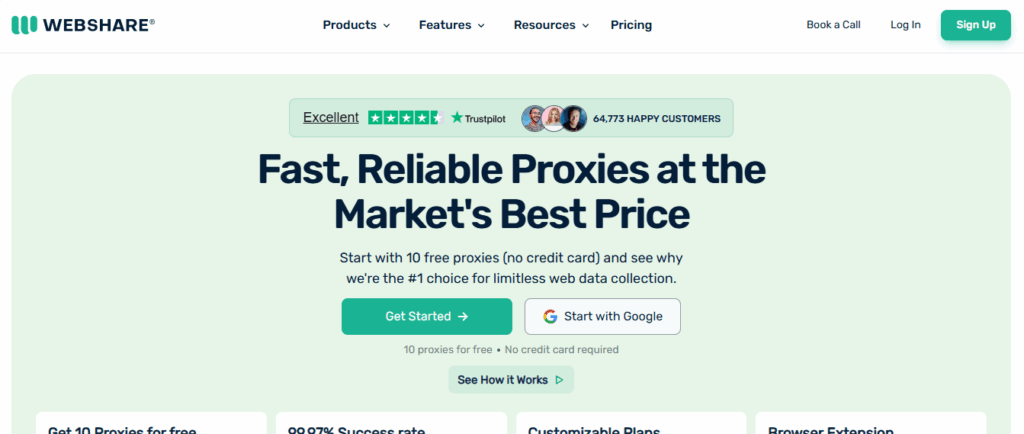
Cheapest shared IPv4 listsWebshare sells datacenter proxy lists by volume: 100 proxies for $2.99 a month, about three cents each. Dedicated ISP IPs cost $3.70 falling to $1.80, and residential runs $3.50 to $1.50/GB.
- The lowest cost per IP, with a free plan
- Self-serve plans in 50+ countries
- The cheapest IPs are shared with a 250 GB cap, and residential bandwidth does not roll over
Rayobyte (formerly Blazing SEO)
Lowest per-GB rate at 1 TBRayobyte’s residential price falls from $3.50/GB to $0.70/GB from 1 TB, and it rents dedicated datacenter IPs from $2.50 down to $1.88 each, or semi-dedicated IPs from $1.00.
- Static datacenter IPs come with unlimited bandwidth
- Longer terms cut static prices by 5–15%
- Static plans start at five IPs, and ISP IPs cost more than anywhere else here
Infatica
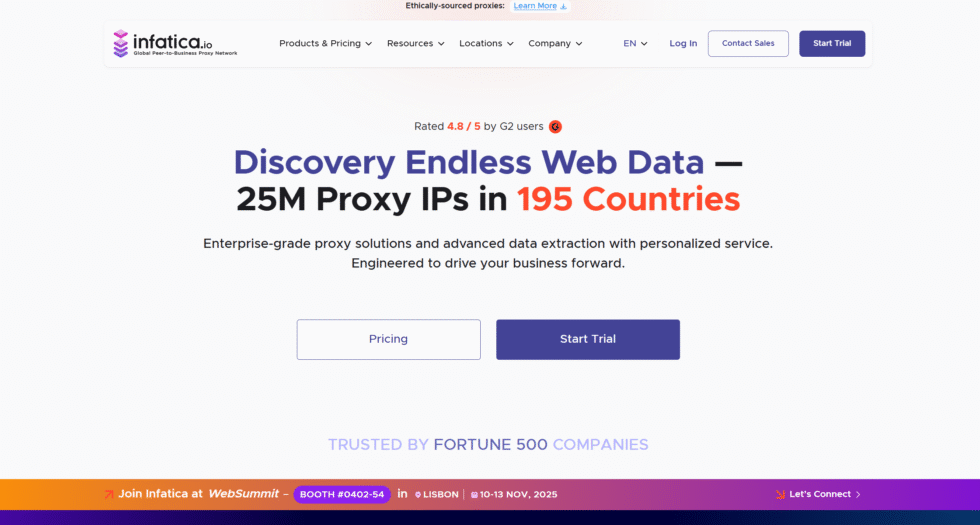
Low-cost fixed IPsInfatica lists dedicated datacenter IPs at $1.00 to $1.50 a month and static ISP IPs from $1.95, beside 45M+ residential IPs and a separate IPv6 product.
- Login or IP-whitelist access, with unlimited traffic on dedicated IPs
- Annual billing brings residential down to $2.08/GB
- Per-IP prices are shown only as ranges or “from” figures, not a full volume ladder
IPv4 vs IPv6 proxies
Why most buyers still want IPv4Chapters and transcript
- 0:00 Intro
- 0:15 Two versions of IP
- 0:40 How much bigger is IPv6?
- 1:00 Why IPv4 ran out
- 1:21 Other differences
- 1:42 Why we still run both
- 2:04 How to check yours
- 2:23 What it means for proxies
- 2:45 Which one ProxyEmpire uses
- 3:06 Try it yourself
Intro. Every device on the internet needs an IP address, and there are two kinds: IPv4 and IPv6. In this video you'll see how they differ, why IPv4 ran out, why the internet still runs both, how to check yours, and what it all means for proxies.
Two versions of IP. The Internet Protocol gives every device an address and moves packets between them. IPv4 is the original, from 1981. Its addresses are 32 bits long, written as four numbers separated by dots. IPv6 is its successor. Its addresses are 128 bits long, written as eight groups of hexadecimal digits separated by colons, with a double colon to shorten runs of zeros.
How much bigger is IPv6? That difference is enormous. IPv4 has about 4.3 billion addresses. IPv6 has about 340 undecillion. To put that in perspective, a single ordinary IPv6 subnet, a slash 64, holds more than four billion times as many addresses as the entire IPv4 internet.
Why IPv4 ran out. The last free IPv4 blocks were handed out in 2011. Since then, IPv4 addresses mostly change hands through transfers, and networks stretch what's left with NAT: many devices, or with carrier-grade NAT many customers, share one public address. IPv6 removes the need for that: there are enough addresses for every device to have its own.
Other differences. There are smaller differences too. The IPv6 header is a fixed 40 bytes, and drops the checksum that IPv4 routers recompute at every hop. IPv6 devices can configure their own addresses, and routers no longer fragment packets along the way. But the most important fact is this: the two protocols can't talk to each other directly.
Why we still run both. So networks run both side by side, called dual-stack, or translate between them. Google measured about 46 percent of its users reaching it over IPv6 in September 2026. The other half still relies on IPv4, and so do many large websites: GitHub, eBay and Reddit still had no IPv6 address in October 2026.
How to check yours. To check your own connection, use curl with the dash 4 and dash 6 flags against an IP echo service. The first shows the IPv4 address websites see; the second shows your IPv6 address, or fails if you have none. And a website is only reachable over IPv6 if it publishes an AAAA record.
What it means for proxies. For proxies, the question is the exit: the address the website sees. IPv6 proxies offer huge address blocks cheaply, but they can't reach IPv4-only sites, and sites often group IPv6 visitors by their slash 64, so a million addresses from one block can count as one visitor. IPv4 exits work on every public website.
Which one ProxyEmpire uses. ProxyEmpire's exit IPs are mostly IPv4, with some IPv6, and there's no separate IPv6 product. If your project needs huge IPv6 ranges, a provider that sells IPv6 blocks is the better fit. If your proxy has to work on every site, residential and mobile IPs with IPv4 exits are the safer choice.
Try it yourself. To try residential and mobile IPs, ProxyEmpire's $1.97 trial includes 100 megabytes of residential and 50 megabytes of mobile data, and it doesn't expire. The full IPv4 versus IPv6 guide is linked in the description. Thanks for watching.
IPv4 has about 4.3 billion addresses, and they ran out years ago, so most IPv4 addresses already have an owner and a usage history. IPv6 has so many addresses that a provider can hand out huge blocks for cents. That is why IPv6 proxies are cheap, and why many sites still don’t accept them or treat a whole IPv6 range as one visitor.
| IPv4 proxies | IPv6 proxies | |
|---|---|---|
| Address | 203.0.113.7 | 2001:db8::7 |
| Website support | Almost universal | Only sites that accept IPv6 |
| Price | $1–$5 per private IP, or per GB | Often cents per IP |
| Best for | Any site, accounts, scraping | Large IPv6-ready targets on a budget |
If you are not sure the target accepts IPv6, buy IPv4. Our IPv4 vs IPv6 guide explains the protocols in more depth.
Types of IPv4 proxies
Same address format, different sources| Type | Where the IP comes from | Priced by | Best for |
|---|---|---|---|
| Residential | Home broadband connections | GB | Scraping, prices, SEO, ads |
| Mobile | 4G and 5G carriers | GB or device | Social apps and the strictest sites |
| ISP (static residential) | ISP-registered IPs that stay fixed | IP a month | Accounts that need one fixed IP |
| Datacenter | Hosting companies | IP a month or GB | Fast bulk jobs on lenient sites |
Residential and mobile IPv4 are hardest to block, because many real people share those ranges. ProxyEmpire sells all four: rotating mobile proxies from $4.50 falling to $2.00/GB, ISP proxies from $3.50 to $2.00 per IP a month, and rotating datacenter proxies from $25 for 40 GB.
How to buy the right IPv4 proxy
Private, shared or rotating- Private or shared? A private (dedicated) IPv4 proxy is used only by you. Shared IPv4 lists cost pennies, but other customers may already have burned the IPs on your target.
- Fixed or rotating? Logins and allow-lists need a fixed IP; scraping many pages works better with a rotating pool.
- Datacenter or residential? Cheap datacenter IPv4 is fine for public pages and APIs. Marketplaces and social networks often block hosting ranges, so use residential, mobile or ISP IPs there.
- Compare monthly prices. Some calculators open on one-week rentals, which makes a private IPv4 look half the price.
- Test first. ProxyEmpire’s $1.97 trial covers residential and mobile, and its datacenter proxies start at a single GB for $2.
For the cheapest fixed IPs, see our guide to the best cheap private proxies, and for server IPs, the best datacenter proxy providers.
Free IPv4 proxies: are they worth it?
Why we publish no listFree IPv4 proxy lists are public servers that thousands of people share. They are slow, usually blocked on the sites you care about and gone within hours, and you cannot know who runs them or what they log. That is why we don’t publish one. For a free start with your own login, Webshare gives 10 free proxies and Oxylabs five free datacenter IPs; paid trials start at $1.97. Whatever you use, the target site’s terms and local laws still apply.
IPv4 proxy FAQ
Short answersWhat is the best IPv4 proxy provider?
ProxyEmpire, in our 2026 comparison: residential, mobile, ISP and datacenter IPs on one account, 30M+ residential IPs from $3.50 down to $1.50/GB, and a $1.97 trial.
What is an IPv4 proxy?
A proxy server whose exit address is an IPv4 address. Websites see that IP instead of yours, and because IPv4 is supported almost everywhere, it works on nearly any site.
Are ProxyEmpire’s proxies IPv4 or IPv6?
Mostly IPv4, with some IPv6. ProxyEmpire does not sell a separate IPv6 proxy product.
What are the cheapest IPv4 proxies?
Webshare’s shared datacenter proxies cost about three cents each a month. For a private IPv4, Proxy-Seller charges $1.80 a month for a US IP, and Decodo $1.15 each at 2,000 IPs.
What is a private IPv4 proxy?
An IPv4 address rented to you alone, usually by the month. Nobody else sends traffic through it, so its reputation depends only on how you use it.
Are there residential IPv4 proxies?
Yes. Residential IPv4 proxies route your traffic through home connections, and Bright Data, IPRoyal and ProxyEmpire all sell them. ProxyEmpire’s residential and mobile exit IPs are mostly IPv4, with some IPv6, across 30M+ residential and 4M+ mobile IPs.
Are IPv4 proxies better than IPv6 proxies?
For compatibility, yes: nearly every site accepts IPv4. IPv6 proxies cost less per IP but only work on sites that support IPv6.
Do IPv4 proxies support SOCKS5?
Most do. ProxyEmpire supports HTTP, HTTPS and SOCKS5 on every proxy type, and so do Proxy-Seller, MarsProxies and IPRoyal.
Can I buy a single IPv4 proxy?
Yes. Proxy-Seller, MarsProxies and Byteful rent one datacenter IP, and ProxyEmpire’s ISP proxies start at one IP for $3.50 a month.
Does ProxyEmpire sell dedicated datacenter IPv4?
No. Its datacenter proxies rotate and are billed per GB, from $0.625 down to $0.35/GB at 5 TB. For a fixed IP, use its ISP proxies.
IPv4 residential, mobile and ISP proxies in one account
30M+ residential IPs from $3.50/GB down to $1.50/GB, 4M+ mobile IPs, ISP proxies from $2.00 per IP a month, HTTP, HTTPS and SOCKS5, and 24/7 support from real people. Try ProxyEmpire for $1.97.