Korean proxies are essential tools for privacy, accessing geo-restricted content, and optimizing business operations like web scraping or ad verification. For those targeting South Korea or requiring South Korean IPs, selecting the right proxy service can make all the difference. Here’s a detailed guide to the top 15 Korean proxy services in 2026, tailored for various use cases and budgets.
🇰🇷 Start your $1.97 Trial 🇰🇷
Learn more about ProxyEmpire’s South Korea Residential Proxies
What to Look for in a Korean Proxy Service?
Before diving into the list, let’s outline key factors to consider when choosing a proxy provider:
- IP Pool Size: A larger pool ensures better anonymity and fewer chances of IP bans.
- Targeting Options: Country, city, or ISP-level targeting is crucial for precise operations.
- Connection Speed: Faster proxies reduce latency and improve efficiency.
- Reliability: High uptime (over 99%) ensures uninterrupted service.
- Pricing: Flexible plans that suit your usage needs without hidden fees.
Top Korean Proxy Services
1. 🏆 ProxyEmpire 🏆 – Best 🇰🇷South Korea Proxy Providers for 2026 🇰🇷
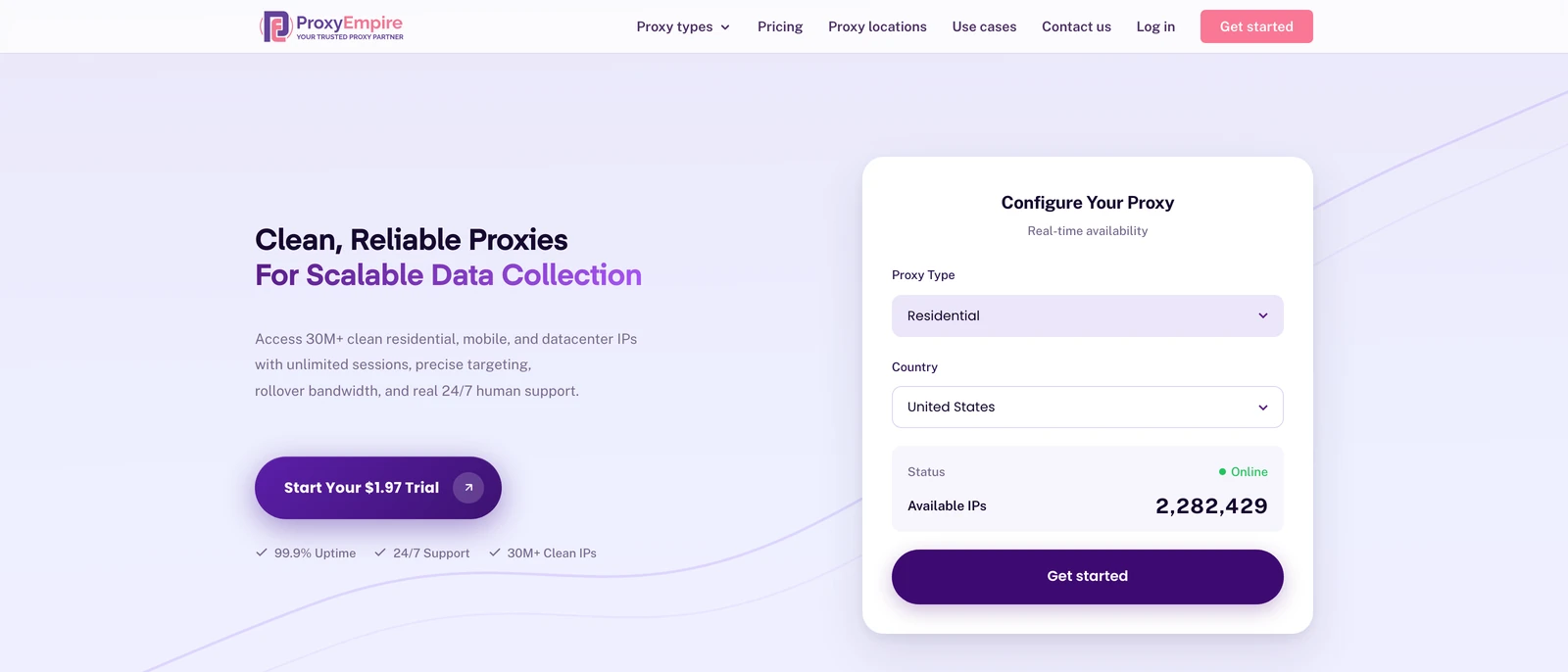
ProxyEmpire is a premium proxy service provider designed to empower web scraping, data collection, and unrestricted internet access through a vast network of ethically sourced residential, mobile, and datacenter proxies. Below is a detailed description based on the provided information:
Overview of ProxyEmpire
ProxyEmpire offers a comprehensive suite of proxy solutions tailored for individuals, businesses, and developers seeking reliable, high-performance tools for data gathering and privacy protection. With over 30 million clean IP addresses spanning 170+ countries, ProxyEmpire provides unparalleled global coverage, ensuring users can access content at scale with a 99.9% uptime and lightning-fast response times (as low as 0.6 seconds).
Proxy Types and Features:
🏘️ Rotating Residential Proxies
Key Benefits
- Global Reach: Access to over 30 million IPs worldwide, covering every major region, with precise targeting options (country, city, state, ASN/ISP).
- High Reliability: A 99.9% uptime ensures uninterrupted service, supported by patented technology for enhanced speed and security.
- Ethical Sourcing: Proxies are responsibly harvested, ensuring quality and compliance.
- Versatile Use Cases: Supports web scraping, price monitoring, sneaker copping, SEO tracking, ad verification, and more.
- Integration-Friendly: Compatible with standard proxy protocols (HTTP, SOCKS5) and third-party tools like Multilogin, Dolphin Anty, Kameleo, Octobrowser, and Gologin.
- No Hidden Fees: Transparent pricing with all features included, starting at a $1.97 trial.
Use case:
2. Oxylabs

Oxylabs stands out among providers for businesses that demand premium proxy solutions equipped with robust capabilities for South Korean connections. The service relies on an advanced infrastructure built to manage complex data collection projects with consistent ease and efficiency. Users gain access to a broad selection of residential and mobile proxies that deliver dependable performance during interactions with Korean online content and platforms. Its enterprise focused features enable smooth integration with a variety of professional tools, which suits teams concentrated on market analysis and large scale web data projects. The platform places strong emphasis on reliability and speed, allowing professionals to reach their objectives without facing avoidable complications. Many users highlight the superior quality of the service and the support that comes with it, which makes Oxylabs well suited for operations involving high volume requirements in the Korean digital environment.
- Key Features:
- 99.95% uptime.
- Advanced ISP targeting.
- Best For: Enterprise-level data scraping and market research.
3. ResiProx
ResiProx provides practical proxy options tailored to users who require stable and effective connections from South Korea for diverse online tasks. The service supplies both residential and mobile proxies that incorporate rotation to help sustain access throughout extended sessions. Support for common protocols such as HTTPS and SOCKS5 ensures smooth compatibility with different applications and automation setups. This makes ResiProx a dependable selection for data gathering efforts and account management inside Korean online environments. The straightforward design appeals to professionals seeking reliable performance without overly complicated configurations. It supports activities like web scraping and automation where maintaining productive connections plays a key role. Many appreciate the versatility that allows efficient operations across multiple Korean platforms and services.
- Key Features:
- Rotating residential and mobile proxies for dynamic IP management and sustained access
- Support for HTTPS and SOCKS5 protocols ensuring compatibility with various applications
- Best For: Data gathering, web scraping, and automation in Korean digital environments
4. SmartProxy

SmartProxy earns recognition for its accessible and budget conscious proxy services that suit smaller teams and startups in need of South Korean IP addresses. The rotating residential proxies supply dynamic options that support numerous online activities. A user friendly dashboard simplifies management, enabling quick setup and ongoing monitoring of connections. This provider often gets chosen for tasks such as social media management and monitoring local search results in Korea. The pay as you go structure delivers flexibility for those with fluctuating usage levels. Many find that the combination of ease of use and dependable performance creates an attractive package for growing businesses exploring opportunities in the Korean market. The service focuses on simplicity while still delivering solid outcomes for everyday proxy requirements.
- Key Features:
- Rotating residential proxies with dynamic IPs.
- User-friendly dashboard.
- Best For: Social media management and localized SEO.
5. SOAX

SOAX supplies flexible proxy management tools that assist users in maintaining effective connections through South Korean addresses. With choices for both rotating and static IP addresses, the service adapts well to varying session requirements. An intuitive dashboard allows easy control and adjustments to proxy sessions as needed. Users involved in ad verification and optimization of gaming experiences frequently select SOAX due to its practical features. The detailed controls permit fine tuning for specific tasks involving Korean content. This provider distinguishes itself through a balance of performance and usability that supports a wide range of applications from data collection to entertainment related activities. Many professionals value the straightforward experience it delivers when working with Korean online resources.
- Key Features:
- Granular geo-targeting options.
- Rotating and static IPs.
- Best For: Ad verification and gaming optimization.
6. IPRoyal

IPRoyal concentrates on responsible practices when delivering proxy services, including reliable options for South Korean connections. The service offers both static and rotating proxies that prioritize quality and consistency. With a commitment to ethical approaches, it attracts users who value sustainable and trustworthy solutions. High reliability makes it suitable for market analysis and accessing content that requires local Korean presence. The platform supports various use cases where stable connections prove essential. Users often note the dependable nature of the service for ongoing projects. IPRoyal positions itself as a responsible participant in the proxy industry, helping clients achieve their objectives with confidence in the Korean digital landscape.
- Key Features:
- Static and rotating proxy options.
- Uptime of 99.9%.
- Best For: Market analysis and content access.
7. NetNut

NetNut connects users directly to internet service providers to offer high speed proxy experiences for South Korean activities. The service provides consistent connections that minimize delays during data operations. Both static and rotating options are available to match different project demands. Many e commerce professionals rely on NetNut for price monitoring and stable scraping tasks involving Korean sites. The focus on direct connections helps ensure smooth performance without common interruptions. This approach benefits users who need reliable access over extended periods. The platform has gained recognition for delivering efficient solutions tailored to demanding online environments in South Korea.
- Key Features:
- Consistent static proxies.
- High-speed connections.
- Best For: E-commerce price monitoring and stable scraping tasks.
8. Bright Data

Bright Data maintains an extensive global presence with strong offerings for users needing South Korean proxy access. The service provides customizable solutions that fit businesses of various sizes and requirements. Comprehensive tools and API integrations support large scale data collection initiatives. Professionals involved in ambitious projects appreciate the flexibility and power of the platform. Bright Data is known for its broad capabilities that extend across multiple proxy types. The service helps organizations streamline their operations when dealing with Korean online data sources. Many enterprises choose it for the depth of features that facilitate complex workflows and detailed analysis.
- Key Features:
- Comprehensive API integration.
- Flexible pricing tiers.
- Best For: Large-scale data collection projects.
9. StormProxies

StormProxies serves as an affordable entry point for those exploring proxy use with South Korean IPs. The service features simple setup processes that allow beginners to start quickly. Rotating residential proxies provide the dynamic access needed for basic scraping and testing activities. Users with small scale projects often find it meets their initial requirements without high costs. The straightforward design makes it approachable for individuals new to proxy services. StormProxies supports fundamental needs in the Korean online space effectively. Many appreciate the balance of cost and functionality it offers for starting out or handling lighter workloads.
- Key Features:
- Simple setup process.
- Rotating residential proxies.
- Best For: Beginners and small-scale projects.
10. Webshare
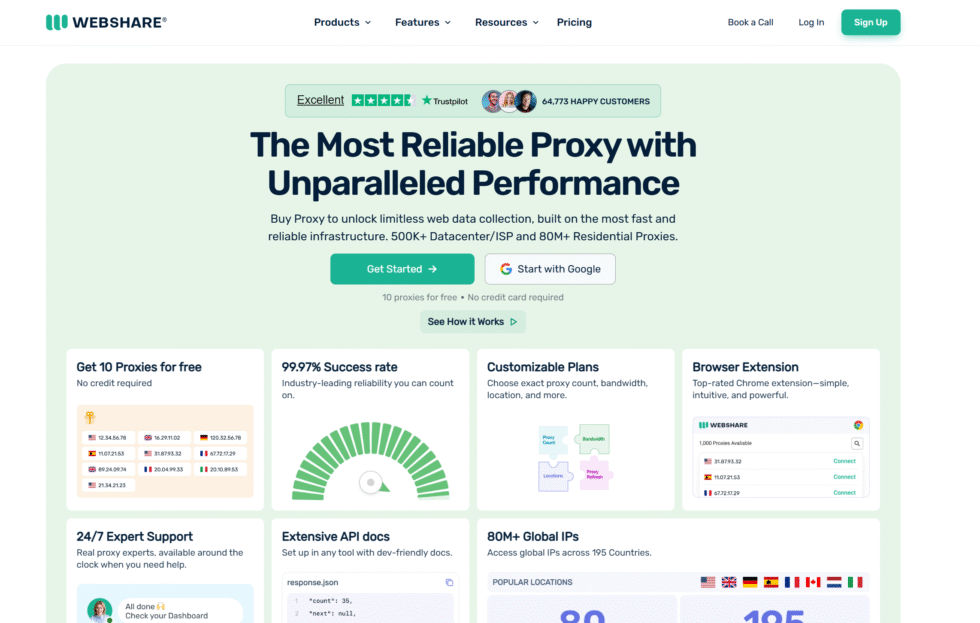
Webshare delivers fast and secure proxy connections for users seeking South Korean IP addresses. The service supports both residential and datacenter options along with flexible usage configurations. It proves effective for web scraping, social media activities, and bypassing certain restrictions. Scalable features allow handling of multiple simultaneous operations smoothly. Users benefit from the reliable performance that supports high volume tasks. Webshare emphasizes stability and ease of configuration for optimal results. The provider stands out for its practical approach to meeting diverse needs in the Korean proxy market while maintaining solid speed and consistency. With a vast global network of IP addresses, it handles large scale automation and data collection across broad international coverage, including strong options for South Korean connections.
- Key features: Residential and datacenter proxies, country-level targeting, HTTP and SOCKS5 protocol support, rotating and dedicated options for flexible usage.
- Accurate data and information: High uptime ensuring consistent availability, low latency for quick responses, customizable concurrency supporting 500-3000 threads simultaneously.
- Market insights: Total proxy pool exceeding 80 million IPs globally, ideal for large-scale automation and data collection with broad international coverage.
11. Rayobyte
Rayobyte prioritizes ethical sourcing and authenticity in its South Korean proxy offerings. The service features residential and mobile proxies that support stealthy data access and secure browsing across applications. High success rates make it suitable for competitive intelligence gathering and automation projects. The wide distribution of IPs enhances overall reliability for users in sectors like e commerce and healthcare research. Rayobyte focuses on quality connections that resist detection during intensive operations. Many clients value the emphasis on compliance and performance. The provider delivers robust solutions for those who require dependable and unblockable access within the South Korean online ecosystem.
- Key features: Residential and mobile proxies, ethically sourced authentic IPs, real mobile IPs from South Korean networks with nationwide dispersion.
- Accurate data and information: 99.99% success rates in Korea, capable of handling over 5 million requests daily with consistent performance.
- Market insights: Extensive pool for South Korea, supporting stealthy data scraping in critical sectors like healthcare and e-commerce with high-quality, verifiable IPs.
12. ProxyWing
ProxyWing headquartered in Middletown Delaware in the United States delivers a comprehensive selection of proxy solutions suited for operations that require South Korean IP addresses. The service offers rotating residential proxies in major hubs such as Seoul and Busan along with mobile proxies sourced from prominent local carriers and ISP static proxies registered with key networks. Datacenter options are also available in the same primary locations providing users with choices that match different speed and authenticity needs. This range supports activities like accessing local streaming platforms managing accounts on popular Korean sites conducting data collection for e commerce insights and performing ad checks as experienced by local audiences. The infrastructure emphasizes stable connections and reduced latency making it practical for sustained sessions in competitive Korean online environments. Professionals value the versatility that allows seamless switching between proxy types depending on the task at hand while maintaining effective performance across various applications. The platform integrates well with standard tools and provides support for multi account setups and real time monitoring.
- Key features: Rotating residential proxies mobile proxies from major carriers ISP static proxies datacenter options compatibility with common protocols flexible IP rotation for sessions.
- Accurate data and information: Extensive coverage across South Korean locations with strong carrier integration many users rely on the service for reliable access to local platforms and data operations high levels of stability and speed reported in demanding tasks within the Korean market.
13. ProxyRack
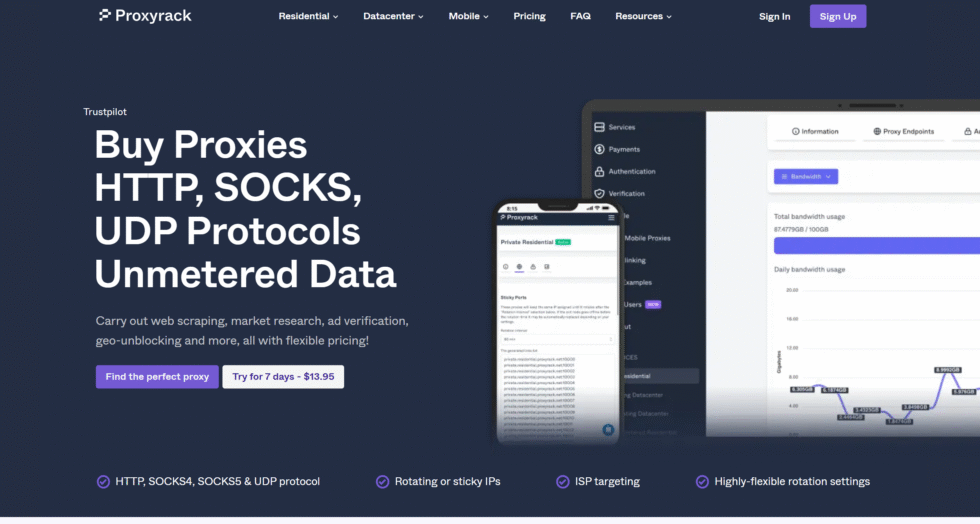
ProxyRack based in the United States offers versatile proxy services that include options for South Korean connections through its broad residential datacenter and mobile networks. The provider supports multiple protocols such as HTTP SOCKS5 and UDP enabling compatibility with a wide array of applications and automation setups. Users can select rotating or sticky session configurations to suit ongoing projects or specific requirements when working with Korean websites and services. This flexibility makes ProxyRack suitable for web scraping data collection account management and accessing region specific content without unnecessary interruptions. The dashboard provides transparent reporting and quick setup processes that appeal to developers and businesses handling projects in the South Korean digital space. Many professionals appreciate the ethical focus and consistent performance that helps sustain operations across diverse use cases. The service maintains a reputation for handling intensive workloads effectively in Asian markets including South Korea.
- Key features: Residential datacenter and mobile proxy types support for HTTP SOCKS5 and UDP protocols rotating and sticky session management geo specific targeting options integration with scraping tools.
- Accurate data and information: Wide network reach including South Korea with flexible targeting many businesses use it for large scale data projects strong emphasis on reliability and protocol versatility across various operational needs.
14. Byteful
Byteful has positioned itself as a trusted proxy server provider for data driven businesses seeking effective solutions for South Korean connections. The service features datacenter, static residential ISP, and residential proxies that leverage local infrastructure for smooth performance. A user friendly dashboard simplifies management of IP rotation and session control while supporting integration with popular Korean platforms such as e commerce sites and social networks. The offerings emphasize authenticity for traffic that appears genuinely local. While the platform delivers solid speed and legitimacy across standard operations, users with extremely high volume needs sometimes find additional monitoring helpful to maintain peak efficiency. Byteful stands out for its practical balance that supports market research and data gathering efforts in South Korea.
- Key features: Datacenter proxies, static residential proxies, residential proxies, user friendly dashboard, support for major Korean platforms, HTTP and SOCKS5 compatibility.
- Accurate data and information: The service emphasizes stable connections and ethical practices, making it suitable for market research and data gathering in South Korea.
15. DataImpulse
DataImpulse specializes in custom proxy services designed to simplify data collection and fast connections for businesses targeting South Korean online resources. The provider offers residential, mobile, datacenter, and premium residential proxies with flexible rotation and session options that adapt to various project demands. An intuitive dashboard provides clear controls for settings and usage tracking while tutorials support integration with automation tools and browsers. The service focuses on ethically sourced IPs to ensure reliable access to local content. Although it performs consistently for many standard and advanced tasks, teams handling highly specialized workflows may require some initial setup time to fully optimize results. DataImpulse appeals to organizations looking for versatile solutions that facilitate informed decision making through Korean market insights.
- Key features: Residential proxies, mobile proxies, datacenter proxies, rotating and sticky sessions, country and city targeting options, HTTP and SOCKS5 support.
- Accurate data and information: The platform is trusted by many customers for web scraping, testing, automation, and brand protection activities involving South Korean sources.
16. Yilu
Yilu delivers residential proxy services through SOCKS5 protocol with dynamic and static options tailored for South Korean connections. The platform features rotating proxies and dedicated IPs that support country and city targeting for precise operations. Desktop client support along with compatibility for multiple devices enhances usability across different setups. The service prioritizes high anonymity and stable performance suitable for data scraping, SEO monitoring, and social media management in Korea. While it offers effective tools for bypassing restrictions and gathering information, users with very complex global setups sometimes adjust configurations for seamless multi region use. Yilu has built recognition for its quality proxies and professional technical support that aids in maintaining consistent access to Korean online environments.
- Key features: Dynamic residential proxies, static dedicated proxies, rotating datacenter IPs, sticky sessions, country and city targeting, HTTP and SOCKS5 support.
- Accurate data and information: The provider is known for clean IPs and reliable connections that support price monitoring, e commerce research, and brand protection tasks in South Korea.
17. Infatica
Infatica provides residential proxy services that include access to South Korean IP addresses for users engaged in various online activities. Headquartered in Singapore, the company has developed a network focused on ethical sourcing of proxies from real devices. It supports a range of proxy types including residential and mobile options, allowing for flexible use in data collection and content access tasks. The platform offers customizable selections for specific countries, regions, cities, and ISPs, which helps users tailor their connections to particular needs in the South Korean market. Many professionals use the service for web scraping and market research, appreciating the intuitive dashboard that simplifies session management and monitoring. Some users with specialized workflows note that initial setup may take additional time to optimize for peak performance in demanding environments.
- Key features: Residential and mobile proxy types, customizable location and ISP selections, user friendly dashboard for connection management, compatibility with standard protocols and automation tools.
- Accurate data and information: Many users report consistent and reliable performance for data gathering tasks involving South Korean sources. Some highlight strong results in ad verification and localized content access. The network provides broad coverage across South Korean locations with connections that support sustained operations for business projects.
18. NodeMaven
NodeMaven delivers high quality residential and mobile proxy services with dedicated options for South Korean connections in cities such as Seoul, Busan, and Incheon. Founded in Estonia, the provider emphasizes IP quality and offers tools for precise session control including sticky sessions. The service supports automation and account workflows with clean IP filtering. Users can access real South Korean residential and mobile addresses for tasks requiring local presence. The infrastructure is designed for reliability in data operations and area specific activities. Many appreciate the dashboard and targeting options for city and ISP level control. Some teams handling complex multi location projects find the setup straightforward after initial configuration.
- Key features: Residential, mobile, and ISP proxy types, sticky and rotating session options, real time clean IP filtering, support for major South Korean cities, compatibility with popular automation and browser tools.
- Accurate data and information: Many users report strong reliability for automation and account management tasks in South Korean digital environments. Some note effective performance in data collection and localized workflows. The service maintains a focus on quality IPs that support consistent results across various business applications.
19. LumiProxy
LumiProxy offers residential proxy services tailored for South Korean IP addresses, including native and rotating options that support large scale operations. The provider focuses on proxies shared by millions of real devices, positioning its network as an industry standard for accessing South Korean content and platforms. Users benefit from hassle free integration supported by developer friendly documentation and tutorials. The service enables scaling of web scraping projects and unlocking of websites without common restrictions. Many professionals value the straightforward setup process and the power of its residential connections for everyday and advanced tasks. Some users with very specific multi region requirements may adjust settings to achieve optimal results across broader campaigns.
- Key features: Residential and rotating proxy options, native South Korean IPs, support for city level selections, easy integration with tutorials, compatibility with common scraping and automation frameworks.
- Accurate data and information: Many users report effective scaling for web scraping and content access in South Korean markets. Some highlight reliable performance for projects that require authentic local connections. The network supports a wide range of activities with connections that maintain stability during extended sessions.
Why Use a Korean Proxy Service?
Using a reliable Korean proxy service can unlock several benefits:
- Access geo-restricted content like streaming platforms or local websites.
- Conduct market research by simulating local user behavior in South Korea.
- Scrape localized data without getting flagged as suspicious activity.
- Manage multiple social media accounts from different locations seamlessly.
How to Choose the Right Provider?
When selecting a proxy service, consider your specific needs:
- If you need high scalability for large-scale data scraping, go with providers like ProxyEmpire or Oxylabs.
- For budget-friendly options with moderate features, SmartProxy or StormProxies are ideal choices.
- If ethical sourcing is a priority, IPRoyal stands out as a responsible provider.
The right proxy service can significantly enhance your online operations by providing secure, reliable access to South Korean IPs. Whether you’re managing social media accounts or conducting advanced market research, there’s a provider on this list tailored to your needs.
🇰🇷 Start your $1.97 Trial 🇰🇷
Proxy Protocols Explained: HTTP vs SOCKS5
Proxy protocols serve as the foundation for how connections are managed in various online activities. HTTP proxies handle web traffic efficiently, making them suitable for tasks where only browser-based interactions are needed. Users turn to HTTP proxies in situations requiring straightforward request handling without additional overhead. On the other hand, SOCKS5 proxies support a wider range of applications, including those beyond simple web requests, by managing data at a lower level. This flexibility leads people to select SOCKS5 proxies when dealing with diverse protocols in their setups. Integrating these with rotating residential proxies allows for dynamic IP management during sessions that demand frequent changes to maintain performance. Similarly, static residential proxies pair well with protocols needing stable, unchanging connections over extended periods.
Integrating Proxies with Automation Tools
Automation tools streamline repetitive tasks, and proxies enhance their functionality by providing varied connection points. When setting up scripts for data collection, incorporating rotating mobile proxies ensures that the automation mimics natural patterns from different devices. Developers often choose dedicated mobile proxies in scenarios where exclusive access to a single IP is necessary for consistent tool performance.
For basic learning, the web scraping 101 resource outlines how proxies fit into automation frameworks. In account management contexts, social media proxies integrate seamlessly with tools designed for handling multiple profiles. Additionally, proxies for ad verification become integral when automation involves checking display elements across various sessions.
Top Korean Proxy Services Compared Side-by-Side in 2026
Different Korean proxy services stand out based on how well they handle specific tasks. Some focus on steady connections while others shine with frequent IP changes. The main types include rotating residential proxies that pull from real home connections across South Korea. These work especially well for tasks that need to appear completely natural. Static residential proxies provide the same IP for longer sessions when consistency matters most.
When comparing for Korean use, residential types often deliver better success rates on local sites. Rotating mobile proxies bring extra benefits in apps and platforms that check device behavior. Dedicated mobile proxies give exclusive access to one address. Rotating datacenter proxies deliver faster speeds but may not always blend in as well with strict Korean websites. Factors such as rotation intervals, protocol support and session control make big differences. Many users pick services that allow city level choices inside South Korea for more precise work. The best setups combine reliable uptime with easy integration into automation tools.
Our 2026 Testing Methodology for Ranking Korean Proxy Services
Teams that evaluate options for South Korean proxy needs focus on practical performance first. Many begin by looking at how rotating residential proxies manage frequent requests across local platforms without triggering restrictions.
The process starts with checking the range of available addresses and how precisely they can target specific cities or network providers inside South Korea. Next comes speed. Fast responses matter when users interact with time sensitive content or run automated scripts. Reliability follows closely. Connections that stay active for extended periods help avoid interruptions during important work.
Ethical sourcing ranks high on the list too. Clean addresses from real sources tend to blend in better and face fewer blocks over time. Session options also play a big role. Some tasks call for constant changes while others benefit from keeping the same address for hours.
Finally, compatibility with standard protocols and popular automation software determines how easily everything fits into existing workflows. Evaluators test these elements together because real projects rarely rely on just one factor. Clear criteria help separate strong choices from weaker ones when the goal involves steady access to Korean platforms and services.
Korean Proxy Pricing Comparison 2026
Pricing structures for Korean proxy services vary quite a bit. Some providers use a pay as you go model that charges based on data used. Others offer monthly packages with set limits or even unlimited bandwidth options. Services with rotating residential proxies sometimes include flexible data rollover. Static residential plans tend to focus on dedicated IPs with different price points based on duration. Mobile proxy pricing usually reflects the higher authenticity these connections provide. Businesses with lighter requirements often start with smaller packages. Those running larger scale activities look toward plans that lower the cost as volume increases. The choice depends on expected usage and project length.
Side-by-Side Comparison Table: Top Korean Proxy Services in 2026
People compare different proxy categories when they need access to South Korean platforms. Each type brings its own strengths depending on the job at hand.
| Proxy Category | Common Uses in South Korean Context | Session Style | Connection Characteristics | Authenticity Notes |
| Rotating Residential Proxies | Data collection from local sites and apps | Frequent rotation | Balanced speed and flexibility | High, drawn from home networks |
| Static Residential Proxies | Account management and steady sessions | Fixed address | Consistent performance | High, issued through local providers |
| Rotating Mobile Proxies | App testing and social media activities | Dynamic changes | Good on mobile networks | Very high, from carrier sources |
| Dedicated Mobile Proxies | Exclusive access for specific tools | Single dedicated | Strong and private | High, private mobile connection |
| Rotating Datacenter Proxies | High volume tasks where speed is key | Regular rotation | Fastest option | Lower, server based |
Rotating residential proxies work well when projects require natural looking traffic patterns during extended runs on Korean platforms. Static residential proxies suit situations that need one reliable address over many hours without interruption. Rotating mobile proxies add another layer of authenticity for platforms that check device signals closely. Dedicated mobile proxies give exclusive access when tools demand a single clean connection. Rotating datacenter proxies deliver quick responses for large scale operations that prioritize speed over maximum realism.
Latest News In 2026
The market for connections to South Korean online spaces keeps evolving. Infrastructure upgrades across Asia support smoother performance for many users. At the same time, the industry sees a stronger push toward responsible ways of obtaining addresses. These changes help reduce issues that sometimes arise with automated tasks. New developments in session management tools also make it easier to maintain steady operations. Teams working on data projects or multiple account setups notice the difference when tools integrate cleanly with their existing proxy setups. Overall, the focus remains on delivering consistent results for businesses active in the Korean digital environment.
FAQ
What Are Korean Proxy Services?
Korean proxy services act as intermediaries between users and the internet, routing requests through servers located in South Korea. This setup allows for interactions with online resources as if originating from within the country.
How Do Korean Proxies Work?
Korean proxies function by receiving user requests and forwarding them to the target website using a South Korean IP address. The response is then sent back through the proxy, maintaining the connection flow. This process involves protocols like HTTP or SOCKS5 for compatibility.
What Types of Korean Proxies Exist?
Several types of Korean proxies are available, including those sourced from real devices for everyday use and dedicated ones for consistent access. Mobile-based options offer connectivity through cellular networks, while datacenter variants provide high-speed alternatives.
What Benefits Do Korean Proxies Offer?
Using Korean proxies can enhance online activities by providing access to region-specific content and supporting tasks like market research. They help in managing multiple connections efficiently and ensure smoother browsing experiences.
How Can Korean Proxies Be Used for Web Scraping?
Korean proxies facilitate web scraping by allowing data collection from South Korean websites without direct exposure. They support tools that extract information from search engines or social platforms. An example includes using a scraping API for Naver to gather insights from Korea’s popular search engine.
Are Korean Proxies Secure for Online Activities?
Korean proxies contribute to security by masking the user’s original IP address, adding a layer of protection during internet sessions. Features like encryption protocols further safeguard data transmission.
What Is the Difference Between Residential and Datacenter Korean Proxies?
Residential Korean proxies come from actual household connections, offering authenticity, whereas datacenter ones are hosted on servers in data centers for faster performance. Each type suits different scenarios based on requirements.
How to Set Up a Korean Proxy?
Setting up a Korean proxy involves configuring the proxy details in your browser or application settings, entering the IP address and port provided. Some services offer extensions or apps for easier integration.
What Are Common Applications for Korean Proxies?
Common applications include accessing Korean social media, conducting competitive analysis, and testing website functionality from a local perspective. They are useful for developers and researchers handling region-focused projects.
Can Korean Proxies Support Multiple Devices?
Korean proxies can be configured to support multiple devices simultaneously, depending on the service’s capabilities. This allows for shared usage across computers, smartphones, or other gadgets.
What defines a Korean proxy service?
A Korean proxy service involves intermediaries that route internet traffic through servers associated with South Korea, facilitating connections that appear local to that area. These services come in various forms, including those using residential IPs sourced from real users or datacenter options from server farms. Providers typically offer features like IP rotation to switch addresses periodically, which helps in maintaining uninterrupted access during prolonged usage. Compatibility with different protocols ensures they work with a range of software and applications.
How do proxies function in online environments?
Proxies act as gateways between a user’s device and the internet, forwarding requests and responses while masking the original IP address. This process begins when a request is sent to the proxy server, which then communicates with the target site on behalf of the user. Responses travel back through the same path, allowing for added layers of anonymity. In practice, this setup supports tasks where multiple requests are made, as the proxy can distribute them across different IPs to avoid detection.
What distinguishes residential proxies from datacenter proxies?
Residential proxies utilize IPs assigned by internet service providers to actual households, making them appear as genuine user connections. People opt for residential proxies in cases where authenticity is key, such as in scenarios requiring trust from target systems. Datacenter proxies, sourced from cloud servers, offer higher speeds due to their dedicated infrastructure. Users select datacenter proxies when prioritizing quick response times over realism in their operations.
In what ways do mobile proxies differ from other types?
Mobile proxies leverage IPs from cellular networks, simulating connections from smartphones or tablets. This type is chosen when applications involve mobile-specific behaviors, like app testing or dynamic content loading. Rotating versions of mobile proxies cycle through IPs to refresh connections, while dedicated ones provide a fixed IP for exclusive use. Their structure aligns with 4G or 5G networks, offering variability that desktop-based proxies might lack.
How does IP rotation impact proxy usage?
IP rotation refers to the automatic switching of IP addresses at set intervals or after certain actions. This mechanism is built into many services to distribute traffic and reduce the risk of blocks from overuse of a single IP. Services incorporating rotation, such as those detailed in rotating datacenter proxies explanations, allow for sustained operations in high-volume tasks. Without rotation, sessions might face interruptions, leading users to prefer rotating options for efficiency.
What role do proxies play in data scraping?
Proxies enable data scraping by providing multiple entry points to websites, allowing tools to collect information without triggering anti-scraping measures. In scraping setups, a pool of IPs ensures requests come from varied sources, mimicking organic traffic. Advanced configurations might combine proxies with headers and delays to further enhance success rates. This approach is common in market analysis or content aggregation, where large datasets are extracted systematically.
Why might someone use proxies for social media management?
Proxies assist in social media management by enabling the operation of multiple accounts from a single device without raising flags. Each account can route through a different IP, creating the illusion of separate users. This is particularly useful for marketing or monitoring purposes, where handling numerous profiles is required. Services focused on this, as covered in relevant resources, outline integration methods with platform APIs.
How are proxies applied in ad verification processes?
In ad verification, proxies confirm that advertisements display correctly by simulating views from different connections. This helps detect issues like fraud or improper placement. By routing checks through varied IPs, verifiers gather accurate data on ad performance across networks. The process involves scripting or tools that automate these views, ensuring comprehensive coverage.
What considerations arise when selecting proxy bandwidth?
Bandwidth in proxies determines how much data can be transferred, affecting speed and capacity for concurrent tasks. Unlimited options are favored for heavy usage, while metered plans suit lighter needs. Factors like the number of threads in automation influence bandwidth requirements, with higher demands leading to selections of robust services.
How do proxies support e-commerce activities?
Proxies aid e-commerce by allowing price monitoring or inventory checks through multiple IPs, preventing blocks from repeated accesses. This enables real-time data on product availability and pricing fluctuations. In competitive environments, such as limited releases, proxies facilitate faster responses by distributing requests.
What Are Korean Proxy Services?
Korean proxy services function as intermediaries that connect users to the internet through South Korean addresses. They make online activities appear as if they originate from within the country rather than the user’s actual location. This capability proves valuable for various professional and personal needs involving Korean digital platforms and helps maintain separation between real identity and visible online presence.
How Do Korean Proxies Work?
The process starts when a user sends a request that first goes to the proxy server located in South Korea. That server then forwards the request to the destination website using its local IP address. Once the website responds, the proxy sends the data back to the user completing the full cycle without direct exposure and keeping the flow smooth across different applications.
What Types of Korean Proxies Exist?
Several varieties exist to suit different requirements including rotating residential proxies and static residential proxies. Mobile options such as rotating mobile proxies and dedicated mobile proxies offer connections through cellular networks. Each category brings unique advantages depending on whether the priority is speed, authenticity or session stability in everyday online work.
What Benefits Do Korean Proxies Offer?
They enable smoother access to Korean specific websites and content libraries. Users rely on them heavily for localized market research and managing multiple online profiles. The added layer of separation between actual connection and visible IP supports more secure daily operations across various platforms.
How Can Korean Proxies Support Web Scraping?
Rotating residential proxies allow scripts to gather information from Korean search engines and e commerce sites in a natural pattern. They reduce the chance of detection during extended data collection sessions. This setup works particularly well with automation frameworks targeting local platforms and services while handling complex data flows.
Are Korean Proxies Secure?
These proxies hide the original IP address from websites and potential observers. Many include support for common secure protocols that encrypt the data flow. The overall arrangement adds meaningful protection during sensitive browsing or automated processes and helps prevent unwanted tracking.
What Is the Difference Between Residential and Datacenter Korean Proxies?
Residential proxies draw addresses from real household internet connections which gives them a more authentic appearance to target sites. Datacenter proxies operate from professional server environments that prioritize connection speed over residential traits. Different projects favor one type or the other based on the level of trust needed from Korean websites and the balance between realism and performance.
How Do Mobile Proxies Differ From Other Types?
Mobile proxies route traffic through cellular networks rather than traditional broadband or server connections. This creates behavior patterns closer to those of smartphone users which some platforms specifically monitor. Dedicated mobile proxies and rotating versions both bring this mobile signature to various online activities and improve compatibility with app based services.
How do Korean proxy services route traffic to local platforms?
Requests first reach a server associated with South Korea before moving forward to the target site using its local address. The response then travels back through the same path to the original user. This routing creates the impression of activity originating inside the country while keeping the actual connection details private. It supports smooth access to content that might otherwise appear limited or altered based on outside locations. Standard protocols keep the flow efficient and reliable for everyday tasks as well as longer operations.
What proxy categories support work involving South Korean websites and apps?
Different categories match various requirements for Korean online work. Rotating residential proxies change addresses regularly to support high volume activities like data gathering from local platforms. Static residential proxies keep one address steady, which helps with long running sessions on apps that prefer consistency. Mobile categories bring device level authenticity that works well for social and messaging services popular in the region. Each category offers distinct advantages based on whether the priority is speed, realism, or session stability.
When do projects benefit from residential proxies based in South Korea?
Residential proxies based in South Korea help projects that need traffic to appear as everyday user activity from the region. They support detailed market research where understanding local trends and pricing matters. Account management on Korean apps also runs more smoothly because the addresses carry the legitimacy of real home connections. These options reduce the risk of blocks during tasks that involve repeated visits to the same platforms. Users often turn to them when working with content or services that check for genuine local origins.
How does session control affect results on Korean online services?
Session control determines if an address stays fixed or switches during use. Fixed sessions support activities like staying logged into accounts on Korean social or messaging apps without repeated verifications. Switching sessions spread activity across many addresses, which helps when collecting large amounts of data from search engines or shopping sites in the region. The choice depends on the specific demands of the platform and the length of the operation. Proper control leads to fewer interruptions and more consistent outcomes overall.
Why does ethical sourcing matter for proxies used in South Korea?
Ethical sourcing ensures addresses come from legitimate networks rather than artificial setups. This approach keeps the addresses cleaner and less likely to raise flags on platforms that monitor for unusual patterns. It supports long term reliability when running ongoing projects that involve Korean e commerce or content platforms. Clean sourcing also aligns with best practices that many industries now expect from data tools. The result is steadier performance and fewer unexpected blocks during critical work.
Which automation tools pair well with setups for South Korean access?
Automation tools that handle browser sessions and scripting often integrate effectively with South Korean proxy setups. These combinations allow smooth handling of tasks like monitoring local search results or managing multiple profiles on popular Korean apps. The key is support for common protocols that let the tools direct traffic through the chosen addresses without extra complications. Many professionals use such setups to scale their operations while keeping activity patterns natural. Integration quality directly influences how efficiently the whole system runs on regional platforms.
What should users keep in mind when choosing among different proxy options for Korean tasks?
Users should consider the specific demands of their tasks on Korean platforms. Projects focused on data collection may need options that handle frequent address changes to avoid detection. Tasks requiring stable logins benefit from options that maintain one address for extended periods. Compatibility with the tools already in use also plays an important role in avoiding setup issues. Testing different approaches on a small scale often reveals which option delivers the most reliable results for the intended work.
Learn more about ProxyEmpire’s South Korea Residential Proxies