
In 2026, unblocked proxies help users get around online barriers without issues. These tools let you pull data, check ads, or handle accounts safely. With tech changes, picking a solid provider matters for steady connections. Discover the best unblocked proxies in 2026 for reliable access and data tasks.
What Makes a Proxy Unblocked?
Proxies become unblocked when they use real home or phone IPs that sites trust. This setup avoids quick flags from targets. Providers with big proxy pools rotate addresses often, so blocks happen less. Tools like SOCKS5 support add layers for tough spots. Many users turn to these for scraping or market checks, as they blend in better than basic datacenter ones.
Why Proxies Matter More in 2026
Tech shifts push proxies into key roles. AI tools need fresh data, and proxies supply it without stops. Businesses use them for safe tests or global views. With more rules on data, strong proxies protect info flows.
Folks face tighter blocks from sites, but good proxies slip past. They handle big loads without drops. Providers now focus on uptime over 99 percent for non-stop use. This trend fits growing remote work and online checks.
Best Unblocked Proxies in 2026
1) ProxyEmpire – Best Unblocked Proxies In 2026
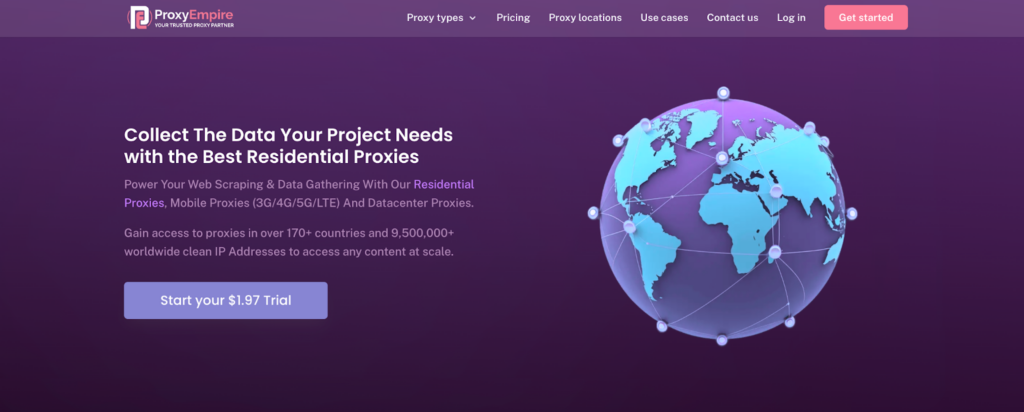
ProxyEmpire is a premium proxy service provider designed to empower web scraping, data collection, and unrestricted internet access through a vast network of ethically sourced residential, mobile, and datacenter proxies. Below is a detailed description based on the provided information:
Overview of ProxyEmpire
ProxyEmpire offers a comprehensive suite of proxy solutions tailored for individuals, businesses, and developers seeking reliable, high-performance tools for data gathering and privacy protection. With over 30 million clean IP addresses spanning 170+ countries, ProxyEmpire provides unparalleled global coverage, ensuring users can access content at scale with a 99.9% uptime and lightning-fast response times (as low as 0.6 seconds).
Proxy Types and Features:
🏘️ Rotating Residential Proxies
Key Benefits
- Global Reach: Access to over 30 million IPs worldwide, covering every major region, with precise targeting options (country, city, state, ASN/ISP).
- High Reliability: A 99.86% uptime ensures uninterrupted service, supported by patented technology for enhanced speed and security.
- Ethical Sourcing: Proxies are responsibly harvested, ensuring quality and compliance.
- Versatile Use Cases: Supports web scraping, price monitoring, sneaker copping, SEO tracking, ad verification, and more.
- Integration-Friendly: Compatible with standard proxy protocols (HTTP, SOCKS5) and third-party tools like Multilogin, Dolphin Anty, Kameleo, Octobrowser, and Gologin.
- No Hidden Fees: Transparent pricing with all features included, starting at a $1.97 trial.
Use case:
2. ResiProx
ResiProx’s rotating residential proxies by ResiProx offer solid unblocked paths. The company provides access to 10 million ethical IPs from 180 countries, focusing on scale data collection and security boosts. It handles web scraping well, with fast rotations to skip bans. Mobile proxies use 4G, LTE, and 5G for high-speed links, ideal for public data grabs or multi-accounts. Sessions can rotate or stick based on needs. Response times dip under 0.3 seconds on average, keeping work snappy. Uptime hits 99.9 percent, so drops are rare. Targeting drills down to city and ISP levels for accurate hits. It works with major languages like Python or Node.js, plus tools such as Selenium. This setup suits market research or ad checks without hitches.
- Supports HTTPS and SOCKS5 protocols for secure connections.
- Unlimited concurrent sessions handle heavy loads.
- Premium IP quality ensures low detection rates.
- Pros: Fast performance suits time-sensitive tasks; broad coverage aids global ops.
- Cons: Targeting options might need tweaks for niche spots.
3. Oxylabs
Oxylabs’s residential proxies by Oxylabs lead in enterprise setups. Headquartered in Vilnius, Lithuania, it boasts 100 million IPs from ethical sources worldwide. This network powers large-scale scraping and market intel without blocks. Rotations happen smartly to mimic real users, dodging flags. It includes datacenter and mobile options for mixed needs. Tools like AI scrapers add value for complex pulls. Uptime stays top-tier, with quick fixes via support. Sessions scale up easily for big teams. This fits web tests or price tracks smoothly.
- Huge pool covers 195 countries with city targets.
- Advanced management via dashboard and API.
- High stability for long-running jobs.
- Pros: Strong for big data needs; reliable in tough sites.
- Cons: Setup can feel complex for starters.
4. Bright Data
Bright Data’s residential proxies by Bright Data dominate with 72 million IPs globally. Based in Tel Aviv, Israel, it specializes in data unlocks and compliance. The service rotates IPs to stay unblocked on strict platforms. It offers unlocks for e-commerce or social sites. Mobile and ISP proxies add variety for specific tasks. Response speeds keep up with demands, and uptime is solid. Custom rules let users fine-tune access. This works well for ad verifies or SEO monitors.
- Unblocker tool bypasses tough CAPTCHAs.
- Geo-targeting down to zip codes.
- API integrations for easy automation.
- Pros: Versatile for many industries; strong ethics focus.
- Cons: Interface might overwhelm new users.
5. SOAX
SOAX’s residential proxies by SOAX provide flexible unblocked access. The company, in London, UK, uses 8.5 million IPs from real devices in 195 countries. It focuses on clean data pulls without interruptions. Rotations adjust to avoid detections, with sticky options available. Mobile proxies enhance for app-based work. Quick setup via endpoints suits devs. Uptime and speed support steady ops. This aids in review gathers or travel fares.
- WiFi and mobile IPs for diverse blends.
- Auto-rotations based on time or requests.
- Dashboard for real-time stats.
- Pros: Easy to scale; good for mid-size projects.
- Cons: Pool size smaller in some regions.
6. NetNut
NetNut’s residential proxies by NetNut offer direct ISP connects. Headquartered in Tel Aviv, Israel, it has 52 million IPs worldwide. This setup ensures fast, unblocked paths for scraping or tests. It uses ISP ties for stable links, reducing blocks. Rotating and static options fit various needs. High bandwidth handles big volumes. Support covers quick integrations. This excels in cyber checks or market insights.
- Direct ISP access for speed boosts.
- Unlimited threads for heavy use.
- Global coverage with ASN targets.
- Pros: Reliable for high-traffic tasks; low latency.
- Cons: Less focus on mobile-specific features.
7. Decodo
Decodo’s residential proxies by Decodo (formerly Smartproxy) deliver value-driven unblocks. It features 55 million IPs in 195 countries for broad reach. The service rotates smartly to evade bans, ideal for data or account work. Sessions can stick up to 30 minutes. Quick responses keep efficiency high. API tools aid custom setups. This suits devs or small teams needing steady access.
- Pay-per-GB model for flexible use.
- City-level targeting worldwide.
- Browser extension for easy tests.
- Pros: Affordable entry; strong performance.
- Cons: Support wait times during peaks.
8. IPRoyal
IPRoyal’s residential proxies by IPRoyal provide ethical unblocked options. With 2 million IPs in 195 countries, it focuses on privacy and speed. Rotations help bypass restrictions smoothly. Sticky sessions last hours for consistent work. Mobile proxies add phone-based access. Dashboard tracks everything simple. This works for ad checks or social manages.
- Ethical sourcing from users.
- SOCKS5 for secure tunnels.
- Unlimited bandwidth on plans.
- Pros: Clean IPs reduce flags; easy interface.
- Cons: Smaller pool in rare spots.
9. Webshare
Webshare’s residential proxies by Webshare deliver robust unblocked access with over 80 million ethically sourced IPs from 195 countries. This service emphasizes stability and speed, making it ideal for data scraping, market research, and bypassing restrictions. Users benefit from rotating proxies that mimic real behavior to avoid detections, with seamless integration via API and quick-start guides. The network connects to genuine residential devices, ensuring high reliability for large-scale operations. It supports ethical compliance and offers a free trial for testing. Overall, it’s a strong choice for developers and businesses seeking efficient, undetectable connections without complex setups.
- Over 80 million residential IPs for broad coverage.
- HTTP and SOCKS5 protocols for secure, flexible use.
- Rotating options with top locations like US, UK, Germany.
- 99.97% uptime ensures minimal interruptions.
- 153,563 subnets enhance diversity and evasion.
- Pros: Extremely stable for heavy tasks; easy developer tools boost integration; ethical sourcing reduces risks.
- Cons: Targeting might lack depth in less common regions.
10. NodeMaven
NodeMaven’s residential proxies by NodeMaven provide premium access to over 30 million high-quality IPs plus 250,000 mobile ones, ethically sourced from ISPs and real devices across 150+ countries and 1400+ cities. This setup excels in multi-account management, data scraping, and SEO monitoring, with sticky sessions up to 24 hours for consistent performance. Real-time IP filtering keeps 95% clean, minimizing bans. Unlimited concurrent sessions handle demanding workloads, while fast speeds under 0.8 seconds support time-sensitive jobs. It’s tailored for pros needing undetectable, reliable proxies with dedicated support, including account managers for custom needs.
- 30 million residential and 250,000 mobile IPs.
- HTTP and SOCKS5 protocols with country, city, ISP targeting.
- Sticky sessions up to 24 hours; unlimited concurrency.
- 99.54% average success rate for high reliability.
- 95% IP clean rate via advanced filtering.
- Pros: Boosts success rates significantly; excellent for long-term accounts; top-tier customer support.
- Cons: Newer service may have evolving features in niche areas.
11. Crawlbase
Crawlbase’s smart proxies by Crawlbase integrate AI for unblocked scraping with 140 million residential and 98 million datacenter IPs, rotating worldwide across 30 countries. This service shines in anonymous data collection, bypassing CAPTCHAs and blocks for large-scale projects like SEO or market analysis. It simplifies infrastructure with tools like Crawling API, handling billions of documents efficiently. Trusted by over 70,000 companies, it ensures GDPR compliance and 24/7 support. The focus on scalability and high success makes it great for enterprises needing robust, low-maintenance proxy solutions without managing rotations manually.
- 140 million residential IPs for massive scale.
- Worldwide rotation with AI bypass for tough sites.
- 99.9% network uptime and 99% success rate.
- Integration with scraping APIs for easy automation.
- Supports targeting for major platforms like Amazon, LinkedIn.
- Pros: Highly scalable for big data needs; strong compliance and support; efficient for anonymous crawling.
- Cons: Limited to 30 countries may restrict ultra-specific access.
12) Rayobyte
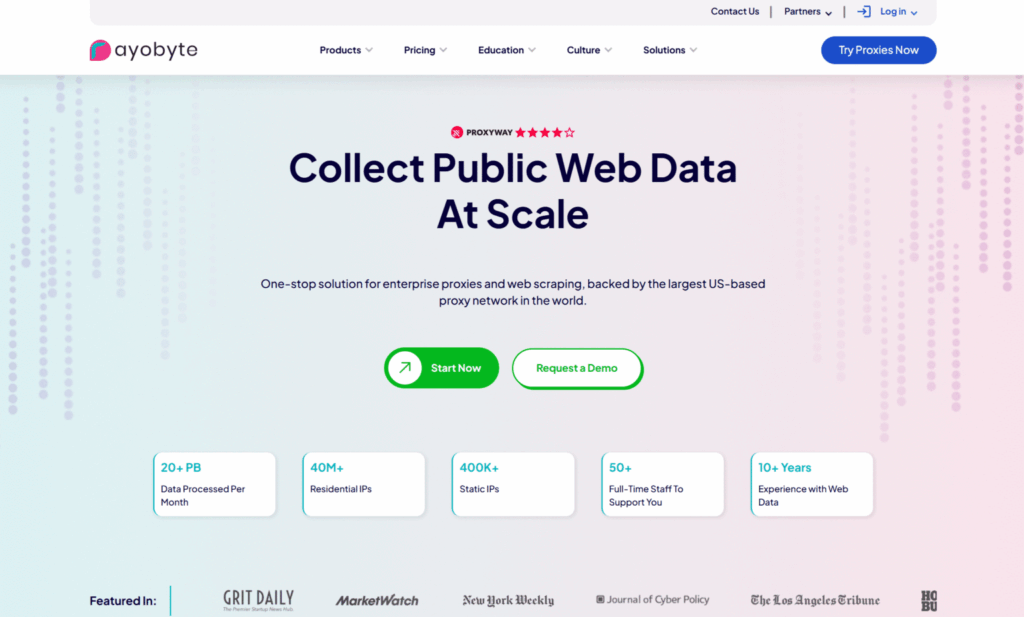
Rayobyte stands out as a comprehensive proxy provider specializing in ethical web data collection, with a strong emphasis on sustainability and customer partnership. Headquartered in the United States, the company has over a decade of experience, processing more than 20 petabytes of data monthly through its extensive network. Its strengths lie in offering undetectable proxies that excel in high-speed tasks like e-commerce monitoring and AI dataset building, backed by a team of data engineers providing consultative support. However, it may face challenges in highly dynamic environments where rapid IP rotation is crucial, potentially leading to occasional detection in stringent anti-bot systems. Overall, Rayobyte’s commitment to ethical sourcing and custom solutions makes it a reliable choice for enterprises seeking long-term proxy stability, though smaller users might find the enterprise focus less tailored to basic needs.
- Vast proxy pool exceeding 40 million IPs, including 36 million residential addresses for global coverage.
- Supports geo-targeted scraping with high-speed rotating data center proxies achieving sub-second response times.
- 99.9% network uptime, with over 20 PB of data processed monthly across various use cases.
- Trusted by major clients for ad verification and SERP analysis, with a dedicated team of 50+ specialists.
13) Live Proxies
Live Proxies differentiates itself by allocating private residential and mobile IPs exclusively to users, avoiding shared pools that can lead to bans. Based in Studio City, California, the company prioritizes stability and unblocked access for tasks like e-commerce and market research. Its strengths include unlimited threads and bandwidth rollover, ensuring seamless operations for high-volume users, with instant delivery after network activation. Weaknesses may arise in scalability for ultra-large projects due to the private allocation model, which could limit pool diversity compared to larger providers. This approach fosters high trust and reliability, making it ideal for professionals needing consistent performance without concurrency limits, though it requires careful management for optimal IP rotation in dynamic scenarios.
- Over 10,000 users with dedicated IPs supporting state-level targeting in the US.
- Features unlimited concurrent sessions and 24/7 support with a dedicated account manager.
- High uptime proven for web scraping and social media management use cases.
- Bandwidth rollover system allows unused data to carry over, enhancing efficiency.
14) Infatica
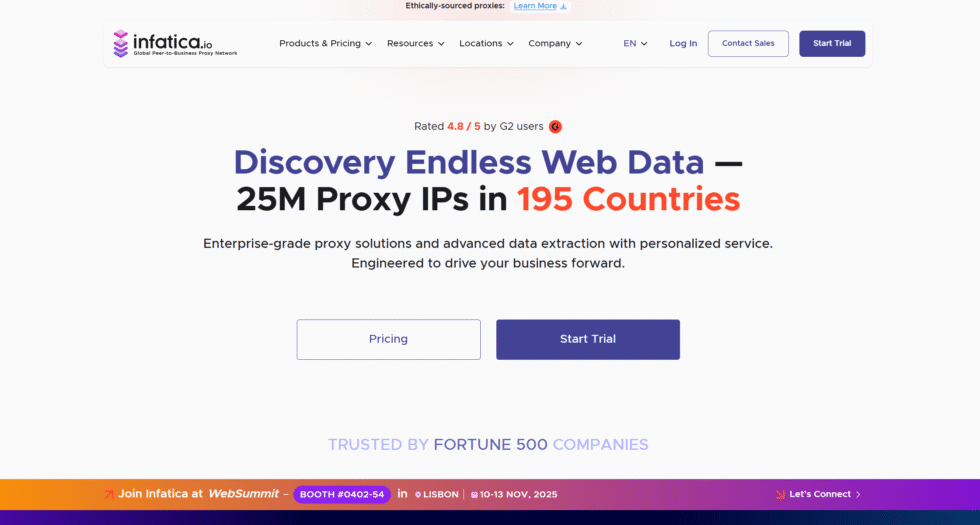
Infatica offers a robust platform for web scraping and data access, leveraging ethically sourced proxies to ensure compliance and reliability. The company’s strengths encompass a massive IP pool with granular targeting, enabling zero CAPTCHAs and minimal blocks for tasks like price aggregation and cybersecurity. It excels in providing high-speed connections and customizable rotation, ideal for large-scale projects. However, weaknesses include potential variability in performance across less common geolocations, which might affect consistency in niche markets. With ISO certification and a focus on enterprise needs, Infatica supports diverse industries, though smaller operations may find the advanced features overwhelming without dedicated integration support.
- 35 million+ residential IPs worldwide, with 5 million+ mobile addresses.
- 99.9% uptime and 0.4-second average response time for efficient data collection.
- Supports HTTP/SOCKS protocols with country, city, ZIP, and ISP-level targeting.
- Serves millions of records in datasets for platforms like LinkedIn and Amazon, with hundreds of millions of entries processed.
15) SpeedProxies
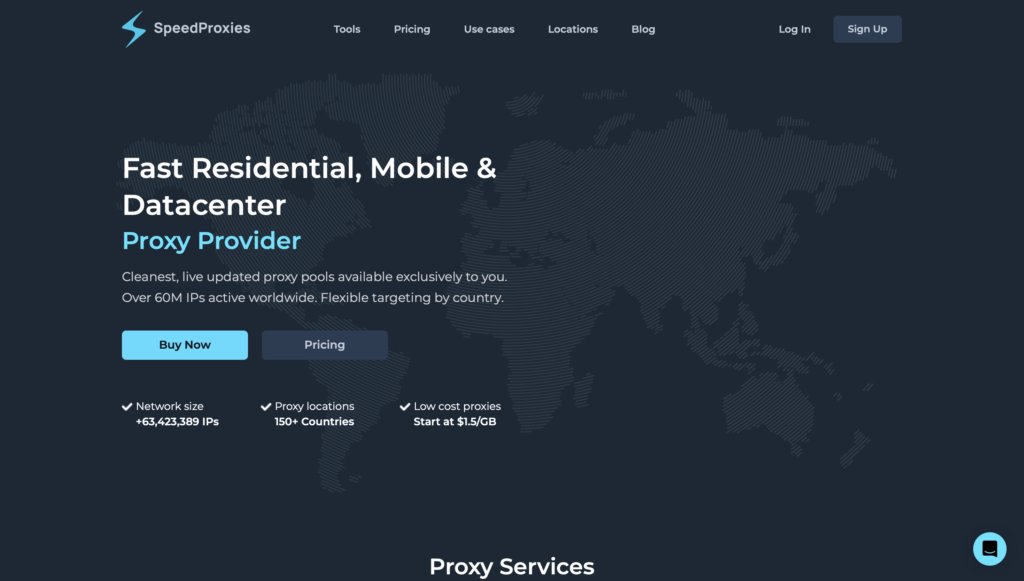
SpeedProxies provides a versatile proxy network emphasizing undetectable fingerprinting and bandwidth optimization for seamless scraping. Its strengths are in offering a growing pool of ethically sourced IPs with global reach, making it suitable for ad-heavy sites by blocking trackers. The service shines in uninterrupted operations via pay-as-you-go models, but weaknesses may include mixed reliability in high-density urban targeting due to network expansion. This makes it a solid option for developers needing easy integration, though it requires monitoring for optimal performance in competitive environments.
- Large ethical residential IP pool across 150+ countries.
- 99.9% uptime for scraping projects with ad and tracker blocking.
- Supports advanced fingerprinting to bypass CAPTCHAs effectively.
- Continuous network growth for broader location access.
16) Proxy-Seller
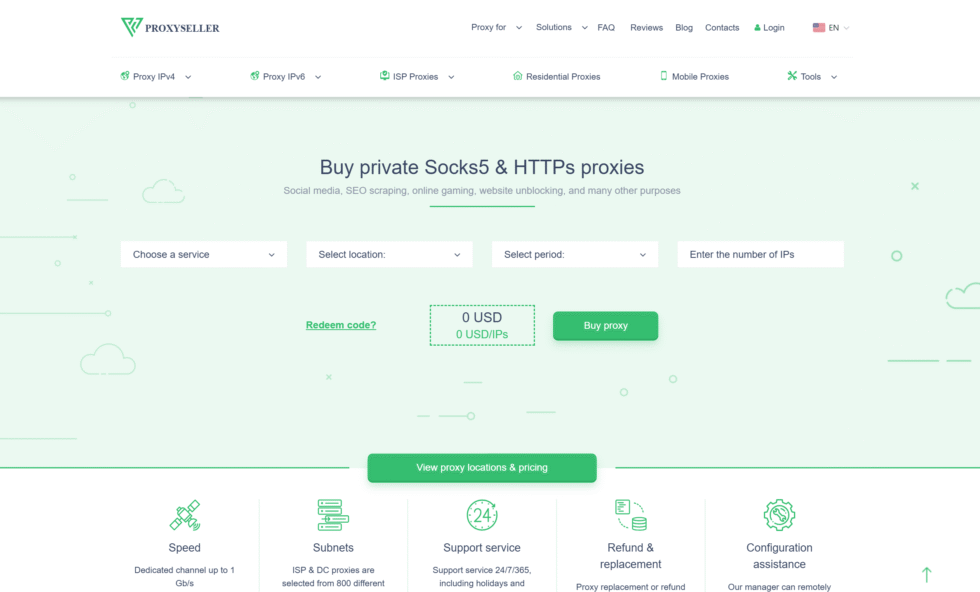
Proxy-Seller has served over half a million clients with its decade-long expertise in providing fast, anonymous proxies. Strengths include extensive subnet diversity and high-speed connections up to 1 Gbps, ideal for SEO and e-commerce monitoring. It offers flexible rotation and geotargeting, enhancing anonymity. Weaknesses could involve dependency on user configuration for optimal security in complex setups, potentially leading to issues without expert assistance. The company’s focus on ethical sourcing and 24/7 support positions it well for scalable operations across various scales.
- Over 20 million residential IPs from 800 subnets and 400 networks.
- 99% uptime with support for SOCKS5 and HTTP(S) protocols.
- Coverage in 220+ countries with city and ISP targeting.
- Used by 500,000+ clients for AI data collection and ad verification.
17) MobileHop
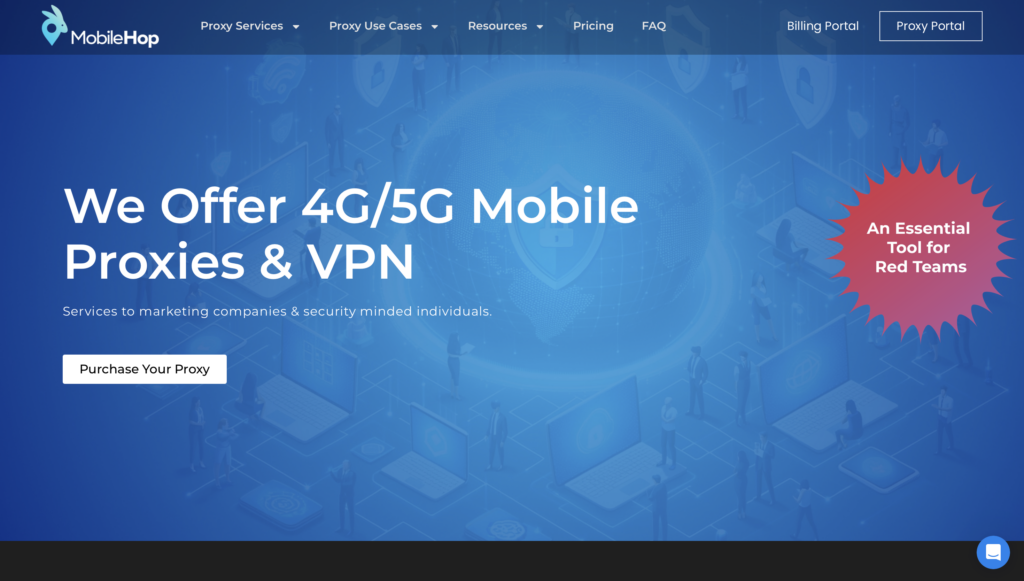
MobileHop specializes in 4G/5G mobile proxies and VPNs tailored for US users, catering to security and marketing needs. Based on enterprise-grade Verizon modems, its strengths lie in true mobile IPs with high speeds and unlimited location changes, perfect for data scraping and ad verification. Weaknesses may include limited international coverage, restricting global applications. With no-log policies and API access, it’s geared toward professionals requiring privacy and consistent US-based performance.
- 50+ unique US locations with infinite IP changes.
- 99.9% uptime and 50-80 Mbps speeds.
- Supports HTTP(S)/SOCKS5 and VPN protocols.
- Targets cyber security and SEO monitoring with personalized fingerprints.
18) SimplyNode
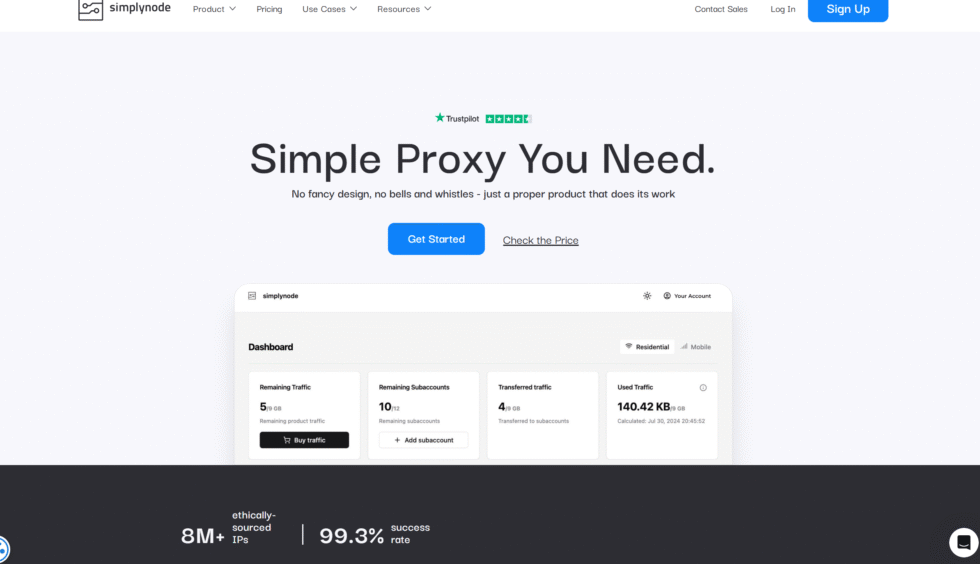
SimplyNode delivers residential and mobile proxies with a commitment to ethics and no-expiration traffic. Its strengths are in high success rates and concurrent session handling, suitable for market research and web scraping. Offering pay-as-you-go flexibility, it supports global expansion. Weaknesses might emerge in dedicated IP absence, limiting static needs. The international operation ensures broad coverage, making it accessible for diverse users.
- Over 8 million IPs with 99.3% success rate.
- HTTPS/SOCKS5 support and country/city targeting.
- Handles thousands of concurrent sessions.
- 4.6 Trustpilot rating from international users.
19) Ping Proxies
Ping Proxies, established in 2020, focuses on web data gathering with a vast network for business intelligence. Strengths include high-capacity infrastructure and API integration, excelling in price comparison and brand protection. It provides ethical IPs with intuitive management. Weaknesses could be in niche targeting precision compared to specialized providers. Serving thousands, it’s ideal for scalable data operations.
- 35 million+ IPs across 195 countries.
- 99.9% uptime and 100 Gbps capacity.
- HTTP/SOCKS5 compatible with geo-targeting.
- Over 25,000 customers processing 150+ ISP subnets.
20) DataImpulse
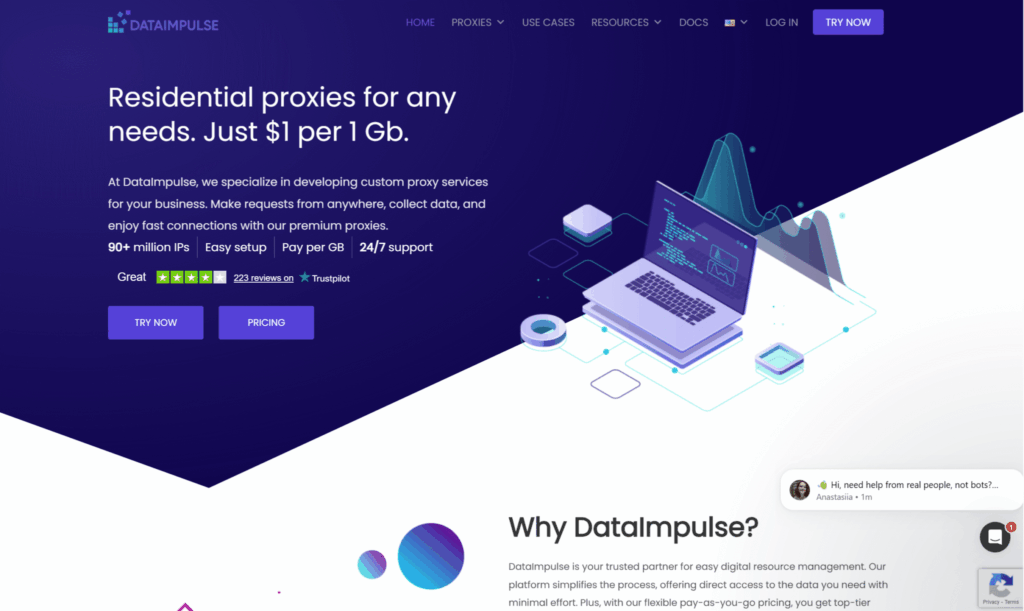
DataImpulse offers tailored proxies for data collection and automation, with flexible pricing. Strengths encompass a large ethical pool and sticky sessions, strong for SERP tracking and botting. It provides 24/7 support and no expiration. Weaknesses may include less emphasis on ultra-high-speed tasks. The service supports over half a million users in efficient, legal data extraction.
- Over 90 million IPs in 194 locations.
- 99.9% uptime for datacenter proxies.
- HTTP(S)/SOCKS5 with ASN targeting.
- 500,000+ customers in 4 years for AI and scraping.
21) MarsProxies
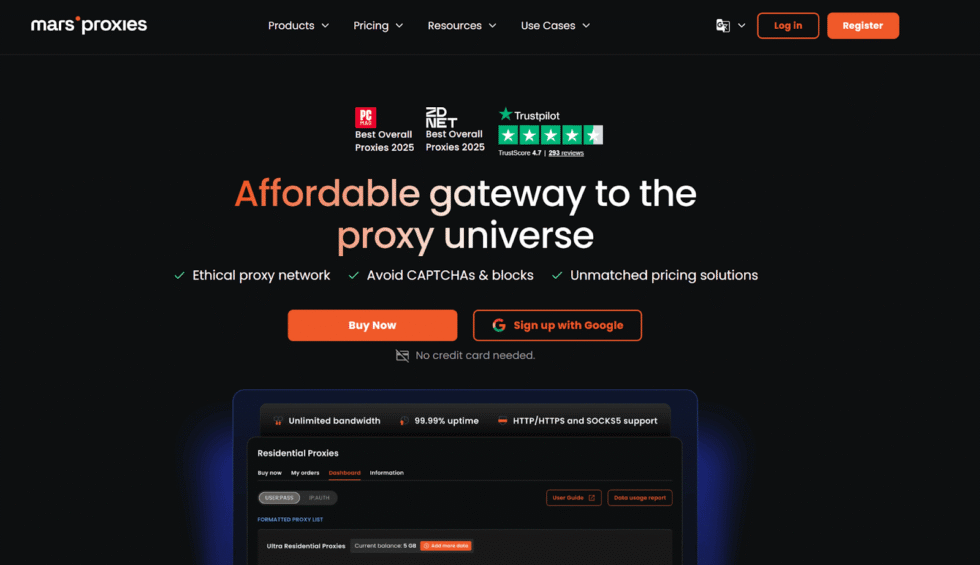
MarsProxies provides a range of proxies for global content access and anonymity. Strengths are in unlimited traffic options and seamless tool integration, ideal for business projects. It offers ethical IPs with no expiration. Weaknesses might involve variability in smaller pools for specific types. Trusted for reliability, it’s suited for e-commerce and scraping.
- 1 million IPs in 195 countries.
- High availability with 344+ TB data consumed.
- Supports dedicated IPs and sessions.
- Community support via Discord for users.
22) Proxy-Cheap

Proxy-Cheap focuses on cost-effective proxies for secure online activities. Strengths include high anonymity and broad compatibility, with top speeds for multi-accounting and scraping. It features extensive locations and no logging. Weaknesses could be in premium feature depth for enterprises. Serving tens of thousands, it’s a go-to for budget-conscious users.
- Vast IP pool with >99% uptime.
- HTTP/HTTPS/SOCKS support.
- Coverage in numerous countries including US and UK.
- 45,000+ clients with 4.8/5 reviews.
23) Geonode
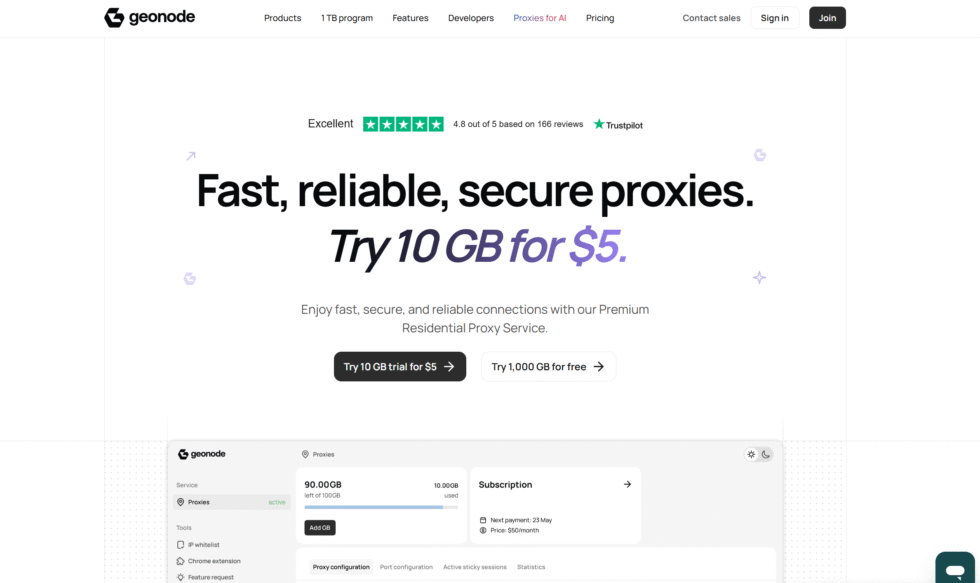
Geonode, headquartered in Singapore, offers premium proxies for e-commerce and tech. Strengths lie in fast responses and anti-detection, with own pools for reliability. It supports APIs and high concurrency. Weaknesses may include higher costs for advanced features. Onboarded thousands of developers, it’s geared toward scalable scraping.
- Millions of unique IPs in 190+ countries.
- 99% success rate and 500ms response.
- HTTP support with geo-targeting.
- Over 10,000 developers using for AI agents.
24) Froxy
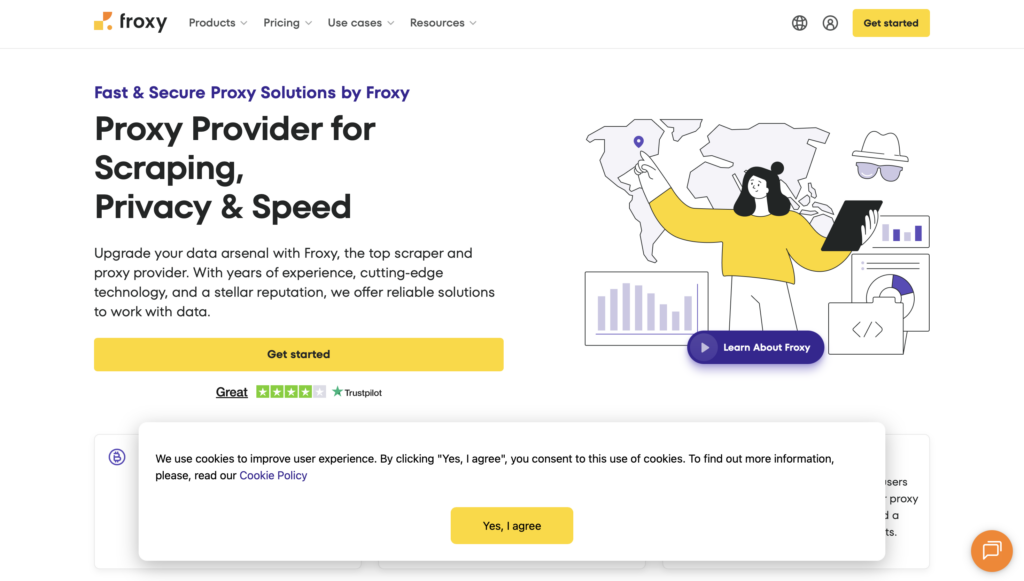
Froxy delivers premium proxies and scraping tools with global reach. Strengths include whitelisted IPs and high-speed transfer, effective for e-commerce monitoring. It offers transparent support. Weaknesses might be payment inconsistencies. Trusted by thousands, it’s strong for secure data efficiency.
- Over 10 million IPs in 200+ locations.
- HTTP/SOCKS5 with city targeting.
- High-speed for SERP and price analysis.
- Thousands of worldwide users.
25) ProxyGuys
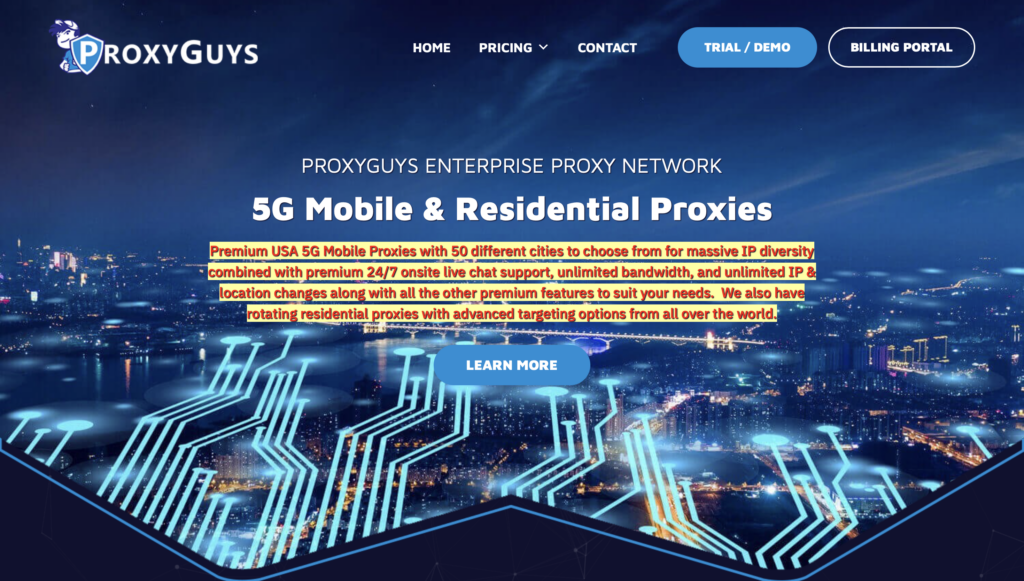
ProxyGuys operates from its headquarters in Corona, California, United States, delivering specialized mobile and residential proxy solutions ideal for unblocked web access and data extraction tasks. The provider maintains a robust focus on US infrastructure, leveraging major carriers such as Verizon and AT&T across numerous locations to ensure stable connections that effectively bypass restrictions on platforms and websites. Its mobile proxy offerings feature unlimited bandwidth capabilities, supporting extended sessions without mandatory rotations, while the rotating residential network provides access to more than 10 million IPs with granular targeting down to city and region levels. This combination enables reliable performance for applications like web scraping, social media automation, and market research where authentic US IP appearances are advantageous. Although the service excels in domestic US coverage with fast IP switching options, its global residential pool is optimized for quality and control rather than the broadest international scale.
- Key features include 4G LTE and 5G mobile proxies with support for HTTP and SOCKS5 protocols.
- Rotating residential proxies covering over 10 million IPs with country, region, and city targeting.
- Static residential options alongside mobile offerings for consistent long-term sessions.
- Infrastructure in 26 US locations using premier carriers for enhanced stability and low latency.
- Rapid IP change capability in as little as 3 seconds for mobile proxies.
26) Massive
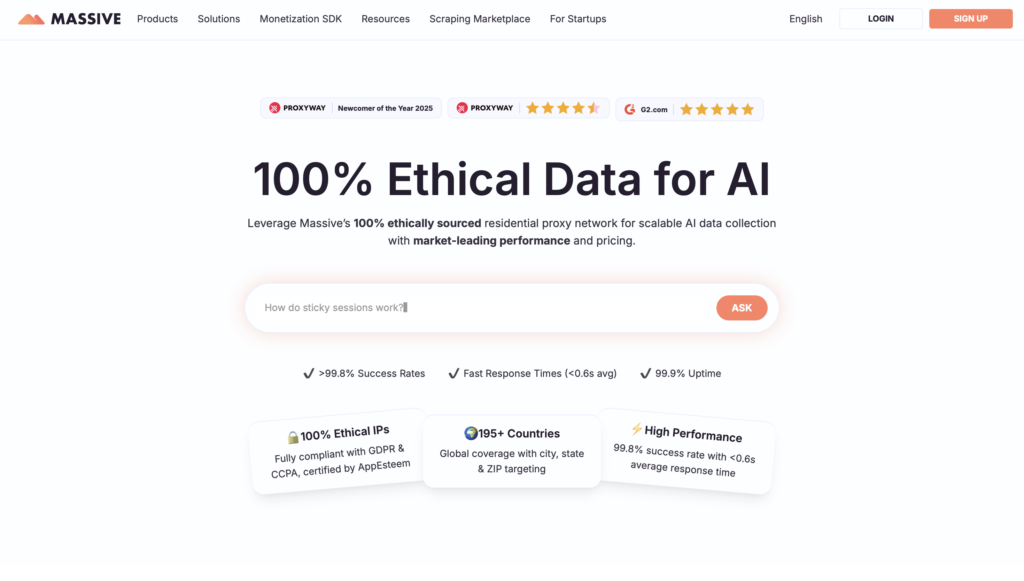
Massive, a US-based provider, has built a reputation for ethically sourced residential proxies designed for high-success unblocking and large-scale data collection in 2026. With a network exceeding 1.6 million residential IPs across 195 countries, it delivers exceptional performance metrics including a 99.87% success rate in the United States and average response times around 0.52 seconds in key markets. The service prioritizes compliance with SOC 2 Type 1 audits, GDPR, and CCPA standards, appealing to businesses needing trustworthy IPs for AI data gathering and web automation. Advanced features allow precise geo-targeting at country, city, ZIP code, and even device type levels (mobile, desktop, TV), paired with customizable sticky sessions up to several minutes. Its volunteer device model contributes to lower fraud scores and higher acceptance rates on challenging targets, although the selective pool size emphasizes quality and ethical practices over maximum volume found in some competitors.
- Residential proxies with 99.8% first-attempt success rates and 95+% overall success.
- Device type and ZIP-level targeting plus flexible rotation and sticky session controls.
- Premium ISP proxies available with ultra-low latency options particularly in the US.
- Full ethical sourcing and compliance certifications for enterprise use cases.
- Strong infrastructure performance on major platforms like Google and Amazon.
27) LimeProxies
LimeProxies is headquartered in Walnut, California, United States, and supplies a comprehensive range of private and residential proxy services optimized for unblocking content and supporting automated online activities. The company offers access to millions of premium IPs distributed across more than 50 geo locations worldwide, with high-speed connections reaching up to 1 Gbps to facilitate efficient data retrieval and multi-account management. Its dedicated proxy infrastructure features extensive subnet diversity, helping users maintain anonymity and circumvent blocks during intensive scraping or SEO monitoring operations. Residential options provide authentic user-like traffic that enhances success rates for accessing restricted websites and regional content. The provider’s independent US-based operations allow for focused customer support and customized solutions, though its network scale prioritizes reliable performance and speed in core markets rather than competing solely on the largest possible IP counts in every region.
- Private dedicated proxies with support for multiple international and US locations.
- Over one million IPs available with more than 1,000 subnets for diversity.
- Residential proxy network for accurate localized data and bypassing restrictions.
- High-speed ports up to 1 Gbps suitable for bandwidth-intensive tasks.
- Integration-friendly solutions for ecommerce, SEO, and web scraping applications.
28) ProxyWing
ProxyWing, registered in Middletown, Delaware, United States, provides a versatile selection of residential, ISP, and datacenter proxies aimed at users seeking unblocked and high-performance internet access globally. Its residential pool encompasses over 70 million IPs spanning more than 190 countries, supporting rotating and static session configurations for flexible deployment in web scraping, ad verification, and social media operations. With claimed 99.9% uptime and connection speeds up to 1 Gbps, the service caters to both individual professionals and teams requiring consistent reliability across diverse locations. ISP proxies deliver stable Tier-1 connections, while the overall platform includes advanced management tools and 24/7 support to optimize proxy usage. The company’s US base enables responsive service, with a user base exceeding 70,000 clients worldwide, although certain features focus on balanced global coverage and performance metrics suited to mid-scale to enterprise demands.
- Rotating residential proxies with non-expiring traffic options in 190+ countries.
- ISP and datacenter proxies offering unlimited bandwidth in select configurations.
- HTTP and SOCKS5 protocol support with advanced geo-targeting capabilities.
- 99.9% uptime guarantee and high-speed infrastructure up to 1 Gbps.
- Serving over 70,000 users with 24/7 technical assistance and dashboard tools.
How to Pick the Best Proxy for Your Needs
Match proxies to your tasks.
- For data pulls, go with big pools and rotations.
- Mobile ones fit app checks.
- Check protocol support like SOCKS5 for security.
- Speed tests help spot lags.
- Ethical providers cut long-term risks.
- Uptime logs show reliability.
- Trial runs reveal fits.
- Compare types: Residential mimic homes, datacenter speed up. Mix them for balance.
- Target levels matter for local access.
- Support quality fixes issues fast.
This approach avoids common pitfalls.
Benefits of Using Proxies Today
- Proxies shield your main IP from bans.
- They open global content without travel.
- Businesses gather intel safely.
- AI drives more proxy use for data.
- Many firms rely on them for competitive edges.
- PCMag notes proxies aid market research without detections.
- This keeps ops smooth in restricted zones.
- Users handle multiple profiles easily.
- They test sites from various views.
- Proxies boost privacy in checks.
- With rising online walls, these tools stay vital.
| Proxy Type | Key Use | Strength | Weakness |
| Residential | Data scraping | Low detection | Slower speeds |
| Mobile | App access | High trust | Costlier |
| Datacenter | Quick tests | Fast | Easier blocks |
| Static | Long sessions | Stable | Less rotation |
Understanding Proxy Types for Optimal Performance
Different proxy types serve specific purposes in online activities, including unblocked proxies that ensure reliable access. Residential proxies, sourced from real user devices, provide authenticity in tasks like web scraping where natural traffic patterns help avoid detection, making them ideal as unblocked proxies for seamless operations. Users often choose rotating residential proxies when frequent IP rotation supports uninterrupted data gathering. Static residential proxies offer consistency for operations requiring a stable connection over time, such as account management.
Mobile proxies, utilizing cellular networks, suit scenarios involving app-based interactions or social media automation. Many select rotating mobile proxies for their adaptability in mimicking mobile user behavior during dynamic sessions. Datacenter proxies deliver speed for high-volume tasks, and rotating datacenter proxies are preferred in environments needing quick IP switches without compromising performance. Backconnect proxies combine reliability for automation, making them useful in web-based operations.
Proxy Applications in Modern Business
Proxies play a role in various business operations, enhancing efficiency in data-related tasks through unblocked proxies that maintain consistent connectivity. In web scraping, they facilitate access to public information for market analysis, with tools like web scraping APIs aiding in structured data extraction. Social media management benefits from proxies that handle multiple accounts, where social media proxies support consistent engagement across platforms.
Ad verification uses proxies to monitor campaign displays, and proxies for ad verification help ensure accurate placements. Businesses involved in e-commerce monitoring rely on proxies for price tracking, integrating with price monitoring tools. For broader applications, proxies assist in cybersecurity testing by simulating diverse connections, often through integrations with existing systems.
Unblocked Proxies for AI Agents and Automation in 2026
In 2026, AI agents and automation systems depend on unblocked proxies to navigate online environments successfully. Many such systems incorporate rotating residential proxies to simulate varied user behaviors across different sessions. Projects focused on mobile applications benefit from the implementation of rotating mobile proxies that reflect authentic mobile traffic patterns. For more intensive automation runs, dedicated mobile proxies deliver the required bandwidth and control. Situations demanding persistent connections often turn to static residential proxies for their stability while rotating datacenter proxies support high speed requirements in certain automated workflows.
Achieving Reliable Browser and Tool Compatibility with Unblocked Proxies in 2026
Successful deployment of unblocked proxies in 2026 involves strong compatibility with existing tools and platforms. Advanced proxy integrations facilitate smooth connections with leading automation and scraping frameworks used by businesses. Organizations select different proxy use cases to match their specific operational requirements. Teams managing online presence through social platforms utilize social media proxies to maintain account integrity and performance.
Latest News In 2026
In late January 2026, Google and partners disrupted one of the largest residential proxy networks, believed to involve millions of compromised devices used for various cyber activities. This action included removing hundreds of associated apps from platforms and targeting domains to degrade the network’s operations and reduce its impact on consumer devices.
New developments include proxy providers expanding offerings with enterprise-grade residential IPs across numerous countries, alongside achieving security certifications like ISO 27001 and SOC 2 Type 2. Industry discussions emphasize the need for policymakers to address threats posed by such networks, highlighting ethical sourcing and improved stability in proxy technologies for professional applications.
Recent Trends in Proxy Use
AI growth pushes proxy demand for fresh inputs. Providers add smarter rotations to beat advanced blocks. Ethical focus rises, as seen in industry reports. Many turn to mobile for better blends. Hybrid setups combine types for versatility. Support for new protocols grows. This evolves with web changes. Innovation includes API scrapers for no-code work. Dashboards get better for team controls. Focus shifts to low-latency for real-time needs. These shifts help users stay ahead.
FAQ
What are the top features to look for in unblocked proxies?
Unblocked proxies thrive on diverse IP pools that enable seamless rotations, keeping connections fresh and less likely to trigger alerts from websites. Advanced protocol support, including SOCKS5, allows for encrypted and versatile data transfers, which is key for handling various online activities without interruptions. Ethical IP management ensures long-term reliability, as it focuses on compliant sources that maintain trust with target platforms. Customizable session controls, like sticky or rotating modes, give users flexibility to adapt to different tasks, enhancing overall performance in restricted environments.
How do residential proxies differ from mobile ones?
Residential proxies draw from everyday home internet connections, making them appear as genuine user traffic, which suits general web browsing and content access. In contrast, mobile proxies leverage cellular networks, offering dynamic IPs that change frequently with carrier signals, ideal for platforms with stringent verification processes. While both types excel at evading detections through natural behaviors, residential options provide broader compatibility for desktop-oriented jobs, whereas mobile variants shine in simulating on-the-go user patterns. Understanding these differences helps in selecting the right tool for specific online requirements, ensuring smoother operations across diverse applications.
Can proxies help with data collection in 2026?
Proxies facilitate efficient data gathering by masking origins and rotating addresses, allowing access to restricted sources without raising flags. They integrate well with automation tools for pulling information from e-commerce sites or public databases, supporting tasks like trend analysis or content aggregation. As online platforms evolve, proxies adapt to new security measures, enabling consistent retrieval of fresh insights for various projects. Proper configuration ensures compliance with data policies, making them a reliable choice for ongoing collection efforts.
Why might a proxy get blocked and how to prevent it?
Proxies can face blocks due to repetitive access patterns that mimic automated bots, or when IPs are shared too widely without variation. Inconsistent user agents or rapid request rates also contribute to detections by sophisticated site defenses. To counter this, implement gradual request pacing and diversify headers to emulate organic interactions more closely. Regular monitoring of connection health through dashboards can spot issues early, while opting for providers with intelligent rotation logic maintains access longevity.
What is a proxy and how does it function?
A proxy acts as an intermediary between a user’s device and the internet, routing requests to mask the original IP address. This setup allows for smoother online interactions in activities like data collection or browsing. For instance, businesses use proxies to handle large-scale requests without interruptions.
What are the main types of proxies available?
Common types include residential, mobile, and datacenter proxies, often used as unblocked proxies for various needs. Residential proxies come from real household connections, making them suitable for tasks requiring authenticity. Mobile proxies use cellular IPs, ideal for app-related operations. Datacenter proxies provide fast connections from servers, often chosen for high-speed needs.
How do rotating proxies differ from static ones?
Rotating proxies change the IP address at intervals or per request, which is useful in scenarios where avoiding detection is key, such as continuous scraping with unblocked proxies. Static proxies maintain the same IP for extended periods, supporting stable connections in ongoing sessions like monitoring.
What role do proxies play in web scraping?
Proxies enable access to websites by distributing requests across multiple IPs, preventing blocks from overuse of a single address. They integrate with scraping tools to gather public data efficiently such as SERP scraping with search engine results.
Are there proxies specifically for mobile networks?
Yes, mobile proxies operate on 3G, 4G, 5G, or LTE networks, simulating mobile device traffic. Users turn to dedicated mobile proxies when exclusive access to a mobile IP is needed for specific tasks.
How can proxies support social media activities?
Proxies allow management of multiple profiles by assigning unique IPs to each, reducing the risk of platform restrictions. This approach is common in marketing where consistent access across accounts is essential.
How do unblocked proxies enhance AI agent performance in 2026?
Unblocked proxies support continuous operation of AI agents by providing fresh connection points that help maintain access during extended data collection phases. This setup allows systems to process information from multiple sources while adapting to changing online conditions. Proper implementation in scaling AI projects effectively with proxies contributes to more robust machine learning models and improved decision-making capabilities through reliable data streams.
What advantages do rotating mobile proxies offer for automation tasks?
Rotating mobile proxies enable automation tasks to bypass detection mechanisms that target traditional connection types. They deliver traffic patterns associated with real mobile networks, which many platforms accept more readily. Integration with scraping API solutions further streamlines data extraction processes across mobile-optimized websites and applications.
When are dedicated mobile proxies preferred in professional setups?
Dedicated mobile proxies become valuable in professional setups requiring exclusive bandwidth and consistent performance over long durations. These connections support high-volume operations where shared resources might lead to variability. Access through comprehensive proxy targets allows teams to focus resources on critical locations with dedicated mobile infrastructure.
In what scenarios do static residential proxies provide the most value?
Static residential proxies prove beneficial in activities that rely on maintaining a single identity across multiple interactions. They support consistent monitoring and management tasks where changing addresses would disrupt workflows. Global location coverage helps businesses establish presence in specific markets through stable IP assignments.
How important are proxy integrations for business workflows?
Proxy integrations play an essential role in embedding unblocked connections directly into enterprise software environments. They reduce setup time and enable seamless data flow between different business applications. Established web scraping practices benefit greatly from these technical connections that support automated reporting systems.
What factors determine the selection of specific proxy use cases?
The nature of online platforms involved and the volume of required interactions help determine appropriate proxy use cases. Duration of projects and the need for specific connection qualities also influence choices. Solutions designed for ad verification processes often require particular proxy characteristics to ensure accurate monitoring results.
Why do social media proxies help with platform management?
Social media proxies offer multiple connection pathways that assist in distributing activity across various accounts. They help maintain natural engagement patterns on platforms that monitor user behavior closely. Unblocked residential proxy solutions enhance the ability to handle content distribution and community interactions at scale.
How has unblocked proxy technology evolved to meet 2026 demands?
Unblocked proxy technology now features improved protocol support and enhanced compatibility with modern automation frameworks. Providers have developed more sophisticated rotation mechanisms and quality controls to match advancing platform security standards. Advanced unlimited bandwidth residential proxies demonstrate how current technology handles demanding concurrent operations in data-heavy environments.