











Static Residential Proxies - Buy Static Residential Proxies (ISP) in 24 countries
ProxyEmpire's ISP Proxy service allows you to keep using the same residential IPs for a month or longer.
Buy your own dedicated static residential IP and keep the same trusted IP address, day after day.
Harness the Power of Static Residential Proxies
Tired of constantly rotating IPs? Static residential proxies give you total control with the same private, targeted IPs for all your web data needs.
What Are Static Residential Proxies?
Static residential proxies use IP addresses from ISPs that remain fixed instead of rotating randomly.
Benefits of Static Residential Proxies
- IP consistency: Keep using the same IPs for ongoing access to target sites.
- Avoid frequent re-authentication: Maintain persistent sessions without constant logins.
- Stickiness emulates real users: Static IPs mimic actual user behavior better than rotating.
- Resist blocking: Residential IPs are less likely to get flagged than datacenters.
Use Cases for Static Proxies
- Managing accounts long-term: Keep all your social media and marketplace accounts unified.
- Consistently accessing geo-restricted content: Ongoing access to streaming sites and services.
- Price monitoring: Check pricing pages from the same IPs to avoid re-authentication.
- SEO analytics: Sticky IPs ease rank tracking and content analysis for sites prone to blocking.
- Data aggregation: Gather data over time by mimicking normal user browsing behavior.
Are Static Residential Proxies the Same as ISP Proxies?
Static residential proxies and ISP proxies describe the same kind of address. The IP is registered to a real internet service provider. The exit path runs on server hardware, so the session stays up while the label still looks like a home or office line.
A site that checks the ASN sees a consumer carrier, not a hosting range. That is why teams pick an ISP proxy when a login, a QA path, or a multi-day check must keep one identity.
The setup is simple:
- The provider leases an IP block from a residential ISP.
- That block is announced under the ISP’s ASN.
- Your traffic leaves from a stable host that holds the same IP for the full term.
- HTTP proxy, HTTPS proxy, and SOCKS5 proxy all use that same fixed endpoint.
A residential proxy from a peer pool is different. That address lives on a real household device and moves when the device drops offline. An ISP-registered static IP does not depend on someone’s home router staying on.
What websites actually see
- An ISP name they already trust from normal broadband users
- A fixed source address across days and weeks
- Datacenter-class uptime behind that residential label
That mix is why the two names keep showing up together. “Static residential” stresses the fixed identity. “ISP” stresses the carrier registration. Both point to one product: a dedicated static residential IP that stays yours for the subscription.
Where this identity fits next to other traffic
Long observation windows, account continuity, and location-based testing with residential IPs all lean on the fixed address. High-volume public page fetches still sit better on rotating residential proxies, which change exit IPs by request or by a short sticky window.
Some pipelines split the work:
- The static ISP IP handles the identity layer (logins, cookies, multi-step QA).
- A rotating residential pool covers bulk sampling.
- Rotating mobile proxies add carrier paths when the same public page must be viewed from a phone network.
- Rotating datacenter proxies take the lighter, speed-first slice of the same project.
Country-level static IPs pair well with market work that repeats the same storefront. USA residential proxy routes, UK residential proxy routes, and Germany residential proxy routes are common picks for that pattern. The IP does not hop cities on its own. It stays in the country you assigned.
ASN quality in plain terms
The ASN is the network ID attached to the IP. Large consumer carriers already have many real users on the same network. A static IP from those ranges is read as ordinary broadband. Smaller or hosting-heavy ASNs are easier for filters to group. Carrier quality is why two “residential” labels can behave differently on the same target. For a longer setup walkthrough of exclusive ISP endpoints, the dedicated ISP proxies guide covers assignment, protocols, and how a fixed line sits beside other proxy types.
True Static ISP IPs vs Sticky Residential Sessions
A true static ISP IP is assigned to one customer and stays that address for the life of the plan. A sticky session is a short hold inside a rotating pool. The pool tries to reuse one peer IP for minutes or hours. Then the device leaves, the lease ends, or the gateway issues a new exit.
Sticky proxy sessions are a setting on rotating traffic. They are useful when a short form, a checkout preview, or a brief QA path needs the same IP for one pass. They are a poor stand-in for a month-long identity.
How the two models behave
True static ISP IP
- One address, exclusive to you
- No planned rotation
- Same login region every day
- Built for account continuity, multi-step QA, and week-over-week checks
Sticky residential session
- One peer IP for a limited window
- The hold can end early if the home device goes offline
- New identity after the window
- Built for short public data jobs that still want a brief pause between rotations
Why the mix-up happens
Many dashboards label a sticky hold as “static.” The word only means “do not rotate right now.” It does not mean the IP is yours next week. Teams that treat a sticky peer IP as a long-term identity see session resets, fresh device checks, and messy time-series data.
The best static ISP proxies style assignment avoids that reset. The host is not a random home laptop. The IP stays on the same line until you change plans.
When each model fits
Sticky holds work well for
- One-off public page pulls
- Short SEO monitoring samples that can accept a new IP later
- Burst collection through a scraping API that already retries failed requests
True static ISP IPs work well for
- Separate QA, monitoring, and research workflows that must resume tomorrow on the same path
- Ad verification checks that compare the same creative across several days
- Brand protection reviews of the same public listing week after week
- Price monitoring on pages that personalize by network
- Social media proxies work that keeps one research profile on one network path
Heavy traffic next to a fixed identity is a common 2026 layout. The static line keeps the session. Unlimited bandwidth residential proxies or a rotating pool carry the large public fetch. Dedicated 4G and 5G proxies sit in the same stack when the test must look like a phone on a carrier.
A simple way to choose. Ask how long the identity must last.
- Minutes to a few hours: a sticky session on rotating residential proxies is enough.
- Days to months: a true static ISP IP is the matching tool.
- Both in one pipeline: keep the static IP for state, and send volume through rotation.
Static Residential Proxies for AI Training and LLM Data Collection
Static residential proxies give AI teams a fixed residential IP that stays the same across long training runs and repeated data pulls. Many model builders need the same identity when they gather public web pages for fine-tuning or when they check how an LLM answers the same prompt over days. A consistent IP keeps session state intact so the collection process does not reset mid-pipeline.
Teams that collect public datasets often combine a stable static residential IP with rotating residential proxies for the high-volume parts of the job. The fixed IP handles login-style or multi-step flows while the rotating pool covers bulk page fetches. This mix supports clean, repeatable data pipelines for language models without forcing every request through the same address.
In practice, the fixed residential address works well for tasks that build knowledge graphs or that sample the same public pages at regular intervals. Researchers can return to the same network path and receive consistent responses from the target site. When the project also needs mobile carrier traffic, rotating mobile proxies can sit beside the static residential layer so the overall setup covers both desktop and mobile views of public content.
Use Cases in Ad Verification, Market Research, E-commerce & Cybersecurity
Ad verification teams rely on a steady residential IP to view the same creative and landing page over multiple checks. The fixed address lets them confirm that ads render correctly from a real home network and that the experience stays the same across repeated visits. Projects that focus on this work often draw on the dedicated resources described under proxies for ad verification.
Market research groups use the same stable residential identity when they track public product pages, review sentiment, or sample local search results over weeks. Because the IP does not change, the data set stays coherent and easier to compare across time. Many of these projects also pull in SEO monitoring workflows so the research covers both marketplace and search visibility in one continuous view.
E-commerce monitoring benefits from a fixed residential path when teams watch inventory levels or public pricing pages that personalize based on the visitor’s network. A consistent IP reduces noise in the collected signals and keeps the observation window reliable.
Cybersecurity and brand-protection work uses the same long-lived residential IP to test public endpoints, watch for counterfeit listings, or review how a site responds from a trusted home network. The stable session supports repeated inspection without the identity shifting underneath the test. Teams that run these checks often pair the static residential layer with brand protection processes. Social media-related checks can also incorporate social media proxies when public profile or post monitoring is required.
Static Residential Proxies In 24 Countries
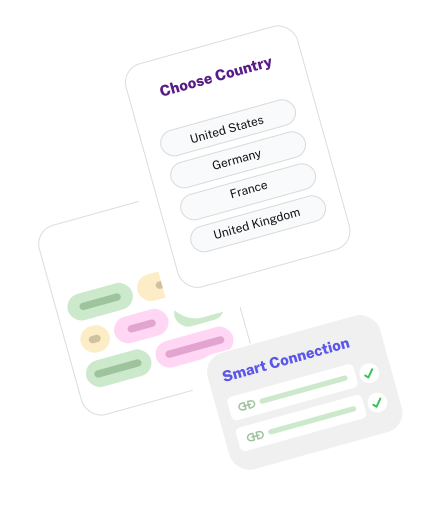
We currently offer ISP proxies in the following countries:
All of our static residential proxy plans come with personalized integration support to get you set up in minutes. Our proxies support both HTTP and SOCKS5 protocols and can be integrated in any software stack that supports user and password proxy authentication.
Our static residential proxies currently support only country targeting.
If you are interested in a larger number of non-static IPs check out our rotating residential proxy service. Our rotating residential and mobile proxies support Country, Region, ISP, and City targeting.
More Questions About Static Residential Proxies
How do static residential proxies help with repeated public data pulls for AI models?
A fixed residential proxy IP creates a stable network identity that stays constant while an AI pipeline revisits the same public pages across multiple collection cycles. This consistency reduces unexpected variation in page responses that can appear when the exit address keeps changing. Researchers can therefore build cleaner training sets that reflect the true public state of a site rather than artifacts caused by shifting network paths. The same stable address also simplifies debugging when a particular data sample needs to be re-checked days later. Many pipelines place this fixed layer alongside higher-volume sources so the overall system balances identity needs with scale.
What role do fixed residential IPs play in multi-step QA testing?
Fixed residential proxies keep the same network identity active while a tester moves through multi-page flows, form submissions, or sequential checks. Session cookies and temporary state remain tied to one address, which prevents the test environment from resetting between steps. This is especially useful for localization and experience checks that must stay realistic across an entire user journey. Teams can return to an incomplete test the next day and continue from the exact same network perspective.
Can static residential proxies sit next to rotating pools in the same project?
Yes. Many projects assign the static residential address to phases that require a lasting identity and route the high-volume public fetches through rotating residential proxies or rotating mobile proxies. The fixed IP handles login-style steps, repeated verification, or long observation windows, while the rotating pool covers bulk sampling. This hybrid layout lets teams match the right network behavior to each part of the workflow without forcing every request into a single mode. The result is a more flexible data collection system that stays efficient across both stable and variable needs.
Which protocols work with static residential proxies in everyday scripts?
HTTP proxy, HTTPS proxy, and SOCKS5 proxy are the protocols most often used with static residential proxies in scripts and automation tools. These standards are already supported by common libraries in Python, Node.js, and other languages, so connection setup stays straightforward. Browser automation frameworks and anti-detect tools also accept the same protocols when they route traffic through a fixed residential address. The wide protocol support means teams can keep existing scripts and simply point them at the static residential endpoint.
How do static residential proxies support brand-protection monitoring over weeks?
A fixed residential IP lets monitoring systems return to the same public listings and pages on a regular schedule while appearing as a consistent home network. This stable viewpoint makes it easier to notice gradual changes such as new counterfeit offers or altered product pages that might be missed under rotating proxy addresses. The long-lived identity also supports side-by-side comparison of the same URL across days or weeks without introducing network-related noise.
Are ISP proxies running on home Wi-Fi or on servers?
Home Wi-Fi is the path used by peer residential proxies, where a real device must stay online. An ISP proxy keeps the consumer ASN and moves the routing onto managed hardware, so uptime is not tied to a household modem. That split also shows up in datacenter proxies vs residential proxies comparisons, because the host looks like a server while the registration still reads as broadband. Shared home networks can also sit behind CGNAT, which makes a “fixed” peer address less exclusive than it sounds. The CGNAT and static residential IP notes explain why a dedicated ISP line avoids that shared exit.
What does an ASN tell a website about a static residential IP?
IP intelligence tools map each address to an ASN, a carrier name, and a connection type. A consumer ASN from a known broadband provider is scored like ordinary household traffic. A hosting ASN is scored like a server farm, even if the speed is similar. That lookup is why two IPs in the same country can be treated differently on SEO monitoring or public catalog checks. Carrier reputation travels with the block, so neighboring IPs on the same ASN can share a history. The differences between residential, mobile, and datacenter proxies page frames that label as the first filter many sites apply.
How long can a sticky session hold an IP compared with a static ISP IP?
A sticky hold is a timer or a session ID on a rotating residential gateway. It asks the pool to reuse one peer IP for one job, then releases it. A static ISP assignment is a lease of the address itself, so reconnects, new browser profiles, and next-day runs still leave from the same IP. Sticky IDs are also local to that gateway username. They do not survive a plan change the way a dedicated ISP row in the dashboard does. Setup flags for those short holds live in the sticky proxy sessions docs.
Can one workflow use a fixed ISP IP and a rotating pool together?
Yes. A practical split is route class, not “one proxy for everything.” Login, cookie warm-up, and multi-page QA stay on the fixed ISP endpoint. List pages, search grids, and archive pulls go through rotating residential proxies or a scraping API. Unlimited residential proxies absorb long crawl windows that would crowd a single static line. Rotating mobile proxies take only the requests that must render as carrier traffic. The same script can hold both credentials and choose the endpoint per task.
Do static residential endpoints support username auth and IP allow lists?
Most stacks send a username and password with each HTTP, HTTPS, HTTP/2, or SOCKS5 request. An allow list can restrict which office or cloud IPs may open that tunnel, which helps when several tools share one dedicated line. Static endpoints usually do not need rotation flags inside the username, unlike a backconnect pool. Browser profile tools such as the ones listed on ProxyEmpire accept the same host, port, and login pair. Connection examples and protocol notes sit in the documentation.
What breaks when a sticky rotating IP is treated as a long-term identity?
Charts and QA logs start mixing two stories: the page changed, or the network identity changed. Price monitoring and ad verification lose a clean baseline when the exit IP is new each morning. Saved logins and shopping carts tied to one address then look like a new visitor. Brand protection reviews of the same listing also become harder to compare across weeks. A dedicated ISP IP keeps the network variable still so the only movement in the data is the public page itself.
Is a static residential IP a good fit for SERP checks that repeat the same query?
It fits the control sample: one query, one language, one network identity, logged on a schedule. Wide keyword grids still need many exits, which is why teams pair the static line with rotation or a SERP scraping API. Local result sets also shift by country path, so a France residential proxy identity and a Spain residential proxy identity are separate controls, not interchangeable rows. SEO monitoring work stays easier to audit when the control IP never moves mid-study.
How is a backconnect rotating gateway different from a fixed ISP endpoint?
A backconnect gateway is one hostname that stands in front of a pool. Targeting and rotation are often packed into the username, so the same port can exit from many IPs. A fixed ISP endpoint is closer to a private list: host, port, and one address that does not change when you open a new socket. That makes firewall rules and browser profiles simpler to pin. Rotating datacenter proxies often use the same gateway style for speed-first jobs.
Do country-level static IPs also pick a city or an ISP on their own?
No. The static product holds a country assignment for the term. City and ISP filters belong to rotating pools used on pages such as Australia proxy, India residential proxies, or Canada residential and mobile proxies. That is useful when a study must stay inside one national market without the IP drifting mid-month. If a later task needs a different city sample, that task is usually a rotating request, not a rewrite of the static lease.
When does a mobile carrier IP belong next to a static residential IP?
It belongs there when the same public URL or app screen changes on a phone network. Desktop broadband and carrier traffic can return different layouts, ads, or app APIs. Dedicated 4G and 5G proxies keep the mobile identity still, while the static ISP line keeps the broadband identity still. Social media proxies research and app QA often store those two paths as separate profiles. Mixing both fingerprints on one session makes it harder to tell which network caused the change.
